
When your child gets a bad ear infection or you develop a urinary tract infection, you expect a simple prescription to fix it. But in 2026, that’s no longer guaranteed. Antibiotic shortages are no longer rare headlines-they’re daily realities in hospitals, clinics, and pharmacies across the UK, the US, and beyond. And the consequences aren’t just inconvenient. They’re deadly.
Why Antibiotics Are Disappearing
Antibiotics are different from other drugs. You don’t take them for years like blood pressure medicine. You take them for a week, then stop. That makes them low-profit products. Manufacturers don’t make much money off them, but they still need expensive, sterile factories to produce them. When the price of penicillin drops 27% over a decade, and compliance costs rise 34%, companies walk away. India and China dominate production, but supply chains are fragile. Brexit alone pushed UK antibiotic shortages from 648 in 2020 to over 1,600 in 2023. The European Court of Auditors called it a failure of oversight-no one was forcing manufacturers to invest in reliable production lines.The Global Crisis in Numbers
As of late 2024, 147 antibiotic shortages were active in the US alone, according to the FDA. Globally, 37 antimicrobials were officially listed as in short supply. The European Economic Area reported 28 countries facing shortages, with 14 calling them critical. In the UK, amoxicillin-a basic, cheap antibiotic used for everything from ear infections to pneumonia-has been rationed since early 2023. Hospitals had to cut its use by over 60% in some areas. That’s not a minor adjustment. It’s a system failure.What Happens When Antibiotics Vanish
When penicillin G benzathine isn’t available, doctors can’t treat syphilis properly. When amoxicillin runs out, they turn to stronger drugs like amoxicillin-clavulanate, which pushes bacteria to evolve faster. When those run out too, clinicians are forced to use last-resort antibiotics like colistin-a toxic drug that can damage kidneys and nerves. One infectious disease specialist in California told the APHA forum she had to give colistin to a healthy woman with a routine UTI. She was 28. She didn’t need it. But there was no other option. In low-income countries, the situation is worse. In rural Kenya, nurses report sending patients home without treatment because penicillin simply isn’t in stock. In Mumbai, a mother waited 72 hours for azithromycin to treat her child’s pneumonia. By the time it arrived, the infection had worsened. The child ended up in intensive care. These aren’t outliers. They’re symptoms of a broken system.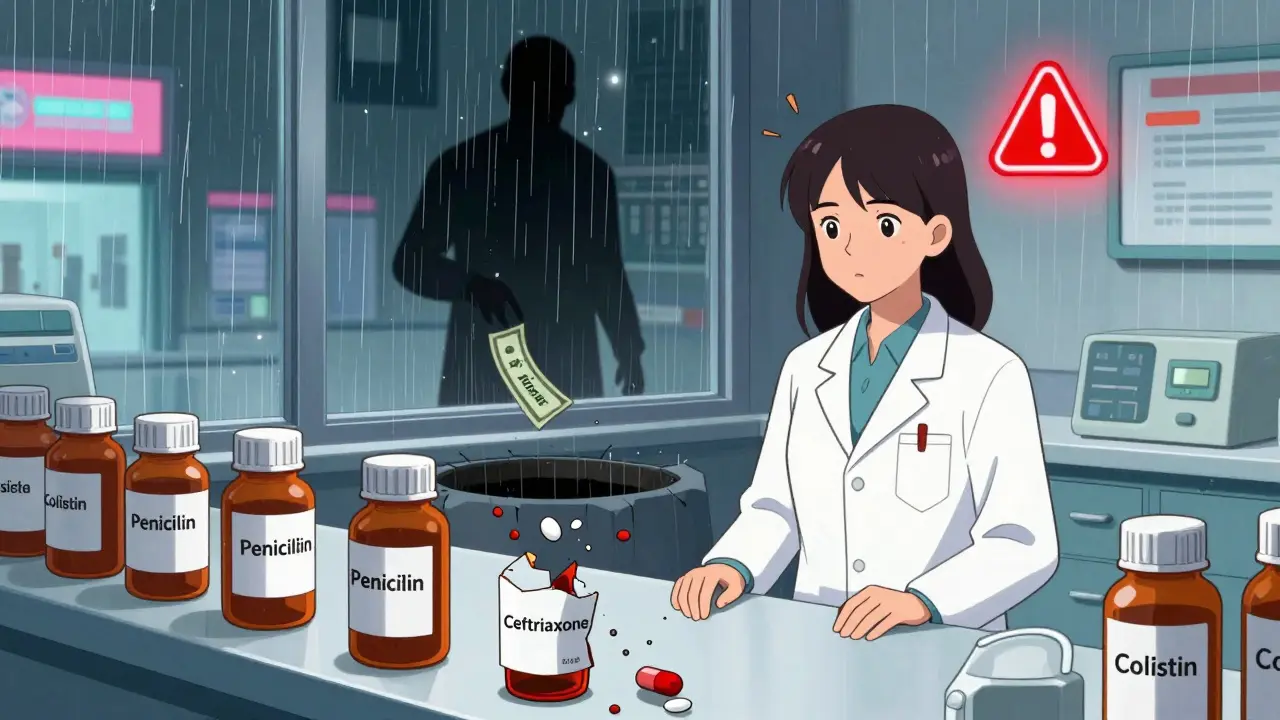
Resistance Is Rising Because of Shortages
This isn’t just about running out of pills. It’s about what happens when you replace one antibiotic with another. When third-generation cephalosporins disappear-drugs that used to treat most E. coli and K. pneumoniae infections-doctors have no choice but to use carbapenems. These are broad-spectrum antibiotics, often reserved for the most dangerous infections. But when you use them for simple cases, you create superbugs. The WHO’s 2025 report found that resistance has increased in over 40% of pathogen-antibiotic combinations since 2018. One in six bacterial infections worldwide is now resistant. In urinary tract infections, it’s one in three.How Hospitals Are Trying to Cope
Hospitals are scrambling. Some set up antibiotic stewardship programs-teams that track usage, push for faster diagnostics, and avoid unnecessary prescriptions. Johns Hopkins reduced broad-spectrum antibiotic use by 37% during shortages by using rapid tests to identify infections within hours. But only 37% of US hospitals meet all WHO standards for these programs. In the UK, pharmacists are spending 22% more time managing shortages. Rationing decisions are now part of daily work. One NHS pharmacist in Birmingham said, “We’re playing Russian roulette with antibiotics. We give the strongest one first, hoping it lasts, but we know we’re making resistance worse.”Why Importing Doesn’t Fix It
High-income countries try to import antibiotics from other regions. But that’s not a solution-it’s a bandage. The global supply chain is stretched thin. When India faces a monsoon or China shuts down a factory for inspections, shortages ripple worldwide. The US FDA approved two new manufacturing facilities in January 2025, which should ease 15% of current shortages by late 2025. But building new plants takes years. And even if they’re built, will they be profitable? The market for generic antibiotics grew just 1.2% from 2019 to 2024. The rest of the pharmaceutical industry grew over 5%. Why would any company invest here?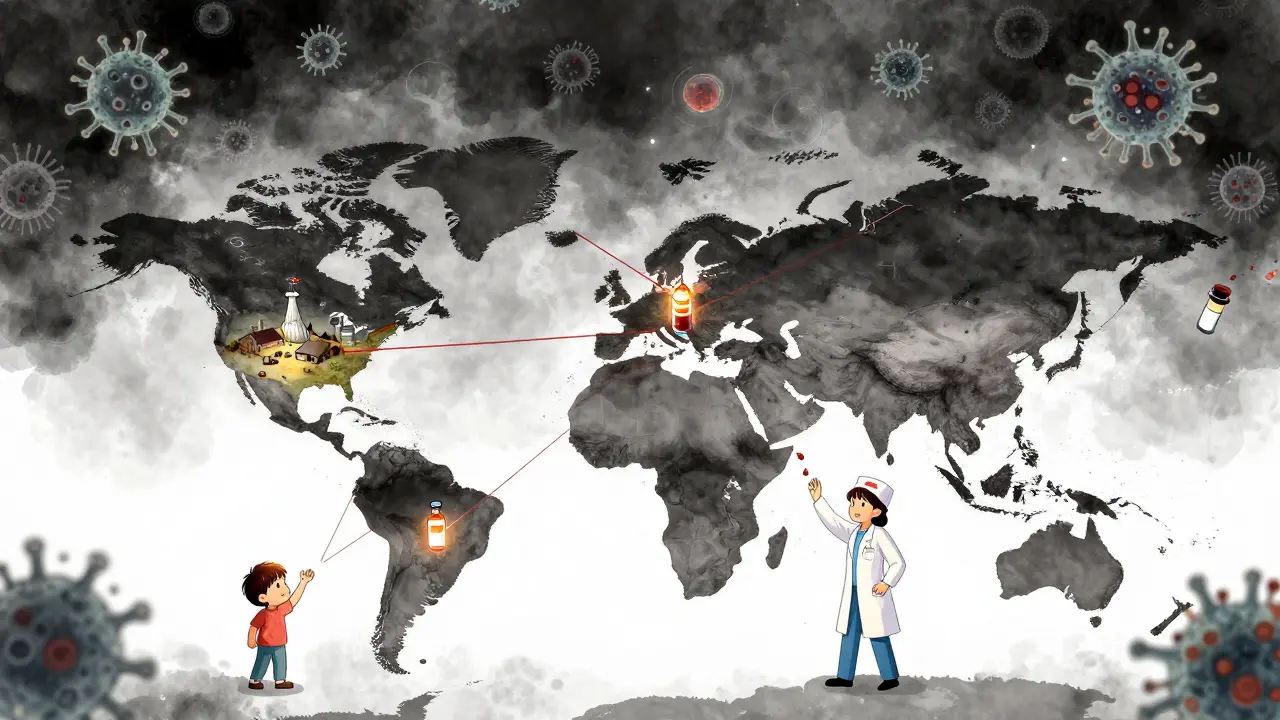
The Human Cost
The Review on Antimicrobial Resistance predicts that without major change, antibiotic shortages will cause 1.2 million extra deaths annually by 2030. That’s not a future prediction. It’s a projection based on today’s trends. These aren’t abstract numbers. They’re mothers, children, elderly patients, cancer survivors recovering from chemo-all vulnerable to infections that used to be easily treatable. In 2023, a patient in Birmingham died from a simple skin infection. The hospital had run out of flucloxacillin. The next available option was delayed by five days. By then, the infection had spread to the bloodstream.What’s Being Done-And What’s Not
The WHO launched a $500 million Global Antibiotic Supply Security Initiative in late 2025, backed by G7 nations. The European Commission is pushing new rules to guarantee minimum stockpiles. But these are long-term plans. The immediate problem? No one is paying manufacturers enough to make the drugs. The WHO wants 70% of antibiotic use to come from the safest, narrowest-spectrum drugs by 2030. Right now, it’s only 58%. And the global market for antibiotics is smaller than it was a decade ago. Without financial incentives, manufacturers won’t change.What You Can Do
You can’t fix the supply chain. But you can help stop the crisis from getting worse. Don’t demand antibiotics for colds or flu-they don’t work. Finish your full course, even if you feel better. Don’t save leftover pills for next time. Ask your doctor if there’s an alternative. Support policies that fund antibiotic production. And if you’re a healthcare worker, push for better stewardship programs. This isn’t just about pills. It’s about preserving the ability to treat infections at all.Why are antibiotic shortages worse than other drug shortages?
Antibiotics are different because they’re often the only effective treatment for bacterial infections. Unlike painkillers or blood pressure meds, there aren’t always alternatives. If you run out of insulin, you can use another type. If you run out of penicillin for strep throat, you might have to use a stronger, riskier drug-or nothing at all. Plus, misuse during shortages accelerates resistance, making future infections harder to treat.
Is this problem only in the UK and US?
No. Antibiotic shortages are global. The WHO’s 2025 report shows the worst impacts are in South-East Asia and the Eastern Mediterranean, where one in three infections is resistant. Low- and middle-income countries face even greater challenges-70% of antibiotics are already inaccessible there. Even countries with strong healthcare systems, like Germany and Canada, are seeing critical shortages of key drugs like amoxicillin and ceftriaxone.
Can I buy antibiotics online to avoid shortages?
Never. Online pharmacies selling antibiotics without prescriptions are illegal and dangerous. You might get fake, expired, or wrong-dose pills. Worse, you might take the wrong antibiotic for your infection, which can worsen resistance. Always get antibiotics through a licensed healthcare provider who can diagnose properly and choose the right drug.
Are new antibiotics being developed?
Very few. Drug companies focus on chronic diseases because they’re more profitable. Only 22% of new antibiotic candidates in development target the most dangerous resistant bacteria. Even when new ones are approved, it takes years to scale up production. The pipeline is thin, and manufacturing isn’t keeping pace.
How long will this shortage last?
There’s no end in sight unless governments and manufacturers act. The WHO projects shortages will increase by 40% by 2030. New manufacturing facilities may help in the next 2-3 years, but without financial incentives-like guaranteed minimum prices or government contracts-companies won’t stay in the market. This isn’t a temporary hiccup. It’s a systemic collapse.

Ian Glover
My name is Maxwell Harrington and I am an expert in pharmaceuticals. I have dedicated my life to researching and understanding medications and their impact on various diseases. I am passionate about sharing my knowledge with others, which is why I enjoy writing about medications, diseases, and supplements to help educate and inform the public. My work has been published in various medical journals and blogs, and I'm always looking for new opportunities to share my expertise. In addition to writing, I also enjoy speaking at conferences and events to help further the understanding of pharmaceuticals in the medical field.
11 Comments
-
lokesh prasanth
January 22, 2026 AT 06:28India makes 70% of global antibiotics. Factories shut down for monsoon. No one cares. Profit > lives. Simple.
-
michelle Brownsea
January 24, 2026 AT 03:35Let me be perfectly clear: this crisis is not an accident-it is the direct consequence of decades of deregulation, corporate greed, and the abdication of public responsibility. We have allowed the market to dictate life-or-death medical supply chains, and now we are reaping the moral rot of that choice. Every time you take an antibiotic unnecessarily, you are not just harming yourself-you are accelerating the collapse of modern medicine. We are not just facing a shortage; we are facing the unraveling of a social contract we once believed in.
And yet, no one in Congress is willing to pass legislation that guarantees a minimum profit margin for essential antibiotics. Why? Because lobbying money flows to cancer drugs, not to penicillin. We fund research for vanity treatments for the wealthy, but let children in rural Kenya die because a factory in Gujarat had a power outage.
And don’t even get me started on the FDA’s ‘approval process’-it’s a bureaucratic farce that takes five years to approve a generic antibiotic while letting unregulated online pharmacies flood the market with counterfeit pills. We need price controls. We need national stockpiles. We need to treat antibiotics like vaccines-not commodities.
And yes, I’m calling out every single person who says, ‘Just buy it online.’ That’s not a solution-it’s a death sentence disguised as convenience. You’re not saving time; you’re killing the next generation’s ability to survive a scratched knee.
And if you think this is ‘just a US problem,’ you’re delusional. The WHO report is not a suggestion-it’s an obituary for the 20th-century medical model. We are in the final act. And no one is holding the script.
-
Andrew Rinaldi
January 25, 2026 AT 13:52I get why companies don’t make antibiotics-it’s not sexy, it’s not profitable. But we’re all in this together. Maybe we need a public-private model where the government guarantees a baseline purchase, like they do for vaccines. Not perfect, but better than watching people die because a factory in India had a bad quarter.
-
Jarrod Flesch
January 26, 2026 AT 06:00Been working in rural Aussie clinics for 12 years. We’ve been rationing amoxicillin since 2022. Kids with ear infections get paracetamol and a hug. We’re not heroes-we’re just doing our best with nothing. 🙏
-
Barbara Mahone
January 27, 2026 AT 14:11The WHO’s 2025 report confirms what frontline clinicians have known for years: resistance is rising fastest where antibiotics are inconsistently available. When you can’t get the right drug, you use what’s left-and that’s how superbugs win.
-
Jerry Rodrigues
January 27, 2026 AT 23:23My sister got a UTI last month. Took 11 days to get amoxicillin. They gave her a painkiller and told her to drink water. She’s fine now. But it shouldn’t be this hard.
-
Gerard Jordan
January 28, 2026 AT 00:13Just had a chat with my cousin in Mumbai. She said her 4-year-old had pneumonia. They waited 3 days for azithromycin. By then, the kid was in ICU. 😢 We need to treat this like a war. Not a market problem.
-
Stephen Rock
January 29, 2026 AT 10:47Typical. Another doomsday article. Everyone’s panicking over antibiotics like they’re the last slice of pizza. Meanwhile, we’ve got AI diagnosing infections in seconds and synthetic biology on the horizon. Chill out. The future isn’t in penicillin-it’s in precision medicine.
-
Melanie Pearson
January 31, 2026 AT 00:38The United States must immediately cease all reliance on foreign manufacturing of critical pharmaceuticals. National security is at stake. We must mandate domestic production of all antibiotics under the Defense Production Act, with penalties for noncompliance. This is not a suggestion-it is an imperative.
-
Ashok Sakra
January 31, 2026 AT 03:32They don’t make antibiotics because no one buys them. People want pills for colds. When no pills, they scream. But they don’t pay more. So no one makes. Simple.


Write a comment
More Articles
How to Read Dose Measurements on Liquid Prescription Labels
Learn how to accurately read liquid prescription labels using milliliters (mL) to avoid dangerous dosing errors. Understand concentration, use proper measuring tools, and follow current safety standards.
How to Maintain a Healthy Weight with a Skeletal Muscle Condition
Maintaining a healthy weight with a skeletal muscle condition can be challenging, but it's not impossible. It's essential to focus on a balanced diet, including plenty of fruits, vegetables, lean proteins, and whole grains. Regular, low-impact exercise like swimming, yoga, or walking can help strengthen muscles and improve overall fitness. Don't forget to consult with your doctor or a physical therapist to create a tailored exercise plan that suits your specific needs. Finally, remember to monitor your progress and listen to your body to ensure you're making consistent, healthy choices.
Topiramate Withdrawal: Symptoms and Tips for Managing Them
In my latest article, I discuss the process of withdrawing from Topiramate, a medication typically used for treating epilepsy and migraines. The withdrawal can lead to various symptoms including anxiety, restlessness, and sleep disturbances. I also provide useful tips to manage these symptoms, such as tapering off the dosage gradually under a doctor's guidance and maintaining a healthy lifestyle. It's important to remember that everyone's experience is different, so don't hesitate to seek professional help if needed. Understandably, this process can be challenging, but with the right approach and support, it can become manageable.
Roisin Kelly
January 20, 2026 AT 16:46This is all just a big pharma scam to make us buy more expensive drugs-why do you think they let antibiotics get so cheap? They knew people would panic when they ran out and then pay ten times more for the ‘new miracle drug’ they’re secretly developing.