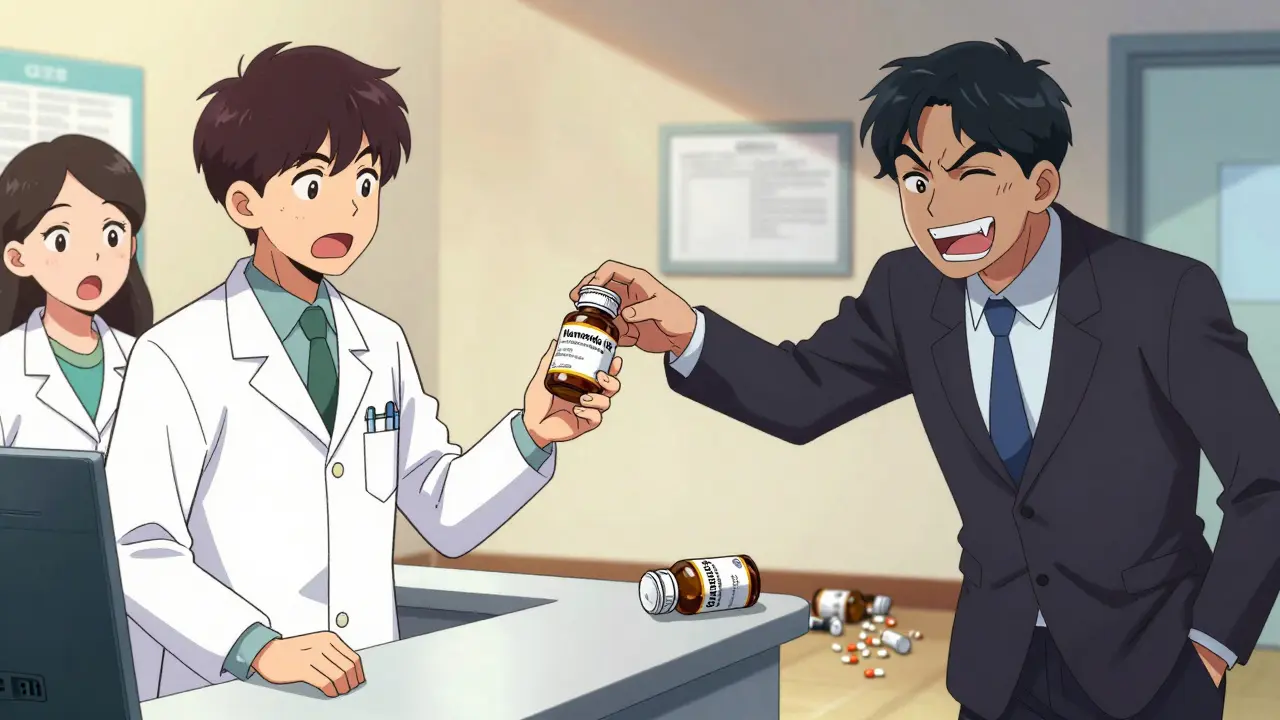
When a doctor writes a prescription for a brand-name drug, you might expect your pharmacist to hand you a cheaper generic version-especially if state law says they can. But in many cases, that’s not what happens. Behind the scenes, big pharmaceutical companies are using legal loopholes and shady tactics to block generics from ever reaching your pharmacy shelf. This isn’t about safety or innovation. It’s about keeping prices high-and it’s breaking the law.
How Generic Substitution Is Supposed to Work
In the U.S., every state has laws that let pharmacists swap a brand-name drug for a generic version, as long as it’s bioequivalent-meaning it works the same way in your body. These laws exist to save money. Generics cost 80% less on average. When they hit the market after a patent expires, they typically take over 80-90% of sales within months. That’s how competition is supposed to work. But here’s the catch: if the original brand-name drug disappears before generics can enter, those state substitution laws become useless. You can’t substitute something that’s no longer available. And that’s exactly what some drug companies have figured out how to do.Product Hopping: The Sneaky Trick Behind High Drug Prices
The most common tactic is called product hopping. It works like this:- A brand-name drug’s patent is about to expire.
- The company releases a slightly changed version-maybe an extended-release pill, a new coating, or a different shape.
- Then they pull the original version off the market, sometimes just days before generics launch.
Why Courts Are Starting to Step In
For years, courts let this slide. In 2009, a case against AstraZeneca over switching from Prilosec to Nexium was dismissed because the original drug was still available. But in 2016, the Second Circuit Court of Appeals changed everything with New York v. Actavis. The court ruled that pulling Namenda IR before generics arrived wasn’t just business strategy-it was illegal. Why? Because it destroyed the foundation of state substitution laws. The court said: “The only cost-efficient means of competing available to generic manufacturers is the automatic substitution system.” By killing that system, Actavis wasn’t competing on merit. They were blocking competition. That ruling opened the door. Since then, courts have started distinguishing between legitimate product improvements and anti-competitive sabotage. If the old drug stays on the shelf, it’s usually fine. If it vanishes? That’s a red flag.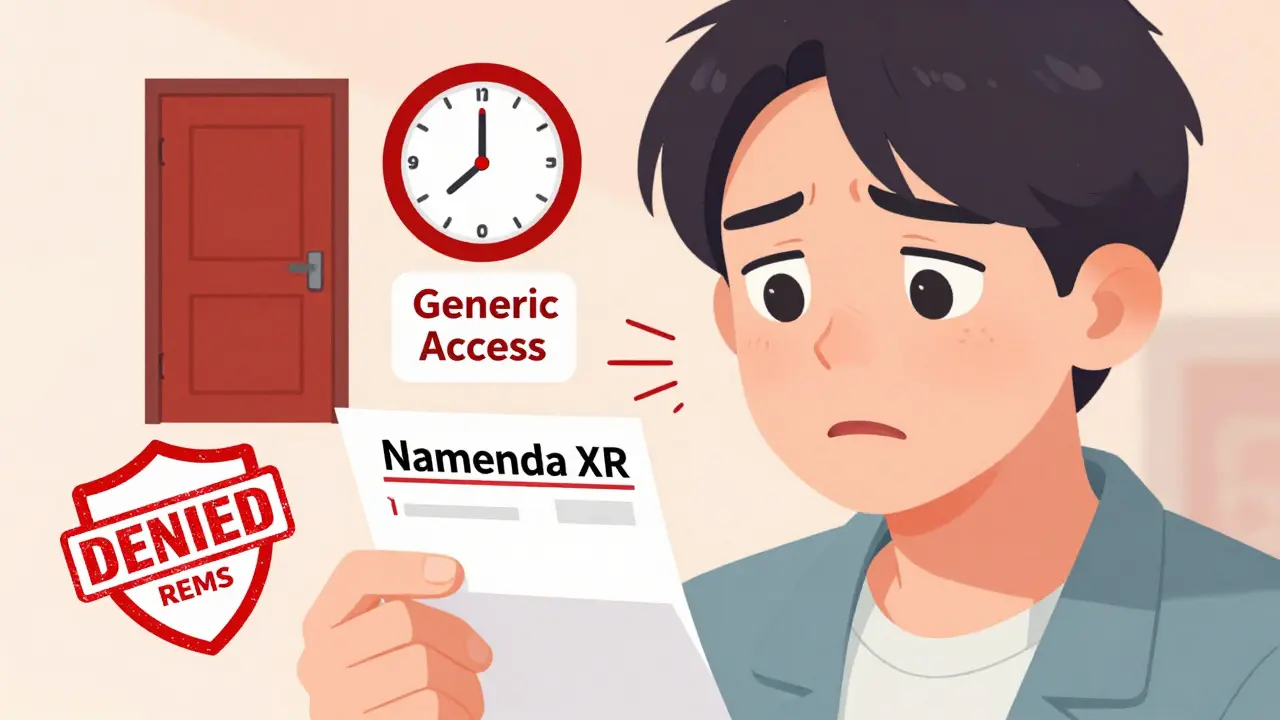
Another Trick: Blocking Generic Access to Drug Samples
Even if a generic company wants to enter the market, they need samples of the brand-name drug to prove their version works the same. That’s required by the FDA. But here’s the twist: some brand-name companies use FDA-mandated safety programs called REMS to deny access. REMS are meant to control risks for dangerous drugs. But companies have turned them into weapons. They claim generic makers can’t safely handle the drug, so they won’t provide samples. Without samples, generics can’t get approved. No approval? No competition. A 2017 study by Michael A. Carrier found over 100 generic companies reported being blocked this way. One analysis of 40 drugs showed this tactic alone cost consumers more than $5 billion a year. The FTC called this a textbook case of monopolization-because the behavior makes no economic sense unless the goal is to hurt competitors.What Happens When the FTC Steps In
The Federal Trade Commission has become the main enforcer. In the Namenda case, they got a court order forcing Actavis to keep selling the old version for 30 days after generics launched. That gave generics a fighting chance. In another case, Suboxone, Reckitt Benckiser pushed patients from tablets to films by spreading fear about the tablets’ safety-claims later found to be baseless. The FTC stepped in, and in 2019 and 2020, they forced the company to pay settlements and stop the misleading tactics. The DOJ has also gone after generic manufacturers-for price-fixing. Teva paid a $225 million fine in 2023, the largest ever for a domestic antitrust cartel. That shows regulators aren’t just targeting big brands. They’re cleaning up the whole system.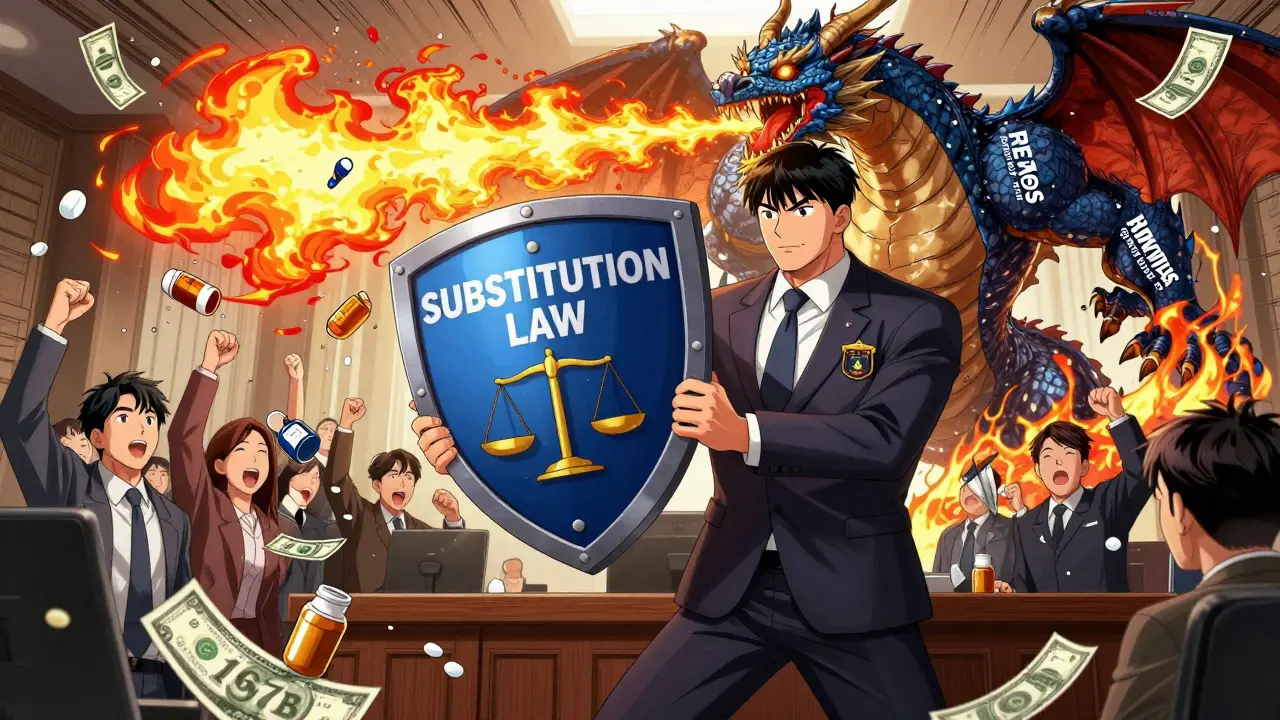
State Laws Are the First Line of Defense
Federal enforcement is slow. State attorneys general have been quicker. New York’s attorney general sued Actavis in 2014 and won an injunction to keep Namenda IR on the market. Other states have followed suit. But state laws vary. Some require pharmacists to substitute unless the doctor says no. Others let pharmacists decide. Some don’t allow substitution at all for certain drugs. That patchwork makes it easier for companies to game the system. The FTC is now pushing states to strengthen their substitution laws. They want rules that make it harder to pull the old drug off the shelf before generics arrive. They also want to close REMS loopholes that block sample access.The Real Cost: Billions and Broken Trust
This isn’t abstract. It’s money out of your pocket. The FTC estimates that delayed generic entry due to product hopping and patent abuse has cost U.S. consumers and taxpayers over $167 billion in just three drugs: Humira, Keytruda, and Revlimid. Revlimid’s price jumped from $6,000 to $24,000 a month over 20 years. That’s not innovation. That’s exploitation. And it’s made possible because the system lets companies manipulate rules instead of competing fairly. Patients don’t realize their prescriptions are being manipulated. Doctors think they’re prescribing the best option. Pharmacists just want to fill the order. But behind every high-price drug, there’s often a legal strategy designed to keep generics out.What’s Next? More Scrutiny, Maybe New Laws
In 2023, the FTC and DOJ held joint hearings on generic competition. Congress is paying attention. The House Committee on Appropriations directed the FTC to report on its efforts to stop product hopping. Legal scholars are calling for clearer rules: if a drug is pulled before generics enter, and the only reason is to avoid substitution, that should be illegal by default. Some experts believe Congress may pass a law that bans withdrawal of a drug within a certain window before generic entry. Others want REMS reforms that force companies to provide samples to all qualified generic makers. Until then, the battle continues in courtrooms, statehouses, and pharmacies. And every day a brand-name drug stays on the market without competition, patients pay more.What is product hopping in the pharmaceutical industry?
Product hopping is when a drug company releases a slightly modified version of a brand-name drug-like a new pill form or extended-release version-then pulls the original version off the market just before generic competitors can launch. This blocks pharmacists from substituting cheaper generics, because the original drug no longer exists. It’s not about better medicine; it’s about avoiding competition.
How does the FTC fight antitrust violations in generic drug substitution?
The FTC investigates and sues companies that use tactics like product hopping or REMS abuse to block generics. They’ve won court orders forcing companies to keep selling old drug versions during generic entry and secured settlements that ban misleading marketing. They also push states to strengthen substitution laws and have published reports detailing how these practices cost billions.
Why can’t generic companies just advertise to win back customers?
Because state substitution laws are designed to make generics the default choice at the pharmacy-no advertising needed. When the original drug is removed, patients and doctors are forced onto the new version. Switching back isn’t practical. Patients don’t ask for generics; they take what’s given. Generic makers can’t compete by spending on ads when the original drug isn’t even available to substitute.
What are REMS and how are they used to block generics?
REMS are FDA safety programs meant to manage risks for certain drugs. But some brand-name companies misuse them by refusing to provide drug samples to generic makers, claiming safety concerns. Without samples, generics can’t prove they’re bioequivalent, so they can’t get FDA approval. Over 100 generic companies have reported being blocked this way, costing consumers over $5 billion a year.
Have any companies been punished for these practices?
Yes. Actavis was forced to keep selling Namenda IR after generics launched. Reckitt Benckiser paid settlements after misleading patients about Suboxone tablets. Teva paid a $225 million criminal fine for price-fixing with other generic makers. These are not isolated cases-they’re part of a growing pattern of enforcement.
Can states do anything to stop this?
Yes. States with strong substitution laws have had more success blocking product hopping. State attorneys general have sued companies and won injunctions. The FTC now encourages states to pass laws that require brand-name drugs to remain available for a set time after generics enter the market. Stronger state rules make it harder for companies to game the system.

Ian Glover
My name is Maxwell Harrington and I am an expert in pharmaceuticals. I have dedicated my life to researching and understanding medications and their impact on various diseases. I am passionate about sharing my knowledge with others, which is why I enjoy writing about medications, diseases, and supplements to help educate and inform the public. My work has been published in various medical journals and blogs, and I'm always looking for new opportunities to share my expertise. In addition to writing, I also enjoy speaking at conferences and events to help further the understanding of pharmaceuticals in the medical field.
14 Comments
-
Josias Ariel Mahlangu
December 18, 2025 AT 01:30It is regrettable that corporate interests have come to overshadow public health. The legal framework, though ostensibly designed for consumer protection, has been rendered impotent by deliberate manipulation. One cannot help but question the moral compass of those who profit from the suffering of the chronically ill.
-
Billy Poling
December 18, 2025 AT 18:59It is imperative to recognize that the pharmaceutical industry operates within a complex regulatory ecosystem that balances innovation incentives with market accessibility. While the phenomenon of product hopping may appear anticompetitive on the surface, it is often a strategic response to patent cliffs and the need to sustain R&D funding. The FTC’s intervention, while well-intentioned, risks chilling legitimate product development and may inadvertently disincentivize the very innovation that leads to improved therapeutics in the long term.
Moreover, the assertion that generic substitution laws are the sole viable competitive mechanism is a reductive oversimplification. Market dynamics involve physician prescribing behavior, formulary placement, and payer negotiations - all of which are equally, if not more, influential than pharmacological substitution. To criminalize product evolution under the guise of antitrust enforcement is to confuse cause and effect. The real issue lies in the absence of transparent pricing mechanisms and the fragmented reimbursement landscape, not in the existence of extended-release formulations. -
Joanna Ebizie
December 19, 2025 AT 04:55Bro. They literally just make a new pill and call it a day. No new science. Just ‘hey we’re gonna make you switch so you can’t get the $5 version.’ And you’re telling me this isn’t fraud? Jesus.
My grandma’s on Namenda. She didn’t even know she got switched. Now she’s paying $200 a month for the same damn drug in a different shape. -
Elizabeth Bauman
December 19, 2025 AT 15:30This is why America needs to wake up. Big Pharma is a foreign-owned cartel that’s been laughing at our laws for decades. They use REMS like a weapon? That’s not safety - that’s economic warfare. And our government lets them get away with it?
It’s time to nationalize drug manufacturing. We pay for the research through NIH grants, then they charge us 10x. This isn’t capitalism - it’s treason. And if you’re not mad about this, you’re part of the problem. -
Ron Williams
December 21, 2025 AT 09:09I’ve been a pharmacist for 22 years, and I’ve seen this play out in real time. Patients don’t even know they’re being manipulated. They think the doctor chose the new pill because it’s better. But half the time, the new version is just harder to swallow or causes weird side effects.
What’s worse? We’re forced to follow the script. If the brand’s off the shelf, we can’t substitute - even if the patient asks. It’s like being told you can’t give someone water because the old bottle’s gone, but the new one’s got a cap you can’t open.
State laws need to be unified. We can’t keep playing whack-a-mole with corporate loopholes. -
Aditya Kumar
December 22, 2025 AT 03:04Too much text. Just say they’re scamming people.
-
Tiffany Machelski
December 22, 2025 AT 17:26so like… if the old drug gets pulled before generics can come in, that’s illegal? but how do they even get away with it for so long? i feel like i’m missing something…
also i think i saw a commercial for namenda xr last week and it looked like a spaceship pill?? -
Souhardya Paul
December 24, 2025 AT 03:11Hey, I just want to say - this is one of those issues where everyone loses except the shareholders. Patients pay more, pharmacists get stuck in bureaucratic limbo, doctors are kept in the dark, and generic companies spend years in court instead of making medicine.
It’s not just about price. It’s about trust. When you go to the pharmacy expecting a cheap alternative and get handed a branded pill you didn’t ask for, you start to wonder who’s really looking out for you.
Maybe the fix isn’t just legal - maybe it’s cultural. We need to stop treating drugs like luxury goods and start treating them like basic rights. -
anthony epps
December 25, 2025 AT 21:56Wait, so if the original drug disappears, the generic can’t even start? That seems kinda unfair. Why not just let them make the generic anyway? Like, if it works the same, why does it matter if the brand version is gone?
I just don’t get why they make it so complicated. -
Andrew Sychev
December 27, 2025 AT 14:55They’re not just blocking generics - they’re erasing history. They’re turning medicine into a cult where you’re forced to worship the new pill like it’s holy. And if you dare ask for the old one? You’re a heretic.
I’ve seen people cry because they can’t get the original pill anymore. Their body adjusted to it. The new one gives them migraines. But no - the company says ‘adapt or pay more.’
This isn’t business. This is psychological warfare wrapped in a white coat. -
Dan Padgett
December 28, 2025 AT 01:33You know, in my village back home, if someone sold you a medicine that didn’t work, they’d be shamed. Here, they patent a pill, tweak the color, and call it innovation. We call that stealing time. And time? That’s the one thing you can’t buy back.
It’s not about money. It’s about dignity. When your life depends on a pill, you shouldn’t have to fight a legal war just to get the one that works. -
Hadi Santoso
December 29, 2025 AT 20:35Man, I work at a pharmacy and I see this every day. People come in confused because their med changed - they don’t know why. We can’t explain it without sounding like we’re accusing the drug company of being evil.
And the worst part? The docs don’t even know half the time. They just see the new prescription on the list and think ‘oh cool, better version.’
Need a national campaign to teach folks: ‘If the old one disappeared right before generics hit? That’s not an accident.’ -
Arun ana
December 29, 2025 AT 22:48Wow. This is wild. 😳 I had no idea this was happening. I just thought generics were cheaper because they’re cheaper to make - didn’t realize there’s a whole system of sabotage behind it.
So if I’m reading this right, the system is rigged? Like, literally? 🤯
Hope Congress does something soon. This is insane.


Write a comment
More Articles
Statin Medications: What You Need to Know About Cholesterol Benefits and Muscle Pain Risks
Statins lower cholesterol and prevent heart attacks, but muscle pain is a common concern. Learn who benefits most, how to manage side effects, and why quitting can be dangerous.

Kayleigh Campbell
December 17, 2025 AT 01:43So let me get this straight - they don’t improve the drug, they just change the pill shape and call it a day? And then yank the old one like it’s a bad Tinder date? This isn’t capitalism, it’s a magic trick where the rabbit is your wallet.
Pharmacists are stuck playing Jenga with prescriptions while patients just want to not go broke. It’s like the system’s been rigged by people who think ‘patent’ means ‘license to print money’.