
Every year in the U.S., over 1.3 million medication errors happen in hospitals and pharmacies. Many of these are preventable. One of the most effective tools to stop them? Barcode scanning. It’s not flashy. It doesn’t make headlines. But in pharmacies across the country, it’s quietly saving lives by making sure the right drug goes to the right patient at the right time.
How Barcode Scanning Stops Errors Before They Happen
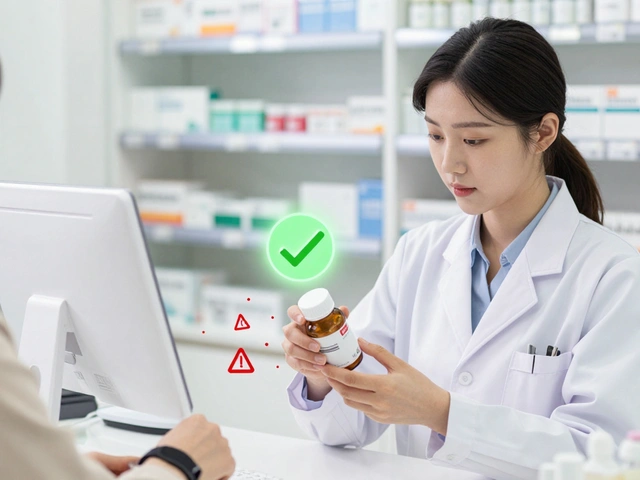
Picture this: a pharmacist grabs a bottle of levothyroxine to fill a prescription. The dose looks right. The label matches the order. But the patient actually needed a tenth of that dose. One mistake. One pill. Could be deadly. Without barcode scanning, that error might slip through. Barcode scanning changes that. At the moment the pharmacist picks up the medication, they scan the barcode on the bottle or blister pack. Simultaneously, they scan the patient’s wristband. The system checks: Is this the right drug? Right dose? Right patient? Right time? Right route? It’s called the five rights-and barcode systems verify all five in under five seconds. If anything doesn’t match, the system stops the process. It won’t let the medication be dispensed. No alert. No warning. Just a hard stop. That’s how it prevents errors before they reach the patient. Studies show this works. A 2021 BMJ Quality & Safety study found that barcode systems prevent 93.4% of potential dispensing errors. At one Pennsylvania hospital, accuracy jumped from 86.5% to 97% after implementation. That’s not theory. That’s real data from real pharmacies.What’s Under the Hood: 1D vs 2D Barcodes
Not all barcodes are the same. Most pharmacy systems still use 1D linear barcodes-those thin black-and-white lines you see on medicine bottles. They store the National Drug Code (NDC), a unique identifier assigned by the FDA since 2006. That’s the baseline. But newer systems are moving to 2D matrix codes, like QR codes. These can hold way more info: lot number, expiration date, even the manufacturer’s name. The FDA started piloting 2D barcodes in 2023 because they offer better traceability. By 2026, experts predict 65% of medications will use them, up from just 22% in 2023. Why does this matter? Because when a drug is recalled, or if there’s a contamination issue, 2D barcodes let pharmacists track exactly which batch went to which patient. That’s life-saving in emergencies.Why Manual Checks Aren’t Enough
Before barcode scanning, pharmacies relied on double-checks: two staff members verify the prescription. Sounds smart, right? But research shows manual checks catch only about 36% of errors. People get tired. They get distracted. They assume the label is correct. Barcode systems don’t get tired. They don’t assume. They don’t skip steps. A 2022 ASHP report found that when pharmacists skipped scanning because they were rushed, error rates jumped back up to pre-technology levels. The system only works if it’s used every time. And here’s the scary part: even when the label is wrong, the barcode can still scan correctly. There was a case where vancomycin was labeled with the right NDC but the wrong concentration. The barcode scanned fine. The system approved it. The pharmacist didn’t visually check the liquid. The patient got 10 times the intended dose. That’s why the ECRI Institute warns: “When a barcode will not scan, pharmacists need to visually verify that the medication matches what is ordered for the patient. It is not safe to send a label by itself.”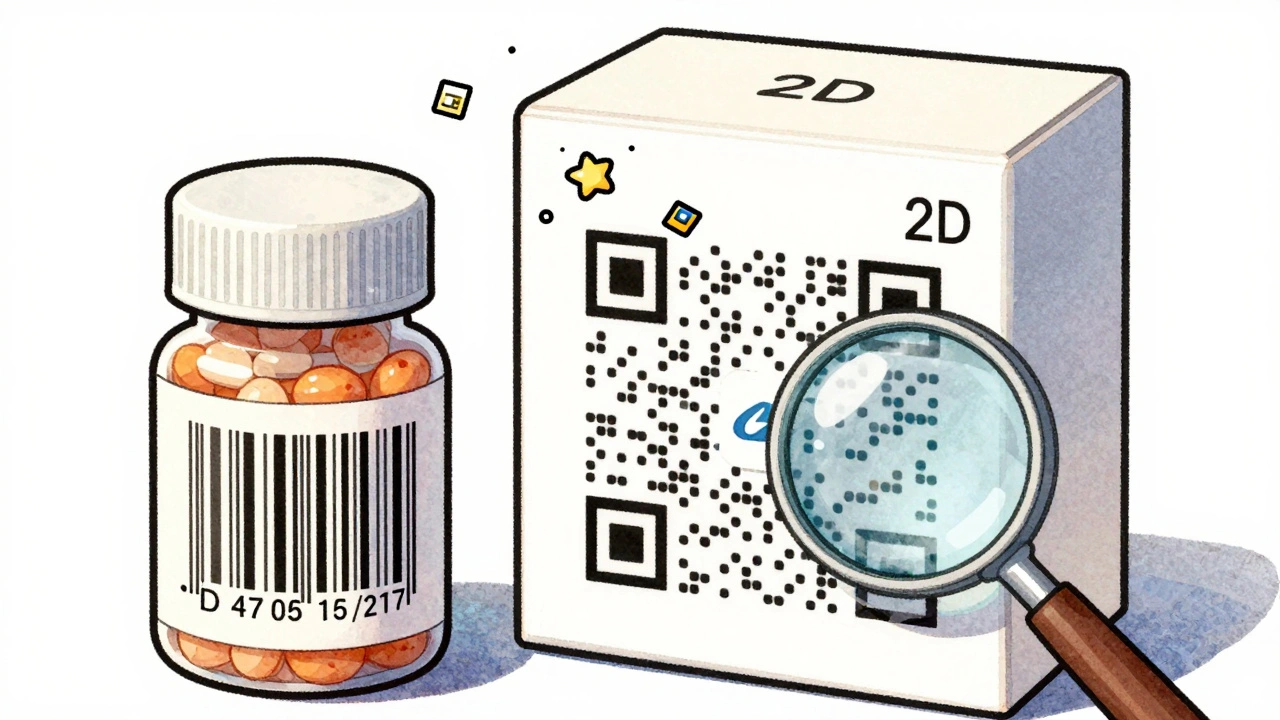
Where It Fails: Ampules, Insulin, and Emergency Situations
Barcode scanning isn’t perfect. It struggles with certain medications. Ampules-those small glass vials used for injectables-often have tiny or damaged barcodes. Insulin pens, especially in high-volume settings, have labels that wear off or get smudged. Emergency drugs, like epinephrine or naloxone, are sometimes stored without barcodes because they’re meant to be grabbed fast. In these cases, workarounds happen. Pharmacists might scan the box instead of the vial. Or they’ll override the system because “it’s an emergency.” A 2023 Pharmacy Times survey found 41% of pharmacists admitted to bypassing scans during rush hours. That’s dangerous. Leading pharmacies now use special scanning trays for ampules. They keep bright lights nearby. They train staff to never override a scan without a second visual check. Some even have barcode validation teams that randomly audit high-risk medications.Real Stories from the Pharmacy Floor
Sarah Chen, a hospital pharmacist in Ohio, says her team’s dispensing errors dropped by 75% after implementing barcode scanning. “It caught a 10x dose of levothyroxine last month,” she says. “We’d never have spotted that visually.” But not everyone is thrilled. One pharmacy tech on Reddit complained that scanning failures add 15-20 minutes to every shift. “Small vials, damaged barcodes, scanners freezing-it’s frustrating. We end up cutting corners just to keep up.” That’s the trade-off. The system isn’t flawless. But the errors it prevents far outweigh the inconveniences. In a 2024 LinkedIn post, a Kaiser Permanente pharmacy technician wrote: “We lose 30 minutes a day fixing scanner issues. But I’d rather lose 30 minutes than lose a patient.”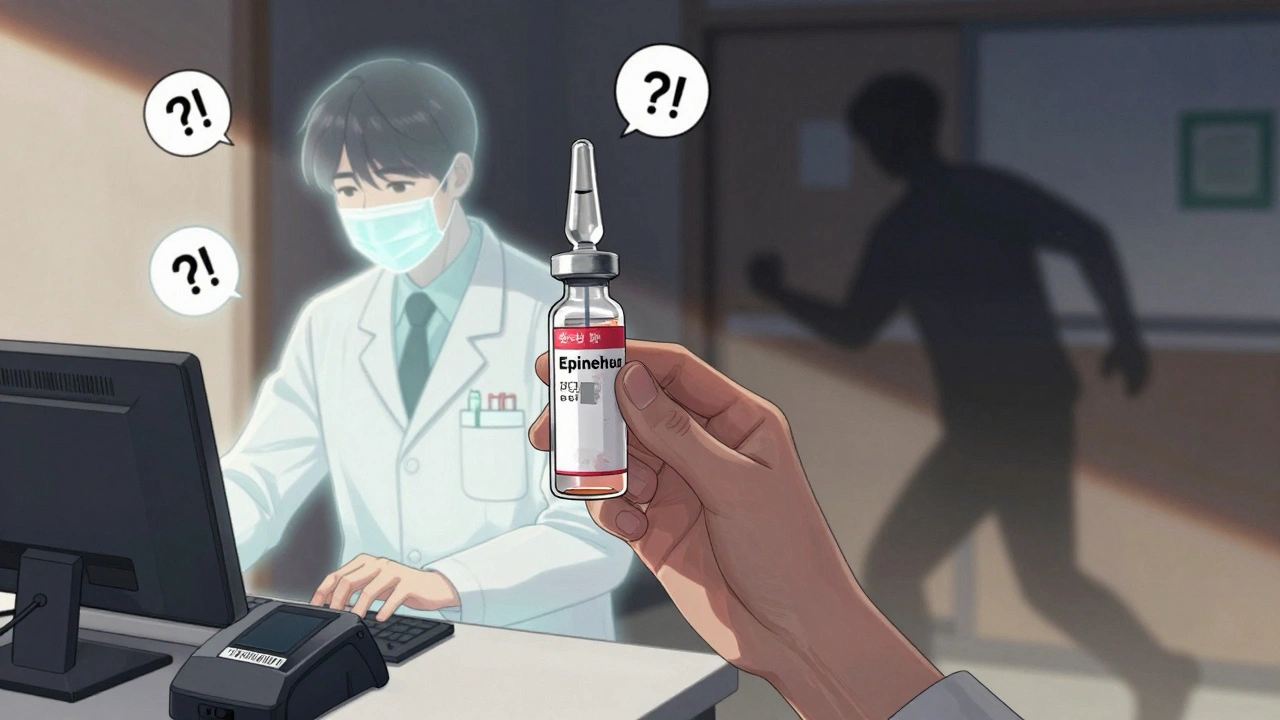
Integration and Technology: It’s Not Just a Scanner
Modern barcode systems don’t work in isolation. They’re plugged into pharmacy information systems (PIS), electronic health records (EHR), and automated dispensing cabinets. They use HL7 interfaces to talk to hospital networks. They encrypt data to meet HIPAA rules. Some even sync with robotic dispensing arms. The best systems today are mobile. Epic Systems released a new version in March 2024 that lets pharmacists scan with handheld tablets instead of fixed scanners. That cut scanning failures by 22%. Cerner plans to add AI in 2025 to predict when a barcode will fail before it happens. Adoption is growing. In U.S. hospitals, 78% now use barcode scanning. But in community pharmacies? Only 35%. Cost is the main barrier. A full system can run $50,000-$150,000. But the savings? A single preventable error can cost a hospital over $50,000 in lawsuits and lost reputation.What You Need to Make It Work
Just buying scanners won’t fix anything. You need:- Training: Staff need to understand why scanning matters-not just how to do it.
- Protocols: What to do when a barcode won’t scan. No overrides without visual verification.
- Hardware: High-resolution scanners that read damaged codes. Good lighting. Clean surfaces.
- Support: Vendor response time matters. Epic scores 4.7/5 on support; Cerner gets 3.8/5.
- Review: Regularly check your system logs. Which medications are being scanned least? Why?
The Bigger Picture: Safety Isn’t a Single Tool
Barcode scanning isn’t magic. It’s one layer in a layered safety system. It works best with computerized prescribing (CPOE), automated dispensing cabinets, and pharmacist reviews. The Institute for Safe Medication Practices calls it a “Tier 1” safety practice-meaning it’s among the most effective tools we have. But it’s not the only one. Smart pumps prevent IV errors. RFID tracking improves inventory. Blockchain could one day track drugs from factory to patient. But for now, barcode scanning is the most proven, affordable, and widely used tool to stop dispensing errors. The future? More 2D codes. Smarter scanners. Less human override. But the core principle stays the same: if you can’t scan it, don’t give it. Verify. Always.How effective is barcode scanning at preventing medication errors?
When properly used, barcode scanning prevents 93.4% of potential dispensing errors, according to a 2021 BMJ Quality & Safety study. In real-world settings, hospitals have seen accuracy rates jump from 86% to over 97%. It’s especially effective at catching wrong-patient errors (92% prevention), wrong-drug errors (89%), and wrong-dose errors (86%).
Do all pharmacies use barcode scanning?
In U.S. hospitals, 78% use barcode scanning systems as of 2023. But in community pharmacies, adoption is only around 35%. The main barriers are cost-systems can run $50,000 or more-and the complexity of integrating with older pharmacy software. Smaller pharmacies often rely on manual checks, which are far less reliable.
Can barcode scanning miss errors?
Yes. If a medication has a damaged or missing barcode, the system can’t verify it. Even worse, if a pharmacy prints a wrong label with a correct barcode, the system will approve it. That’s why visual verification is still required when scanning fails. The system is a tool, not a replacement for human judgment.
What medications are hardest to scan?
Ampules, insulin pens, small vials, and emergency drugs like epinephrine are the most challenging. Their labels are often too small, easily damaged, or not barcoded at all. Many pharmacies now use special scanning trays and bright lighting to improve success rates with these items.
Is barcode scanning required by law?
The FDA requires all prescription medications to have a barcode containing the National Drug Code (NDC) since 2006. The Joint Commission also mandates medication identification as part of its National Patient Safety Goals. While pharmacies aren’t legally forced to scan, failing to use available safety technology can be seen as negligence in the event of an error.
What’s the difference between barcode scanning and RFID in pharmacies?
Barcode scanning requires line-of-sight and physical scanning. RFID uses radio waves and can read multiple items at once without direct contact. RFID is more expensive and still emerging in pharmacies. Barcode systems are 47% cheaper per unit and just as effective for error prevention. Most pharmacies stick with barcodes for now.
What happens if a pharmacist skips a scan?
Skipping a scan removes the safety net. Studies show that when scanning is bypassed, error rates return to pre-technology levels. Many hospitals now track scan compliance rates. If a staff member skips scans repeatedly, they’re retrained. In some cases, it leads to disciplinary action. The system only works if everyone uses it.

Ian Glover
My name is Maxwell Harrington and I am an expert in pharmaceuticals. I have dedicated my life to researching and understanding medications and their impact on various diseases. I am passionate about sharing my knowledge with others, which is why I enjoy writing about medications, diseases, and supplements to help educate and inform the public. My work has been published in various medical journals and blogs, and I'm always looking for new opportunities to share my expertise. In addition to writing, I also enjoy speaking at conferences and events to help further the understanding of pharmaceuticals in the medical field.
9 Comments
-
nikki yamashita
December 14, 2025 AT 13:51This is why I love pharmacy techs. They’re the quiet heroes. 🙌 I saw a scan stop a 10x levothyroxine error last week-no drama, just a beep and a red light. We all breathe easier because of this stuff.
-
Audrey Crothers
December 14, 2025 AT 23:43OMG YES. I work in a hospital pharmacy and our scanner froze during a code blue. We had to grab epinephrine by hand. I still get chills thinking about it. We now have backup scanners AND a bright light station for ampules. Never going back.
-
Ashley Skipp
December 16, 2025 AT 15:35Barcodes are just a bandaid. Real safety comes from training and culture. You put a scanner on a tired, overworked staff who don’t care? You’re just giving them a false sense of security. The system fails when people do.
-
Laura Weemering
December 18, 2025 AT 03:17Let’s be real: 93.4% sounds impressive… until you realize that’s still 6.6% of errors slipping through. And let’s not forget the cases where the barcode is correct but the label is wrong-because someone printed it wrong, and the system didn’t care. It’s not a cure. It’s a filter. And filters clog. And when they clog? People die. We’re celebrating a tool that’s just… barely good enough.
And don’t get me started on the 41% who bypass scans during rush hour. That’s not negligence-it’s survival. The system is designed for perfection, but we’re human. We’re tired. We’re overworked. And we’re not robots.
2D barcodes? Great. But they don’t fix the fact that insulin pens are designed by people who’ve never held one in a frantic 3 a.m. shift. The vial’s label is smaller than a fingernail. You think a scanner can read that? In a dimly lit corner, with a patient screaming for pain meds?
And the cost? $150k? For a pharmacy that makes $200k profit a year? That’s not an investment-that’s a gamble. And we’re gambling with lives. Not because we’re lazy. Because we’re broke.
ASHP says scan the manufacturer’s barcode? Fine. But who’s auditing that? Who’s checking if the pharmacy’s label is misprinted? No one. Because no one has time. And the system doesn’t care. It just says “approved.”
We need better design. Better lighting. Better training. Better funding. And yes-better humans. Not just better scanners. We’re treating the symptom, not the disease.
And yet… I still use it. Every. Single. Time. Because even a flawed system is better than none. But don’t call it magic. Call it a last line of defense. And pray it doesn’t fail.
-
Robert Webb
December 19, 2025 AT 18:38I’ve spent over 20 years in pharmacy, from community to hospital settings, and I’ve seen every iteration of safety tech come and go. Barcode scanning isn’t perfect, but it’s the first tool in decades that actually reduced errors at a systemic level-not just anecdotal. What’s often missed is that it doesn’t just prevent errors; it changes culture. Before barcode systems, pharmacists would say, ‘I’ve done this a thousand times.’ Now they say, ‘I’m scanning it anyway.’ That shift-from trust to verification-is profound. And it’s not just about the machine. It’s about the ritual. The pause. The moment you stop and check. That’s what saves lives. Even when the scanner fails, the habit remains. That’s the real win.
And yes, the 2D codes are the future. They’re not just about expiration dates-they’re about traceability in recalls. Imagine a contamination event. Without 2D codes, you’re calling every patient who got a batch. With them? You know exactly who got the bad one. That’s not convenience. That’s public health infrastructure.
As for the cost? It’s a red herring. The average preventable medication error costs a hospital $50,000 in legal fees, extended stays, and reputational damage. One error. One. A $150,000 system that prevents 93% of errors? That’s not an expense. That’s insurance with a 20x return. The problem isn’t the cost-it’s the mindset that safety is optional until someone dies.
And to those who say ‘manual checks are enough’-look at the data. 36% catch rate. That’s worse than flipping a coin. We don’t let pilots fly without checklists. Why do we let pharmacists dispense without scans?
The real failure isn’t the scanner. It’s when we accept ‘good enough’ as the standard. We can do better. We have to.
-
Nathan Fatal
December 21, 2025 AT 02:24Let’s cut through the noise: barcode scanning works because it removes human bias. We assume labels are right. We trust the system. We rush. The scanner doesn’t. It doesn’t care if you’re tired, stressed, or overworked. It just says ‘no’ when things don’t match. That’s not a flaw-it’s the feature. And yes, there are edge cases: ampules, insulin, emergencies. But those aren’t reasons to abandon the system-they’re reasons to improve it. Better lighting. Better vial design. Better training. Not less scanning. More smart scanning.
The fact that 41% of pharmacists bypass scans during rush hour is terrifying. That’s not a system failure. That’s a cultural failure. We need accountability-not just audits, but real consequences. If you skip a scan, you get retrained. Repeat offense? Suspension. No exceptions. Safety isn’t negotiable.
And to the folks who say ‘it’s too expensive’-I’ve seen families bankrupted by a single wrong dose. What’s the cost of a life? The answer isn’t a spreadsheet. It’s a funeral.
We’re not debating tech. We’re debating values. Do we value safety? Or do we value convenience?
-
wendy b
December 22, 2025 AT 11:18Actually, the FDA only requires the NDC to be barcoded-not that you scan it. That’s a common misconception. The Joint Commission doesn’t mandate scanning either. It’s a best practice. Not a law. So when people act like it’s mandatory, they’re misinformed. The real issue? Pharma companies don’t always print clear barcodes. Some labels are literally unreadable. And no one holds them accountable. So we’re stuck fixing someone else’s mess.
-
Nathan Fatal
December 24, 2025 AT 01:51Wendy, you’re right about the FDA requirement-but wrong about the implications. Just because it’s not legally mandated doesn’t mean it’s optional. In tort law, failing to use a widely accepted, proven safety tool is considered negligence. Courts have ruled this in multiple cases. The Joint Commission may not say ‘scan,’ but they do say ‘use all available safety measures.’ That’s the legal gray zone-and hospitals are getting sued in it. So yes, scanning is de facto mandatory. The law doesn’t have to say it for it to be the standard of care.


Write a comment
More Articles
NSAIDs and Peptic Ulcer Disease: Understanding the Risk of Gastrointestinal Bleeding
NSAIDs relieve pain but carry serious risks of gastrointestinal bleeding, especially in older adults and those with ulcers. Learn who's most at risk, how to protect yourself, and what treatments actually work.
sandeep sanigarapu
December 12, 2025 AT 21:27Barcode scanning is a fundamental safety layer, no doubt. But in community pharmacies, the cost-benefit ratio is still a hard sell. I've seen small shops skip it entirely because the ROI isn't clear until someone gets hurt. The tech works, but adoption lags because human systems resist change unless forced.