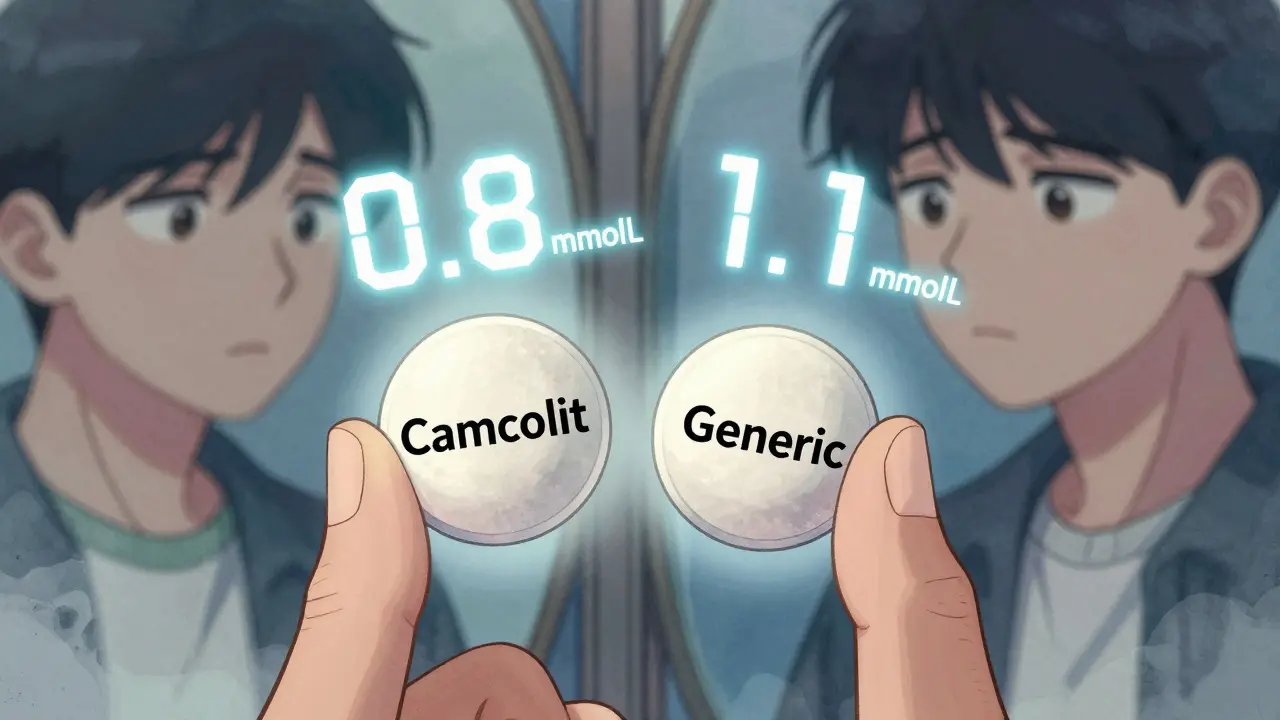
When you're managing bipolar disorder with lithium carbonate, it's not just about taking a pill. The difference between feeling stable and slipping into depression or mania can come down to a tiny number: your serum lithium level. And if you're on a generic version, that number can shift unexpectedly-even if your doctor didn't change your dose.
Why Generic Lithium Isn't Always Interchangeable
Lithium carbonate is one of the oldest and most effective mood stabilizers for bipolar disorder. But unlike many other medications, not all generic versions are created equal when it comes to how your body absorbs them. While the FDA requires generics to be bioequivalent to the brand-name drug, that doesn't mean they behave the same in your bloodstream. Take Camcolit and Priadel, two common sustained-release formulations. A 2024 study found that patients switched from one to the other ended up with 11% higher average serum lithium levels-even when the daily dose stayed the same. That might not sound like much, but in lithium therapy, even a 0.2 mmol/L change can push you from safe to toxic. Why does this happen? It’s all about how the tablet breaks down. Some generics release lithium slowly over hours. Others let it flood your system faster. Even small differences in coating, filler, or particle size change how quickly lithium enters your blood. For someone on a tight therapeutic window, that’s enough to cause side effects-or worse, trigger a relapse.The Narrow Window: What Your Serum Level Should Be
Lithium has one of the narrowest therapeutic indexes in all of medicine. That means the difference between a helpful dose and a dangerous one is razor-thin. For most adults, the target range is 0.6 to 1.2 mmol/L. But that’s not one-size-fits-all:- 0.6-0.8 mmol/L: Often used for long-term maintenance, especially in older adults or those with kidney issues.
- 0.8-1.0 mmol/L: Recommended for acute episodes or when symptoms are still present.
- Above 1.2 mmol/L: Risk of toxicity rises sharply. Levels over 1.5 mmol/L can cause tremors, confusion, and kidney damage. Above 2.0 mmol/L? That’s a medical emergency.
When and How to Check Your Levels
Getting your blood drawn at the wrong time can give you a false reading. Timing matters.- If you take lithium twice a day, your blood should be drawn 12 hours after your last dose. That’s when your level stabilizes.
- If you take it once daily (common with extended-release versions), the blood test should be done 24 hours after your last dose.
Who’s at Higher Risk?
Not everyone needs the same lithium level. Certain factors change how your body handles it:- Age over 60: Kidneys clear lithium slower. Many experts recommend lowering targets by 20-25% for older adults.
- Women: On average, women need lower doses than men-about 96 mg less per day-due to differences in body weight and fluid balance.
- People with kidney disease: Lithium is cleared by the kidneys. If your eGFR drops below 45 mL/min, your doctor should reduce your dose or consider alternatives.
- Those on diuretics or NSAIDs: Medications like ibuprofen, hydrochlorothiazide, or ACE inhibitors can cause lithium to build up dangerously. Always check with your doctor before starting any new drug.
What You Should Monitor Beyond Blood Levels
Lithium doesn’t just affect your brain. It impacts your whole body. Regular monitoring isn’t optional-it’s essential.- Thyroid function: Up to 15% of long-term users develop hypothyroidism. Get a TSH test every 6 months.
- Kidney function: Check serum creatinine and eGFR every 3-6 months. Some guidelines now recommend adding cystatin C for more accurate kidney assessment.
- Electrolytes: Sodium levels matter. Low salt intake (like on a low-sodium diet) can cause lithium to accumulate. Don’t cut salt without talking to your doctor.
- Weight and hydration: Losing weight or becoming dehydrated (from illness, heat, or exercise) can spike lithium levels. Drink water consistently, especially in summer.
What Happens When You Switch Generics?
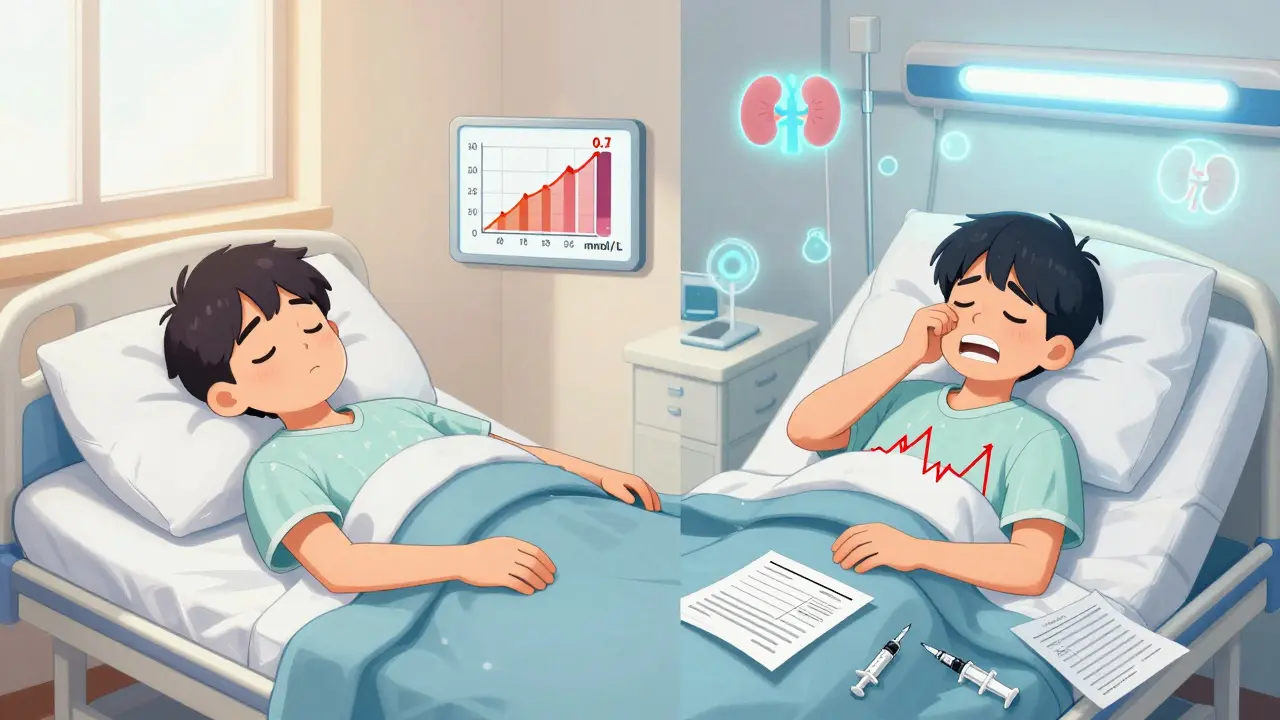
Pharmacists can legally swap your brand-name lithium for a generic without telling you. But if you’ve been stable for years, that switch could throw you off. In one case, four patients in a UK study had lithium levels spike to 1.32-1.88 mmol/L after their pharmacy switched their prescription to a different generic. All four developed symptoms: tremors, nausea, and dizziness. One needed hospitalization. Never assume a generic is interchangeable. If your pharmacy changes your pill, even if it’s still called “lithium carbonate,” ask your doctor to check your serum level within 1-2 weeks.
Why Some Doctors Still Prefer Brand-Name Lithium
Yes, generics cost less. But brand-name versions like Priadel and Camcolit come with detailed pharmacokinetic data. Their release profiles are consistent across batches. Generic manufacturers don’t always publish that information. A 2023 FDA draft guidance now requires manufacturers of extended-release lithium to prove equivalence through real-world blood tests-not just lab simulations. That’s a step forward. But until every generic is held to that standard, sticking with one brand (or one generic) is the safest bet.What’s Changing in 2025?
New research is making lithium therapy smarter. The International Consortium on Lithium Genetics (ConLiGen) has identified over 30 genes linked to how people respond to lithium. Some people naturally clear lithium faster. Others hold onto it longer. Several hospitals in the UK and US are now testing AI tools that use your age, weight, kidney function, and genetic markers to predict your ideal dose. In trials, these tools reduced the number of blood draws needed by 40% while keeping levels more stable. But until those tools are widely available, the old rules still apply: know your level. Know your pill. Know your body.What to Do If You’re on Lithium
Here’s your simple action plan:- Know which brand or generic you’re on. Write it down. Don’t let your pharmacy switch it without telling you.
- Get your serum lithium level checked every 3-6 months-more often if you’re adjusting doses or feeling off.
- Always test at the same time of day, 12 or 24 hours after your last dose.
- Keep a log: date, dose, level, symptoms (tremors, thirst, fatigue).
- Report any new meds, weight changes, or illness to your doctor immediately.
- Never stop lithium cold turkey. Tapering must be done slowly under supervision.
Lithium isn’t perfect. But for many people with bipolar disorder, it’s the most reliable tool they have. The key isn’t avoiding it-it’s mastering it. And that means paying attention to the numbers, not just the pills.
Can I switch between different lithium carbonate generics without checking my blood level?
No. Even if two generics have the same milligram dose, they can release lithium at different rates. Switching brands without checking your serum level can lead to toxicity or loss of effectiveness. Always ask your doctor to test your lithium level 1-2 weeks after any switch.
Why do I need to check my lithium level so often if I feel fine?
Lithium levels can rise slowly over time due to aging, reduced kidney function, or changes in diet and hydration. You might not feel symptoms until your level is dangerously high. Regular checks catch changes before you have a crisis.
Is lithium still used today, or are newer drugs better?
Lithium remains a first-line treatment for bipolar I disorder, especially for preventing suicide and long-term relapse. While newer drugs exist, none have matched lithium’s proven track record for preventing manic and depressive episodes over decades. About 60% of long-term bipolar patients still take it.
Can I take ibuprofen or other painkillers while on lithium?
Avoid NSAIDs like ibuprofen, naproxen, or diclofenac unless approved by your doctor. These drugs reduce kidney clearance of lithium, causing levels to rise quickly. Acetaminophen (paracetamol) is safer for pain relief.
What are the early signs of lithium toxicity?
Early signs include fine hand tremors, increased thirst, frequent urination, nausea, mild confusion, or muscle weakness. If you notice these, stop taking lithium and contact your doctor immediately. Severe symptoms like seizures, irregular heartbeat, or loss of consciousness require emergency care.
Do I need to avoid salt or fluids while on lithium?
No-don’t restrict salt or fluids. In fact, sudden drops in sodium intake (like on a crash diet) can cause lithium to build up in your blood. Eat normally and drink water consistently. Avoid dehydration, especially in hot weather or during illness.
Can lithium cause weight gain or thyroid problems?
Yes. Up to 50% of users gain weight over time, and 5-15% develop hypothyroidism. Regular thyroid tests (TSH every 6 months) can catch this early. If your thyroid slows down, you may need a simple hormone replacement-this doesn’t mean you have to stop lithium.
Is lithium safe for older adults?
Yes, but with caution. Older adults clear lithium more slowly and are more sensitive to side effects. Many doctors aim for lower targets-0.4-0.6 mmol/L-for patients over 60. More frequent monitoring is essential.
If you’re on lithium, you’re not alone. Thousands of people manage bipolar disorder with it every day. The key isn’t fear-it’s awareness. Know your numbers. Know your pill. And never stop checking.

Ian Glover
My name is Maxwell Harrington and I am an expert in pharmaceuticals. I have dedicated my life to researching and understanding medications and their impact on various diseases. I am passionate about sharing my knowledge with others, which is why I enjoy writing about medications, diseases, and supplements to help educate and inform the public. My work has been published in various medical journals and blogs, and I'm always looking for new opportunities to share my expertise. In addition to writing, I also enjoy speaking at conferences and events to help further the understanding of pharmaceuticals in the medical field.
9 Comments
-
Jasmine Yule
December 31, 2025 AT 01:37THIS. I’m so tired of pharmacies swapping my Priadel for some mystery generic and acting like it’s no big deal. I’ve been stable for 7 years. Then BAM-nausea, tremors, brain fog. I had to go to the ER. Don’t let them play russian roulette with your mental health. Demand a level check after any switch. 💪
-
Greg Quinn
December 31, 2025 AT 16:18It’s funny how we treat lithium like it’s just another pill. But it’s not. It’s a scalpel-precise, delicate, and dangerous if misused. The body doesn’t care if it’s branded or generic. It only cares about what enters the bloodstream. And that’s why we need real-world data, not just lab simulations. We’re not just treating bipolar-we’re dancing with chemistry. And chemistry doesn’t care about your insurance plan.
-
Lisa Dore
January 1, 2026 AT 19:17Hey everyone, I just wanted to say-you’re not alone in this. I’ve been on lithium for 12 years, and yes, I track my levels religiously. I keep a little notebook: date, dose, how I’m feeling, even what I ate that day. It’s weird, but it helps. And if you’re switching generics? Just email your prescriber. They’ll get it. Seriously. We’ve all been there. You got this. 🌱
-
Sharleen Luciano
January 3, 2026 AT 18:23It’s almost embarrassing that we still have to fight for basic pharmacokinetic consistency in 2025. The FDA’s draft guidance is a start, but it’s laughably inadequate. If you’re taking lithium and not using a branded formulation with published release profiles, you’re essentially participating in an unregulated clinical trial. And for what? A $3 copay? Please. Your brain deserves better than cost-cutting compromises. This isn’t aspirin.
-
Jim Rice
January 5, 2026 AT 02:29So you’re telling me I can’t just take whatever generic is cheapest? That’s ridiculous. I’ve been on three different generics and I feel fine. Your doctor is just being paranoid. Maybe you’re just anxious. Stop overthinking it. People have been taking lithium since the 50s without all this fuss. Chill.
-
Henriette Barrows
January 5, 2026 AT 15:47Jim, I hear you-but I lost a friend to lithium toxicity after a pharmacy switch. She felt fine too. Until she didn’t. It’s not paranoia. It’s precaution. And honestly? If you’re on lithium, you’ve already survived enough. Why risk it? Just get the test. It’s a quick blood draw. Not a big deal. You’re worth it.
-
Alex Ronald
January 6, 2026 AT 15:34For anyone on extended-release lithium: if you take it once daily, make sure your blood draw is at 24 hours. I’ve seen so many people get tested at 12 hours and panic over a falsely low number. That leads to unnecessary dose increases-and then toxicity. Timing matters more than people think. Also, if you’re over 60? Ask for a lower target. Your kidneys aren’t what they used to be. And that’s okay. We adapt.
-
Teresa Rodriguez leon
January 8, 2026 AT 15:32I’ve been on lithium for 15 years. I’ve had thyroid issues, weight gain, kidney scares. I’ve cried in doctor’s offices. I’ve been hospitalized. I’ve been stable. I’ve been broken. And I still take it. Because it’s the only thing that’s kept me alive. So yes-I check my levels. Yes-I track my sodium. Yes-I refuse to let a pharmacist swap my pills. This isn’t about fear. It’s about survival. And if you’re not doing the same? You’re playing with fire.


Write a comment
More Articles

Ampicillin and biofilms: Can it help break down bacterial communities?
In my latest research, I came across an interesting topic about Ampicillin and its potential role in breaking down bacterial communities known as biofilms. Biofilms are notorious for their resistance to antibiotics, making infections difficult to treat. Ampicillin, a widely used antibiotic, has shown some promise in disrupting these communities. Studies have suggested that it could weaken the biofilm structure, making it easier for other antibiotics to penetrate and eliminate the bacteria. It's fascinating to think that a common antibiotic like Ampicillin might be the key to tackling these stubborn bacterial communities!


Himanshu Singh
December 29, 2025 AT 20:09man i just switched generics last month and thought i was fine til i started getting shaky hands and drinking like a camel 😅 turns out my level jumped to 1.3-thank god i checked. never assume the pill looks the same means it works the same. write it down, folks.