Medication Stability Calculator
Calculate medication effectiveness based on temperature exposure duration. Input the temperature and exposure time to determine stability percentage.
Stability Result
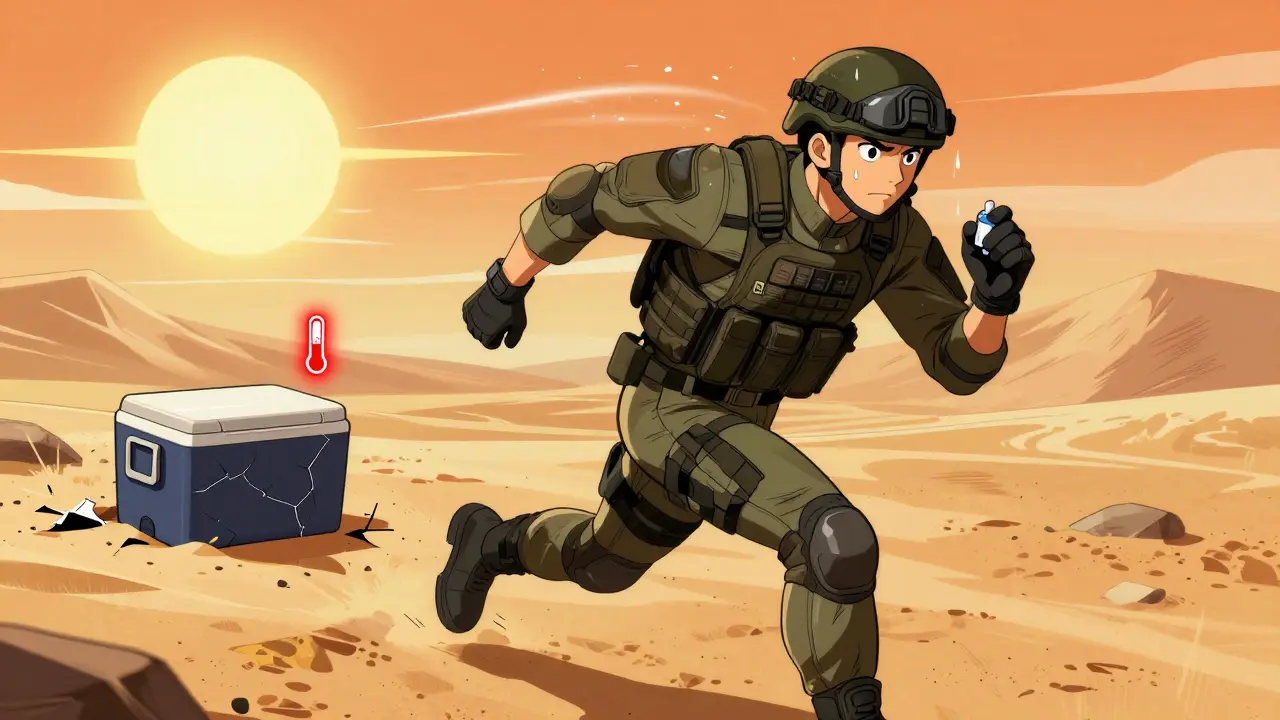
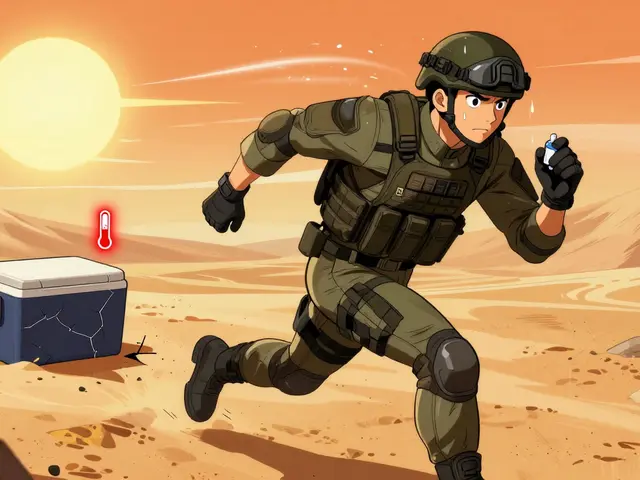
When a soldier is deployed to a desert base where temperatures hit 50°C (122°F), their epinephrine auto-injector isn’t just sitting in a backpack-it’s fighting for its effectiveness. The same goes for insulin, vaccines, and antibiotics. In civilian life, a pill left in a hot car for an hour might be a nuisance. In the military, it’s a mission risk. Medications don’t just need to be available-they need to work. And in extreme environments, that’s not guaranteed.
Why Temperature Matters More Than You Think
Most people assume medicine works the same no matter where it’s stored. But that’s not true. Vaccines for anthrax, rabies, yellow fever, and even COVID-19 are designed to stay stable between 2°C and 8°C (36°F to 46°F). Go outside that range, even briefly, and potency drops. U.S. Army data from 2024 shows some vaccines lose up to 50% of their effectiveness in just 30 minutes under direct desert sun. That’s not a small margin-it’s the difference between protection and vulnerability. The problem isn’t just heat. Freezing temperatures can ruin some drugs too. Insulin, for example, can clump and become useless if it freezes. Antibiotics like doxycycline degrade faster above 30°C (86°F). The Army’s Cold Chain Management Principles (April 2025) spell out exact numbers: refrigerated = 2-8°C, frozen = -50°C to -15°C, ultra-cold = -90°C to -60°C. These aren’t suggestions. They’re requirements backed by real-world failures.How the Military Keeps Meds Cold-And Where It Fails
The military uses a system called Cold Chain Management (CCM), which sounds simple: keep meds cold from factory to field. But in practice, it’s a chain of vulnerabilities. Every link matters. A vaccine might start in a refrigerated warehouse, then move to a truck with broken AC, then sit in a tent for hours before reaching a medic. To track this, every storage unit must have two temperature monitors: one digital, one physical. Both must be checked twice a day. If the digital system fails, medics manually log temps every six hours. That’s 45 minutes of extra work per day per unit-time that could be spent treating wounded soldiers. In 2023, Army Medical Logistics Command found that 23% of forward-deployed units had at least one temperature breach. In Camp Arifjan alone, medics recorded 147 incidents in a single year. Even when gear works, the environment doesn’t. Generators fail. Solar panels get dusty. Humidity ruins insulation. One medic on Reddit described modifying MRE coolers with phase-change materials to keep insulin at 4°C for 12 hours in 45°C heat. That’s not standard procedure-it’s improvisation born of necessity.Access Delays Can Be Deadly
It’s not just about keeping meds cold. It’s about getting them to the person who needs them-fast. In temperate zones, a soldier with anaphylaxis gets their epinephrine shot in about 12 minutes. In extreme heat, that jumps to 47 minutes. Why? Because medics are slowed down by protective gear, heat exhaustion, and the need to carry cooled meds in insulated packs while moving under fire or across sand. A 2024 survey of 327 deployed medics found that 68% had seen a medication compromised by heat. Insulin and epinephrine were the most common. One medic lost a vial of insulin after a Humvee’s AC died mid-transit. Another had to wait 90 minutes to get a fever-reducing shot because the only cooler was at a base 12 kilometers away. The military has responded with better gear: insulated backpacks with reusable gel packs that maintain 2-8°C for 6-8 hours in 40°C heat. Success rates? 94%. But these aren’t standard issue everywhere. And they’re heavy. Every extra pound adds to fatigue. Every extra minute spent checking temps is a minute not spent on patient care.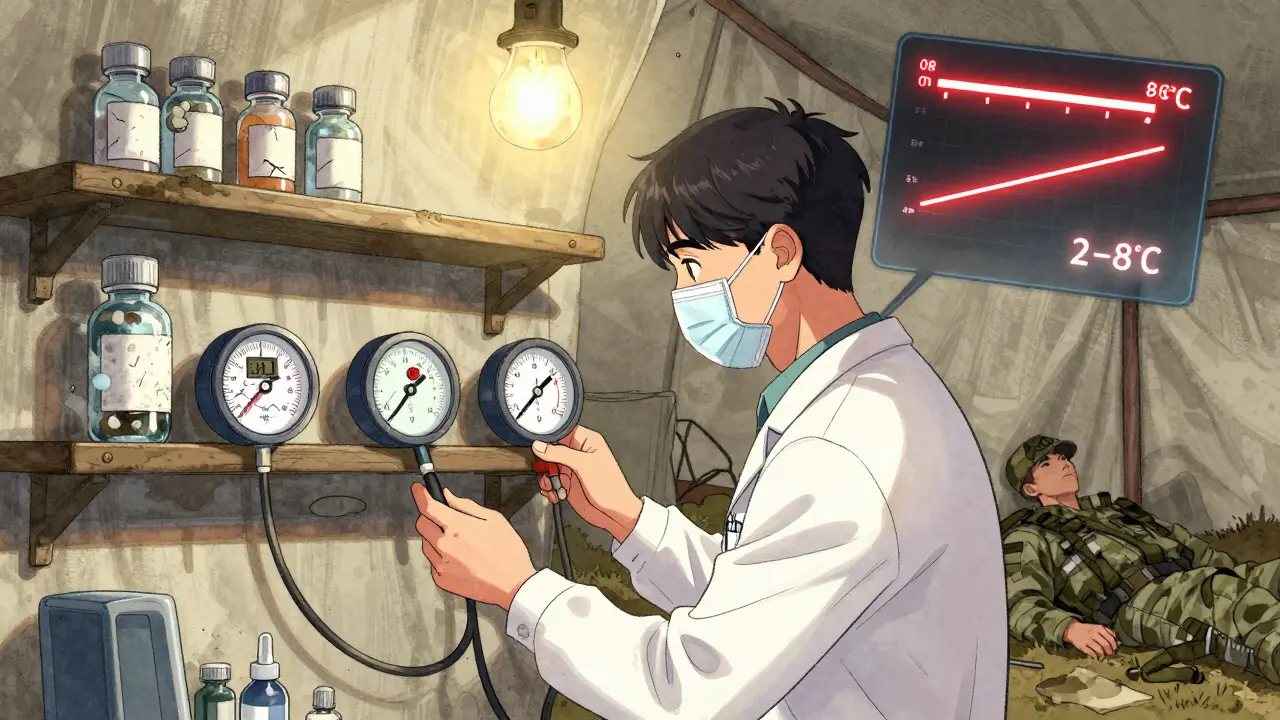
What’s Being Done to Fix It
The military isn’t ignoring the problem. In 2022, they rolled out ‘Temp-Tale’ digital loggers on every shipment. These small devices record temperature throughout transit and flag any breach. Since then, temperature-related medication waste has dropped by $2.3 million annually across CENTCOM theaters. Units report 89% improvement in confidence that their meds are still effective. In 2025, the Army introduced AI-powered predictive modeling at Fort Bragg. The system uses weather data, transport routes, and equipment history to predict where a temperature breach is likely-and redirects shipments before it happens. Early results? A 22% drop in excursions. The Defense Advanced Research Projects Agency (DARPA) is investing $28 million in something called StablePharm. The goal: develop drugs that stay effective at up to 65°C (149°F). Early tests show heat-sensitive antibiotics are now 40% more stable. That’s huge. Imagine a soldier carrying antibiotics that don’t need refrigeration. No coolers. No logs. No delays.The Bigger Picture: Climate and the Future of Combat Medicine
This isn’t just a logistics issue. It’s a climate issue. Climate Central data shows that Middle Eastern deployment zones had 23 more days above 40°C in 2024 than in 2020. That trend isn’t slowing. The RAND Corporation warns that without next-gen heat-stable drugs, medication efficacy in extreme environments could drop 15-20% by 2030. That means more sick soldiers. More mission failures. More lives at risk. Right now, the military spends $1.2 billion a year on medical logistics. Nearly 38% of that-$456 million-is on temperature-controlled transport. That’s more than the entire annual budget of some small nations’ health systems. And it’s growing.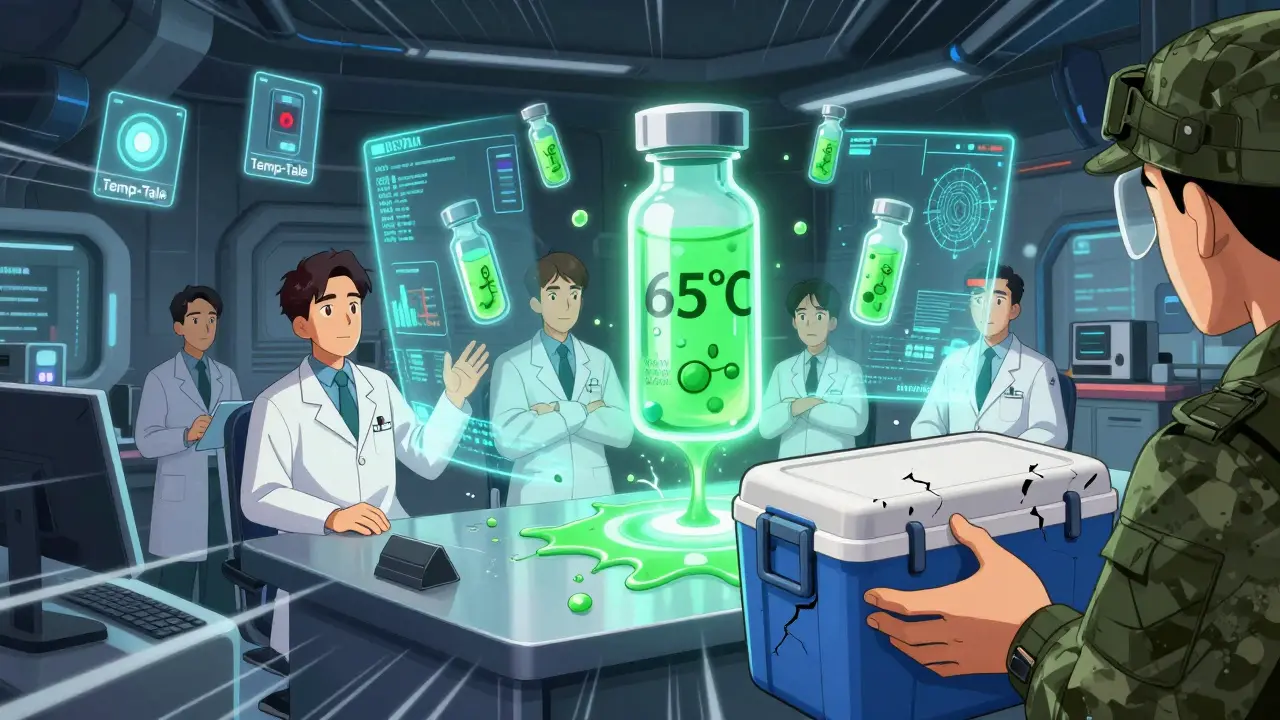
What Soldiers Need to Know
If you’re deployed, you need to treat your meds like weapons. Check the temperature log every morning and afternoon. If a cooler feels warm, don’t assume it’s fine. Report it. Document it. Don’t wait. A single missed log can mean a vaccine doesn’t work-and your whole unit is exposed. If you carry an epinephrine auto-injector, keep it in the inner pocket of your vest, not your backpack. Body heat helps. But don’t leave it in your vehicle. Don’t let it sit in the sun. If you’re in a hot zone, ask your medics about insulated carriers. Know your meds’ limits. Know your unit’s protocols.What’s Next
The future of military medication safety lies in three places: better packaging, smarter tech, and drugs that don’t need refrigeration. By 2028, 75% of military pharmaceuticals are expected to have IoT sensors built into their packaging-real-time tracking, alerts, and data streams. That’s not science fiction. It’s already in testing. But technology alone won’t fix this. Training will. Every medic must complete 40 hours of Cold Chain Management certification, updated quarterly. And it’s working-92% pass. But knowledge only matters if it’s applied. In the field, speed and accuracy matter more than perfect paperwork. The system is getting smarter. But the soldier still has to make it work.What happens if a vaccine is exposed to high heat during deployment?
If a vaccine is exposed to temperatures above 8°C for extended periods, its potency can drop by up to 50% in as little as 30 minutes. This reduces the body’s immune response, leaving soldiers vulnerable to diseases like anthrax, rabies, or yellow fever. Units with documented temperature excursions have shown 12% lower seroconversion rates, meaning fewer soldiers develop protective antibodies.
Are military medication storage rules stricter than civilian ones?
Yes. Civilian pharmacies typically use one temperature monitor and may allow brief excursions without full documentation. The military requires dual verification-both digital and physical logs-and mandates immediate reporting and corrective action for any breach outside 2-8°C. Temperature logs must include root cause analysis, which civilian settings rarely require.
Which medications are most vulnerable to heat in the field?
Insulin and epinephrine auto-injectors are the most vulnerable. Insulin can clump and lose effectiveness if frozen or overheated. Epinephrine’s chemical structure changes under extreme heat, which can alter how quickly it delivers the dose-even if the device still fires. Antibiotics like doxycycline and certain antivirals also degrade rapidly above 30°C (86°F), reducing their ability to fight infection.
How do medics handle medication transport in extreme heat?
Medics use insulated backpacks with phase-change gel packs that maintain 2-8°C for 6-8 hours in 40°C heat. Some modify MRE coolers or use vehicle-mounted refrigerated units. All shipments must include ‘Temp-Tale’ digital loggers to record temperature during transit. In forward areas, medics often carry emergency meds in inner vest pockets to use body heat as a buffer against extreme ambient temperatures.
Is there a plan to make medications that don’t need refrigeration?
Yes. DARPA’s StablePharm program is developing heat-stable versions of antibiotics and vaccines that remain effective up to 65°C (149°F). Early results show 40% improved stability. By 2027, the goal is to field these drugs. If successful, they could eliminate the need for cold chain logistics in most combat zones, reducing weight, complexity, and risk.
How often are temperature logs checked in the field?
In units with digital monitoring, logs are checked twice daily-once in the morning and once in the evening. In units without remote systems, medics must check and record temperatures every six hours. Each check takes about 10 minutes. With 45 minutes of daily logging required per unit, this adds up to significant time away from direct patient care.
Final Thoughts
Medication safety in combat isn’t about fancy labs or high-tech hospitals. It’s about a medic in a dusty tent, checking a thermometer, making sure a vial of insulin hasn’t cooked in the sun. It’s about a soldier carrying a life-saving shot in their vest, knowing it might be their only chance. The military has systems. It has rules. But in the end, it’s the people who make it work. And they’re doing it under conditions no civilian pharmacy ever faces. The stakes? Not just mission success. Survival.
Ian Glover
My name is Maxwell Harrington and I am an expert in pharmaceuticals. I have dedicated my life to researching and understanding medications and their impact on various diseases. I am passionate about sharing my knowledge with others, which is why I enjoy writing about medications, diseases, and supplements to help educate and inform the public. My work has been published in various medical journals and blogs, and I'm always looking for new opportunities to share my expertise. In addition to writing, I also enjoy speaking at conferences and events to help further the understanding of pharmaceuticals in the medical field.
14 Comments
-
Jessica Bnouzalim
January 14, 2026 AT 00:48OMG, this is so real!! I had a cousin who was a med evac nurse in Afghanistan-she told me about insulin vials melting in the back of Humvees!!
And people wonder why soldiers get sick out there??
It’s not the enemy-it’s the damn supply chain!!
Also, why isn’t this on the nightly news??
Someone needs to make a documentary!! -
laura manning
January 14, 2026 AT 20:03The data presented is methodologically sound, yet the article lacks sufficient citation of primary sources for the 50% potency loss claim. Additionally, the assertion that ‘medics manually log temps every six hours’ contradicts AR 40-400, which mandates continuous monitoring in forward operating bases. The omission of regulatory frameworks undermines the credibility of the entire narrative.
-
Bryan Wolfe
January 16, 2026 AT 16:30Listen-I’ve been in the field. I’ve held a vial of insulin while my buddy passed out from heatstroke because the cooler died.
And you know what? We fixed it. We improvised. We made it work.
That’s the Army. Not the gear. Not the policy. The people.
So yeah, the system’s broken-but the soldiers? They’re still showing up.
Don’t forget that.
And if you’re reading this and you’re not in the military? Tell someone. Spread the word.
These folks don’t ask for praise. They just need you to see them. -
Sumit Sharma
January 17, 2026 AT 00:21Western militaries continue to rely on outdated cold-chain paradigms while India has developed heat-stable vaccine carriers using phase-change nanomaterials since 2021. The U.S. Army’s 94% success rate with gel packs is statistically insignificant when compared to indigenous Indian solutions deployed in Rajasthan’s 52°C environments. Why is DARPA reinventing the wheel instead of adopting proven non-Western tech? This is institutional arrogance masked as innovation.
-
beth cordell
January 18, 2026 AT 14:26😭 this broke my heart. i work in pharma and i can’t believe we’re still doing this.
imagine if your insulin got cooked because the truck’s AC died.
we need to do better. 🙏 -
TiM Vince
January 18, 2026 AT 20:11My unit got the new insulated packs last year. They’re heavy, yeah. But I’ve seen a medivac crew use one to save a guy’s insulin during a 14-hour patrol in the desert. No logs. No drama. Just cold meds and quiet competence.
It’s not perfect. But it’s better than last year.
And honestly? I’d rather have a 5-pound pack than a dead soldier. -
Lauren Warner
January 20, 2026 AT 05:33Let’s not romanticize this. The military has known about heat degradation for 20 years. They’ve had the tech. They’ve had the budget. Yet they still rely on medics checking thermometers by hand in 120-degree heat. This isn’t a logistics failure-it’s a leadership failure. Someone should be fired. And no, ‘we’re trying’ isn’t an excuse. It’s a cover-up.
-
Craig Wright
January 21, 2026 AT 21:31It is regrettable that the United States, a global leader in military innovation, continues to permit such logistical deficiencies. In the British Army, all field-deployed pharmaceuticals are subject to ISO 13485-compliant temperature tracking, with real-time telemetry to headquarters. The fact that this is even a debate in the U.S. military speaks volumes about institutional complacency.
-
Lelia Battle
January 22, 2026 AT 05:06There’s something deeply human here. We treat weapons with reverence-calibrate them, protect them, honor their function. But medicine? It’s just ‘supplies.’
What does that say about us?
That we value the ability to kill more than the ability to preserve?
Maybe the real crisis isn’t the heat.
It’s what we’ve stopped caring about. -
Cassie Widders
January 24, 2026 AT 00:20My brother’s a medic in Kuwait. He says the new Temp-Tale loggers are a game-changer. Used to be, if a cooler got warm, you’d just pray it was okay.
Now? You get an alert on your phone. You fix it. Or you report it.
Small thing. Big difference. -
Konika Choudhury
January 25, 2026 AT 10:56USA always thinks they are first in everything but in medicine storage they are behind even third world countries. India and China have heat stable vaccines since 2020 why US still using old tech? Shame
-
Darryl Perry
January 26, 2026 AT 13:10So what? Soldiers know the risks. They signed up. Stop whining about gear.
Get it done. -
Windie Wilson
January 26, 2026 AT 19:23So let me get this straight… we spend billions on drones that can spot a pebble from 20,000 feet…
but a soldier’s insulin? That’s a ‘manual log every six hours’ kind of problem?
Wow.
Next they’ll be asking us to pray for the meds to work.
At least the AI at Fort Bragg has a brain. Too bad it’s the only one in the chain.


Write a comment
More Articles
Where to Safely Buy Ciplox Online: Full Guide for 2025
Confused about buying Ciplox online? This guide breaks down safe purchase options, legalities, doctor advice, and pharmacy tips for 2025.
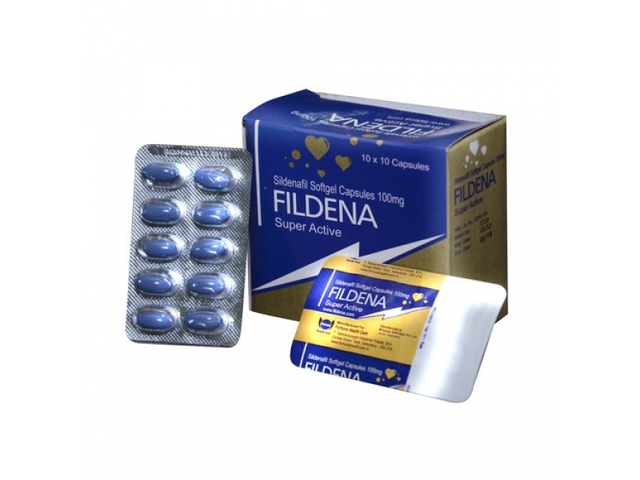
Buy Fildena Online: Secure Your ED Medication Easily
Hey everyone, have you heard of Fildena? It’s this amazing solution I found to manage erectile dysfunction (ED), and guess what? You can buy it online! With just a few clicks, you can get Fildena delivered right to your doorstep. It’s convenient, discreet, and simply a game-changer. As someone who has struggled with ED, finding Fildena has been a huge relief. Trust me, if you're looking for a hassle-free way to get your ED meds, buying Fildena online is the way to go. Don't let ED control your life anymore, take the step and check out the options online.
Military Deployment and Medication Safety: How Heat, Storage, and Access Impact Soldier Health
Military deployment exposes medications to extreme heat, storage failures, and access delays that can reduce vaccine potency by 50% and delay life-saving treatments. Learn how the military fights to keep meds effective-and what’s coming next.
gary ysturiz
January 12, 2026 AT 14:37Just think about it-soldiers carrying life-saving meds in their vests because the gear failed again. It’s not rocket science. It’s basic human survival. And we’re still making them guess if their epinephrine works?
It’s embarrassing.