Patient Safety Goals: What They Are and How They Keep You Safe
When you take a pill, get an injection, or start a new treatment, patient safety goals, a set of standardized practices designed to prevent harm during medical care. Also known as national patient safety initiatives, these goals are the quiet rules hospitals and pharmacies follow to stop mistakes before they happen. They’re not just paperwork—they’re the reason your pharmacist checks your meds twice, why nurses verify your name before giving you anything, and why your doctor asks if you’re allergic to penicillin even if you’ve said it five times before.
These goals directly connect to adverse drug reactions, harmful or unintended effects from medications, which are one of the top causes of hospital injuries. The Naranjo Scale, used by clinicians to judge if a side effect was caused by a drug, is one tool that feeds into these safety systems. You’ll see this in posts about azithromycin interactions, statin-related diabetes risk, or how systemic antifungals can spike statin levels to dangerous points. Patient safety goals force providers to track these risks, document them, and adjust treatment before someone gets hurt.
They also tackle healthcare errors, mistakes in prescribing, dispensing, or administering treatment—like giving the wrong dose, mixing up drugs with similar names, or missing dangerous food-drug combos. That’s why you’ll find guides on creating your own food and medication checklist, understanding expiration dates, or comparing generic cancer drugs. These aren’t just tips—they’re responses to real failures that led to national safety standards. For example, if a patient on warfarin eats too much kale without knowing, it could cause bleeding. Patient safety goals push for better communication, clearer labels, and patient education to prevent that.
And it’s not just about drugs. Patient safety goals cover everything from infection control in hospitals—like stopping candidemia outbreaks—to how nurses handle corticosteroid tapers to avoid adrenal crash. They make sure that when you’re on hydroxyurea and your bones are at risk, or when you’re using brimonidine for glaucoma and your skin reacts, someone’s watching for those signals. It’s why FDA inspection records matter: they show if a drug maker cut corners that could put you in danger.
What you’ll find here isn’t theory. It’s the real-world impact of those goals—how they show up in your asthma inhaler, your heart medication, your pregnancy-safe antacid, or your hair-loss treatment. These posts don’t just explain side effects. They show you how safety systems try—and sometimes fail—to protect you. And more importantly, they give you the tools to speak up, check details, and take control before something goes wrong.
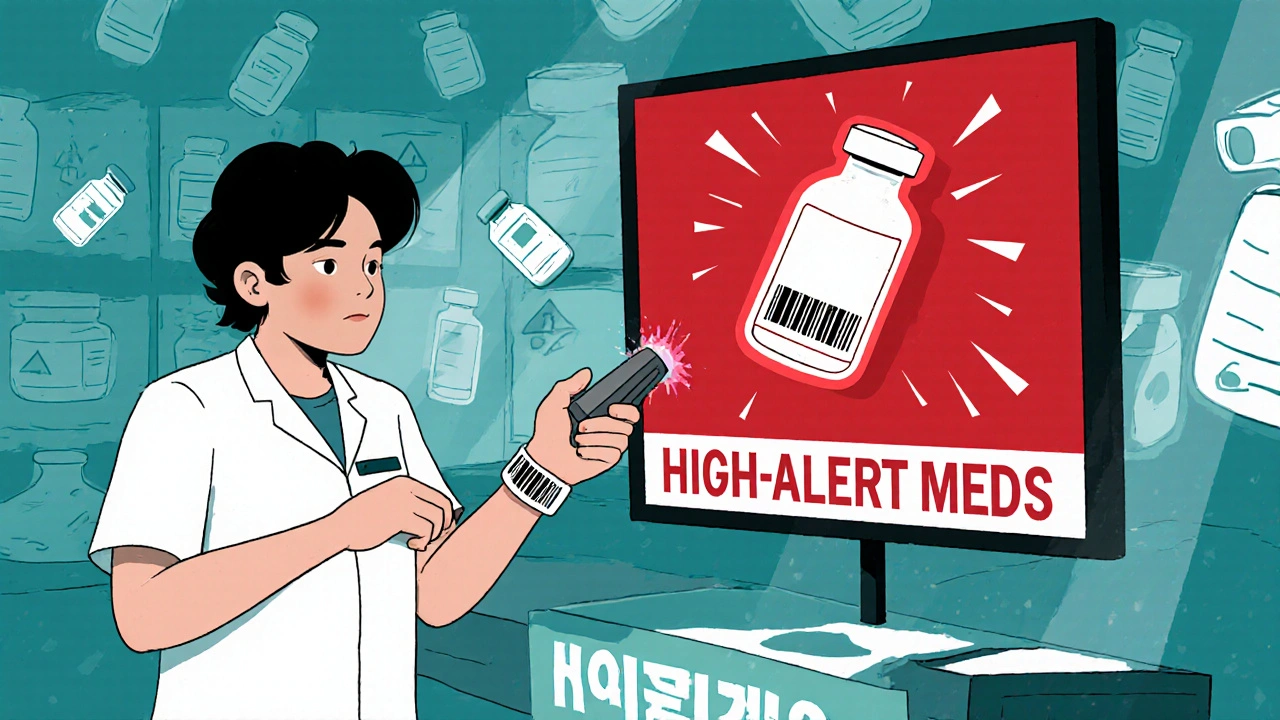
Patient Safety Goals in Medication Dispensing and Pharmacy Practice: How to Prevent Errors and Save Lives
Discover the real-world safety goals that prevent medication errors in pharmacies and hospitals. Learn how barcode scanning, high-alert drug controls, and system redesign-not just training-save lives.