Pharmacy Dispensing Errors: What They Are, Why They Happen, and How to Prevent Them
When a pharmacy dispensing error, a mistake made when handing out medication to a patient. Also known as medication errors, it can mean getting the wrong drug, the wrong dose, or even the wrong patient. These aren’t just paperwork glitches—they’re real risks that can land you in the hospital or worse. Every year, hundreds of thousands of people in the U.S. alone are harmed because someone at the pharmacy mixed up pills, misread a script, or skipped a safety check. And it’s not always the pharmacist’s fault. Busy workflows, similar-looking drug names, poor handwriting on old prescriptions, and rushed interactions all play a part.
One of the biggest culprits is drug interactions, when two or more medications react badly together. You might get the right pill, but if your pharmacist doesn’t see you’re also on warfarin or a statin, that new antibiotic could turn deadly. Then there’s expiration dates, the timeline that tells you when a drug is no longer safe or effective. Some pharmacies put their own "beyond-use" labels on compounded meds—dates that aren’t the same as the manufacturer’s. If you don’t know the difference, you might be taking something that’s lost its power—or turned toxic.
And it’s not just about pills. Think about inhalers. A patient with asthma might get the right device, but if the dose is wrong or the technique isn’t explained, the medicine won’t work—and their condition could spiral. Or take calcium supplements, commonly used for bone health but easily confused with other pills. If someone with kidney issues gets calcium carbonate instead of citrate, it could cause dangerous mineral buildup. These aren’t rare edge cases. They’re happening in pharmacies you trust, every day.
What’s scary is how often these mistakes go unnoticed. You might not feel anything right away. Maybe your headache doesn’t go away. Maybe you feel more tired than usual. Maybe your blood sugar creeps up after starting a new statin. These are signals—red flags that something’s off. And if you’re not checking your meds against a personal checklist, or asking your pharmacist to walk you through what you’re taking, you’re flying blind.
The good news? You don’t have to be a victim. You can protect yourself. Know your meds. Ask questions. Keep a list. Compare labels. Double-check expiration dates. If something looks different, say something. The system isn’t perfect—but you can be the last line of defense. Below, you’ll find real stories and practical guides from people who’ve been there: how to spot a wrong prescription, how to read a beyond-use date, how to catch a dangerous interaction before it’s too late. These aren’t theoretical tips. They’re tools that saved lives.
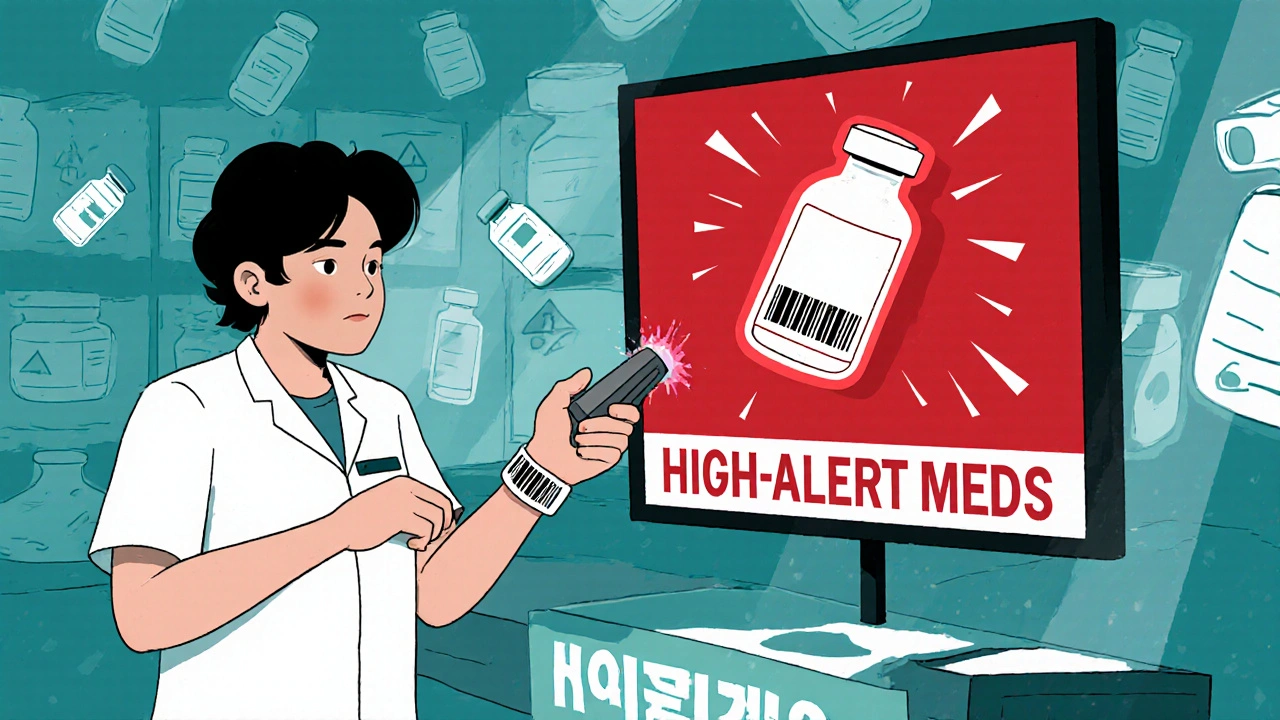
Patient Safety Goals in Medication Dispensing and Pharmacy Practice: How to Prevent Errors and Save Lives
Discover the real-world safety goals that prevent medication errors in pharmacies and hospitals. Learn how barcode scanning, high-alert drug controls, and system redesign-not just training-save lives.