Symptom Control: How to Manage Side Effects and Improve Daily Life with Medications
When you take a medication, you’re not just treating the main problem—you’re also dealing with its symptom control, the process of managing unwanted effects caused by drugs to improve comfort and daily function. Also known as side effect management, it’s not about stopping the medicine, but making it work better for your life. Many people stop taking their meds because of nausea, fatigue, dizziness, or skin reactions. But symptom control isn’t about toughing it out. It’s about knowing what’s normal, when to speak up, and how to adjust safely.
adverse drug reactions, harmful or unintended responses to medications at normal doses are common, and they show up in ways you might not expect. A statin might cause muscle pain, an asthma inhaler could lead to thrush, and a heart rhythm drug might make you feel tired all the time. These aren’t random—they’re predictable patterns. Tools like the Naranjo Scale, a clinical tool used to assess whether a reaction is likely caused by a drug help doctors figure out if your symptoms are from the medicine or something else. And when you know the difference, you can ask the right questions: Is this normal? Can we lower the dose? Is there a safer alternative?
Symptom control also means watching for drug interactions, when one medicine changes how another works in your body. A common antifungal might boost statin levels to dangerous points. Grapefruit juice can turn a simple pill into a risk. Even something as simple as calcium supplements can interfere with thyroid meds. These aren’t theoretical—they’re daily realities in pharmacies and homes. That’s why creating a personal food and medication interaction checklist isn’t just smart—it’s life-saving.
Good symptom control doesn’t happen by accident. It’s built on knowing your body, tracking changes, and working with your pharmacist or doctor. It’s why someone on hydroxyurea needs to monitor bone health. Why someone on corticosteroids must taper slowly. Why heartburn meds during pregnancy need careful selection. These aren’t isolated cases—they’re part of a bigger picture where small adjustments lead to big improvements in quality of life.
You’ll find real-world guides here on how to reduce steroid side effects, manage fatigue from IBD meds, handle skin reactions from fludrocortisone, and avoid deadly interactions between antifungals and cholesterol drugs. No fluff. No theory. Just clear, actionable steps people have used to take back control of their daily lives while staying on the meds they need.
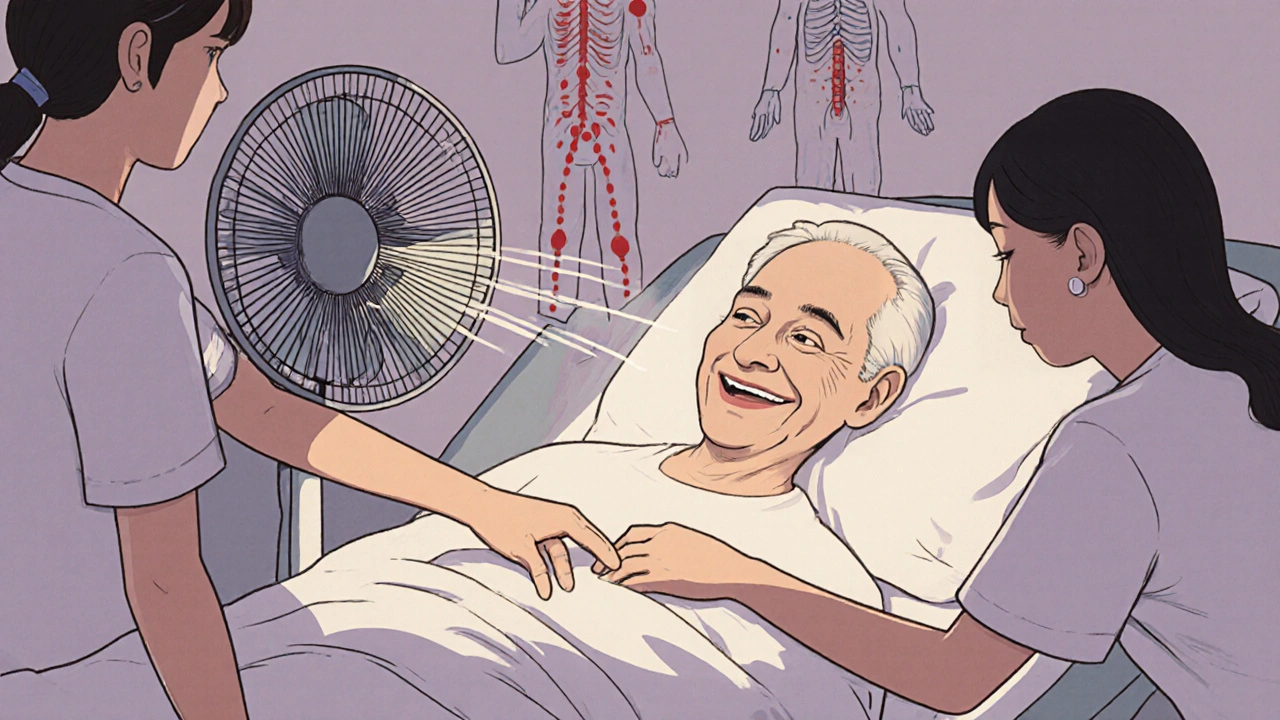
Palliative and Hospice Care: How to Balance Symptom Relief with Minimal Side Effects
Learn how palliative and hospice care balance pain relief with minimal side effects. Discover practical strategies for managing symptoms like breathlessness, delirium, and nausea while preserving dignity and quality of life.