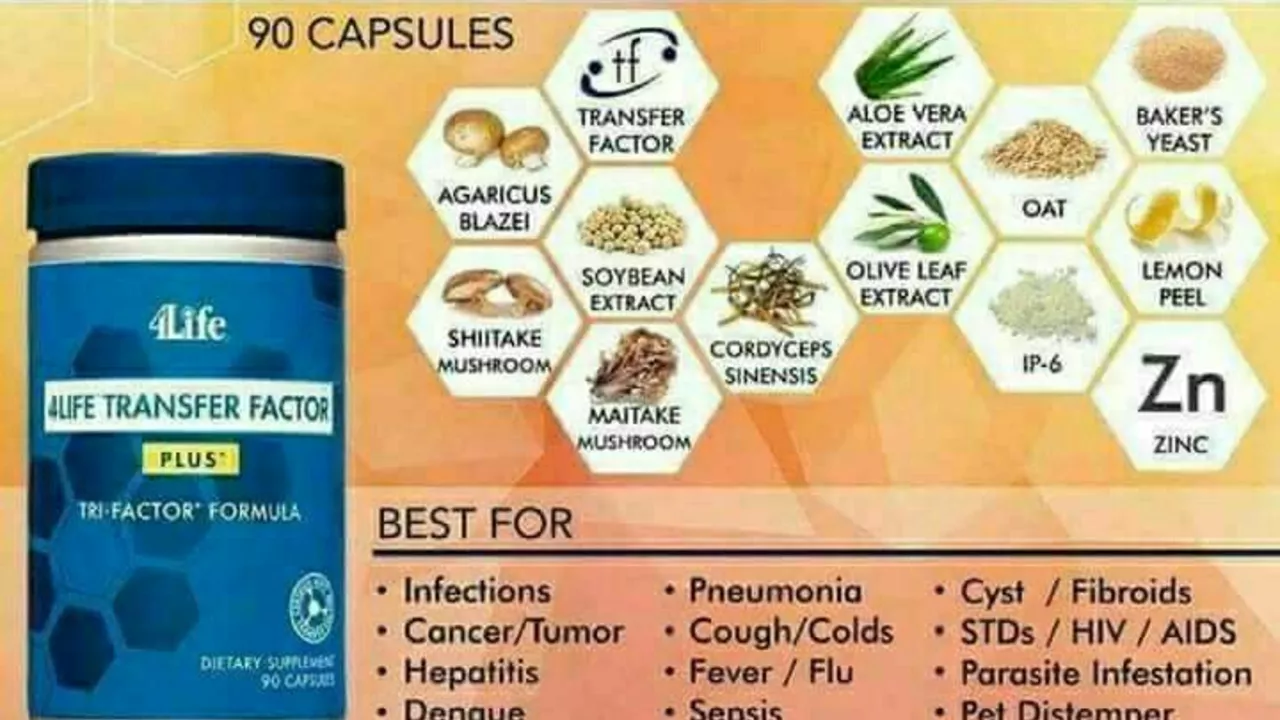
Understanding Transfer Factor
Let's kick off our discussion with the basics. Transfer Factor is a type of molecule that is found within the immune cells of animals and humans. It's not a vitamin, mineral, or herb; it is an immune molecule that contains information about the immune system's past experiences. They act as messengers, carrying information from one immune cell to another, hence helping our bodies to respond appropriately to potential threats.
Transfer factors were discovered in the 1940s by Dr. H. Sherwood Lawrence, who found that immunity could be transferred from a donor to a recipient through a white blood cell extract. This groundbreaking discovery led to further studies and research about the benefits of transfer factors for our health.
How Does Transfer Factor Work?
So how do these tiny molecules work? Once a transfer factor has been introduced into your body, it teaches your immune cells about present or potential dangers and how to respond to them. This information transfer helps to equip your immune system to recognize, respond to, and remember potential health threats.
Specifically, transfer factors help your immune system in three ways: they help immune cells quickly recognize invading germs or other potential threats, they speed up the immune system's response to those threats, and they remember the makeup of past threats to make the immune system more efficient in future encounters.
Transfer Factor and Your Immune System
The immune system is a complex network of cells, tissues, and organs that work together to protect the body from harmful invaders. When functioning properly, it's an effective defense system. However, stress, poor nutrition, lack of sleep, and other factors can weaken the immune system.
Transfer factors play a significant role in strengthening your immune system. By teaching your immune cells about potential threats and how to tackle them, they boost your body's defenses and help to maintain your overall health and wellness. A stronger immune system means a healthier, more robust you.
The Benefits of Transfer Factor Supplementation
Given the crucial role of transfer factors in immune health, it's no surprise that many people choose to supplement their diets with transfer factor products. These supplements are derived from the colostrum of cows or egg yolks from chickens, both rich sources of these immune-boosting molecules.
Supplementing with transfer factor can help to boost your immune system, increase your energy levels, improve your mental clarity and focus, and enhance your overall well-being. It's a simple step with potentially significant health benefits.
Who Can Benefit from Transfer Factor Supplementation?
So, who stands to benefit the most from transfer factor supplementation? In truth, just about anyone can. Whether you're a busy professional looking to ward off the common cold, a parent wanting to boost your child's immune health, or an athlete seeking to enhance your performance and recovery, transfer factor supplements can provide a valuable boost to your immune system.
That said, these supplements may be particularly beneficial for those with compromised immune systems or those who are prone to frequent illness. Remember, a stronger immune system is better equipped to fight off potential threats.
Choosing the Right Transfer Factor Supplement
With so many transfer factor supplements on the market, how do you choose the right one for you? It's important to look for a product that is derived from a quality source, whether that's cow colostrum or chicken egg yolks. You should also look for a product that is backed by scientific research and has positive customer reviews.
Remember, everyone's body is unique and may respond differently to supplementation. It's always a good idea to consult with a healthcare professional before starting any new supplement regimen.
Wrapping Up: The Power of Transfer Factor
In conclusion, transfer factors are powerful immune-boosting molecules that can play a significant role in maintaining and enhancing your health. Whether you're looking to boost your immune health, increase your energy levels, or simply improve your overall well-being, transfer factor supplementation may be worth considering.
So, here's to a healthier, stronger, and more resilient you, thanks to the miracle molecule that is transfer factor!

Ian Glover
My name is Maxwell Harrington and I am an expert in pharmaceuticals. I have dedicated my life to researching and understanding medications and their impact on various diseases. I am passionate about sharing my knowledge with others, which is why I enjoy writing about medications, diseases, and supplements to help educate and inform the public. My work has been published in various medical journals and blogs, and I'm always looking for new opportunities to share my expertise. In addition to writing, I also enjoy speaking at conferences and events to help further the understanding of pharmaceuticals in the medical field.
19 Comments
-
SHIVA DALAI
July 19, 2023 AT 08:38In the grand tapestry of immunology, the advent of transfer factor emerges as a paradigm-shifting revelation, warranting meticulous scholarly scrutiny. One must acknowledge the profound implications of such molecular intermediaries on prophylactic healthcare strategies.
-
Brooke Bevins
July 22, 2023 AT 13:58Honestly, the idea that a tiny molecule can “teach” your immune cells feels both exhilarating and a bit unsettling 😊. It’s like giving your immune system a crash course in bio‑security, and the results can be striking. I’ve seen friends report fewer colds after consistent use. So, kudos to the researchers pushing this forward.
-
Tom Saa
July 25, 2023 AT 19:18The existence of transfer factor invites contemplation of the very nature of biological memory. If cells can archive past encounters in molecular form, what does that reveal about consciousness? It’s a subtle reminder that our bodies harbor narratives beyond our awareness.
-
John Magnus
July 29, 2023 AT 00:38The mechanistic basis of TF's immunomodulation is well-documented.
-
Marc Clarke
August 1, 2023 AT 05:58Got to say, adding transfer factor to a daily regimen feels like a low‑effort upgrade. You’re essentially fine‑tuning your immune surveillance without a hefty supplement stack.
-
angelica maria villadiego españa
August 4, 2023 AT 11:18It’s simple: if you want your body to stay ready for the next bug, a little boost can help. Just make sure you choose a reputable brand.
-
Ted Whiteman
August 7, 2023 AT 16:38Oh, here we go again with the “miracle molecule” hype. Sure, it sounds promising, but let’s not abandon proven hygiene practices. Remember, no supplement replaces a balanced lifestyle.
-
Dustin Richards
August 10, 2023 AT 21:58While the formal literature underscores the potential of transfer factor, practical application should be approached with measured optimism. In informal settings, consistency and dosage matter greatly.
-
Anthony Burchell
August 14, 2023 AT 03:18Honestly, I think the fuss is overblown; many users report negligible changes. Friendly reminder: your gut health and sleep schedule still rule the day.
-
Michelle Thibodeau
August 17, 2023 AT 08:38From a cultural perspective, the concept of “teaching” immunity resonates with traditional practices that value knowledge transfer across generations, a notion beautifully mirrored in modern immunology. The vibrancy of language we use to describe these molecules-“miracle,” “miraculous,” “magic”-speaks to a collective yearning for empowerment over health. Yet, beneath the lyrical prose lies rigorous biochemistry that delineates peptide fragments conveying antigenic signatures. This duality, poetic and empirical, invites us to bridge storytelling with data. By integrating transfer factor into holistic wellness, we honor both ancestral wisdom and scientific advancement. Moreover, embracing such supplements can foster a sense of agency, especially in communities historically marginalized by healthcare disparities. It is crucial, however, to maintain vigilant scrutiny, ensuring that commercial claims align with peer‑reviewed evidence. As we navigate the nuanced landscape of immune support, let us celebrate the synergy of cultural narratives and molecular mechanisms, fostering a richer, more inclusive discourse on health.
-
Patrick Fithen
August 20, 2023 AT 13:58Transfer factor acts as a molecular messenger bridging innate and adaptive immunity it provides antigenic memory cues to lymphocytes the result is faster response to known pathogens
-
Michael Leaño
August 23, 2023 AT 19:18Totally agree with Ted, the hype can be a distraction, but the science does have merit. Let’s keep a balanced view while exploring its benefits.
-
Anirban Banerjee
August 27, 2023 AT 00:38In accordance with established protocols, one should meticulously evaluate the sourcing and clinical validation of any transfer factor supplement prior to incorporation. Formal adherence to such standards safeguards both efficacy and safety.
-
Alexia Rozendo
August 30, 2023 AT 05:58Oh great, another “miracle” pill to solve all our problems – because we clearly need more shortcuts. Yeah, that’s just what the world needed.
-
Vinay Keragodi
September 2, 2023 AT 11:18I've been reading up on the peptide sequences involved, and it's fascinating how they can encode immunological memory. It definitely warrants a deeper dive into the research papers.
-
Cassidy Strong
September 5, 2023 AT 16:38While the concept is intriguing, the literature mandates a critical assessment; many studies suffer from limited sample sizes, and the statistical significance is often marginal. Therefore, one must exercise caution before endorsing widespread supplementation; rigorous, double‑blind trials are essential.
-
Anil Karwal
September 8, 2023 AT 21:58Just remember to check for allergens before you start.
-
Suresh Pothuri
September 12, 2023 AT 03:18In our nation, embracing scientifically validated supplements like transfer factor is a patriotic duty; dismissing them is tantamount to neglecting our people's health. Assertively, we must adopt these advances without succumbing to baseless skepticism.


Write a comment
More Articles
How to Buy Cheap Generic Singulair Online Safely in the UK
Learn how to safely buy cheap generic Singulair (montelukast) online in the UK, verify legit pharmacies, compare prices, and avoid counterfeit risks.
Azithromycin DT vs Alternatives: What Works Best for Infections
Azithromycin DT is convenient, but not always the best choice. Learn which antibiotics like amoxicillin, clarithromycin, and doxycycline work better for common infections-and when to avoid azithromycin altogether.

How Drinking Water Helps You Lose Weight by Curbing Appetite and Boosting Performance
Drinking water before meals can reduce appetite, lower calorie intake, and slightly boost metabolism-helping you lose weight naturally. Science shows it’s more effective than diet drinks and works without side effects.
Kimberly Dierkhising
July 16, 2023 AT 03:18Transfer factor epitomizes a sophisticated immunological courier, leveraging peptide-mediated signal transduction to prime adaptive effector pathways. Its integrative role bridges innate sentinel functions with acquired memory synthesis, offering a nuanced modulation of host defense.