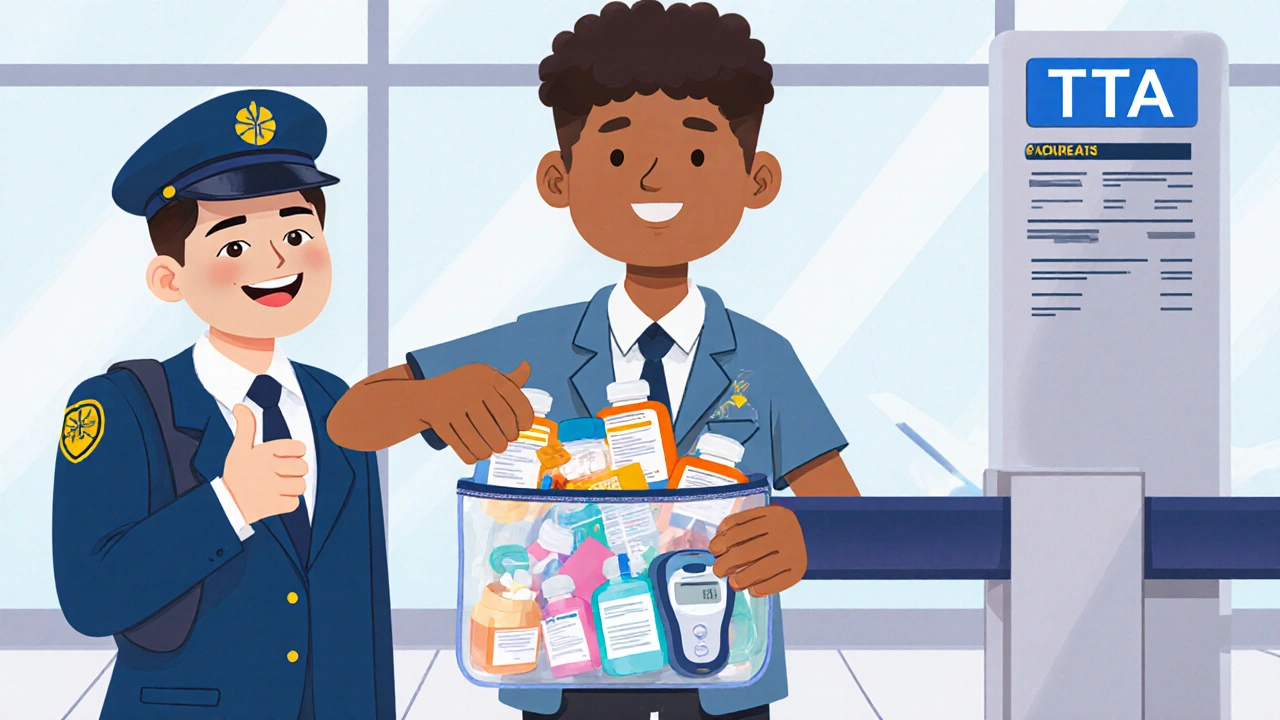
Planning a flight and wondering how to bring your prescription meds through airport security? You’re not alone. Millions of travelers carry medications every year - insulin, blood pressure pills, antidepressants, pain relievers, even topical creams. But if you’ve ever been asked to take your medicine out of your bag at security, or worse, had something confiscated, you know it’s not always straightforward. The good news? The TSA lets you bring almost all prescription medications on board, with no size limits. The bad news? Mistakes happen - and they can delay your trip, or worse.
What You Can Bring - No Limits
The TSA doesn’t cap how much prescription medication you can carry. Whether it’s 30 pills or 300, 10 bottles of liquid or one giant vial of insulin, it’s all allowed. This includes pills, liquids, gels, creams, inhalers, patches, and even injectables like insulin pens or auto-injectors. And yes, that means you can skip the 3-1-1 liquid rule entirely. Your 6-ounce bottle of cough syrup? Your 4-ounce tube of hydrocortisone cream? All fine. No need to fit them into a quart-sized bag.
Medications are treated as medical necessities, not regular liquids. That’s why you don’t need to declare them ahead of time unless you’re carrying something unusual - like a large quantity of injectables or a medical device. But here’s the catch: you still need to make them visible. At the security checkpoint, take your meds out of your carry-on and place them in a separate bin. Don’t wait for an officer to ask. Proactively showing them speeds things up.
Do They Need to Be in Original Bottles?
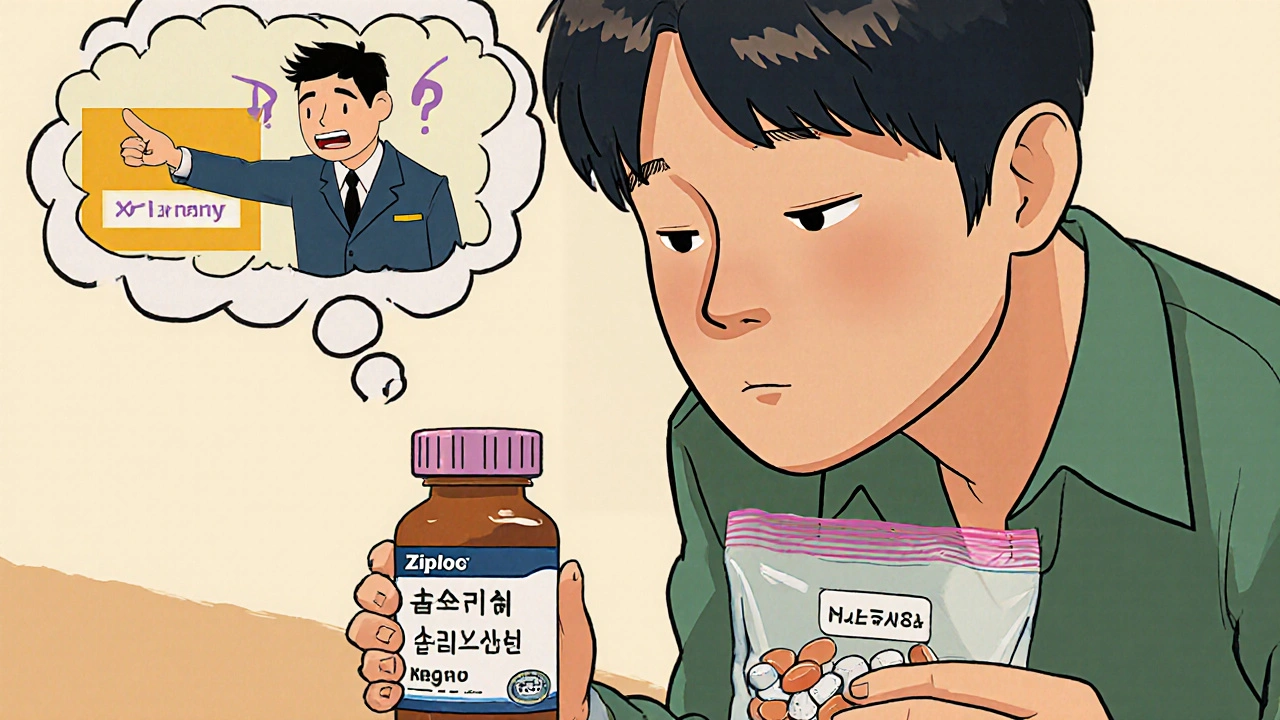
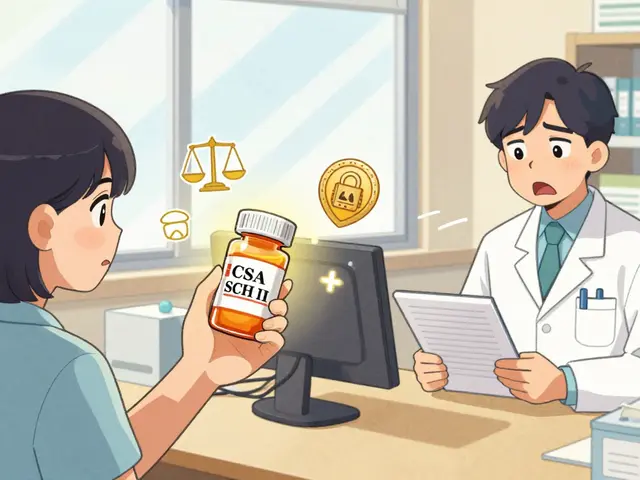
This is one of the most confusing parts. The TSA doesn’t legally require your pills to be in their original pharmacy bottles. You can transfer them to a pill organizer, a small plastic container, or even a Ziploc bag. But here’s the reality: if your name on the pill bottle doesn’t match your ID, you’ll get pulled aside. And that’s not because of TSA policy - it’s because officers need to verify the medication is yours.
Most travelers who’ve had issues report that name mismatches caused the delays. A middle initial missing? A different spelling? A prescription under your spouse’s name? That’s enough to trigger a secondary search. So while it’s not mandatory, keeping meds in original containers with clear labels is the safest move. It saves time, reduces stress, and avoids unnecessary questions.
If you must repack - say, because your 90-day supply won’t fit in your carry-on - bring a copy of your prescription or a doctor’s note. Even a simple letter on letterhead saying, “This patient is prescribed [medication] for [condition],” can clear up confusion in seconds.
What’s Not Allowed - The Big Red Flags
Not all medications are welcome on U.S. flights. The biggest one? Marijuana and CBD products with more than 0.3% THC. Even if you have a medical card in California or New York, federal law still bans these on planes. TSA officers don’t check for THC levels on the spot - they just look for anything labeled as cannabis, hemp oil, or CBD. If it’s not clearly labeled as hemp-derived and under 0.3% THC, it’s likely to be confiscated. And yes - this includes gummies, tinctures, vape pens, and topical balms.
And here’s the kicker: just because it’s legal in your state doesn’t matter. Airports are federal property. TSA follows federal law. Period.
Another issue: controlled substances like Adderall, Xanax, or oxycodone. These are legal in the U.S. with a prescription - but not everywhere else. If you’re flying internationally, you could be arrested for carrying them. Japan, South Korea, the UAE, and several European countries ban these drugs entirely. Even a single pill can get you detained. Before you leave, check the rules of your destination country. The CDC’s Yellow Book and the IAMAT database (available in the TSA app) are your best tools for this.
Traveling with Medical Devices
If you use an insulin pump, continuous glucose monitor (CGM), nebulizer, or ventilator, you’re allowed to bring it on board. But you can’t just walk through the metal detector with it. Tell the TSA officer before screening. You have the right to request a visual inspection instead of an X-ray. Some devices can be damaged by scanners - especially CGMs and pumps with sensitive electronics.
Pro tip: Don’t wait until you’re at the checkpoint. If you need special help - like a private screening or extra time - call TSA Cares at 1-855-787-2227 at least 72 hours before your flight. They’ll assign a specialist to meet you at security and guide you through the process. This isn’t a luxury - it’s a right.
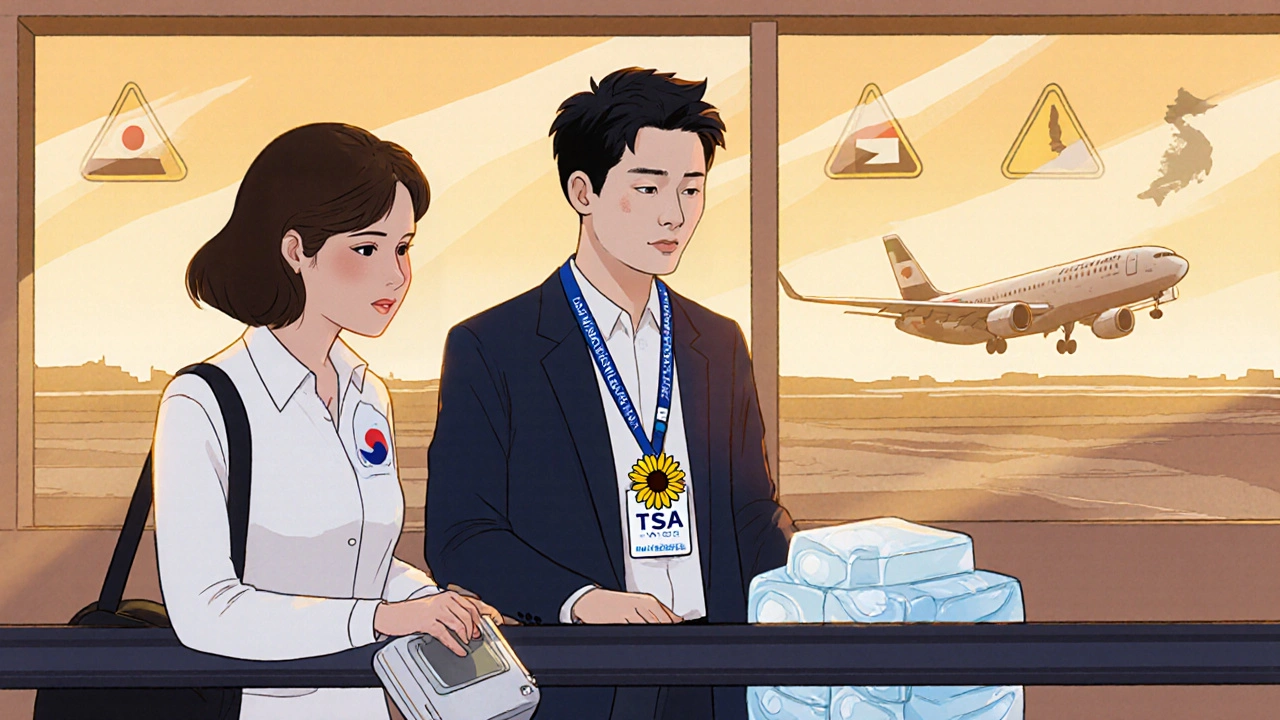
Also, frozen gel packs for cooling medications? Allowed - as long as they’re solid ice. Once they start melting, they count as liquids and fall under the 3-1-1 rule. So if you’re carrying insulin or other temperature-sensitive meds, pack your ice packs frozen solid. Officers will inspect them visually and let you through.
Carry-On Only - No Checked Bags
Never check your medication. Ever. Even if you’re not planning to use it during the flight. Checked luggage gets lost, delayed, or stolen. And if you need your insulin at 30,000 feet or your anxiety medication after a long layover, you’re out of luck. United Airlines, Delta, and American all have the same policy: keep meds in your carry-on. It’s not a suggestion - it’s a safety rule. Airlines have had cases where passengers lost life-saving drugs because they were packed in checked bags. Don’t be one of them.
And if you’re worried about space? Use a small, clear toiletry bag. It’s easier to pull out at security. You don’t need a fancy med case - just something that keeps your pills from rattling around with your socks.
International Travel? Double-Check Everything
Flying abroad? Your U.S. prescription doesn’t mean anything overseas. Countries have their own rules - and they’re often stricter. For example:
- Japan bans ADHD meds like Adderall and Ritalin - even with a prescription.
- The UAE treats opioids like oxycodone as illegal narcotics.
- Some countries require a special permit for antidepressants or sleeping pills.
Always check the rules of your destination. Use the CDC Yellow Book or the TSA app’s international medication checker. If you’re unsure, call the embassy. A 10-minute call can save you from a detention or a fine. And if you’re staying longer than 90 days, bring a letter from your doctor explaining why you need a larger supply. Customs officials will ask.
Tips to Avoid Delays
Here’s what works in real life, based on thousands of traveler reports:
- Keep meds in original bottles with your name on them.
- Bring a copy of your prescription or doctor’s note - especially for controlled substances.
- Put meds in your carry-on, not your checked bag.
- Take them out at security - don’t wait to be asked.
- Don’t decant CBD or THC products unless you’re 100% sure they’re under 0.3% and clearly labeled.
- If you have a hidden disability, wear the TSA Sunflower Lanyard. It signals you may need extra help.
- Use TSA PreCheck. If you’re enrolled, you can leave your meds in your bag during screening.
And if you’re traveling with someone who has cognitive or sensory issues - autism, dementia, PTSD - let the officer know. They’re trained to handle these situations with patience. No need to explain everything - just say, “I need a little extra time.”
What Happens If Something Gets Confiscated?
If TSA takes your medication, they won’t give it back. You can ask for a receipt, but don’t expect a refund or replacement. Your best move? Stay calm. Arguing won’t help. Call your doctor after you land. If it was a legal medication, you can often get a new prescription locally - though it may cost more and take time.
For CBD products, the issue is worse. Even if your oil is legal under federal law, officers may still confiscate it because they can’t test THC levels on the spot. The Government Accountability Office found over 14,000 compliant CBD products were wrongly seized in 2023. It’s a systemic problem - and you’re not alone. But there’s no quick fix. Prevention is your only defense.
What’s Changing in 2025?
There’s no such thing as “2025 TSA rules” yet. Some YouTube videos and travel blogs claim new rules are coming - but those are misleading. The current guidelines, updated through 2023 and reaffirmed in 2024, are still in effect. However, the TSA is testing biometric verification for medication declarations at eight airports. This means in the future, you might be able to scan your ID and have your meds automatically verified through a secure system. But that’s still in pilot mode.
Also, IATA and the WHO are working on a global medication form that could make international travel easier. But it won’t be ready until mid-2025 at the earliest. For now, stick to the basics: know your meds, know your destination, and always carry proof.

Ian Glover
My name is Maxwell Harrington and I am an expert in pharmaceuticals. I have dedicated my life to researching and understanding medications and their impact on various diseases. I am passionate about sharing my knowledge with others, which is why I enjoy writing about medications, diseases, and supplements to help educate and inform the public. My work has been published in various medical journals and blogs, and I'm always looking for new opportunities to share my expertise. In addition to writing, I also enjoy speaking at conferences and events to help further the understanding of pharmaceuticals in the medical field.
12 Comments
-
Edward Hyde
December 1, 2025 AT 14:29Let me guess-someone’s gonna post a TikTok of them yelling at TSA because their Adderall was in a pill organizer. Meanwhile, the officer’s just trying to get through 300 people before lunch. Stop making it a performance.
-
Charlotte Collins
December 2, 2025 AT 09:21Did you know the TSA has no legal authority to seize your meds? They can detain you for questioning, but they can’t legally confiscate FDA-approved prescriptions. The real problem? Officers don’t know that. And you? You’re just the collateral damage in their incompetence.
-
amit kuamr
December 3, 2025 AT 03:09Why do Americans think their prescriptions are holy? In India we carry medicine in plastic bags and no one cares. You make everything a crisis.
-
ariel nicholas
December 3, 2025 AT 15:06You say ‘TSA doesn’t require original bottles’-but then you say ‘it’s safer’-so which is it? Are you giving advice or just hedging? This whole thing is a bureaucratic farce. The government tells you one thing, then punishes you for following it. That’s not policy-that’s psychological warfare.
And don’t get me started on CBD. You’re telling me a plant extract is illegal because some bureaucrat can’t tell 0.3% from 0.4%? That’s not law. That’s laziness dressed up as authority.
Meanwhile, the real threat to national security? The 700-pound man in the airport who brought a 5-gallon jug of maple syrup. But no-let’s make the diabetic woman feel guilty for having a 6-ounce bottle of insulin.
And don’t even mention the ‘sunflower lanyard.’ It’s performative allyship. They don’t train staff to handle neurodivergent people-they train them to look like they care.
This entire guide reads like a corporate PR pamphlet written by someone who’s never been stopped at security with a prescription in their pocket.
They don’t want you to be safe. They want you to be compliant. And that’s the real danger.
-
Debbie Naquin
December 4, 2025 AT 13:05The epistemological rupture here is between regulatory compliance and phenomenological necessity. The TSA’s operational framework is predicated on a Cartesian binary: visible = legitimate, invisible = suspect. But pharmacological agency is distributed across embodied experience, not containerization. Your pill organizer isn’t a violation-it’s an act of spatial reclamation against institutional overreach.
The real issue isn’t the bottle-it’s the ontological insecurity of the state when confronted with self-managed corporeal autonomy.
-
Bonnie Youn
December 6, 2025 AT 08:58Just got back from Tokyo with my anxiety meds in a Ziploc and a doctor’s note-no problems. Seriously, just be prepared and you’re golden. Don’t overthink it. You got this.
-
Karandeep Singh
December 7, 2025 AT 04:30Original bottle? Who cares. TSA dont even read labels. They just look for bottles. Put it in a bag. Done.
-
elizabeth muzichuk
December 8, 2025 AT 07:39Did you know the TSA has been quietly working with pharmaceutical companies to track your medication usage through airport scanners? They’re building a national drug database under the guise of ‘security.’ That’s why they’re so obsessed with bottles-they’re not checking your identity, they’re logging your prescriptions. This isn’t about safety. It’s surveillance. And they’re coming for your antidepressants next.
-
Scotia Corley
December 9, 2025 AT 20:18It is imperative to underscore that the Transportation Security Administration operates under the statutory authority conferred by Title 49 of the United States Code, Section 114. The discretion afforded to screening officers is not arbitrary, but rather guided by federal protocols designed to mitigate potential threats to aviation security. While the agency permits the carriage of prescription pharmaceuticals, the expectation of transparency remains a non-negotiable component of the screening protocol. Failure to comply, regardless of intent, introduces ambiguity into a system predicated on predictability.
-
Mary Ngo
December 10, 2025 AT 19:25They’re scanning your meds to map your mental health history. They already know you’re on Zoloft. They’ve been tracking it since your last flight. That’s why they always ask for your bottle-it’s not about legality. It’s about profiling. The sunflower lanyard? A trap. They use it to flag you for future ‘enhanced screening.’ Don’t be fooled. This is data collection disguised as accommodation.
-
Margaret Stearns
December 10, 2025 AT 20:29Just a quick note: I always keep my meds in original bottles, but I also carry a copy of the prescription in my wallet. I had a weird experience at LAX once where the officer didn’t speak English well, and the paper saved me. Simple things help.


Write a comment
More Articles
The Importance of Self-Care for Breast Cancer Survivors
As a breast cancer survivor, I cannot stress enough the importance of self-care in our journey to recovery. Taking care of our physical, emotional, and mental well-being is crucial in helping us regain our strength and confidence. By engaging in regular exercise, maintaining a healthy diet, and seeking emotional support, we can significantly improve our overall health and reduce the risk of recurrence. Surrounding ourselves with positive influences and seeking professional help when needed also plays a vital role in our healing process. Remember, self-care is not selfish; it is an essential part of our journey to becoming strong, resilient survivors.
Lauryn Smith
December 1, 2025 AT 12:57Just brought my insulin through ORD last week-left it in the original bottle, took it out before the belt, and the officer nodded like it was no big deal. No drama. Just be cool, be clear, and you’ll be fine.