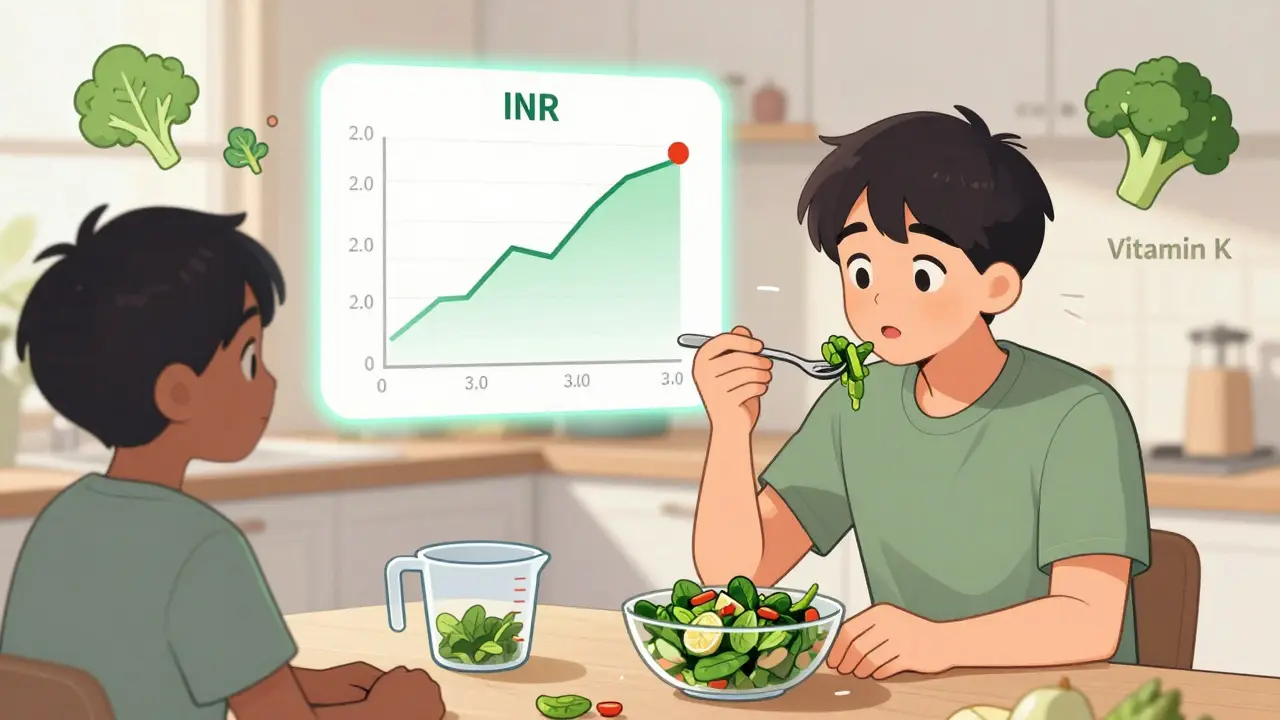
Vitamin K Intake Calculator
Track your vitamin K intake to maintain stable INR. Consistency matters more than specific amounts. Always follow your healthcare provider's guidance.
Add foods to see your intake
Note: Vitamin K intake affects your INR within 3-5 days. Consistency is more important than specific amounts. Your healthcare provider determines your target INR range.
How to Interpret Results
Consistent intake keeps your INR stable. If your intake varies significantly day-to-day, your INR could swing outside the therapeutic range.
Avoid: Cranberry juice, grapefruit juice, excessive alcohol - These interfere with warfarin metabolism
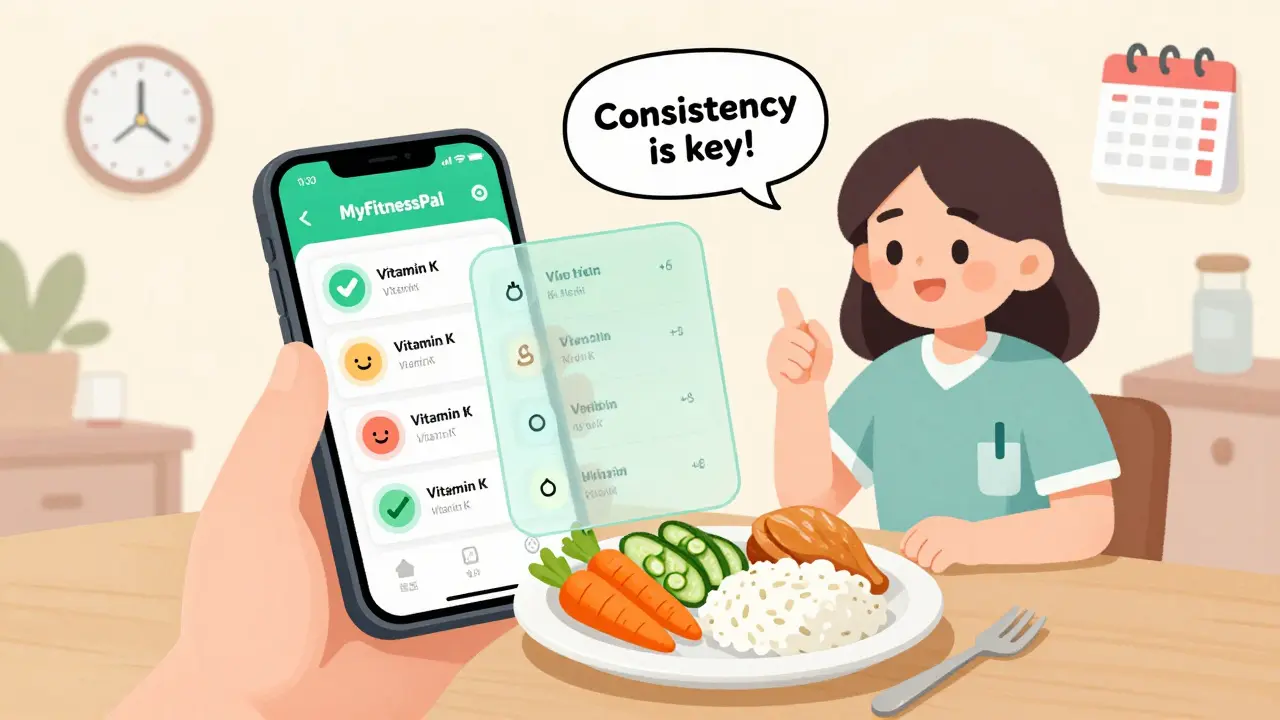
Track your intake daily. If you eat the same amount of vitamin K-rich foods every day, your body adapts and your INR stays stable.
Warfarin saves lives. It prevents deadly blood clots in people with atrial fibrillation, mechanical heart valves, or deep vein thrombosis. But for every person who gets stable control, another struggles with unpredictable INR swings - often because of something they ate. It’s not about cutting out greens forever. It’s about keeping your intake steady. One day you eat a big spinach salad. The next, you skip it. That’s when your INR jumps or drops, and your risk of bleeding or clotting goes up.
How Warfarin Works - And Why Food Matters
Warfarin doesn’t thin your blood. It stops your liver from using vitamin K to make clotting factors. Without enough vitamin K, your blood takes longer to clot. That’s the goal. But if you suddenly eat a lot of vitamin K - like a large serving of kale or cooked spinach - your body gets more of what warfarin is trying to block. Your INR drops. You’re at risk for a clot.
On the flip side, if you go days without vitamin K-rich foods, warfarin works too well. Your INR climbs. You could bleed internally without knowing it. The target INR range is usually 2.0 to 3.0. For mechanical mitral valves, it’s 2.5 to 3.5. Even a 0.5-point swing can be dangerous.
Research shows inconsistent vitamin K intake can shift your INR by 0.5 to 1.0 units in just 3 to 5 days. That’s why the American Heart Association says: don’t avoid vitamin K - stabilize it.
The Vitamin K Food List: What’s High, Medium, and Low
Not all foods affect warfarin the same way. The key is knowing which ones pack the most vitamin K and keeping your portions steady. Here’s a practical breakdown based on actual vitamin K content per 100 grams:
Very High Vitamin K (>500 mcg/100g)
- Kale - 817 mcg
- Collard greens - 623 mcg
- Parsley - 616 mcg
- Seaweed (nori, wakame) - 599 mcg
- Spinach (cooked) - 483 mcg
- Swiss chard - 450 mcg
- Turnip greens - 421 mcg
One cup of cooked spinach has about 889 mcg of vitamin K. That’s nearly 10 times the daily recommended intake for women. If you eat this once a week, then skip it for three days, your INR will likely spike.
High Vitamin K (100-500 mcg/100g)
- Brussels sprouts - 177 mcg
- Broccoli (raw) - 102 mcg
- Green tea - 106 mcg
- Asparagus (cooked) - 70 mcg
- Cabbage (cooked) - 60 mcg
- Green beans - 45 mcg
These are fine to eat - just be consistent. If you usually have broccoli with dinner three times a week, keep doing that. Don’t switch to kale one week and then go back.
Medium Vitamin K (25-100 mcg/100g)
- Lettuce (raw) - 30 mcg
- Avocado - 21 mcg
- Cucumber - 16 mcg
- Carrots - 13 mcg
- Tomatoes - 7 mcg
These foods are low-risk. You can eat them freely without worrying about INR swings. If you’re unsure about a food, check a reliable nutrition database. Apps like MyFitnessPal now track vitamin K - use them.
Foods and Drinks That Interfere Beyond Vitamin K
Vitamin K isn’t the only culprit. Other foods and drinks change how your body processes warfarin - often in ways you won’t expect.
Cranberry Juice
It’s healthy, right? Wrong for warfarin users. Cranberry juice blocks the CYP2C9 enzyme that breaks down warfarin. This causes warfarin to build up in your blood. One patient on Reddit saw their INR jump from 2.4 to 4.1 after drinking 8 ounces daily for a week. That’s a bleeding risk. Avoid it completely.
Grapefruit Juice
It’s a popular morning drink, but it inhibits CYP3A4 - another enzyme involved in warfarin metabolism. Studies show it can increase bleeding risk by 30%. Even one glass a day can push your INR into dangerous territory. Skip it. No exceptions.
Alcohol
Heavy drinking - more than 3 drinks a day - lowers warfarin’s effect by 15-20%. That means more clotting risk. But even moderate drinking can be risky. Your liver is already working hard to process warfarin. Adding alcohol stresses it. The rule: no more than 2 drinks on any day, and at least 2 alcohol-free days each week.
Supplements to Avoid
- Fish oil (omega-3): Increases bleeding risk by 25%. Don’t take more than 1 gram daily without approval.
- Garlic supplements: Can raise INR by 0.8 to 1.2 units. Fresh garlic in food is fine - pills are not.
- Ginkgo biloba: Linked to spontaneous bleeding in multiple case reports. Avoid entirely.
- Vitamin E (high dose): Over 400 IU/day may increase bleeding risk.
Always tell your anticoagulation clinic about every supplement, herb, or over-the-counter pill you take - even if you think it’s harmless.

Real People, Real Results: What Works
Patients who keep stable INRs aren’t eating bland diets. They’re consistent.
One user on PatientsLikeMe, u/StableINR, maintained therapeutic INR for 18 months by eating exactly one cup of spinach salad every day. Same portion. Same day. No variation. That’s the secret.
A 2023 survey by the American Thrombosis Association found that 76% of people who kept daily food journals hit a time-in-therapeutic-range (TTR) of 70% or higher. Those who didn’t track? Only 48% did.
It’s not about perfection. It’s about pattern. Your body adapts to what you eat regularly. If your diet changes suddenly, your INR will too.
Practical Guidelines for Daily Life
Here’s what to do - not what to avoid.
- Find your baseline. Before starting warfarin, note what you normally eat. How many servings of greens? How often do you have broccoli or tea? Use that as your starting point.
- Stick to it. Eat the same amount of vitamin K every day. If you usually have a small side of cooked broccoli, keep doing it. Don’t swap it for kale unless you’re ready to adjust your dose.
- Track your meals. Use MyFitnessPal or another app with vitamin K tracking. Log everything - even snacks. You’ll spot patterns you didn’t know existed.
- Never drink cranberry or grapefruit juice. Not even once. It’s not worth the risk.
- Limit alcohol. Two drinks max per day. Two days off each week.
- Don’t start supplements without asking. Even “natural” ones can be dangerous.
- Plan ahead. If you’re traveling or eating out, research menus. Choose dishes with consistent ingredients. Avoid unknown sauces - they might contain hidden greens.
Warning Signs: When to Call Your Doctor
Warfarin can be safe - if you know the red flags.
- Bleeding from a cut that lasts more than 5 minutes
- Unexplained bruising, especially large or painful
- Red or dark urine
- Black, tarry, or bloody stools
- Severe headaches, dizziness, or vision changes
- Unusual swelling or pain in joints or muscles
These aren’t normal. They could mean internal bleeding. Go to the ER or call your anticoagulation clinic immediately. Don’t wait.
What’s New in 2026
Warfarin isn’t going away. It’s still the only option for people with mechanical heart valves - about 250,000 Americans rely on it. New tools are helping:
- WarfarinDoseIQ: An FDA-approved algorithm that adjusts your dose based on your daily vitamin K intake - now used in major clinics.
- Vitamin K-Controlled Meal Kits: Companies like Nutrisystem now offer pre-portioned meals with exactly 25-30 mcg of vitamin K per serving - no guesswork.
- Smart plate tech: Prototypes are being tested that scan your food and estimate vitamin K content in real time. Not available yet, but coming soon.
But the most powerful tool is still you - and your consistency.
Final Thought: It’s Not a Diet. It’s a Routine.
You don’t need to become a nutritionist. You don’t need to give up your favorite foods. You just need to make your eating habits predictable. Eat your greens the same way, the same amount, every day. Avoid the risky drinks. Skip the unapproved supplements. Track your food. Talk to your clinic.
Stable INR isn’t luck. It’s routine. And with the right habits, you can live safely on warfarin for years - no hospital visits, no scary bleeds, no panic over a single meal.
Can I eat spinach if I’m on warfarin?
Yes, you can eat spinach - but only if you eat the same amount every day. One cup of cooked spinach has nearly 900 mcg of vitamin K. If you eat it daily, your body adjusts. If you eat it one week and skip it the next, your INR will swing dangerously. Consistency is key.
Is kale bad for warfarin users?
Kale is very high in vitamin K - over 800 mcg per 100 grams. It’s not banned, but it’s risky if you eat it inconsistently. If you love kale, stick to one small serving a day, every day. Don’t binge on it once a week. That’s when INR drops and clots become a risk.
Does green tea interfere with warfarin?
Yes. Green tea contains about 106 mcg of vitamin K per 100 grams. Drinking 2-3 cups daily can affect your INR. If you drink it regularly, keep the amount steady. Don’t suddenly switch from one cup to five. Also, some green tea extracts or supplements can be stronger - avoid those unless approved by your doctor.
Can I drink alcohol while on warfarin?
Yes - but only in moderation. No more than 2 standard drinks on any day, and at least 2 alcohol-free days each week. Heavy drinking lowers warfarin’s effect, increasing clot risk. Light drinking can still raise bleeding risk if your liver is stressed. Always talk to your clinic about your habits.
Should I take vitamin K supplements to balance my warfarin?
No. Never take vitamin K supplements unless your doctor specifically prescribes them. Your dose of warfarin is calculated based on your current diet. Adding a supplement can cause your INR to crash, leading to clots. Get your vitamin K from food - and keep it steady.
How long does it take for food to affect my INR?
Changes in vitamin K intake usually show up in your INR within 3 to 5 days. That’s why it’s so important to track your diet and avoid sudden changes. A big bowl of kale on Monday might not affect your test on Tuesday - but it could show up on your Thursday or Friday test.
Do I need to avoid all vegetables?
Absolutely not. Many vegetables are low in vitamin K and safe - like carrots, cucumbers, tomatoes, and zucchini. You don’t need to eat a bland diet. Just avoid sudden changes in your intake of high-vitamin K greens. Stick to your routine.
What should I do if I accidentally eat a lot of vitamin K?
Don’t panic. Don’t skip your next dose. Call your anticoagulation clinic immediately. They may want to check your INR sooner than scheduled. They’ll adjust your warfarin dose if needed. The key is to report it - don’t wait until your next appointment.
Next Steps
Start today. Open your phone’s food tracker. Log your meals for the next week - including portion sizes. Note every serving of greens, tea, or supplement. Bring this log to your next INR check. Ask your nurse or pharmacist: “Is my intake consistent?”
Stable INR isn’t about perfection. It’s about predictability. You’ve already taken the hardest step - you’re learning. Now, make your plate your ally, not your enemy.

Ian Glover
My name is Maxwell Harrington and I am an expert in pharmaceuticals. I have dedicated my life to researching and understanding medications and their impact on various diseases. I am passionate about sharing my knowledge with others, which is why I enjoy writing about medications, diseases, and supplements to help educate and inform the public. My work has been published in various medical journals and blogs, and I'm always looking for new opportunities to share my expertise. In addition to writing, I also enjoy speaking at conferences and events to help further the understanding of pharmaceuticals in the medical field.
More Articles
Understanding Cabergoline: How It Works and What to Expect
Cabergoline is a medication I recently came across, and I thought it would be helpful to share my understanding of how it works and what to expect. It's primarily used to treat high levels of prolactin in the body, which can cause various health issues. The drug works by acting on dopamine receptors, which helps to reduce prolactin levels. Some common side effects include nausea, dizziness, and headache, but most people tolerate the medication well. If you're prescribed cabergoline, it's important to follow your doctor's instructions closely and report any concerning side effects.