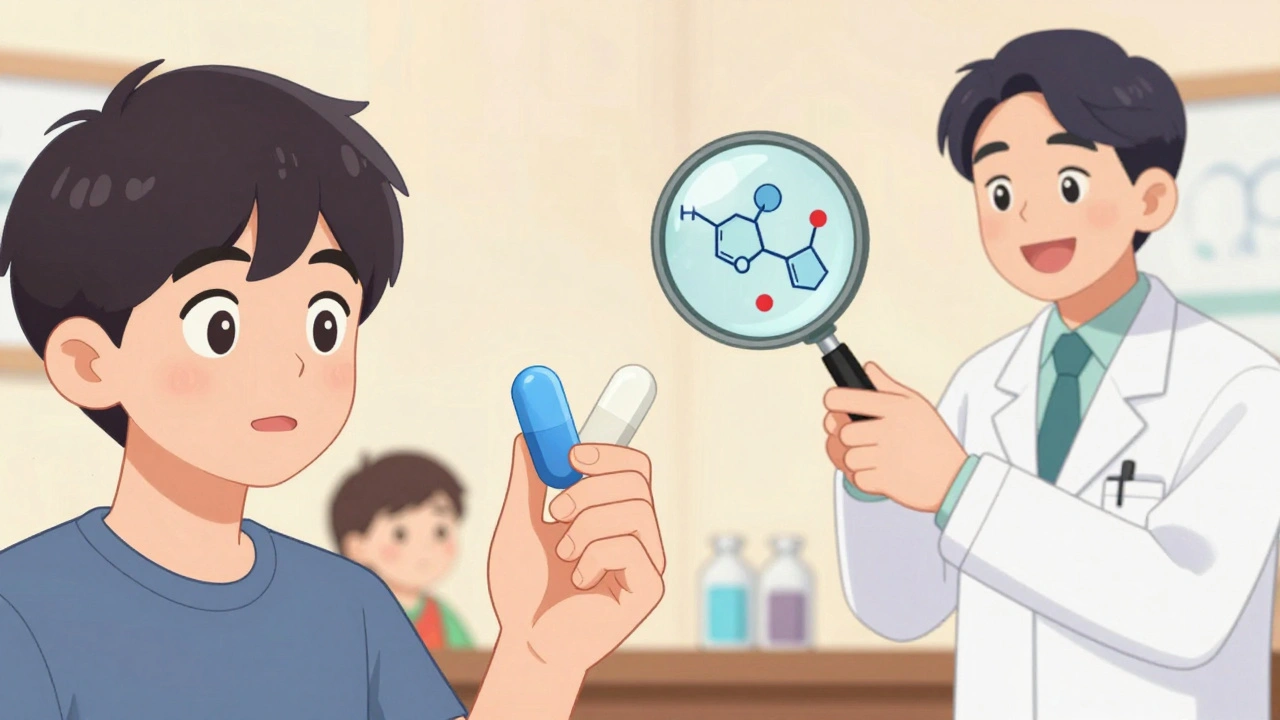
Many people are told to switch from a brand-name medicine to a generic version-and they panic. Generic medications look different. They cost a lot less. And suddenly, you’re wondering: Is this really the same? Will it work? Could it hurt me?
The short answer? Yes, it’s the same. And no, it won’t hurt you-if you’re taking it as prescribed. But the fear is real. And it’s not just in your head. It comes from stories, old habits, and misinformation that’s been passed down like family recipes. Let’s clear up the biggest concerns, one by one.
Are generic drugs really as effective as brand-name ones?
Yes. Absolutely. The U.S. Food and Drug Administration (FDA) doesn’t approve a generic drug unless it delivers the exact same amount of active ingredient into your bloodstream at the same rate as the brand-name version. That’s called bioequivalence. The FDA requires testing to prove that the generic’s absorption falls within 80% to 125% of the brand-name drug’s levels. That’s not a guess. It’s science. And it’s strict.
Think of it like this: two different brands of aspirin both contain acetylsalicylic acid. One might be shaped like a capsule, the other a flat tablet. One might be white, the other blue. But they both dissolve the same way and do the same job. That’s what generics are.
Over 90% of all prescriptions in the U.S. are filled with generics. That’s not because pharmacies are cutting corners. It’s because they work. Studies show that for the vast majority of conditions-high blood pressure, diabetes, cholesterol, depression-generics perform just as well as the name-brand versions.
Why do generics look different?
Because the law says they have to. Brand-name drugs have trademarks-not just on the name, but on the shape, color, and even the imprint on the pill. Generic manufacturers can’t copy that. So they make theirs look different. That’s it. No hidden reason. No trick.
That difference in appearance is why some patients think they got the wrong medicine. A woman I spoke with in Birmingham told me she switched from her blue Eliquis pill to a white one and refused to take it for a week. She thought the pharmacy made a mistake. When she checked, the generic was approved by the FDA, had the same active ingredient, and cost 85% less. She started taking it. Her blood thinner worked just fine.
Don’t let the color or shape fool you. Check the label. Look for the active ingredient. If it matches, you’re good.
Do generics have more side effects?
No. But here’s where confusion creeps in.
Generics use the same active ingredient as the brand-name drug. That’s the part that treats your condition. But they can use different fillers, dyes, or coatings-called excipients. These don’t affect how the drug works. But if you’re allergic to a specific dye or lactose, you might react to one version and not the other.
That’s rare. And it’s not because generics are lower quality. It’s because the ingredients in the pill’s outer shell vary. If you’ve had a reaction to a new generic, talk to your pharmacist. They can check if the excipients changed and suggest another generic version that matches your tolerance.
Also, side effects aren’t new when you switch. They’re just noticed more. When you’ve been on a brand-name drug for years, your body adjusts. Switching-even to an identical drug-can make you hyper-aware of how you feel. That’s psychology, not pharmacology.
Can generics be counterfeit or contain less active ingredient?
No. Not if they’re sold legally in the U.S., UK, or other regulated markets. The FDA requires every generic manufacturer to prove their product contains the exact same active ingredient, in the exact same strength, as the brand-name drug. They must also prove it’s manufactured under the same strict quality controls.
There’s a myth that generics are made in cheaper factories with lower standards. That’s not true. In fact, about half of all generic drugs are made by the same companies that make the brand-name versions. Pfizer, Merck, and Johnson & Johnson all produce generics. The only difference? They’re not paying for advertising or fancy packaging.
The FDA inspects generic drug factories just as often as brand-name ones. Since 2018, their Risk Identification and Correction Action Program has fixed over 1,200 potential quality issues-most of them in generic plants. That’s oversight, not neglect.
Why are generics so much cheaper?
Because they don’t have to pay for research, development, or marketing.
Brand-name companies spend billions creating a new drug. They run clinical trials, hire scientists, patent the formula, and run TV ads. That cost gets built into the price.
Generic companies? They just copy the formula after the patent expires. They don’t need to repeat expensive trials. They only need to prove bioequivalence-which costs a fraction. And once one generic enters the market, others follow. More competition = lower prices.
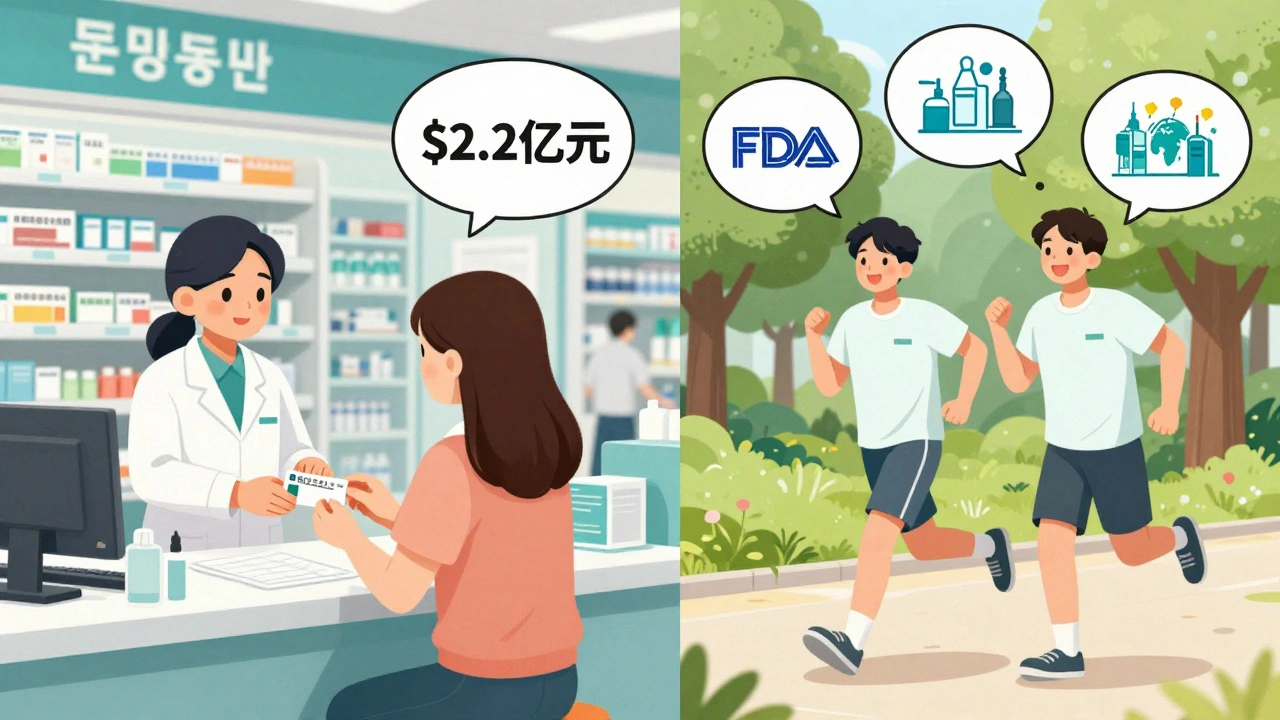
The result? Generics cost 80% to 85% less on average. Over the past decade, they’ve saved the U.S. healthcare system over $2.2 trillion. That’s not just money for insurance companies. It’s money in your pocket. Lower copays. Fewer skipped doses because you can’t afford it.
Are there exceptions? When should I stick with brand-name?
Yes. A small group of drugs requires extra care. These are called narrow therapeutic index (NTI) drugs. That means the difference between a dose that works and a dose that’s dangerous is very small.
Examples include:
- Warfarin (blood thinner)
- Levothyroxine (thyroid hormone)
- Phenytoin and levetiracetam (anti-seizure meds)
For these, some doctors prefer to keep you on the same version-brand or generic-once you’re stable. Why? Because even tiny differences in absorption could, in rare cases, affect how well the drug controls your condition.
But here’s the key: switching from brand to generic, or between generics, is still safe-if monitored. Your doctor or pharmacist should check your blood levels or symptoms after the switch. A 30-day follow-up is standard practice for NTI drugs. Don’t assume you’re on your own. Ask for a check-in.
And remember: if your doctor writes “Do not substitute” on your prescription, the pharmacy must honor it. That’s the law.
Why do some people distrust generics?
It’s not just about science. It’s about trust.
A 2014 survey found that while most people believed generics were safe and effective, 16% still doubted them. And among non-Caucasian patients, the doubt was much higher-56% asked for brand-name drugs, compared to 43% of others.
Why? Stories. Word of mouth. A friend said their generic made them dizzy. A relative swore their old brand was better. These aren’t lies. They’re experiences. But they’re not always about the drug. Sometimes, it’s stress, aging, diet changes, or other meds that caused the side effect-and it got blamed on the switch.
Pharmacists are often the first line of defense. When you pick up your prescription, ask: “Is this the same as my old one?” They can explain the difference in appearance. They can confirm the active ingredient. They can reassure you. Don’t just walk away. Ask.
What should I do if I think the generic isn’t working?
Don’t stop taking it. Don’t switch back without talking to someone.
First, give it time. Your body might need a few weeks to adjust. Even if the drug is identical, your perception of how you feel can change.
Second, track your symptoms. Write down how you feel before and after the switch. Are you having more headaches? More fatigue? More anxiety? Or are you just noticing things you didn’t before?
Third, call your pharmacist. They can check if the generic changed manufacturers. Sometimes, a different version is substituted without your knowledge. They can also tell you if your insurance switched the preferred generic.
Fourth, schedule a quick check-in with your doctor. They can order a blood test if needed-especially for NTI drugs. Most of the time, the generic is working fine. But if it’s not, you’ll know why-and what to do next.
Final thought: Your health matters. So does your wallet.
Choosing a generic isn’t settling. It’s smart. It’s safe. And it’s backed by decades of science and millions of patients.
Generic drugs have been used by over 90% of Americans who take prescription medicine. They’re not second-rate. They’re second-generation-built on the same science, with the same standards, and without the marketing markup.
If you’re unsure, ask. Ask your pharmacist. Ask your doctor. Ask a friend who’s been on generics for years. Chances are, they’ll tell you they’ve never had a problem.
Medicine doesn’t have to be expensive to be effective. Sometimes, the best treatment is the one you can actually afford to take every day.
Are generic drugs as safe as brand-name drugs?
Yes. The FDA requires generic drugs to meet the same strict standards for quality, strength, purity, and potency as brand-name drugs. They must prove bioequivalence, meaning they deliver the same amount of active ingredient into your bloodstream at the same rate. Generic drugs are tested and inspected just like brand-name drugs.
Why do generic pills look different from brand-name ones?
By law, generic manufacturers can’t copy the exact appearance of brand-name pills, including color, shape, or markings, because those are trademarked. But the active ingredient-and how it works in your body-is identical. The difference is only in the outer shell, which doesn’t affect effectiveness.
Can generic drugs cause more side effects?
Not because they’re generic. Side effects come from the active ingredient, which is the same. But generics may use different inactive ingredients (like dyes or fillers), which could cause rare allergic reactions in sensitive individuals. If you notice new side effects after switching, talk to your pharmacist-they can help identify the cause.
Are there any drugs where I shouldn’t switch to a generic?
For a small group of drugs called narrow therapeutic index (NTI) drugs-like warfarin, levothyroxine, and some anti-seizure medications-small changes in absorption can matter. Doctors may recommend staying on the same version (brand or generic) once you’re stable. Always discuss switching with your provider, and get follow-up tests if needed.
How do I know if my pharmacy switched my generic?
Check the label on your pill bottle. It will list the manufacturer and the generic name. If you notice a change in size, color, or shape, ask your pharmacist. They can confirm whether a different generic version was dispensed. You can also ask for the brand-name version if you prefer-but it may cost more.
Can I trust generics made overseas?
Yes. Many generic drugs, both brand and generic, are manufactured overseas-including in India and China. The FDA inspects all facilities, regardless of location, to ensure they meet U.S. quality standards. A drug’s origin doesn’t determine its safety. What matters is FDA approval and compliance.
Why do some doctors still prescribe brand-name drugs?
Sometimes, it’s habit. Other times, they’re unaware a generic is available. Or, for NTI drugs, they prefer to maintain consistency. In some cases, insurance doesn’t cover the generic yet. If you’re unsure, ask your doctor: “Is there a generic available? Would it be safe for me?”

Ian Glover
My name is Maxwell Harrington and I am an expert in pharmaceuticals. I have dedicated my life to researching and understanding medications and their impact on various diseases. I am passionate about sharing my knowledge with others, which is why I enjoy writing about medications, diseases, and supplements to help educate and inform the public. My work has been published in various medical journals and blogs, and I'm always looking for new opportunities to share my expertise. In addition to writing, I also enjoy speaking at conferences and events to help further the understanding of pharmaceuticals in the medical field.
14 Comments
-
Rebecca Dong
December 13, 2025 AT 02:13Funny how the FDA 'approves' generics but never mentions that the same companies that make brand names also make the generics. Same factory. Same workers. Just no ads. You're being sold a myth.
-
Sarah Clifford
December 13, 2025 AT 21:44I switched to generic omeprazole and my heart started racing. I went back to Prilosec and boom, fine. So no, not all generics are the same. Don't lie to us.
-
Regan Mears
December 15, 2025 AT 01:17I get it. Fear is real. But let’s not let fear override science. The FDA’s bioequivalence standards are among the strictest in the world. If your doctor says it’s safe, trust the process. Your body will adjust.
-
Ben Greening
December 15, 2025 AT 16:44The data is overwhelmingly in favor of generics. The cost savings are not trivial. For patients on chronic medication, switching can mean the difference between adherence and abandonment.
-
Nikki Smellie
December 15, 2025 AT 20:16Have you ever checked where the active ingredient is sourced? India. China. Factories with no OSHA oversight. The FDA inspects less than 2% of foreign plants. That’s not oversight. That’s a gamble.
-
Vivian Amadi
December 16, 2025 AT 18:53You think you're saving money but you're just risking your life. I saw a man collapse at CVS because his generic thyroid med was 'close enough.' Close enough is not good enough.
-
Jimmy Kärnfeldt
December 16, 2025 AT 19:20I used to be scared too. Then I started taking generics for my cholesterol. No side effects. Saved $400 a year. My doctor said it was like switching from one brand of coffee to another-same beans, different bag.
-
Ariel Nichole
December 17, 2025 AT 14:34I’ve been on generic metformin for 8 years. Zero issues. My mom switched from brand to generic insulin and said she felt better because she wasn’t stressed about the cost anymore.
-
Monica Evan
December 19, 2025 AT 12:48I work in a pharmacy and I can tell you-most people panic because the pill looks different. I always hand them the bottle and say 'see this? Same active ingredient.' They calm right down. It’s not the drug. It’s the fear of the unknown.
-
Jim Irish
December 20, 2025 AT 08:23For NTI drugs like warfarin consistency matters. But switching between generics is acceptable if monitored. The key is communication with your provider. Not avoidance.
-
Mia Kingsley
December 21, 2025 AT 21:54My doctor gave me a generic for Zoloft and I cried for three days. I thought I was losing my mind. Turned out the new filler gave me migraines. Switched back. No one warned me. This system is broken.
-
Katherine Liu-Bevan
December 22, 2025 AT 23:24The science is clear. Bioequivalence isn't a suggestion-it's a legal requirement. Generics are held to the same manufacturing standards. The only difference is the price tag and the packaging. Don't confuse appearance with efficacy.
-
Lisa Stringfellow
December 24, 2025 AT 06:42You say 'it's safe' like that makes it okay. But what about the people who suffer? The ones who get worse? You don't get to call them crazy just because they don't trust the system. I'm not paranoid. I'm just not stupid.


Write a comment
More Articles
Dong Quai and Warfarin: What You Need to Know About the Bleeding Risk
Dong Quai and warfarin together can dangerously increase bleeding risk. Learn why this herbal supplement is unsafe for anyone on blood thinners, what the science says, and what to do instead.
Sylvia Frenzel
December 11, 2025 AT 09:21I don't care what the FDA says. My cousin took a generic blood pressure pill and ended up in the ER. They don't test these things long enough. I stick with the brand. Period.