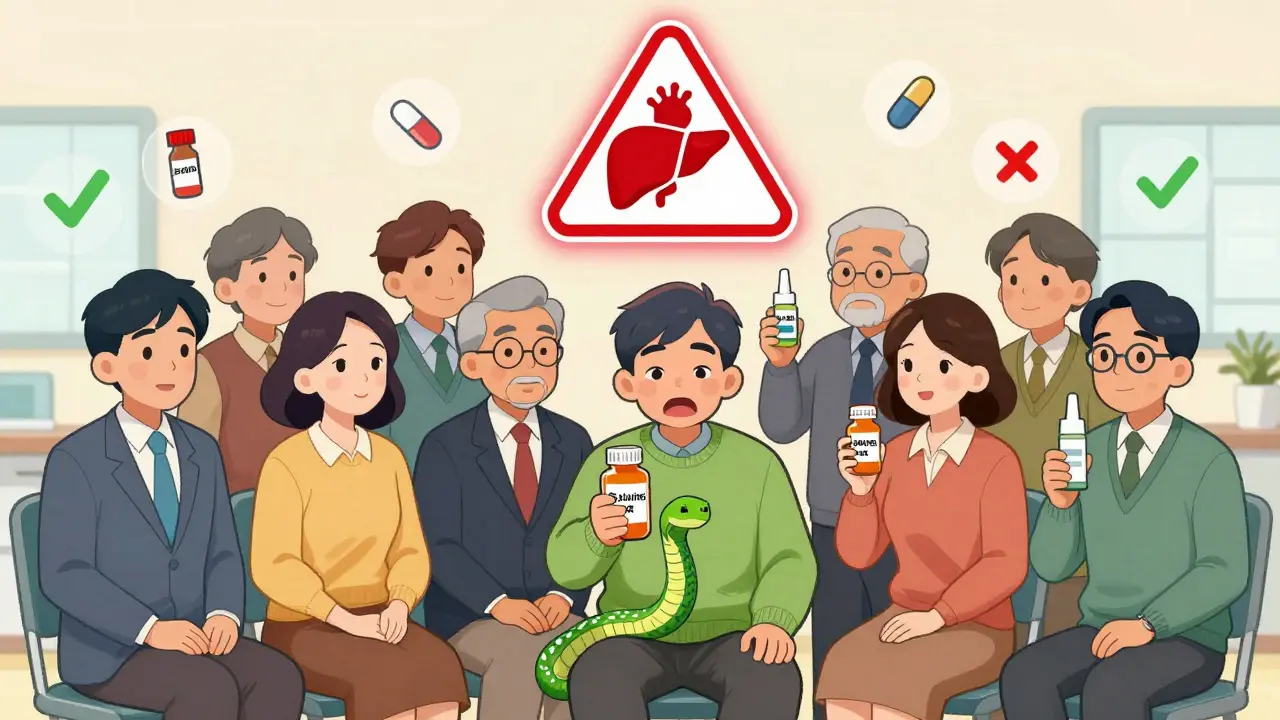
People living with HIV today are living longer, healthier lives - but that longevity comes with a hidden challenge: managing drug interactions. Antiretroviral therapy (ART) keeps the virus under control, but when it’s mixed with everyday medications - from statins to antidepressants to over-the-counter painkillers - dangerous conflicts can happen. These aren’t theoretical risks. They cause real hospitalizations, organ damage, and even death. If you or someone you care for is on ART, knowing which drugs to avoid or adjust is not optional - it’s life-saving.
Why Some HIV Drugs Are More Dangerous Than Others
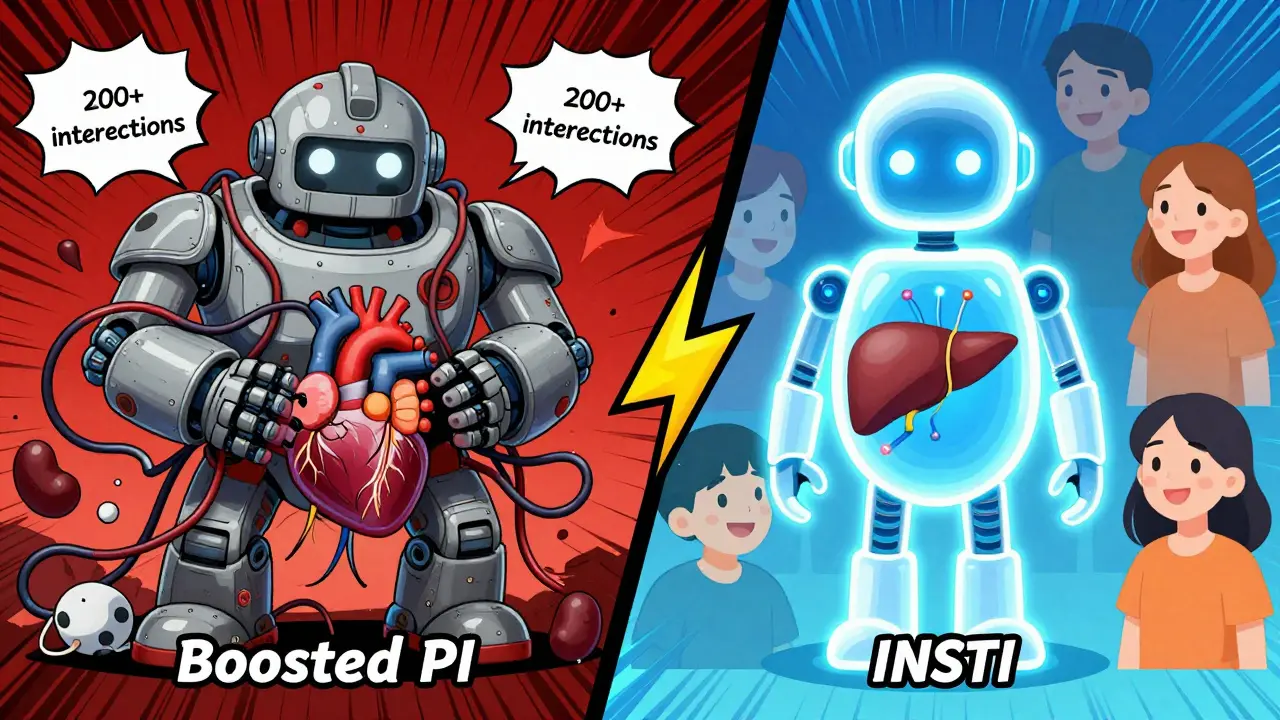
Not all antiretroviral drugs play nice with other medications. The biggest culprits are protease inhibitors (PIs) boosted with ritonavir or cobicistat. These drugs are powerful - they block HIV from multiplying - but they also slam the brakes on your liver’s ability to break down other drugs. Ritonavir alone has over 200 documented interactions. That’s more than most people realize. It doesn’t just affect HIV meds; it messes with heart drugs, cholesterol pills, even nasal sprays.Compare that to integrase strand transfer inhibitors (INSTIs) like dolutegravir and bictegravir. These newer drugs are much quieter. Bictegravir has only seven major interactions. Dolutegravir? Just eight. That’s why doctors now recommend INSTI-based regimens as the first choice for most patients. Simpler. Safer. Fewer surprises.
Then there are the non-nucleoside reverse transcriptase inhibitors (NNRTIs), like efavirenz. These don’t block metabolism - they speed it up. Efavirenz can slash the levels of other drugs by up to 75%. That means birth control pills might fail. Antifungal treatments might not work. Even some antidepressants lose their punch. It’s not just about toxicity - it’s about underdosing.
Top 5 High-Risk Interactions You Can’t Afford to Ignore
Some interactions are so dangerous they’re outright banned. Here are the top five you need to know:
- Statins + Boosted PIs - Simvastatin and lovastatin are absolutely off-limits. When taken with ritonavir or cobicistat, their levels can spike 20 to 30 times. That’s a recipe for rhabdomyolysis - a condition where muscle tissue breaks down, floods your kidneys, and can kill you. Pitavastatin and fluvastatin are safe alternatives.
- Inhaled Steroids + Boosted PIs - Fluticasone (Flonase) and budesonide (Rhinocort) seem harmless. But when combined with ritonavir, they can cause Cushing’s syndrome or adrenal failure. Patients have been hospitalized after using these nasal sprays for months. Switch to beclomethasone or mometasone instead.
- Erectile Dysfunction Drugs + Boosted PIs - Avanafil (Spedra) is completely contraindicated. Sildenafil (Viagra) can still be used, but only at 25mg every 48 hours - half the usual dose. Higher doses can cause dangerously low blood pressure.
- SSRIs + Ritonavir - Fluoxetine (Prozac) and sertraline (Zoloft) can trigger serotonin syndrome - a life-threatening spike in brain serotonin. Symptoms include confusion, rapid heartbeat, fever, and muscle rigidity. Dose reductions or switching to escitalopram are often needed.
- Rifampin + Bictegravir - Rifampin, used for tuberculosis, drops bictegravir levels by 71%. That’s enough to let HIV rebound. Avoid rifampin entirely. Use rifabutin instead - it’s safer with ART.
What About Over-the-Counter and Herbal Supplements?
Most people think only prescriptions matter. They’re wrong. A 2022 study found that 38% of dangerous interactions came from non-prescription sources. St. John’s Wort - often taken for mild depression - can slash efavirenz levels by 60%. That’s enough to make HIV treatment fail. Garlic supplements, grapefruit juice, and even high-dose vitamin C can interfere with absorption or metabolism. Don’t assume natural means safe.
Even common painkillers need caution. NSAIDs like ibuprofen and naproxen are generally okay, but when paired with certain ART drugs, they can increase kidney stress. Acetaminophen (Tylenol) is usually the safer pick. Always check with your pharmacist before starting anything new - even a cold medicine.
Why Age Makes This Even More Dangerous
Half of all people living with HIV in the U.S. are over 50. That means they’re also managing high blood pressure, diabetes, arthritis, and heart disease - each requiring their own meds. On average, a 65-year-old with HIV is taking 9 different drugs. Each additional pill increases interaction risk by 18%. Combine that with slower liver and kidney function, and you’ve got a perfect storm.
Cardiovascular disease affects 27% of older adults with HIV - higher than the general population. That’s why statins are so common. But as we saw, most statins are off-limits with boosted PIs. That’s why switching to a safer ART regimen isn’t just about HIV control - it’s about preventing heart attacks.
What You Should Do Right Now
If you’re on ART, here’s what to do:
- Get a full medication review - every time you see your doctor. Include every pill, patch, cream, vitamin, and herbal supplement.
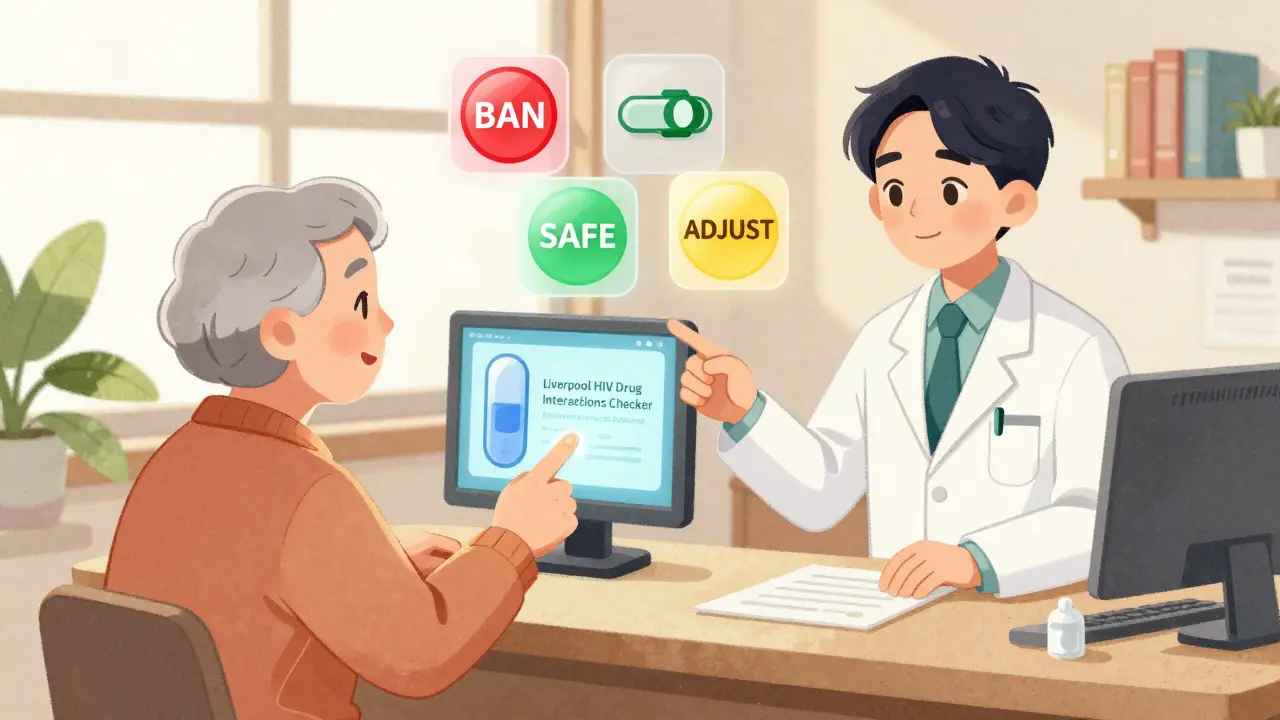
- Use the Liverpool HIV Drug Interactions Checker - it’s free, online, and updated monthly. Type in your ART and any new medication. It tells you if it’s safe, needs adjustment, or is banned.
- Ask about switching regimens - If you’re on a ritonavir-boosted PI and taking multiple other drugs, ask if dolutegravir or bictegravir could be an option. Many people can switch safely.
- Never stop or change a drug without talking to your HIV specialist - even if it’s just a cold medicine. One wrong change can undo months of viral suppression.
Pharmacists are your allies here. Many clinics now have HIV-savvy pharmacists on staff. If yours doesn’t, ask for a referral. The American Academy of HIV Medicine offers a certification course for providers - and it’s cut interaction-related emergencies by 42%.
What’s Changing in 2026 and Beyond
The future of ART is simpler. New drugs like lenacapavir, injected just twice a year, have minimal liver interactions. The next generation of HIV meds is being designed to avoid CYP450 enzymes entirely. By 2030, experts predict 80% fewer clinically significant interactions than today’s boosted PI regimens.
But until then, the risk is real. The tools exist. The data is clear. The choices are known. The question isn’t whether you can avoid these interactions - it’s whether you’re using the resources available to protect yourself.
Can I take ibuprofen with my HIV meds?
For most people on INSTIs like dolutegravir or bictegravir, ibuprofen is safe at standard doses. But if you’re on a ritonavir-boosted regimen, long-term or high-dose ibuprofen can increase kidney strain. Acetaminophen (Tylenol) is usually the safer pain reliever in those cases. Always check with your provider before using NSAIDs regularly.
Is it safe to use St. John’s Wort with HIV medication?
No. St. John’s Wort is one of the most dangerous herbal supplements for people on ART. It strongly induces CYP3A4 and P-glycoprotein, which can drop efavirenz, rilpivirine, and some PIs by 50-60%. This can lead to treatment failure and drug resistance. Avoid it completely. If you need help with depression, talk to your doctor about SSRIs that are safer with your regimen.
Why can’t I take Viagra normally if I’m on HIV meds?
If you’re on ritonavir or cobicistat, sildenafil (Viagra) can build up to dangerous levels in your blood, causing severe low blood pressure, fainting, or heart problems. The standard 50-100mg dose is too high. The safe dose is 25mg, taken no more than once every 48 hours. Avanafil (Spedra) and tadalafil (Cialis) are not safe at all with boosted PIs. Always confirm dosing with your pharmacist.
Can I switch from a boosted PI to an INSTI?
Many people can - and should. Switching from a ritonavir-boosted PI to dolutegravir or bictegravir reduces interaction risk by over 70%. But it’s not automatic. Your HIV resistance history, viral load, and other meds matter. A specialist must evaluate your full profile before switching. If you’re on multiple other drugs, switching might be the safest move you can make.
How often should I check for drug interactions?
Every time you start, stop, or change any medication - including over-the-counter drugs, supplements, or even vaccines. The Liverpool HIV Drug Interactions Checker should be used at every clinic visit. Many clinics now flag potential interactions automatically when prescriptions are entered. If yours doesn’t, ask them to start. Don’t wait for a problem to happen.

Ian Glover
My name is Maxwell Harrington and I am an expert in pharmaceuticals. I have dedicated my life to researching and understanding medications and their impact on various diseases. I am passionate about sharing my knowledge with others, which is why I enjoy writing about medications, diseases, and supplements to help educate and inform the public. My work has been published in various medical journals and blogs, and I'm always looking for new opportunities to share my expertise. In addition to writing, I also enjoy speaking at conferences and events to help further the understanding of pharmaceuticals in the medical field.
15 Comments
-
Nicole James
March 20, 2026 AT 18:17...and yet the government still approves these drugs...who's really in charge here...the FDA? Big Pharma? Or...the Illuminati? I mean, think about it...why would they allow something this dangerous to be prescribed to millions? It's not an accident...it's a system...a system that profits from chronic illness...and if you're not on INSTIs...you're being deliberately left vulnerable...they want you sick...they want you dependent...they want you paying for life-long meds...and they're using your liver as a weapon...don't trust the system...check every single pill...even the vitamins...even the garlic...it's all connected...
-
Nishan Basnet
March 21, 2026 AT 21:58This is one of the most important posts I've read in years. Seriously.
Living with HIV isn't just about taking your pills anymore-it's about becoming a detective in your own body.
I used to think statins were harmless, until my pharmacist pulled me aside and said, 'You're on a PI? Then you're basically one ibuprofen away from a hospital.'
Switching to bictegravir was the best decision I ever made. No more sleepless nights wondering if my cholesterol med is slowly killing me.
And yeah, St. John’s Wort? Don’t even joke about it. I had a friend who tried it 'for the vibes' and ended up with a viral rebound. Took six months to get back on track.
Pharmacists are your secret weapon. Use them. Love them. Thank them.
Also, if you're over 50 and on ART-you're not just managing HIV. You're managing a whole pharmacy. Be proud of how hard you're fighting. -
matthew runcie
March 23, 2026 AT 21:41Good info. Glad I switched to dolutegravir last year.
-
trudale hampton
March 24, 2026 AT 03:53Man I wish I'd known all this five years ago
My doc just handed me a script for simvastatin and said 'it's fine'
Turns out I was one step from rhabdo
Now I carry my med list everywhere
And I ask my pharmacist before I even think about taking anything new
Best advice? Don't be shy. Ask twice. Then ask again. -
Shaun Wakashige
March 25, 2026 AT 22:42lol why is this even a thing
just take your pills and chill -
Paul Cuccurullo
March 26, 2026 AT 03:34The gravity of this issue cannot be overstated. We are not merely discussing pharmacokinetics-we are confronting a systemic failure in patient education, provider training, and pharmaceutical oversight.
Each interaction represents a silent crisis, often unfolding in the quiet solitude of a home, where a patient, trusting the system, ingests a seemingly benign NSAID-only to find themselves in the ICU.
It is not negligence. It is neglect. And it is preventable.
Let us not mistake complexity for inevitability. The tools exist. The knowledge is available. The imperative is moral. -
Bryan Woody
March 27, 2026 AT 22:56Let’s be real-boosted PIs are the medical equivalent of a 2003 Chevy Malibu with a leaking radiator and duct-taped doors
Yeah, it runs… for a while
But if you’re driving a 2024 Prius (INSTI) and you’re still clinging to the Malibu because ‘it’s what I was given’-you’re not being brave, you’re being dumb
Switching regimens isn’t a betrayal of your past self-it’s a gift to your future self
And if your doctor won’t help you switch? Find a new one. There are hundreds of HIV specialists who actually know what’s on the table
Also-St. John’s Wort? That’s like putting diesel in a Tesla
And yes, I’ve seen people try it. They didn’t survive the trip. -
Thomas Jensen
March 28, 2026 AT 08:30They’re hiding something. Why do they keep pushing ritonavir? Why do they still allow grapefruit juice warnings? Why isn’t this in every ER? Why isn’t there a national database? Why do pharmacies still let people buy St. John’s Wort without a warning label? It’s not incompetence. It’s control. They want you dependent. They want you confused. They want you scared to ask questions. I’ve been on ART for 17 years. I’ve watched three friends die from ‘simple’ interactions. And no one talks about it. Why? Because if we all knew, we’d burn the whole system down.
-
Jackie Tucker
March 29, 2026 AT 14:40How quaint. A 12-page treatise on drug interactions as if this is news. I’ve been on dolutegravir since 2019. I don’t even check the Liverpool tool anymore. I just know. And if you’re still on a boosted PI in 2024? Honey, you’re not ‘managing’ your health-you’re performing a tragic opera for Big Pharma. The real question isn’t whether you can switch-it’s why you haven’t yet.
-
Sandy Wells
March 30, 2026 AT 19:48Most people don’t even know what CYP450 is
And they’re still taking supplements
And they wonder why they’re in the hospital
It’s not complicated
It’s just not taught
Doctors don’t have time
Pharmacists are overworked
Patients are overwhelmed
And the system just keeps chugging along
Meanwhile, someone’s kidneys are failing because they took Advil with their PI -
Chris Dwyer
April 1, 2026 AT 04:52Man I wish I’d found this thread two years ago
My wife was on a boosted PI with 8 other meds and we were just winging it
Then we found our HIV pharmacist-she changed our lives
Switched us to bictegravir, cut 3 drugs, added 2 safety checks
Now we sleep better
And I finally stopped checking the news every time she takes a new pill
Don’t wait until something breaks
Reach out. Ask. Advocate.
You’ve got this. -
Timothy Olcott
April 2, 2026 AT 12:11USA for life! We got the best meds in the world
Stop whining
Just take your pills like a man
And if you're in India or somewhere else? Don't even think about it
They don't even have clean water
Meanwhile we got free checkups and Liverpool tool
So shut up and be grateful
Also I took ibuprofen with my ART and I'm still here 😎 -
Desiree LaPointe
April 3, 2026 AT 01:54How is this even a conversation in 2024? The fact that we’re still debating whether to avoid grapefruit juice with ritonavir is a national disgrace. I have a PhD in pharmacology and I still had to Google this. Imagine someone without a degree. Imagine someone without insurance. Imagine someone who can’t afford to switch regimens. This isn’t medicine. This is a moral emergency dressed in clinical jargon. And yet, the same people who wrote this article are probably still prescribing boosted PIs to patients who can’t afford alternatives. The hypocrisy is breathtaking.
-
shannon kozee
April 3, 2026 AT 23:18Switched from atazanavir to bictegravir last year. No more interactions. No more pharmacy calls. Just peace.
Best move I ever made.


Write a comment
More Articles

Tung Seed: Everything You Need to Know About This Powerful Dietary Supplement
I recently came across a powerful dietary supplement called Tung seed, and I just had to share it with you guys! Tung seed comes from the Tung tree, native to China, and is packed with numerous health benefits. It is high in Omega-3 fatty acids, essential for a healthy heart, and also has anti-inflammatory properties. Many people use it to boost their immune system and maintain a healthy weight. If you haven't tried Tung seed yet, I highly recommend giving it a shot for a natural and effective boost to your overall health!


Solomon Kindie
March 20, 2026 AT 13:00So basically if you're on ART you gotta treat your meds like a damn Jenga tower and hope no one knocks it over
One wrong combo and boom your kidneys turn to mush or your heart decides to quit
Why do we still let pharma make these toxic combos in the first place
They know this shit happens and yet they keep pushing boosted PIs like its 2008
Its not rocket science but somehow its still a minefield