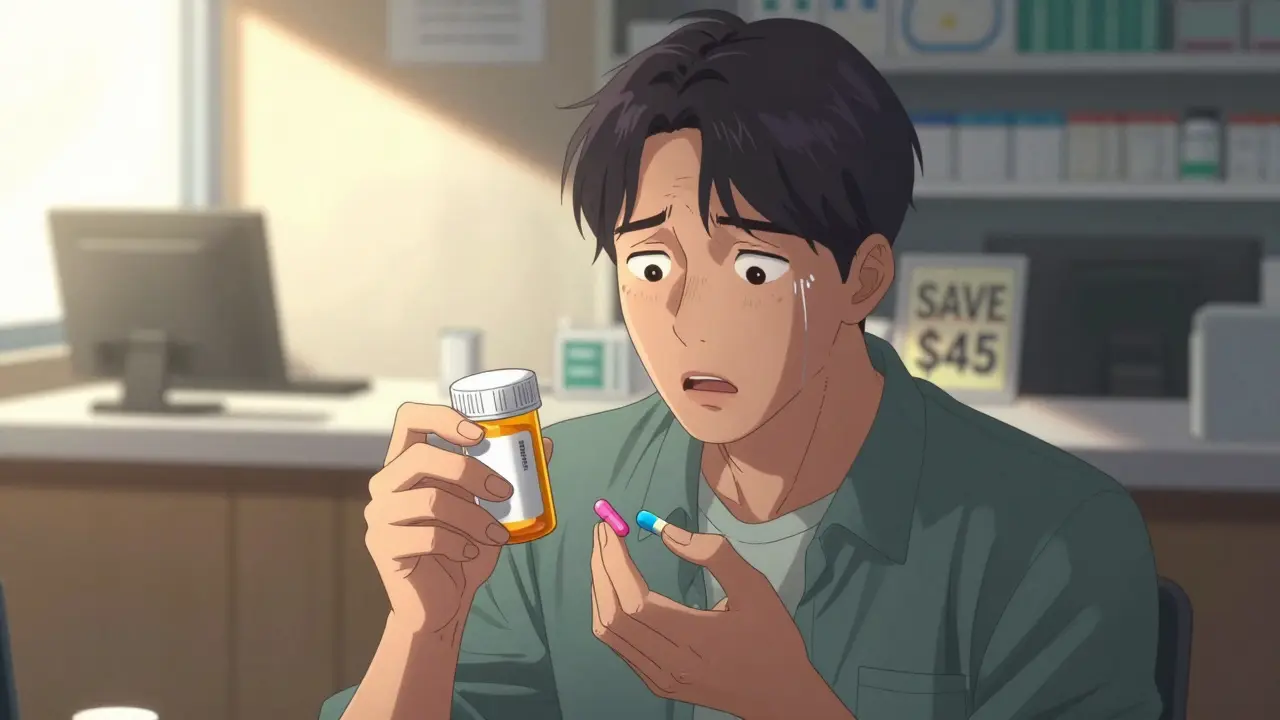
When you’ve been seizure-free for years, the last thing you want is for your pharmacy to switch your medication without telling you. Yet that’s exactly what happens to thousands of people taking antiseizure medications (ASMs) every year - not because of a mistake, but because of a policy meant to save money. Generic substitution sounds simple: same active ingredient, lower price. But for drugs with a narrow therapeutic index, like many antiseizure medications, that small difference in how the body absorbs the drug can mean the difference between safety and a life-threatening seizure.
Why Antiseizure Medications Are Different
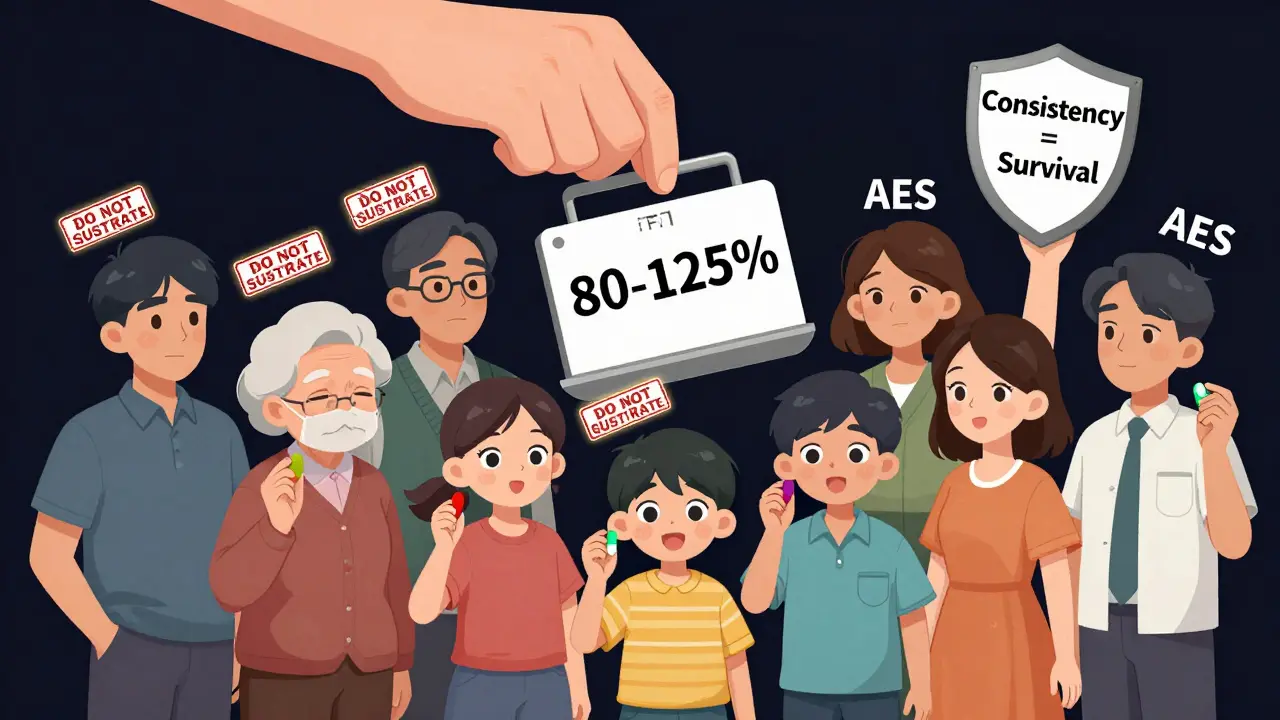
Not all medications are created equal when it comes to switching brands. Most drugs - like antibiotics or blood pressure pills - can be swapped between generic and brand versions without issue. But antiseizure drugs are in a class of their own. Many of them, including lamotrigine, carbamazepine, and valproic acid, have a narrow therapeutic index. That means the gap between a dose that works and one that causes harm is tiny. A 15% drop in blood levels might trigger a seizure. A 15% increase could cause dizziness, confusion, or even liver damage. The FDA says generics are bioequivalent if their absorption falls within 80-125% of the brand-name drug. That sounds precise. But for epilepsy patients, that 45% range is enormous. Imagine your blood level needs to stay between 5 and 7 micrograms per milliliter. A generic that puts you at 4.8? You’re now outside the safe zone. And it’s not just about the active ingredient. Fillers, coatings, and release mechanisms can change how quickly the drug enters your system. A generic version of extended-release lamotrigine might release the drug faster than the brand, causing spikes and crashes in your bloodstream - even if the total amount absorbed is technically "equivalent."The Real Cost of Saving Money
It’s true: generics cost 30-80% less. In the U.S., they make up about 90% of all antiseizure prescriptions. But the savings aren’t always clear-cut. A 2008 study published in Neurology found that switching to generic lamotrigine led to a 23% increase in doctor visits and an 18% rise in hospitalizations. Why? Because when seizures return, the cost of emergency care, missed work, and lost productivity often outweighs the drug savings. A global survey of 1,247 healthcare professionals in 68 countries found that 40% had seen patients experience more seizures after switching to generics. Another 17% reported more side effects. These aren’t rare cases. They’re patterns. And they’re backed by patient stories. One person on the Epilepsy Foundation’s forum wrote: "I’d been seizure-free for five years. After my pharmacy switched me to generic Lamictal, I had three seizures in two weeks." Another Reddit user said switching between different generic versions - each with different colors and shapes - made them anxious enough to trigger their first seizure in two years.What the Experts Say
There’s a deep divide between regulators and clinicians. The FDA maintains that generic substitution doesn’t increase risk. But neurologists who treat epilepsy daily see something else. Dr. Philip Glass from Montefiore Medical Center says, "The evidence is clear that for narrow therapeutic index drugs like many ASMs, even small variations matter." His center’s policy? Never switch patients with difficult-to-control epilepsy unless absolutely necessary. The American Epilepsy Society (AES) takes a middle ground. They agree the FDA’s bioequivalence standards are scientifically sound - but they also urge caution. Their 2018 position statement says: "Heightened caution is needed for medically complex patients." That includes people with frequent seizures, cognitive issues, or anxiety disorders. For them, even the stress of changing pill appearance can be a seizure trigger. In the UK, the Medicines and Healthcare products Regulatory Agency (MHRA) is even clearer: "Consistency of supply is important where the consequence of therapeutic failure might have serious clinical consequences." That’s not a vague suggestion. It’s a warning.
Who’s Most at Risk?
Not everyone needs to avoid generics. But some groups are far more vulnerable:- People with frequent or uncontrolled seizures
- Those taking multiple antiseizure drugs (polypharmacy)
- Patients with memory problems or cognitive decline
- Children and elderly individuals who rely on caregivers
- People on the ketogenic diet - some generic fillers contain hidden carbs
- Anyone who’s been stable for months or years
What You Can Do
You don’t have to accept random switches. Here’s how to protect yourself:- Ask your neurologist to write "Dispense as Written" or "Do Not Substitute" on your prescription. This legally prevents the pharmacy from switching without your doctor’s approval.
- Check your pills every time. If the color, shape, or imprint changes, call your pharmacy. Ask if it’s the same version you’ve been taking. If not, ask them to refill with your original brand or generic.
- Keep a seizure diary. Note any changes in frequency, severity, or side effects after a switch. This data helps your doctor decide if the change caused the problem.
- Know your medication’s name. Don’t just say "my seizure medicine." Know if you’re on lamotrigine, carbamazepine, or valproic acid - and whether it’s brand or generic.
- Use the same pharmacy. Chain pharmacies often switch generics based on cost. Independent pharmacies are more likely to hold your preferred version in stock.
What Doctors and Pharmacies Should Do
Many neurologists say they weren’t trained on bioequivalence in medical school. A 2022 survey found that 78% of neurologists felt underprepared to advise patients on generic substitution. That needs to change. Pharmacists, too, need better guidance. While they’re trained to fill prescriptions, few are taught how to recognize when a switch might be dangerous. The AES and Epilepsy Foundation offer free education modules - but uptake is low. More training, clearer labeling, and standardized communication between prescribers, pharmacists, and patients are essential.The Bigger Picture
The global antiseizure medication market is worth over $6 billion. Generics dominate it - and will keep growing. But the push for cost-cutting can’t ignore patient safety. The FDA is now considering tighter bioequivalence standards for narrow therapeutic index drugs - possibly narrowing the acceptable range from 80-125% to 90-111%. That’s a step in the right direction. Meanwhile, newer ASMs like cenobamate and fenfluramine have complex absorption profiles. These aren’t the old, simple drugs. They’re precision tools. And precision medicine demands consistency.Final Thoughts
Generic substitution isn’t bad. It’s necessary for access. But it shouldn’t be automatic - especially for antiseizure drugs. For people living with epilepsy, stability isn’t a luxury. It’s survival. If you’ve been doing well, don’t let a pharmacy change your medication without your knowledge. Speak up. Ask questions. Demand consistency. Your brain deserves nothing less.
Ian Glover
My name is Maxwell Harrington and I am an expert in pharmaceuticals. I have dedicated my life to researching and understanding medications and their impact on various diseases. I am passionate about sharing my knowledge with others, which is why I enjoy writing about medications, diseases, and supplements to help educate and inform the public. My work has been published in various medical journals and blogs, and I'm always looking for new opportunities to share my expertise. In addition to writing, I also enjoy speaking at conferences and events to help further the understanding of pharmaceuticals in the medical field.
11 Comments
-
Sophie Stallkind
December 26, 2025 AT 23:16Thank you for this meticulously researched and deeply necessary exposition. The clinical implications of generic substitution in antiseizure medications are not merely pharmacological - they are profoundly human. The statistical increases in hospitalization and emergency visits, as documented in the 2008 Neurology study, underscore a troubling disconnect between regulatory policy and frontline patient outcomes.
It is imperative that prescribers, pharmacists, and policymakers recognize that bioequivalence, as currently defined, does not equate to clinical equivalence in patients with narrow therapeutic index drugs. The psychological burden of pill variability - the anxiety induced by color, shape, or imprint changes - is itself a neurological stressor that can precipitate seizures in vulnerable individuals.
I urge all healthcare institutions to adopt mandatory education modules on this topic, and to implement institutional policies that prioritize therapeutic consistency over cost-driven substitution. Patient safety must supersede administrative convenience. -
Michael Dillon
December 27, 2025 AT 05:47Look, I get the fear. But let’s be real - if generics were that dangerous, we’d be seeing hospitals overflowing with seizure patients every time a new batch hits the shelf. The fact is, most people switch without issue. The ones who have problems? Often they’re already anxious, hyper-focused on their meds, and blaming every little thing on the pill change. It’s the nocebo effect in action.
And let’s not forget: generics are how millions of people even access these drugs. Take away generics and you take away treatment for people who can’t afford brand names. That’s not a trade-off - that’s a moral imperative.
Yeah, maybe a few people get unlucky. But the data doesn’t show a crisis. It shows a few loud voices and a lot of confirmation bias. The FDA didn’t approve these drugs on a whim. They’re tested. They’re regulated. If it worked for me, it can work for others. -
Gary Hartung
December 29, 2025 AT 02:21Oh, this is just beautiful. A meticulously crafted manifesto on the sacred geometry of seizure stability - complete with FDA quotes, journal citations, and the sacred incantation: ‘Dispense as Written.’
Meanwhile, in the real world, a 72-year-old widow in Ohio is choosing between her insulin and her lamotrigine - because the pharmacy won’t stock the brand unless she pays $300 extra. And here we are, sipping artisanal coffee, debating the 15% absorption variance like it’s a wine tasting.
Let’s not pretend this is about science. It’s about privilege. The people screaming about pill colors? They’ve never had to choose between rent and their meds. The ‘stability’ you’re fighting for? It’s a luxury most patients can’t afford.
So yes - keep your ‘Do Not Substitute’ scripts. Keep your seizure diaries. Keep your neurologist’s handwritten blessings.
But don’t pretend you’re saving lives. You’re just protecting your own comfort - while the rest of us pray the generic doesn’t kill us before the rent does. -
Ben Harris
December 29, 2025 AT 02:41Why do you think they dont tell you when they switch the pill why do you think the color changes every month why do you think the shape is different why do you think your neurologist never mentions this because the system is designed to keep you in the dark and the pharmacies are making money off the switch and the insurance companies are laughing and the FDA is asleep and your doctor is too busy to care and you are just a number on a spreadsheet and your brain is just another cost center and if you seize so what you were on the wrong pill anyway and now you know better dont you
-
Jason Jasper
December 29, 2025 AT 16:53I’ve been on carbamazepine for 12 years. Switched from brand to generic once - no issues. Switched back to brand because my insurance changed - no issues. But I also don’t have frequent seizures, I’m not on polypharmacy, and I’ve got a neurologist who checks my levels every six months.
This isn’t a blanket issue. It’s context-dependent. For some, it’s life-altering. For others, it’s noise.
What matters is communication. If you’re stable, tell your doctor. If you’re worried, ask for a level check. If the pill looks different, ask why. It’s not about fear. It’s about awareness.
Not everyone needs the same rules. But everyone deserves to be heard. -
Mussin Machhour
December 30, 2025 AT 00:06Y’all are overthinking this. If you’re scared of the generic, just ask for the brand. No one’s forcing you to take a different pill. If your doc says ‘dispense as written,’ they’ll honor it. If your pharmacy tries to switch, call them out. Simple.
I’ve been on generic lamotrigine for 4 years. No seizures. No side effects. My cousin? Switched and had a seizure. She went back to brand. Done.
It’s not a conspiracy. It’s a system. And you’ve got tools to navigate it. Use them. Don’t panic. Don’t rage. Just speak up.
And hey - if you’re on the keto diet? Check the fillers. That’s just common sense. Not a crisis. Just read the label. -
Justin James
December 31, 2025 AT 12:21Have you ever stopped to think that the FDA, the pharmaceutical companies, and the insurance giants are all in on this? They don’t want you to know that generics are being manufactured in the same plants as the brand names - but with cheaper fillers that are laced with neurotoxic binders to make you dependent on more meds. The 80-125% window? That’s not science - that’s a backroom deal with the AMA and Big Pharma to keep you in the system. The color changes? That’s a tracking code. The pill imprints? They’re microchips. They’re monitoring your brain activity through your seizures. Why? Because your brainwaves are being sold to data brokers who sell them to AI companies training neural networks on human neurological collapse. The ketogenic diet warning? That’s because the fillers contain hidden corn syrup - but that’s just the tip of the iceberg. The real agenda? To create a population of seizure-prone citizens who are easier to control through fear, medication dependency, and constant medical surveillance. And if you don’t believe me, check the patent filings on the fillers in generic lamotrigine - they’re identical to the ones used in experimental neurosurveillance programs. You think this is about cost? No. This is about control. And they’re using your children’s brains to do it.
-
Lindsay Hensel
December 31, 2025 AT 22:08Stability is not a privilege. It is a right.
Every pill change is a tremor in the fragile architecture of a patient’s life.
Let us not mistake cost-efficiency for care.
Let us not call indifference a policy.
And let us never forget: behind every statistic is a person who woke up trembling, not from fear - but from a seizure they never should have had. -
Katherine Blumhardt
January 2, 2026 AT 18:44i just switched to a new generic and my head feels weird but i think its just stress??? also my pill is pink now not blue and i dont know if thats normal but my pharmacist said its fine??? idk i just hope i dont seize again like last time but i think its all in my head??? maybe i should just stop checking the pills???
-
sagar patel
January 4, 2026 AT 05:10In India we use generics for everything including antiseizure drugs and the rate of seizure recurrence is lower than in US because we have better adherence and fewer psychological triggers. The problem is not the generic. The problem is the fear.


Write a comment
More Articles

Buy Cheap Generic Crestor Online - Affordable Cholesterol Medication
Learn how to safely buy cheap generic Crestor online, compare prices, verify legitimate UK pharmacies, and avoid scams while saving on cholesterol medication.

Capecitabine and cancer-related anemia: Strategies for management
In my recent research on cancer-related anemia, I came across some interesting strategies for managing this condition, particularly with the use of Capecitabine. As a chemotherapy drug, Capecitabine has shown promising results in reducing anemia symptoms in cancer patients. One approach includes adjusting the dosage and scheduling of Capecitabine to optimize its effectiveness in treating anemia. Additionally, combining Capecitabine with other treatments, such as iron supplementation, can provide further benefits. It is crucial for cancer patients and their healthcare team to collaborate in finding the most suitable management plan for their specific needs.

Minoxidilfinasteride and Hair Loss in Travel: Tips for Staying Confident on the Go
Traveling can be stressful, especially when dealing with hair loss. Thankfully, Minoxidilfinasteride has been a game changer in managing this issue. To stay confident on the go, I make sure to stick to my treatment routine and pack my Minoxidilfinasteride in my travel kit. I also carry a hat or a stylish scarf to cover up any thinning spots. Most importantly, I remind myself that confidence comes from within, and I don't let hair loss hold me back from enjoying my travels.
Terry Free
December 26, 2025 AT 02:55So let me get this straight - we’re letting pharmacies play Russian roulette with people’s brains because a pill costs $5 less? The FDA’s 80-125% bioequivalence window isn’t science, it’s a corporate loophole dressed up as regulation. If your blood level dips 15% below therapeutic and you seize, is that a ‘pharmaco-economic win’? I’ve seen patients go from zero seizures to three in a week after a generic switch. This isn’t about cost. It’s about negligence disguised as efficiency.
And don’t give me that ‘same active ingredient’ nonsense. Fillers matter. Coatings matter. Release kinetics matter. You wouldn’t swap a Ferrari engine for a ‘bioequivalent’ Honda block and call it the same car. Why do we accept this with brain drugs?
Doctors need to start writing ‘Dispense as Written’ like it’s a life-or-death order - because it is. And pharmacies? They need training, not just profit margins.
Meanwhile, the Epilepsy Foundation’s data is screaming. 27% of patients switched back. That’s not anecdotal. That’s a systemic failure.
Generic substitution is fine for ibuprofen. Not for lamotrigine. Not for carbamazepine. Not for anyone whose brain depends on stability, not savings.