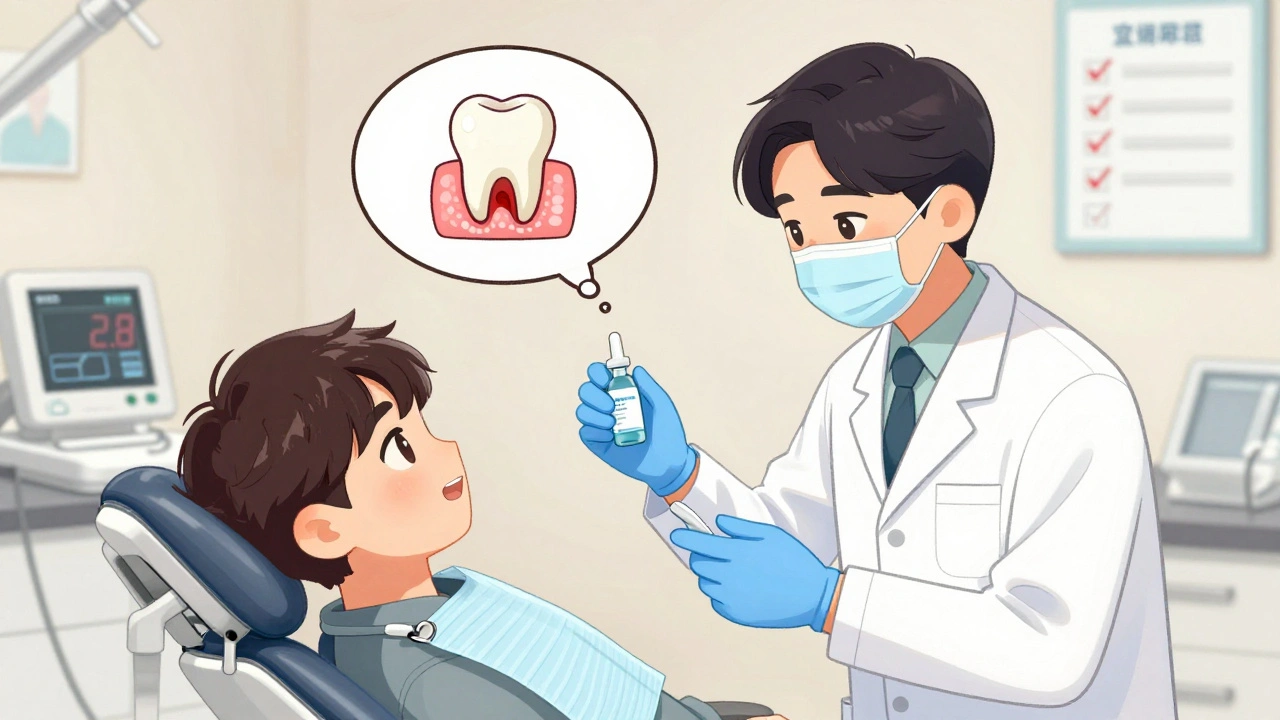
Anticoagulant Dental Procedure Risk Calculator
Assess Your Dental Procedure Risk
This tool helps you understand bleeding risks when having dental work while on anticoagulants. Based on your medication type and procedure, it will provide evidence-based guidance.
When you're on blood thinners, even a simple dental cleaning can feel risky. You’ve heard the warnings: anticoagulants increase bleeding. But what if stopping them is even more dangerous? This isn’t just about a little extra bleeding after a tooth extraction-it’s about preventing strokes, heart attacks, and blood clots that can kill you. Millions of people take anticoagulants for atrial fibrillation, artificial heart valves, or deep vein thrombosis. And more of them are walking into dental offices than ever before. The good news? You don’t need to stop your medication for most procedures. The key is knowing how to manage it right.
Why Stopping Blood Thinners Is Often the Bigger Risk
For years, dentists and patients assumed the safest move was to pause blood thinners before any dental work. That’s what doctors used to do with warfarin. But research from the last decade flipped that thinking. A 2020 JAMA Internal Medicine study of over 3,000 patients found that stopping anticoagulants for dental procedures increased the risk of stroke by 3.5 times. For someone with a mechanical heart valve or chronic atrial fibrillation, a stroke isn’t just a scary word-it’s often fatal or permanently disabling. Dental bleeding, on the other hand, is usually minor and controllable. One expert put it bluntly: thromboembolic events carry 10 to 20 times higher mortality than bleeding from a tooth extraction.What Counts as a Low-Risk Dental Procedure?
Not all dental work is the same when you’re on blood thinners. The risk level depends on the procedure, not just the drug. Low-risk procedures include:- Single tooth extractions
- Simple fillings
- Scaling and root planing (deep cleaning)
- Local anesthesia injections
- Periodontal probing
What About Higher-Risk Procedures?
Some dental work carries more bleeding risk. These include:- Multiple tooth extractions
- Periodontal surgery
- Implant placements (especially more than two)
- Full-mouth extractions
Warfarin vs. DOACs: What’s the Difference?
There are two main types of blood thinners: warfarin and direct oral anticoagulants (DOACs). Warfarin has been around for decades. It requires regular INR blood tests to make sure your blood isn’t too thin or too thick. DOACs-like apixaban (Eliquis), rivaroxaban (Xarelto), dabigatran (Pradaxa), and edoxaban (Savaysa)-don’t need routine testing. They’re more predictable, but they’re not risk-free. A 2022 meta-analysis of over 14,000 patients found warfarin has a 2.3-fold higher bleeding risk during dental procedures than DOACs. But DOACs aren’t perfect. Rivaroxaban carries a higher chance of stomach bleeding than warfarin. Edoxaban can interact badly with proton pump inhibitors like omeprazole, which many patients take for heartburn. That interaction can raise bleeding risk by 2.4 times. That’s a hidden trap for implant patients who need bone healing and are also on acid-reducing meds.
How Dentists Control Bleeding Without Stopping Your Meds
You don’t need to stop your blood thinner. But your dentist needs tools to control bleeding. Here’s what works:- Tranexamic acid mouthwash (5%)-used four times a day for a week-cuts bleeding risk by 62%. It’s cheap, safe, and effective.
- Oxidized regenerated cellulose (Surgicel®)-a dissolvable sponge placed in the socket-reduces bleeding time by 47% compared to plain gauze.
- Microfibrillar collagen (Avitene®)-a natural hemostatic agent-stops bleeding in 92.3% of cases in anticoagulated patients.
- Lidocaine with epinephrine (1:100,000)-the local anesthetic-constricts blood vessels and reduces bleeding by 32% compared to plain lidocaine.
What About Painkillers and Antibiotics?
Pain management is where things get tricky. NSAIDs like ibuprofen, naproxen, or aspirin (even low-dose) can double or triple your bleeding risk when combined with anticoagulants. The answer? Stick with acetaminophen (paracetamol). But even that has a catch: if you take more than 2 grams a day for over seven days, it can raise your INR. Monitor it. Antibiotics matter too. Metronidazole (Flagyl) can boost warfarin’s effect by 33-50%, leading to dangerous INR spikes. Azithromycin? No interaction. Always tell your dentist what antibiotics you’re on-or might be prescribed.What No One Tells You About Bridging
Some doctors still recommend “bridging”-switching from warfarin to heparin shots before surgery, then switching back. It sounds smart. But it’s not. The 2015 BRIDGE trial, published in the New England Journal of Medicine, showed bridging triples major bleeding risk (3.2% vs 1.1%) without reducing clots. The American College of Cardiology says it’s never justified for dental work. If your doctor suggests it, ask for the evidence. Most likely, they’re operating on old habits.
Common Mistakes Dentists Still Make
Despite clear guidelines, mistakes are common. A 2022 survey of 1,247 U.S. dentists found 43.7% still stop warfarin for single extractions. That’s against every major guideline. And the consequences? In 18.3% of those cases, patients ended up in the emergency room within 30 days with a stroke or clot. The problem isn’t lack of knowledge-it’s lack of systems. Clinics that use checklists cut adverse events by 67%. A simple form that asks: “Last INR date? INR value? Last DOAC dose? Hemostatic plan?” makes all the difference.What’s New in 2025?
Technology is helping. Portable INR devices like CoaguChek® let dentists check your blood thinning level in under a minute. No more waiting for lab results. In 2023, the FDA updated approval for andexanet alfa (Andexxa®), a reversal agent for DOACs. It’s expensive-$18,850 per vial-but it can save lives in emergencies. Emerging research is testing topical gels with recombinant factor VIIa. Early trials show they cut bleeding time by over 60%. And AI tools are being developed to predict bleeding risk with 89% accuracy by analyzing 17 factors: your INR, platelet count, procedure type, age, kidney function, and more.What You Should Do Before Your Appointment
Don’t wait for your dentist to ask. Take charge:- Bring a list of every medication you take, including doses and timing.
- Know your latest INR value (if on warfarin) and when it was tested.
- Know the name and dose of your DOAC, and when you last took it.
- Ask: “Will I need to stop my blood thinner? What hemostatic measures will you use?”
- Ask for tranexamic acid mouthwash if it’s not offered.
- Never take NSAIDs for pain after the procedure-use acetaminophen instead.
Final Thought: It’s About Balance, Not Fear
Blood thinners aren’t the enemy. Stopping them without reason is. Dental care is essential. Skipping cleanings or delaying extractions because you’re scared of bleeding can lead to infections, tooth loss, and worse-systemic inflammation that increases your heart risk. With the right protocols, you can get the care you need without putting your life on the line. The science is clear. The tools are available. The only thing missing is confidence-yours and your dentist’s.Should I stop my blood thinner before a tooth extraction?
No, for most single extractions and routine procedures, you should continue your blood thinner. Stopping it increases your risk of stroke or clot by 3.5 times, according to JAMA Internal Medicine. Bleeding from a tooth extraction is usually minor and can be controlled with proper techniques like tranexamic acid mouthwash or Surgicel®. Only stop your medication if your cardiologist or hematologist specifically advises it for a high-risk procedure.
What if I take rivaroxaban or Eliquis? Do I need to wait after my last dose?
Yes. For once-daily DOACs like rivaroxaban, wait at least 12-24 hours after your last dose before a procedure. For twice-daily drugs like apixaban, wait 24-48 hours. If you take your morning dose and have an afternoon appointment, reschedule. Studies show extractions done less than 4 hours after rivaroxaban have an 8.7% major bleeding rate-compared to 1.2% if you wait longer. Timing matters more than INR with DOACs.
Can I take ibuprofen for pain after a dental procedure?
No. Ibuprofen, naproxen, and other NSAIDs increase bleeding risk 3 to 6 times when combined with anticoagulants. Use acetaminophen (paracetamol) instead. But if you take more than 2 grams a day for over seven days, it can affect your INR. Stick to the lowest effective dose for the shortest time.
Do I need an INR test before every dental visit?
Only if you’re on warfarin and having a moderate- or high-risk procedure. For low-risk procedures like fillings or single extractions, an INR within the last 72 hours is sufficient. If your last test was over a week ago, ask your doctor for a quick check. For DOACs, no INR test is needed-but you must know when you last took your dose.
Is it safe to get dental implants if I’m on blood thinners?
Yes, but it’s higher risk. Implants require multiple surgical steps and bone healing. For one or two implants, continue your anticoagulant with INR under 2.5 (if on warfarin) and use hemostatic agents like collagen or tranexamic acid. For three or more implants, consult your hematologist. Some may recommend a temporary INR target of 2.0. Avoid bridging with heparin-it increases bleeding without benefit.

Ian Glover
My name is Maxwell Harrington and I am an expert in pharmaceuticals. I have dedicated my life to researching and understanding medications and their impact on various diseases. I am passionate about sharing my knowledge with others, which is why I enjoy writing about medications, diseases, and supplements to help educate and inform the public. My work has been published in various medical journals and blogs, and I'm always looking for new opportunities to share my expertise. In addition to writing, I also enjoy speaking at conferences and events to help further the understanding of pharmaceuticals in the medical field.
15 Comments
-
Louis Llaine
December 9, 2025 AT 11:07Yeah sure. And I’m sure the pharmaceutical companies didn’t pay for all this "research." Next thing you know, they’ll say brushing your teeth is dangerous unless you buy their special $200 toothpaste.
-
Jane Quitain
December 11, 2025 AT 08:40this is sooo important!! i had a tooth pulled last year and my dentist just said "eh, youll be fine" and i was shaking the whole time!! now i feel like i should’ve asked more questions!! thank you for sharing!! 💕
-
Sam Mathew Cheriyan
December 12, 2025 AT 13:53lol you guys really believe this? what about the NSAIDs ban? i bet the FDA and ADA are just coverin up for the drug companies so they can sell more expensive DOACs. i know a guy who got a stroke after they made him stop his blood thinner for a filling. they lied. always lie.
-
Ernie Blevins
December 14, 2025 AT 00:09So you’re telling me I can’t take ibuprofen? That’s it. I’m off the meds. Better to bleed out than be in pain. This is just fearmongering. Who even uses tranexamic acid? Sounds like a chemical weapon.
-
David Brooks
December 15, 2025 AT 18:59I cried reading this. I’m on Xarelto and have a root canal next week. I’ve been terrified. But now? I feel empowered. This isn’t just dental advice-it’s a lifeline. Thank you for writing this like someone who actually cares. You just changed my life. 🥹❤️
-
Sadie Nastor
December 17, 2025 AT 07:47i love how this is so clear but also gentle. i was so scared to even make an appt bc i thought they’d make me stop my meds. now i’m gonna bring this printout to my dentist. maybe they’ll finally listen. 🙏✨
-
Kurt Russell
December 17, 2025 AT 21:21Let me break this down like I’m talking to my grandma: If you’re on blood thinners, DO NOT STOP THEM for a cleaning or single tooth pull. Period. The bleeding? Manageable. The stroke? Permanent. Use the mouthwash. Use the sponge. Use the epinephrine. And if your dentist says "I always stop them," walk out. They’re operating on 2005 knowledge. You deserve better.
-
Stacy here
December 18, 2025 AT 15:56This isn’t medicine. This is corporate control. Why do they want you to keep taking DOACs? Because they’re more profitable. Why do they ban NSAIDs? Because they want you to buy acetaminophen, which is cheaper for them to produce and they own the patents. Bridging? That’s a money grab. The real enemy isn’t clotting-it’s the system that profits off your fear. Wake up.
-
Kyle Flores
December 19, 2025 AT 00:04I’m a dental hygienist and this is exactly what we’re supposed to be doing-but so many offices still don’t have the protocol. I hand out tranexamic acid rinse to every anticoagulated patient now. No one ever asks for it, but I offer it anyway. Small acts save lives. You’re not alone.
-
Ryan Sullivan
December 19, 2025 AT 11:56The statistical framing here is statistically valid, but the clinical generalization is dangerously reductive. The 3.5x stroke risk is aggregated across heterogeneous populations with varying CHA₂DS₂-VASc scores. For a patient with CHA₂DS₂-VASc = 0 on DOACs, the absolute risk increase from continuing anticoagulation may be negligible. You’re conflating relative risk with absolute risk. This is why medicine is broken.
-
Olivia Hand
December 20, 2025 AT 22:32Wait-so if I’m on edoxaban and take omeprazole for acid reflux, my bleeding risk goes up 2.4x? I’ve been on both for years. Is this why I’ve had unexplained bruising? I’m calling my doctor tomorrow. Thank you for mentioning this. I never knew.
-
Helen Maples
December 22, 2025 AT 13:48This is excellent. But if your dentist doesn’t use Surgicel or collagen, they’re not following standard of care. Don’t settle. Ask for it. If they say no, find a new dentist. Your life is worth more than their convenience.
-
Jennifer Anderson
December 24, 2025 AT 00:07i just found out my mom is on warfarin and she’s been avoiding the dentist for 2 years bc she was scared. i’m printing this out and giving it to her. she’s gonna cry. thank you for making this so clear. 🤍
-
Sangram Lavte
December 25, 2025 AT 13:45I’m from India and we don’t have access to most of these hemostatic agents here. But we do have alum powder and clove oil. I’ve used both after extractions. Not as good as tranexamic acid, but better than nothing. Maybe someone can research traditional methods for anticoagulated patients.


Write a comment
More Articles

GERD and Acid Reflux: How PPIs and Lifestyle Changes Work Together
GERD and acid reflux can be managed with PPIs, but long-term relief comes from lifestyle changes. Learn how weight loss, diet, and timing can reduce symptoms and help you stop relying on medication.

Medications and Athletes: How Common Drugs Affect Performance and Health
Performance-enhancing drugs may boost strength and recovery, but they come with severe, often irreversible health risks-including heart damage, infertility, and mental health collapse. Most users are not elite athletes-they’re everyday gym-goers unaware of the dangers.

Desmond Khoo
December 8, 2025 AT 01:53OMG this is LIFE-SAVING info!! 🙌 I was terrified to get my wisdom teeth out on Eliquis, but now I feel like a superhero. Tranexamic acid mouthwash? I’m grabbing some today. Dentists need to stop acting like we’re all gonna bleed out. 💪🦷