What Are Diabetes Combination Medications?
Diabetes combination medications are pills that contain two or more drugs in one tablet, designed to help control blood sugar in people with Type 2 diabetes. They’re not new-doctors started using them more widely after 2006 when the American Diabetes Association said most patients need more than just one drug to keep HbA1c below 7%. The idea is simple: instead of taking four or five pills a day, you take one or two. That makes it easier to stick with your treatment plan.
The most common combo includes metformin with another drug. Metformin is the go-to first-line treatment because it’s effective, safe, and cheap. It works by reducing how much sugar your liver makes and helping your body use insulin better. The second drug in the combo usually targets a different part of the problem-like increasing insulin release, blocking sugar reabsorption in the kidneys, or improving how your body responds to insulin.
These combos come in two main forms: immediate-release (IR) and extended-release (XR). XR versions release the medicine slowly over time, which can mean fewer side effects like stomach upset. About 60% of today’s combination pills are XR, but most generics are only available as IR.
Which Combination Meds Have Generic Versions?
Out of the 25 combination diabetes drugs available in the U.S., only five have generic versions. The rest are still brand-only, and those can cost hundreds of dollars a month. If you’re paying out of pocket, that’s a big difference.
Here are the main generic combos you can get right now:
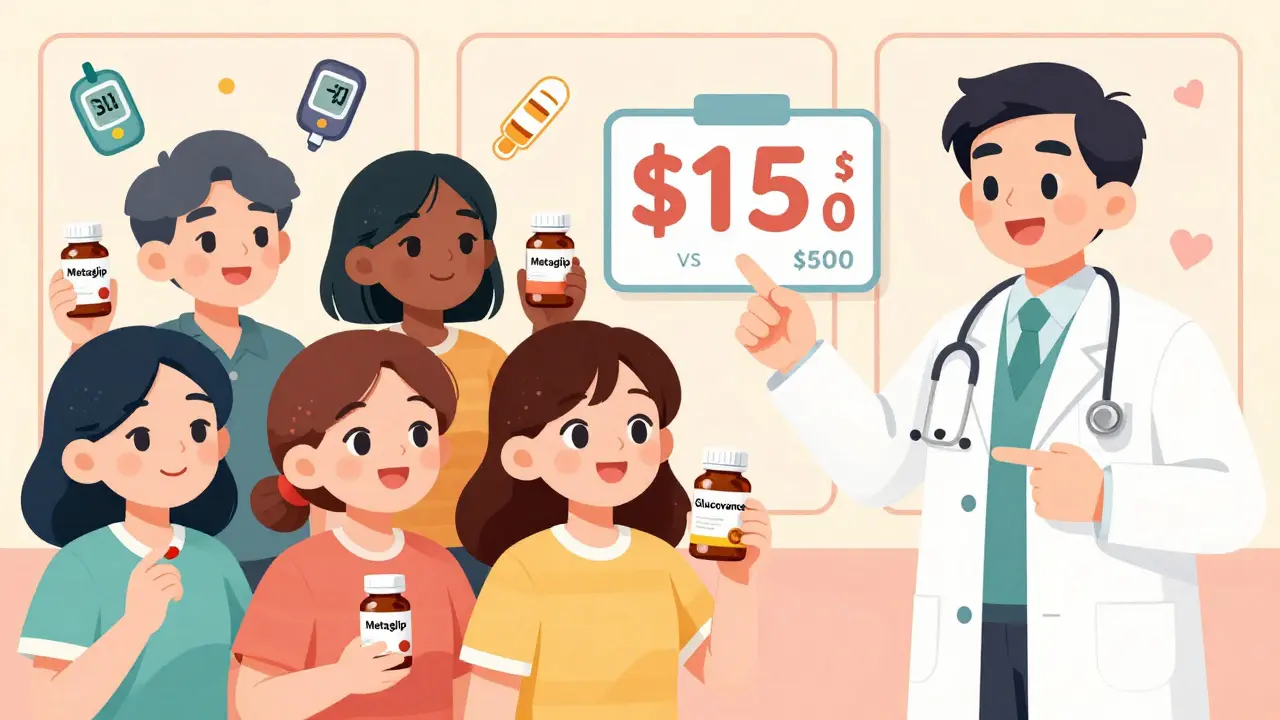
- Metaglip (glipizide + metformin) - Generic since 2012. Costs about $19 for 60 tablets.
- Glucovance (glyburide + metformin) - Generic since 2010. Around $15 for 60 tablets.
- Janumet (sitagliptin + metformin) - Still brand-only. Costs $500+ per month.
- Synjardy (empagliflozin + metformin) - Brand-only until at least 2026. Around $587 for 30 tablets.
- Jentadueto (linagliptin + metformin) - Generic approved in 2023, but not on shelves until 2025 due to legal delays.
Generic versions of metformin + sulfonylurea combos (like Glucovance and Metaglip) have been around for over a decade. They’re widely used and trusted. But newer combos-especially those with SGLT2 or DPP-4 inhibitors-are still protected by patents. That means no generics yet, and prices stay high.
Why Do Generic Versions Cost So Much Less?
Generic drugs cost 85-95% less than brand names because manufacturers don’t have to repeat expensive clinical trials. They just prove their version works the same way. The FDA requires generics to be bioequivalent-meaning they deliver 80-125% of the active ingredient compared to the brand. That’s the legal standard.
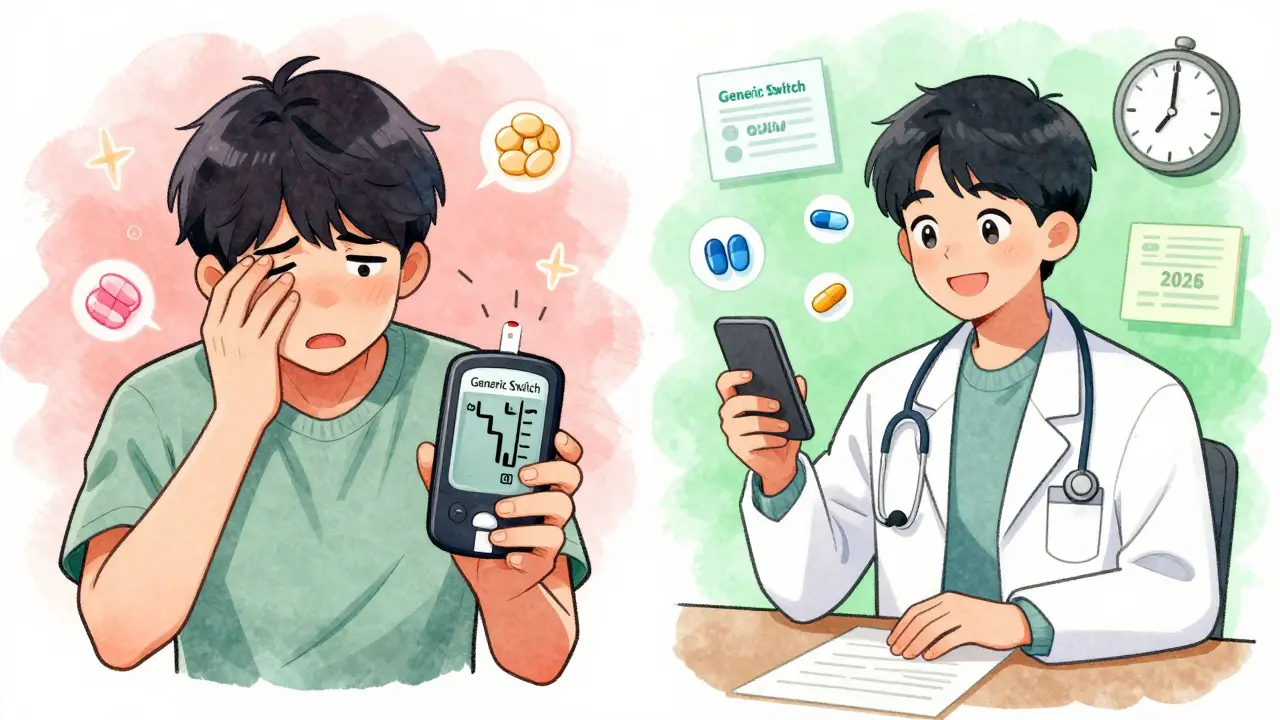
For most people, that’s fine. But diabetes isn’t like taking an antibiotic. Small differences in how a drug is absorbed can affect blood sugar. A 2022 survey by the American Pharmacists Association found that 12% of pharmacists reported patients having unusual blood sugar swings after switching to a generic combo. It’s not common, but it happens.
Here’s how prices stack up:
| Medication (Brand) | Active Ingredients | Brand Price (30 tablets) | Generic Price (60 tablets) |
|---|---|---|---|
| Janumet | Sitagliptin + Metformin | $510 | Not available |
| Glucovance | Glyburide + Metformin | $320 | $15 |
| Metaglip | Glipizide + Metformin | $345 (discontinued) | $19 |
| Synjardy | Empagliflozin + Metformin | $587 | Not available |
That’s not a typo. You’re paying nearly 30 times more for the brand. For many, the choice isn’t about preference-it’s about survival. Insurance often forces patients onto generics. And for those on fixed incomes, that savings can mean the difference between taking their meds or skipping doses.
When Does Substitution Work-and When Doesn’t It?
Switching from a brand-name combo to a generic isn’t always smooth. It depends on the drugs involved.
For older combos like glipizide/metformin or glyburide/metformin, most people switch without issue. A 2022 Joslin Diabetes Center survey found 76% of patients had no problems. These drugs have been around for decades. Their behavior in the body is well understood. Generics match them closely.
But newer drugs? That’s where things get tricky. DPP-4 inhibitors like sitagliptin and linagliptin are designed to work at very precise levels. If a generic delivers 82% instead of 100%, your blood sugar might creep up. SGLT2 inhibitors like empagliflozin affect kidney function. Even small changes can increase dehydration or urinary tract infection risk.
One Reddit user, ‘Type2Warrior’, reported recurrent low blood sugar after switching from brand Glucovance to generic. Their doctor later found the generic version released glyburide faster, causing a spike in insulin that wasn’t matched by their diet. They had to switch back.
Doctors recommend testing your blood sugar more often for 2-4 weeks after switching. Test before meals, two hours after eating, and at bedtime. If your numbers start bouncing around, don’t ignore it. Call your provider. You might need to go back to the brand-or adjust your dose.
What You Need to Know Before Switching
Switching to a generic isn’t just about saving money. It’s about managing risk.
- Pill appearance changes - Generics look different. Same active ingredients, but different color, shape, or size. Some people report swallowing issues. If you’ve had trouble with big pills before, ask for a smaller version.
- No extended-release generics - Most generics are immediate-release. If your brand was XR, you might get more stomach upset or need to take it twice a day. Ask your pharmacist if you’re switching from XR to IR.
- Insurance may force the switch - Many plans won’t cover the brand unless you prove the generic didn’t work. That means you might have to try the generic first. Keep records of your blood sugar logs.
- Don’t let the pharmacy substitute without telling you - Some pharmacies automatically swap brands for generics. Ask them to check with you first. You have the right to say no.
- Check for patient assistance - Even if you’re on a brand, you might qualify for free or discounted meds. Manufacturers like Merck and Boehringer Ingelheim offer copay cards that can cut your cost to $0. Generic makers rarely offer these programs.
What’s Coming in the Next Few Years?
The tide is turning. Patents are expiring, and generics are coming fast.
Janumet XR’s main patent expired in January 2024. But formulation patents may delay generics until 2026. Still, once they arrive, the price could drop from $500 to under $50 a month. Jentadueto’s generic is approved but delayed until 2025. Synjardy and other SGLT2 combos won’t see generics until 2026-2028.
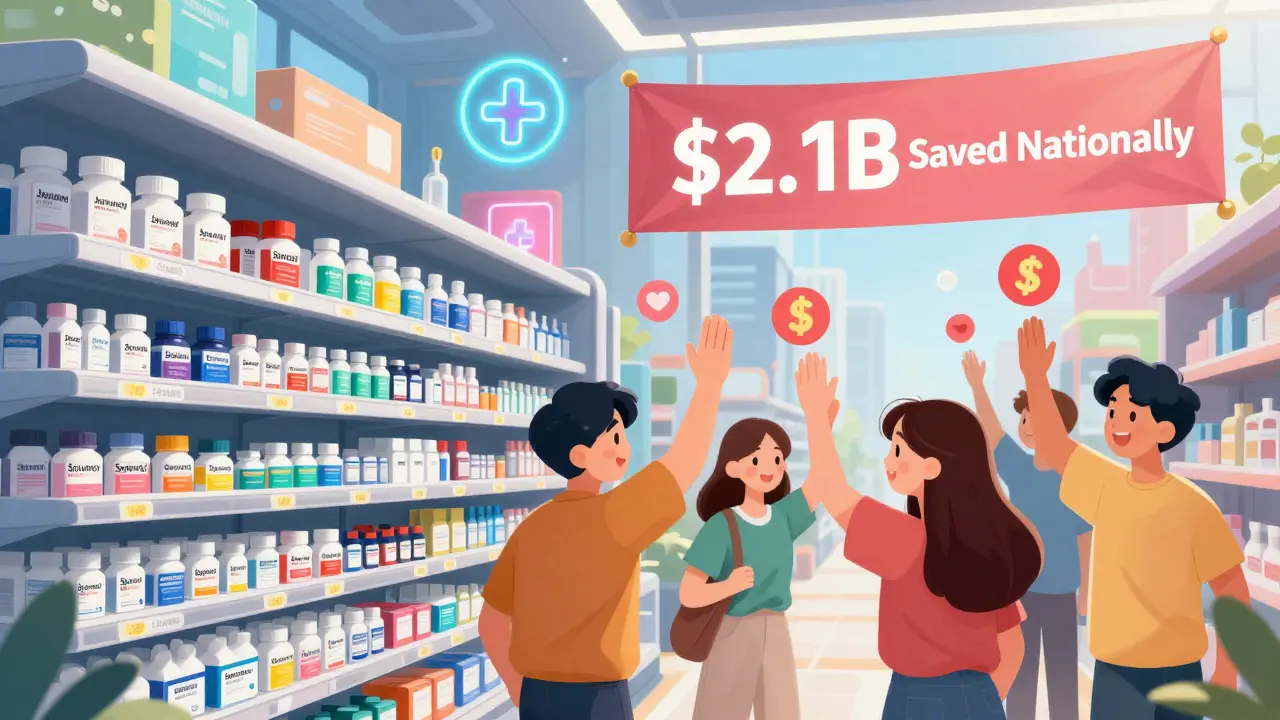
By 2028, experts predict over 80% of metformin-based combos will be generic. That could save patients $2,400 a year on average. The Congressional Budget Office estimates total savings across the U.S. could hit $2.1 billion annually.
But don’t wait. If you’re on a brand-name combo that’s been around for more than five years, ask your doctor if a generic is an option. You might be paying way more than you need to.
When to Stick With the Brand
Generics are great-but not always the best choice.
Stick with the brand if:
- You’ve been stable on it for years and your blood sugar is tight
- You’ve had side effects from generics before
- You need an extended-release version and none exists generically
- Your doctor says your drug has a narrow therapeutic window
- You’re on multiple meds and your body is finely tuned
Also, if you’re using a combo with a GLP-1 agonist (like Ozempic + metformin, which is coming soon), you won’t see generics for at least 7-10 years. Those are biologics, and the rules are different.
Bottom Line: Make the Switch Wisely
Generic diabetes combination meds are safe, effective, and life-changing for many. They’ve helped millions cut costs without losing control of their blood sugar. But they’re not one-size-fits-all.
Know your meds. Know your options. Track your numbers. Talk to your doctor before switching. And don’t be afraid to ask for the brand if the generic doesn’t work for you.
The goal isn’t just to save money. It’s to stay healthy. And sometimes, that means paying a little more-for peace of mind, for stability, for your body’s response.
Are generic diabetes combination medications safe?
Yes, generic diabetes combinations are FDA-approved and must meet the same safety and quality standards as brand-name drugs. They contain the same active ingredients and are proven to work the same way in most people. However, some patients report changes in blood sugar control or side effects after switching, especially with newer drug classes like DPP-4 or SGLT2 inhibitors. Close monitoring for 2-4 weeks after switching is recommended.
Can I switch from a brand-name combo to a generic without consulting my doctor?
No. While pharmacies can legally substitute generics for brand names in many cases, diabetes medications require careful management. Switching can affect your blood sugar levels, especially if you’re on a fixed-dose combo. Always talk to your doctor before switching, and get their approval. Some insurance plans require prior authorization, and your doctor may need to document why a brand is medically necessary.
Why are some combination medications still brand-only?
Newer combination drugs, especially those using DPP-4 inhibitors (like sitagliptin), SGLT2 inhibitors (like empagliflozin), or GLP-1 agonists, are protected by patents that last 20 years from the original filing date. Even after the main patent expires, manufacturers often hold additional patents on the formulation, dosage, or delivery system, which can delay generics for several more years. For example, Janumet XR’s formulation patent extends protection until 2026.
Do generic diabetes combos work as well as brand names?
For most people, yes. Clinical studies show that generic metformin combos like Glucovance and Metaglip achieve similar HbA1c reductions as their brand versions. However, because generics must only be 80-125% bioequivalent to the brand, small differences in absorption can affect blood sugar control in sensitive individuals. Patients with unstable diabetes, kidney issues, or those on multiple medications should be monitored closely after switching.
What should I do if my blood sugar changes after switching to a generic?
Test your blood sugar more frequently-4 times a day for 2-4 weeks. Keep a log of your readings, meals, and symptoms. If your numbers become unpredictable, or you experience frequent highs or lows, contact your doctor immediately. You may need to switch back to the brand or adjust your dose. Don’t assume the change is just "in your head." Document your experience; it may help your doctor advocate for a brand override with your insurance.
Are there programs to help pay for brand-name diabetes combos?
Yes. Most brand-name manufacturers offer patient assistance programs, copay cards, or coupons that can reduce your cost to $0 or $10 per month. For example, Merck (maker of Janumet) and Boehringer Ingelheim (maker of Synjardy) have programs that cover the full cost for eligible patients. Generic manufacturers rarely offer these. Check the drug’s official website or ask your pharmacist for details.

Ian Glover
My name is Maxwell Harrington and I am an expert in pharmaceuticals. I have dedicated my life to researching and understanding medications and their impact on various diseases. I am passionate about sharing my knowledge with others, which is why I enjoy writing about medications, diseases, and supplements to help educate and inform the public. My work has been published in various medical journals and blogs, and I'm always looking for new opportunities to share my expertise. In addition to writing, I also enjoy speaking at conferences and events to help further the understanding of pharmaceuticals in the medical field.
14 Comments
-
Sherman Lee
February 5, 2026 AT 08:41They say generics are bioequivalent... but have you ever seen the fillers? 🤔 Talc, croscarmellose sodium, even *dyes*-some of those are linked to insulin resistance. Big Pharma doesn't want you to know they swap out inactive ingredients to cut costs. Your pancreas doesn't care about FDA standards-it just reacts. I switched back to Janumet after my fasting glucose went from 112 to 158. Coincidence? 😏
-
Antwonette Robinson
February 6, 2026 AT 06:06Oh wow. A whole article about generics and not a single mention of the fact that Merck’s copay card covers 100% of Janumet for people making under $80k? 😂 You’re all acting like you’re choosing between life and death when you could literally pay $0. Just... ask your pharmacist. Or Google. It’s 2024.
-
Rachel Kipps
February 6, 2026 AT 23:13i read this and thought about my mom who switched to gluvance last year and now she's having more hypoglycemic episodes. she didn't tell anyone because she thought it was her fault. maybe more people need to know this isn't just "in their head". thanks for writing this.
-
Joseph Cooksey
February 8, 2026 AT 10:01Let’s be real-this isn’t about science. It’s about corporate greed wrapped in a lab coat. The FDA allows generics to vary by up to 25% in bioavailability? That’s not a tolerance-it’s a loophole. And then they wonder why some of us end up in the ER with DKA because some pharmacist swapped our pills without asking. The system is rigged. We’re not patients-we’re profit margins with pulse.
-
Janice Williams
February 8, 2026 AT 11:20I find it deeply concerning that anyone would suggest a patient switch without rigorous monitoring. Diabetes is not a condition to gamble with. The fact that insurance companies mandate generic substitution without physician oversight is a moral failing. We are not cattle to be herded into cost-saving protocols. This is not efficiency-it is negligence dressed as policy.
-
Katherine Urbahn
February 9, 2026 AT 00:09I appreciate the data, but I must emphasize: bioequivalence ≠ clinical equivalence. The FDA’s 80–125% range is statistically acceptable, but physiologically? For a patient with renal impairment, a 15% variance in sitagliptin absorption can mean the difference between glycemic control and diabetic ketoacidosis. This isn’t theoretical. I’ve seen it. Document everything. And never assume "it’s fine" because the label says "generic".
-
Mandy Vodak-Marotta
February 10, 2026 AT 10:19so i switched from synjardy to... whatever the generic is gonna be (still waiting) and my doc said "just keep an eye on it". well i did. for two weeks i was testing like a maniac. morning fasting went from 105 to 138. post-lunch spiked to 210. i was like... okay, this isn't my diet. i called my doc. she said "switch back". now i'm on a copay card for brand and my numbers are back to normal. i'm not mad, just... glad i didn't listen to the "it's fine" crowd. also, the generic looked like a blue jellybean. i was scared to swallow it. 🤢
-
Meenal Khurana
February 10, 2026 AT 10:47Thank you for this. In India, generics are the only option. But the quality varies. We rely on trusted brands like Cipla and Sun Pharma. Always check the manufacturer.
-
pradnya paramita
February 11, 2026 AT 21:39For SGLT2 inhibitors, the pharmacokinetic variability is clinically significant in elderly patients with eGFR <45. The AUC0–∞ and Cmax fluctuations in generics can exceed the 20% threshold for renal clearance dynamics, leading to subtherapeutic exposure. Always verify the ANDA number and manufacturer. Avoid unknown generics. Stick to FDA-approved ANDAs with proven bioequivalence data in renal populations.
-
Harriot Rockey
February 13, 2026 AT 11:46You’re not alone if you’ve had a bad experience with generics 😊. I switched from Janumet to generic and had three nights of 3 a.m. lows. Took me weeks to figure it out. But I didn’t give up-I tracked everything, talked to my endo, and now we’ve got a plan. You’ve got this. And if the generic doesn’t work? You deserve the brand. No shame in that. 💪❤️
-
Zachary French
February 15, 2026 AT 10:35THEY’RE LYING TO YOU. 🚨 The FDA doesn’t test for long-term glycemic outcomes. They test for peak concentration in healthy adults. But diabetes patients? We’re not healthy. We’re metabolically fractured. And when you switch from a brand that’s been calibrated to your liver’s quirks to a generic made in a factory in Mumbai with a 12% variance? You’re not just risking HbA1c-you’re risking your kidneys, your nerves, your future. And no one in Washington cares. They’re too busy taking bribes from Big Pharma to even *look* at the data. Wake up.
-
Roshan Gudhe
February 15, 2026 AT 14:21There is a deeper question here: if we can produce a generic that is chemically identical, why does the body respond differently? Is it the excipients? The manufacturing process? Or is it that our physiology, shaped by decades of metabolic stress, is so finely tuned that even minor perturbations trigger systemic responses? Perhaps the problem isn’t the generic-but the assumption that biology is reducible to a pill’s chemical formula.
-
Ed Mackey
February 15, 2026 AT 18:00i just wanna say thank you for this post. my wife switched to gluvance last year and her numbers got better and she’s saving $300 a month. we didn’t know about the copay cards for brand names until now. gonna look into that too. you guys are awesome. 🙏


Write a comment
More Articles
How to Read Directions for Extended-Release Medications on Labels
Learn how to safely read and follow instructions on extended-release medication labels to avoid dangerous mistakes like crushing pills or taking them at the wrong time. Understand ER, XR, SR, and CR labels and why timing matters.
caroline hernandez
February 3, 2026 AT 16:15Switching to generics is a no-brainer for most folks-unless you're on a narrow-therapeutic-window combo. For metformin + sulfonylurea, the data is rock-solid. But if you're on a DPP-4 or SGLT2 combo? Monitor like your HbA1c depends on it. Because it does. Keep a log, test BSLs pre-meal, 2hr post, and bedtime. Small shifts matter more than you think.