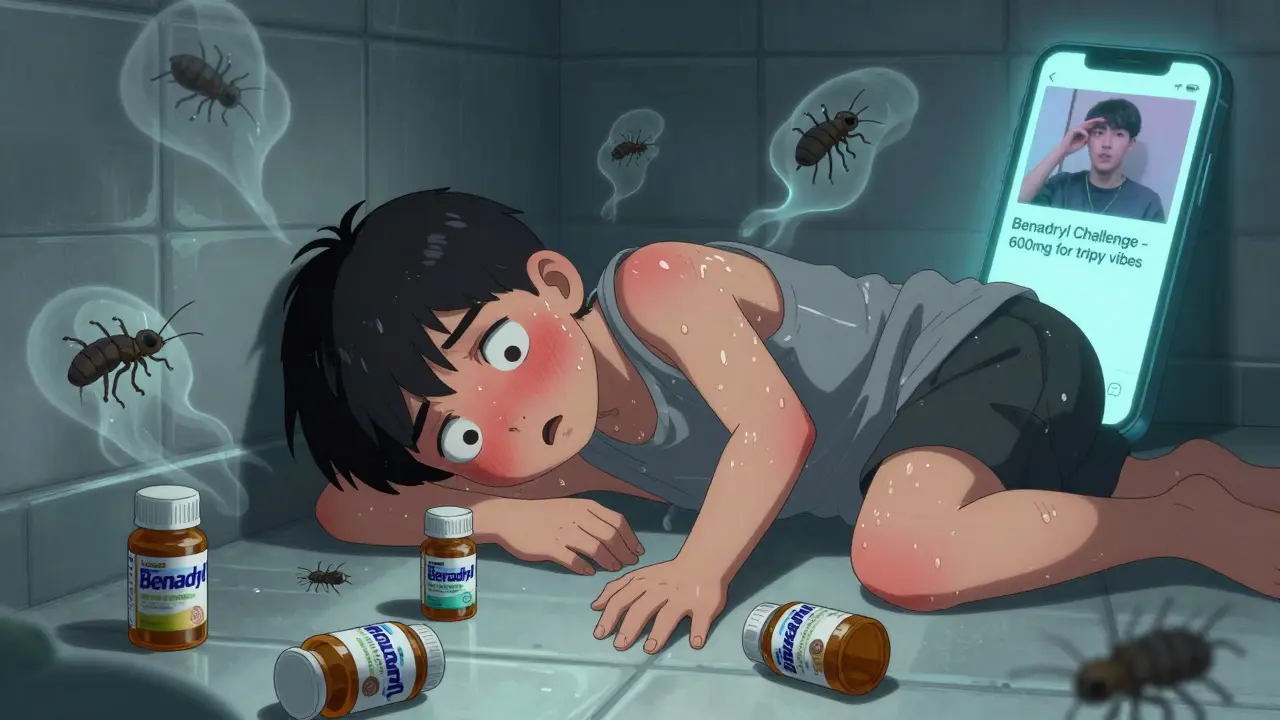
Diphenhydramine Overdose Symptom Checker
Symptom Assessment Tool
Diphenhydramine overdose causes a specific pattern of symptoms known as the anticholinergic toxidrome. If a person shows three or more of the following symptoms, this is a medical emergency.
Skin feels hot and dry. Mouth is parched. No tears. No sweat.
Face and skin flush, especially on the chest and neck.
Pupils are wide, fixed, and unresponsive. Vision blurs. You can't focus.
Agitation, paranoia, hallucinations. Confusion is common.
Body temperature spikes past 104°F (40°C). This isn't just a fever.
Urine won't come out. The bladder swells.
It’s easy to think of diphenhydramine as harmless. You find it on the shelf next to cough syrup and pain relievers. It’s in nighttime sleep aids, cold medicines, and even some allergy tablets. But when too much gets into the body - whether by accident or on purpose - it can turn deadly. This isn’t just about feeling drowsy. A diphenhydramine overdose can shut down your heart, trigger seizures, or leave you trapped in a nightmare of hallucinations and confusion. And it’s happening more often than you think.
What Diphenhydramine Does to Your Body
Diphenhydramine is an antihistamine. It blocks histamine, which helps with allergies and itching. But it also blocks another chemical in your brain and body called acetylcholine. That’s why it makes you sleepy. That’s also why it’s used in sleep aids like Nytol and Sominex, and combo pills like Tylenol PM. At normal doses - 25 to 50 mg every 4 to 6 hours - it’s safe for most adults. But once you hit 5 mg per kilogram of body weight, things start to go wrong. At 20 mg per kg? That’s a medical emergency.
Here’s the scary part: a single bottle of Benadryl contains 25 mg per tablet. Someone weighing 70 kg (about 154 lbs) could overdose on just eight tablets. Some teens, lured by social media challenges, take 300 to 600 mg thinking they’ll get high. That’s six to twelve times the safe dose. And it doesn’t take long for the body to react.
The Signs of Overdose: The Anticholinergic Toxidrome
When diphenhydramine overwhelms your system, it triggers what doctors call an anticholinergic toxidrome. It’s not random. The symptoms follow a clear pattern, and there’s a simple way to remember them:
- Dry as a bone - Skin feels hot and dry. Mouth is parched. No tears. No sweat.
- Red as a beet - Face and skin flush, especially on the chest and neck.
- Blind as a bat - Pupils are wide, fixed, and unresponsive. Vision blurs. You can’t focus.
- Mad as a hatter - Agitation, paranoia, hallucinations. People report seeing insects crawl on walls or hearing voices. Confusion is common.
- Hot as hades - Body temperature spikes past 104°F (40°C). This isn’t just a fever. It’s a dangerous rise that can damage organs.
- Full as a flask - Urine won’t come out. The bladder swells. This is common in moderate to severe cases.
These aren’t just uncomfortable. They’re warning signs. If someone has three or more of these, they need help now.
The Hidden Danger: Heart Problems
Most people don’t realize diphenhydramine can wreck your heart. At high doses, it acts like a tricyclic antidepressant - blocking sodium channels in heart cells. This slows down electrical signals. On an EKG, you’ll see the QRS complex widen beyond 100 milliseconds. That’s a red flag. It means the heart’s rhythm is at risk. QT prolongation (a delay in the heart’s reset phase) is another red flag. Both can lead to dangerous arrhythmias like torsades de pointes - a type of irregular heartbeat that can turn fatal.
Heart rates often shoot past 140 beats per minute. Blood pressure can crash. In severe cases, the heart stops. That’s why EKG monitoring is critical - even if the person seems calm at first. Cardiac issues can appear 2 to 4 hours after ingestion.
What Happens in the ER
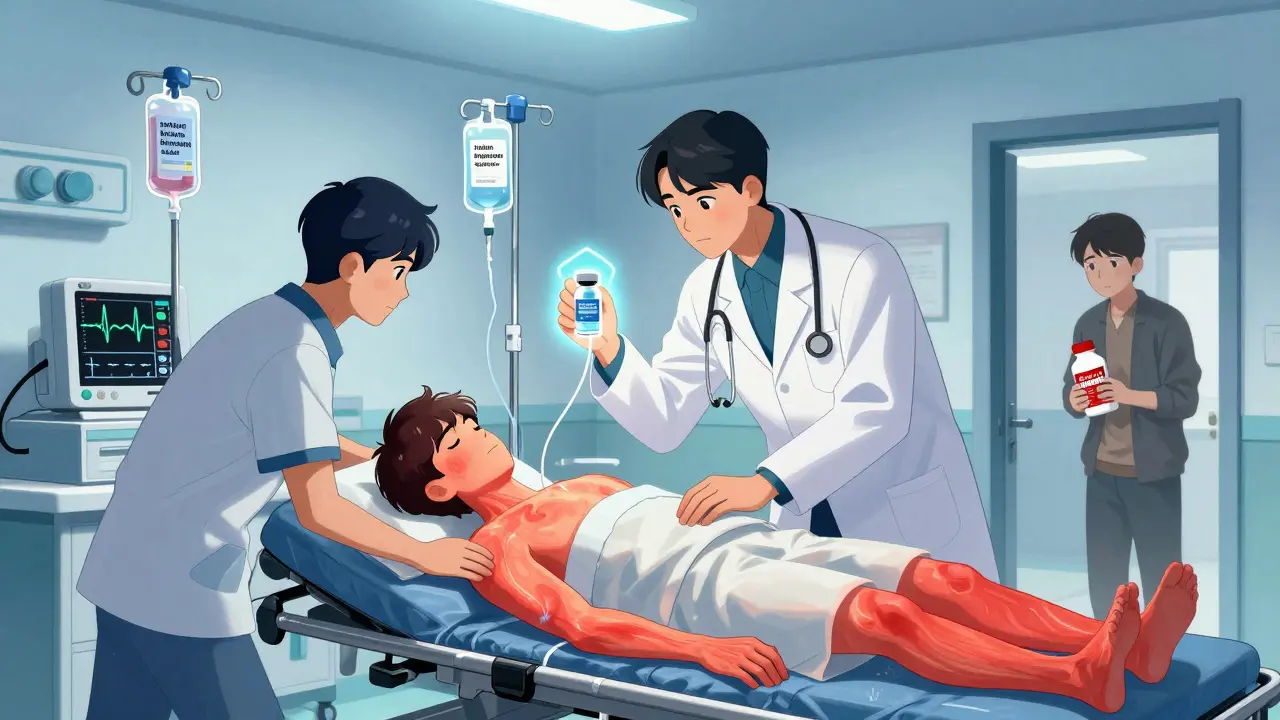
If someone overdoses on diphenhydramine, time is everything. Emergency teams follow the ABCDE approach: Airway, Breathing, Circulation, Disability, Exposure. They check vital signs, oxygen levels, temperature, and heart rhythm immediately.
Here’s what they look for:
- ECG - To check for QRS widening (>100 ms) and QTc prolongation (>450 ms in men, >470 ms in women).
- Blood tests - To rule out acetaminophen (since Tylenol PM contains both), check kidney function, and measure creatine phosphokinase (CPK) for muscle damage.
- Urine test - To confirm ingestion, though levels aren’t used to guide treatment.
Here’s what they do:
- Benzodiazepines - For seizures and agitation. Diazepam or lorazepam given intravenously. These calm the brain and stop seizures.
- Sodium bicarbonate - If the QRS complex is widened, they give it to counteract the sodium channel block. One to two mEq/kg as a bolus, then a drip.
- Magnesium sulfate - For QT prolongation over 500 ms. A 2g IV dose over 15 minutes helps stabilize the heart rhythm.
- Physostigmine - This drug reverses the anticholinergic effects by boosting acetylcholine. It’s fast-acting and works better than sedatives for confusion and hallucinations. Studies show 87% of patients improve with physostigmine versus only 24% with benzodiazepines alone. But it’s not for everyone - avoid it if there’s heart block or seizures.
- Fluids and cooling - IV fluids for low blood pressure. Ice packs and cooling blankets if temperature hits 102.2°F (39°C) or higher.
- Catheter - For urinary retention. It’s not optional. A swollen bladder can rupture.
Some extreme cases need more: lipid emulsion to pull the drug out of the bloodstream, or even ECMO - a machine that takes over heart and lung function - if the heart fails.
Why This Is Getting Worse
In 2022, U.S. poison centers logged 12,000 to 15,000 cases involving diphenhydramine. That’s 3.2% of all poison exposures. But here’s the worst part: intentional overdoses in teens jumped 300% between 2018 and 2022. Why? Social media. TikTok, Reddit, and YouTube have videos promoting the "Benadryl Challenge" - encouraging kids to take huge doses for hallucinations. One Reddit user wrote: "I took 600 mg thinking I could get high. Woke up in the ER with a catheter and IV. I didn’t even know where I was."
Parents don’t realize how dangerous this is. A child under 6 might accidentally swallow a few pills. A teenager might think it’s a harmless prank. But diphenhydramine isn’t candy. It’s a potent drug with a narrow safety margin.
Recovery and Long-Term Effects
Most people survive if they get help fast. But recovery isn’t quick. Sixty-five percent feel groggy for 24 to 48 hours. Forty percent have lingering confusion. Some report memory gaps or trouble focusing for days. And in 35% of moderate to severe cases, a urinary catheter was needed - not just because of retention, but because the body can’t clear the drug fast enough.
Death is rare - about 0.5% in severe cases - but it happens. Most fatalities involve cardiac arrest or extreme hyperthermia. The good news? With proper care, survival rates are high. Emergency departments now have clear protocols. Poison control centers are trained. And physostigmine, once feared, is now recognized as safe and effective when used correctly.
What You Should Do
If you suspect an overdose - even if the person seems fine - call poison control immediately: 1-800-222-1222. Don’t wait for symptoms. Don’t try to make them vomit. Don’t give them coffee or water. Just call.
Keep all diphenhydramine products locked up. Check labels. Many sleep aids and cold medicines contain it. Never mix it with alcohol or other sedatives. And if you’re a parent: talk to your teens. This isn’t a joke. It’s a life-threatening mistake.
Emergency care works. But it only works if you act fast. The more you know, the more you can prevent a tragedy.
Can you overdose on Benadryl if you take it as directed?
No. If you follow the label - 25 to 50 mg every 4 to 6 hours - you won’t overdose. But many people don’t realize that Benadryl is in other products too, like Tylenol PM, NyQuil, and sleep aids. Taking multiple products with diphenhydramine can easily push you over the safe limit. Always check the active ingredients.
Is physostigmine safe to use for diphenhydramine overdose?
Yes, when used properly. Earlier concerns about safety have been disproven. Recent studies show adverse events from physostigmine are rare - only 4.7% of cases had side effects like vomiting or temporary QT prolongation. No deaths were linked to the drug itself. It’s now recommended for severe delirium and hallucinations, as long as the patient doesn’t have heart rhythm problems or seizures.
Why is an EKG necessary if the person looks calm?
Because cardiac effects can be delayed. Someone might seem fine for hours after taking a large dose, then suddenly develop QRS widening or a dangerous arrhythmia. That’s why continuous EKG monitoring for at least 4 to 6 hours is standard. You can’t judge severity by how someone looks.
Can diphenhydramine overdose cause permanent brain damage?
It’s possible, but rare. Severe, prolonged hyperthermia (over 104°F) or lack of oxygen during seizures can damage brain tissue. Most people recover fully with timely treatment. The bigger risk is temporary confusion and memory issues lasting days. Long-term damage is uncommon unless there’s a cardiac arrest or extended period of untreated hyperthermia.
Are there any home remedies for diphenhydramine overdose?
No. There are no safe home remedies. Inducing vomiting, giving activated charcoal, or trying to "sweat it out" can make things worse. The only safe action is calling poison control or going to the ER. Diphenhydramine overdose requires medical monitoring and specific treatments. Delaying care increases the risk of death.

Ian Glover
My name is Maxwell Harrington and I am an expert in pharmaceuticals. I have dedicated my life to researching and understanding medications and their impact on various diseases. I am passionate about sharing my knowledge with others, which is why I enjoy writing about medications, diseases, and supplements to help educate and inform the public. My work has been published in various medical journals and blogs, and I'm always looking for new opportunities to share my expertise. In addition to writing, I also enjoy speaking at conferences and events to help further the understanding of pharmaceuticals in the medical field.
15 Comments
-
Michelle Jackson
March 17, 2026 AT 06:10Why are we even talking about this like it's news? People have been overdosing on Benadryl since the 90s. The real problem is parents who don't lock up medicine and teens who think "hallucinations" are a rite of passage. Stop glorifying stupidity. Also, physostigmine? That's a drug for doctors. Not some guy on YouTube saying "try it for fun."
-
Suchi G.
March 17, 2026 AT 23:26I read this with tears in my eyes. My cousin, just 17, took 300 mg after watching a viral video. She thought she'd see angels. Instead, she saw spiders crawling on the ceiling. For three days, she couldn't speak. Couldn't walk. Couldn't recognize us. We thought we lost her. The hospital said she was lucky-her kidneys cleared it fast. But her mind? Still not the same. I don't post about this because no one listens. But if you're reading this? Please. Lock it up. Talk to your kids. It's not a joke. It's a funeral waiting to happen.
-
Andrew Muchmore
March 18, 2026 AT 17:21ECG is non-negotiable. Even if they seem fine. Cardiac arrest doesn't announce itself. It just happens. And it's silent. No panic. No screaming. Just flatline. That's why you monitor for 6 hours. No exceptions.
-
Paul Ratliff
March 19, 2026 AT 20:10Benadryl in the medicine cabinet? Bad idea. My niece got into it last year. Thought it was candy. She was 4. Took 10 pills. We got lucky. ER saved her. Now I keep everything locked. No excuses. If you're not locking it, you're gambling with a kid's life.
-
SNEHA GUPTA
March 20, 2026 AT 03:21There's a deeper question here: why do we treat medicine like a toy? Is it because we've lost respect for pharmacology? We live in a world where every substance is either demonized or romanticized. But diphenhydramine is neither. It's a tool. A powerful one. Used correctly, it helps. Used carelessly, it kills. The real tragedy isn't the overdose-it's the cultural ignorance that lets it happen again and again.
-
Gaurav Kumar
March 21, 2026 AT 08:49India has better sense than this. We don't have "Benadryl challenges" here. Why? Because we respect our medicine. In the U.S., everything is a trend. TikTok turns pills into entertainment. This isn't innovation. It's collapse. And you wonder why the West is falling apart? Look at your medicine cabinets. Look at your kids. This is what happens when you stop teaching responsibility.
-
David Robinson
March 22, 2026 AT 20:01Let's be real. Most of these "overdoses" are just people trying to get high. You think it's an accident? Nah. It's rebellion. It's boredom. It's the internet telling them it's cool. So stop pretending it's accidental. It's intentional. And parents? You're enabling it. You leave the meds out. You don't talk. You just hope it doesn't happen. Well, it happened. Now fix it.
-
Srividhya Srinivasan
March 24, 2026 AT 01:25Who funds these "educational" posts? Big Pharma? The hospital system? The same companies that sell Benadryl? They make billions off this. They don't care if you overdose. They just want you to keep buying it. And now they're "educating" you? Please. This is damage control. Not care. They knew. They always knew. And they didn't stop it. They profited from it.
-
Prathamesh Ghodke
March 24, 2026 AT 04:13I'm a nurse. Saw 12 cases last year. One kid, 16, took 800 mg. He was laughing. Thought he was "in another dimension." Ended up in ICU. His mom said he "just wanted to chill." I held his hand while he screamed from the seizures. No one deserves that. Please. If you're reading this? Talk to your teens. Not like a cop. Like a human. Tell them what you saw.
-
Stephen Habegger
March 24, 2026 AT 23:51Good info. We can fix this. It starts with one conversation. One locked cabinet. One moment of honesty. You're not alone. Help is here. And it works.
-
Justin Archuletta
March 26, 2026 AT 12:59LOCK IT. UP. NOW. Seriously. I don't care if you "trust" your kids. Lock it. Just lock it. It's one extra step. And it saves lives.
-
Kyle Young
March 28, 2026 AT 12:21What does this say about our relationship with pharmacology? We treat drugs as either sacred or sinful. But diphenhydramine is neither. It's a molecule. A tool. And like any tool, its morality lies in its use. The tragedy isn't the drug-it's the absence of education, the erosion of trust, and the commodification of suffering. We've turned healing into a spectacle. And now we're surprised when people get hurt?
-
Aileen Nasywa Shabira
March 30, 2026 AT 03:32Oh wow, another "awareness" post. Let me guess-you're a nurse, a doctor, or a mom who read one article. Congratulations. You're now an expert. Meanwhile, the real problem? Social media algorithms. Corporate greed. The FDA's lazy labeling. And you? You're just here to say "lock your meds" like it's a magic fix. Pathetic.
-
lawanna major
March 30, 2026 AT 05:41Physostigmine is a game-changer. I’ve seen it reverse hallucinations in under 10 minutes. It’s not perfect, but it’s the closest thing we have to a reset button for the brain after an overdose. The real tragedy? Many hospitals still won’t use it because of outdated fears. We’re clinging to 1980s protocols in a 2025 world. Change is slow-but it’s coming. And every time someone speaks up, it gets faster.


Write a comment
More Articles
Rheumatoid Arthritis Medications: DMARD and Biologic Interactions
Rheumatoid arthritis treatment relies on DMARDs and biologics to stop joint damage. Methotrexate remains first-line, but biologics and JAK inhibitors offer stronger control for severe cases-with trade-offs in cost, side effects, and long-term safety.
jared baker
March 17, 2026 AT 05:50Diphenhydramine isn't candy. I've seen too many kids think it's a party trick because of TikTok. One guy I worked with took 400 mg thinking he'd get "trippy." Woke up in the ER with a catheter, seizures, and a heart rate of 160. He didn't even remember walking in. This stuff is a silent killer-no warning, no second chances. Always check labels. Tylenol PM? NyQuil? Same drug. You're not being smart. You're being dead.