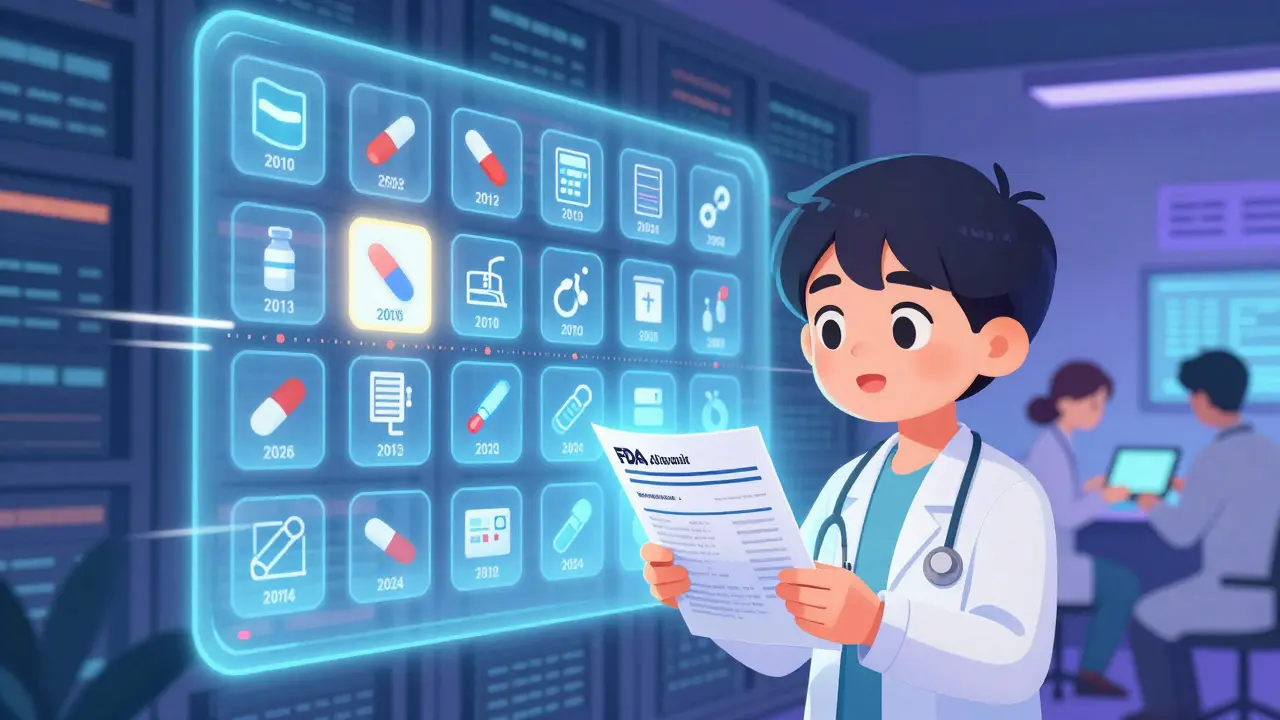
The U.S. Food and Drug Administration (FDA) doesn’t just issue warnings about dangerous drugs and faulty medical devices - it keeps a detailed, public record of every single one. If you’re trying to understand why a medication was pulled from the market years ago, or how a device recall evolved over time, the FDA Safety Communications Archive is your most reliable source. Unlike social media rumors or outdated blog posts, this archive gives you direct access to official notices, dating back to 2010 for drugs and even further for historical records held by the National Archives.
What’s in the FDA Safety Communications Archive?
The archive isn’t one single database. It’s made up of three main systems that work together but serve different purposes.Drug Safety Communications (DSCs) are the FDA’s public alerts about prescription drugs and biological products. These started being formally archived in 2010. Each one explains what went wrong - whether it was liver damage, heart rhythm issues, or unexpected side effects - and who it affects. The FDA doesn’t just post these and forget them. If a newer warning comes out, the old one gets archived with a note saying it’s been replaced. That’s why you can’t just search for "Vioxx" and expect to see the latest info - you have to find the most recent DSC, which will reference earlier ones.
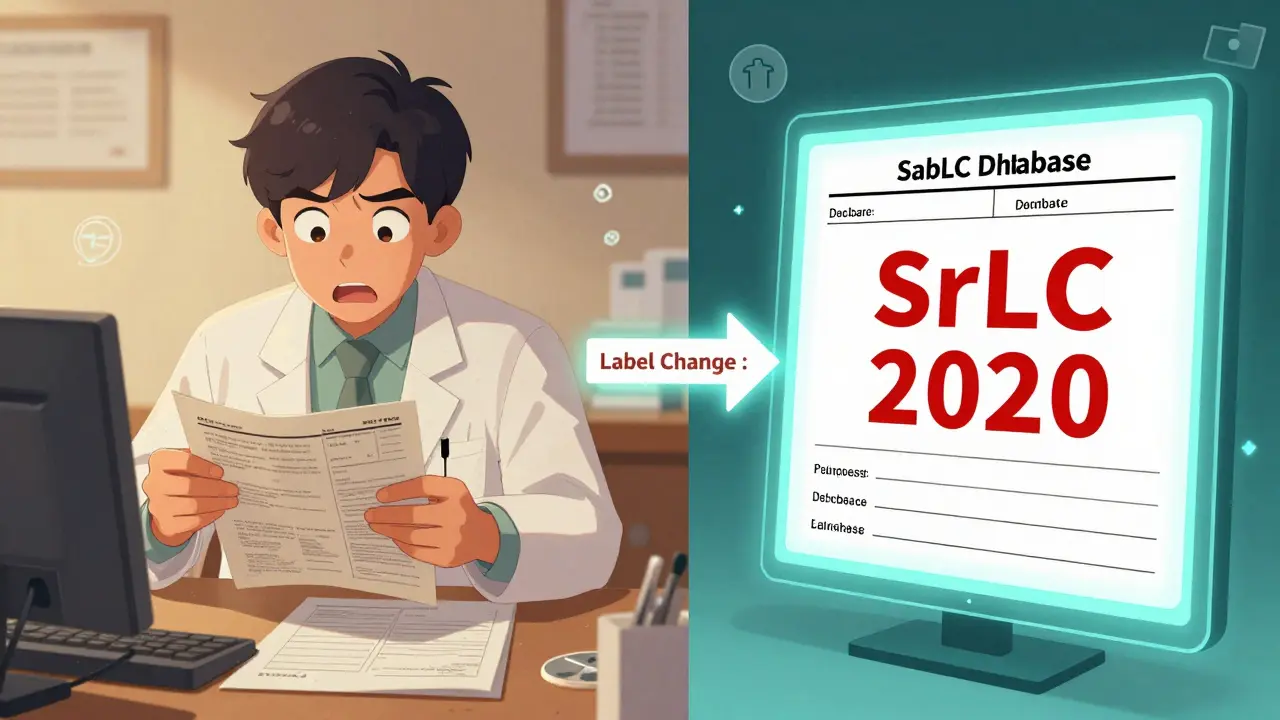
Drug Safety-related Labeling Changes (SrLC) Database is where the FDA tracks actual changes to drug labels. This system started in January 2016 and is incredibly detailed. It doesn’t just say "warning added." It tells you exactly which section of the label changed: BOXED WARNING, CONTRAINDICATIONS, WARNINGS AND PRECAUTIONS, ADVERSE REACTIONS, DRUG INTERACTIONS, or PATIENT COUNSELING INFORMATION. For example, if a diabetes drug added a new warning about pancreatitis risk in 2020, the SrLC Database will show you the exact wording added and the date it went into effect. This is critical for researchers, pharmacists, and lawyers who need to trace how risk information evolved over time.
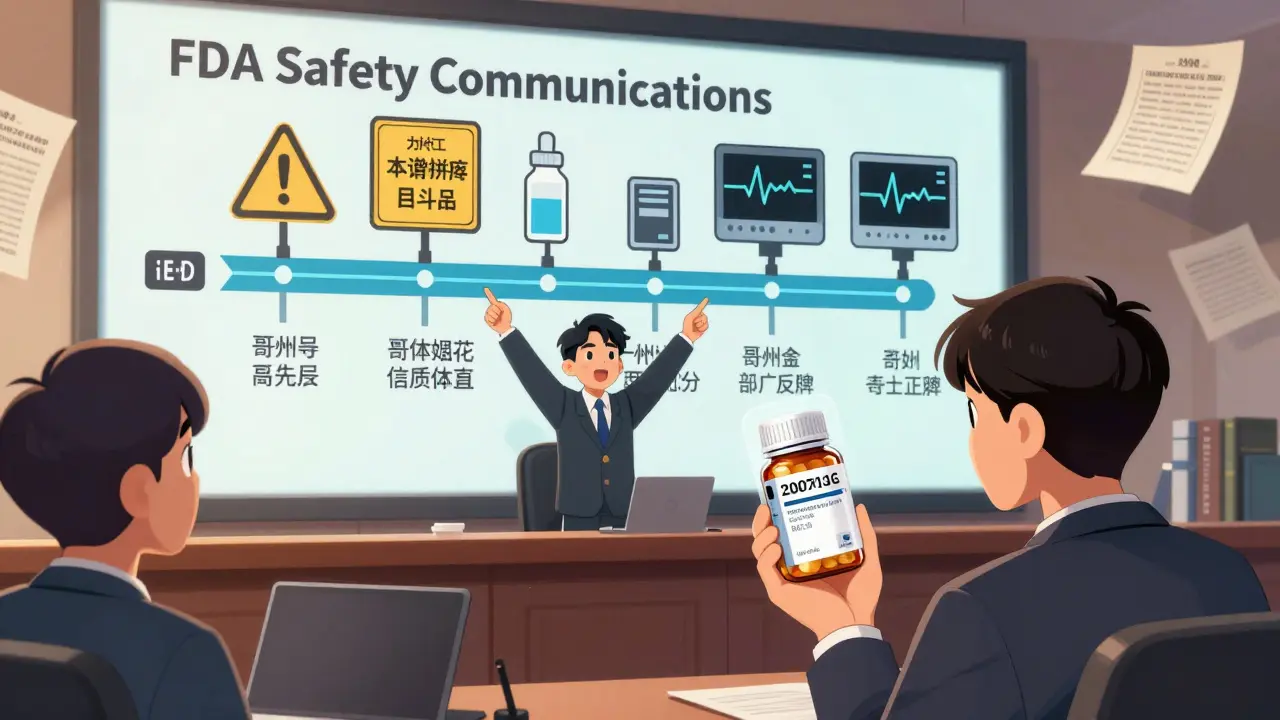
Medical Device Safety Communications cover everything from pacemakers to surgical mesh. These alerts are different from drug alerts because they often include "Early Alerts" - warnings issued before a full recall is even decided. In September 2025, the FDA expanded this program to cover all medical devices, not just high-risk ones. That means if a new type of hip implant starts showing signs of early failure, doctors and patients might get a public alert within weeks, not years.
How to Access the Archive (Step-by-Step)
You don’t need special access, a subscription, or even an account. Everything is free on the FDA website.- Go to www.fda.gov and click on "Drugs" in the top menu.
- Select "Drug Safety and Availability."
- Under "Drug Safety Communications," you’ll see links to archived years from 2010 to 2024. Click the year you need.
- To find labeling changes since 2016, go to the "SrLC Database" link on the same page. You can search by drug name, active ingredient, or change type.
- For medical device alerts, click "Medical Devices" in the top menu, then "Recalls, Market Withdrawals & Safety Alerts." Look for "Early Alerts" and "Safety Communications."
If you’re looking for something older than 2010, use the FDA’s Wayback Machine tool. It lets you view old versions of FDA web pages that no longer exist on the current site. For research going back to the 1900s, the National Archives in Philadelphia holds physical records from 1906 to 1946 - including correspondence, inspection reports, and early warnings about adulterated medicines.
Why This Archive Matters More Than You Think
Many people think FDA warnings are just noise - another alert in a sea of health news. But the real power of this archive is in its ability to show patterns.Take the case of rosiglitazone (Avandia). The FDA issued multiple warnings between 2007 and 2010 about increased heart attack risk. But it wasn’t until 2013 that the label finally included a full boxed warning and restricted use. If you look at the SrLC Database, you can see how each change built on the last. Researchers studying this timeline found that doctors changed prescribing habits slowly - only after the 2010 DSC did prescriptions drop by more than 50%. That kind of data helps the FDA design better warnings in the future.
Or consider the opioid crisis. The FDA’s communications archive shows how warnings about addiction risk evolved from vague statements in the 1990s to specific, bold warnings in the 2010s. That progression didn’t happen by accident. It was shaped by years of data, lawsuits, and public pressure - all documented here.
For patients, this archive can answer questions like: "Why did my doctor switch me off this drug?" or "Was this side effect known before I started taking it?" For healthcare providers, it’s a legal and clinical reference tool. For journalists and researchers, it’s a goldmine of evidence.
What’s Missing - And How to Work Around It
The archive isn’t perfect. The biggest gap is pre-2016 drug labeling data. Before the SrLC Database launched, there was no centralized, searchable system for tracking label changes. If you need to know what a drug’s label said in 2012, you’re stuck digging through old PDFs or contacting the FDA directly.That’s why, in October 2023, the FDA announced a new resource to help researchers collect historical drug approval data. It’s still being built, but it’s a sign they’re trying to fix this blind spot.
Another limitation? Not all warnings have the same impact. A 2012 study found that some FDA alerts caused immediate changes in prescribing behavior, while others had little to no effect. Why? Because the way the message is written matters. Warnings that use clear, urgent language and target both doctors and patients work better than vague, technical notices.
If you’re researching a specific drug or device, don’t just rely on the archive. Cross-reference it with:
- Drugs@FDA - for official approval documents and labeling history
- PubMed - for academic studies on how the warning affected real-world use
- Class action lawsuit filings - often cite FDA communications as evidence
How This Compares to Other Countries
The FDA’s system is more organized than most. The European Medicines Agency (EMA) doesn’t archive its safety alerts as clearly before 2015. Health Canada combines drug and device alerts into one messy list. The FDA’s separation of drug labeling changes from device alerts makes it easier to study each category independently.That’s why U.S.-based researchers and global pharmaceutical companies often turn to the FDA archive first. It’s the most complete, searchable, and transparent system in the world.
What’s Next for the Archive?
The FDA is working on better search tools, clearer labeling of archived vs. current alerts, and possibly merging drug and device data into a unified interface. They’re also exploring ways to measure how effective each warning is - using prescription data, hospital records, and patient surveys.One thing is certain: as more drugs and devices enter the market, the need for a strong, accessible safety archive will only grow. The warnings of today become the lessons of tomorrow.
Can I find old FDA drug safety warnings from before 2010?
Yes, but not through the current FDA Safety Communications page. For warnings from before 2010, use the FDA’s Wayback Machine to view archived web pages. For physical records from 1906 to 1946, the National Archives in Philadelphia holds original correspondence, inspection reports, and early drug safety documents. These are not digitized, so you’ll need to request access or hire a researcher.
Is the SrLC Database the same as the Drug Safety Communications?
No. Drug Safety Communications (DSCs) are public alerts explaining safety concerns. The SrLC Database tracks exact changes made to drug labels - like new warnings added to the "Warnings and Precautions" section. DSCs may lead to changes in the SrLC Database, but not all SrLC changes result in a public DSC. The SrLC Database is more technical and used mainly by professionals.
How often does the FDA update its safety archive?
The FDA issues new Drug Safety Communications and updates the SrLC Database weekly, often on Tuesdays. Medical Device Safety Communications are updated as new issues arise. The archive is always current - new entries are added daily, and older ones are archived when superseded. You can sign up for email alerts on the FDA website to get notified when new communications are posted.
Can I use FDA safety communications in legal cases?
Yes. FDA safety communications are frequently cited in lawsuits involving drug injuries or defective medical devices. Courts treat them as official government records. If a drug’s label was updated with a new warning in 2018 and a patient was injured in 2019, the FDA’s SrLC Database entry proving that change existed before the injury can be critical evidence.
Are all drug safety warnings public?
Almost all are. The FDA issues public communications for any safety issue that affects patient care. Rare exceptions include confidential business information or ongoing investigations. But even then, if a public warning follows, it will reference the issue without revealing proprietary details. You won’t find hidden warnings - the archive is designed to be fully transparent.
Next Steps for Researchers and Patients
If you’re a patient: Print or save any FDA warning related to a medication you’re taking. Bring it to your doctor and ask: "Was this known when I started this drug?" or "Is there a safer alternative now?" If you’re a researcher: Start with the SrLC Database for post-2016 changes. Use the Wayback Machine for pre-2010 materials. Cross-check with Drugs@FDA for approval history. For deep historical research, contact the National Archives.If you’re a healthcare provider: Bookmark the FDA Drug Safety page. Set up email alerts. Review the archive quarterly - not just when a new alert drops. Patterns matter more than single events.
The FDA didn’t build this archive to make life easier for lawyers or academics. They built it so no one has to be hurt again because a warning was buried - or never issued at all.

Ian Glover
My name is Maxwell Harrington and I am an expert in pharmaceuticals. I have dedicated my life to researching and understanding medications and their impact on various diseases. I am passionate about sharing my knowledge with others, which is why I enjoy writing about medications, diseases, and supplements to help educate and inform the public. My work has been published in various medical journals and blogs, and I'm always looking for new opportunities to share my expertise. In addition to writing, I also enjoy speaking at conferences and events to help further the understanding of pharmaceuticals in the medical field.
16 Comments
-
Sam Black
December 22, 2025 AT 21:04I’ve spent nights scrolling through the SrLC Database like it’s a detective novel. That moment when you find the exact wording change from 2017 that explains why your grandma’s blood pressure med got swapped? Pure gold. The FDA doesn’t get enough credit for this.
-
Tarun Sharma
December 23, 2025 AT 11:14This is a well-structured and informative overview of the FDA’s safety communication systems. The distinction between DSCs and SrLC is particularly valuable for professional use.
-
Jamison Kissh
December 23, 2025 AT 22:40It’s funny how we treat medical warnings like noise until someone we love gets hurt. Then suddenly, every archived alert becomes a breadcrumb trail back to what went wrong. The archive isn’t just data-it’s a moral ledger. Who got warned? Who didn’t? Who paid the price because the signal got lost in the static?
-
Johnnie R. Bailey
December 25, 2025 AT 12:45For anyone in pharma or law, the SrLC Database is the unsung hero. I once traced a label change from 2018 back to a 2015 internal memo that never made it to the public. The archive doesn’t show everything-but it shows enough to hold people accountable. Cross-reference with Drugs@FDA and you’ve got a full forensic trail. No guesswork.
-
Art Van Gelder
December 26, 2025 AT 03:11Let me tell you about the time I spent three days in the Wayback Machine hunting down a 2009 warning about a now-banned cardiac drug. I found it buried under three different URLs, one of which had been rewritten as a marketing page for a competitor. The FDA’s archive isn’t perfect-but without it, that drug might still be on shelves. I’ve seen people die because warnings were buried in PDFs nobody bothered to read. This system? It’s not bureaucracy. It’s a lifeline.
And don’t even get me started on how EMA and Health Canada make you dig through XML files like it’s 1998. The FDA’s separation of drug and device alerts? Genius. It’s like having a librarian who knows exactly where every book is-even the ones no one else cares about.
People think this is just government paperwork. Nah. It’s the only reason I feel safe prescribing anything anymore. When I check the archive before writing a script, I’m not just following protocol-I’m honoring the people who came before us and got hurt so we could learn.
I’ve printed out dozens of these alerts. Taped them to my desk. Shared them with residents. One of my patients cried when she saw the 2012 warning about her medication. She said, ‘So it wasn’t just me?’ That’s the power of transparency.
And yes, the pre-2016 gap sucks. But the fact they’re building a new tool to fix it? That’s hope. That’s responsibility. That’s what good institutions do.
-
Julie Chavassieux
December 26, 2025 AT 09:38Why do they even bother? Someone’s always gonna get hurt anyway.
-
Herman Rousseau
December 26, 2025 AT 18:52Big shoutout to the FDA team behind this. Seriously. I used to think these alerts were just red tape. Then my cousin got hospitalized from a drug interaction that was clearly flagged in a 2014 DSC. I found it. Printed it. Took it to her doctor. She’s fine now. This isn’t just data-it’s someone’s second chance.
-
Vikrant Sura
December 27, 2025 AT 01:48Another government waste of time. They spend millions on this and still can’t stop bad drugs from getting approved. What’s the point?
-
Ajay Brahmandam
December 27, 2025 AT 20:08Just saved this page. I’m a med student and this is the kind of stuff they don’t teach you in class. The SrLC Database is wild-like reading the script behind every label change. I’m gonna use this for my research project.
-
jenny guachamboza
December 28, 2025 AT 15:13fake news alert!! the fda is just hiding the truth about big pharma!! they dont want you to know that the archive is all staged!! the real warnings are in the dark web!! 😈
-
Jim Brown
December 30, 2025 AT 07:46The institutionalization of medical transparency, as exemplified by the FDA’s archival architecture, constitutes a profound epistemological shift in the governance of public health. One is compelled to reflect upon the ontological weight of documentation as a form of ethical accountability.
-
Sai Keerthan Reddy Proddatoori
December 31, 2025 AT 10:02USA thinks it's better than everyone. India has better medicine without all this paperwork. Why do we need archives? Just trust doctors.
-
Cara Hritz
January 1, 2026 AT 09:12wait so the archive is free? i thought you needed a subscription? also is it on the fda.gov site or fda.com? i got confused
-
Kathryn Weymouth
January 1, 2026 AT 18:29Thank you for this. I’m a nurse and I’ve been telling my colleagues for years that we need to check the SrLC Database before prescribing. Most don’t even know it exists. This should be required reading in every med school.
-
Johnnie R. Bailey
January 2, 2026 AT 20:00That’s exactly why I keep a printed copy of the 2013 Avandia label update in my desk drawer. I showed it to a resident last week who thought the warning was new. Turned out it was the same one from 2010-just buried under a newer alert. That’s the trap. The archive doesn’t just record history-it teaches you how to read it.


Write a comment
More Articles

Sunburn and Skin Cancer: Essential Facts & Prevention
Explore how sunburn damages skin DNA, raises skin‑cancer risk, and learn practical steps to prevent and detect melanoma, basal and squamous cell cancers.
Tony Du bled
December 22, 2025 AT 16:52The FDA archive is one of those things you don’t think about until you need it-and then you’re damn glad it exists. I’ve dug through it for work, and it’s like finding a time capsule of medical missteps. No fluff, no hype, just cold hard facts that saved lives.