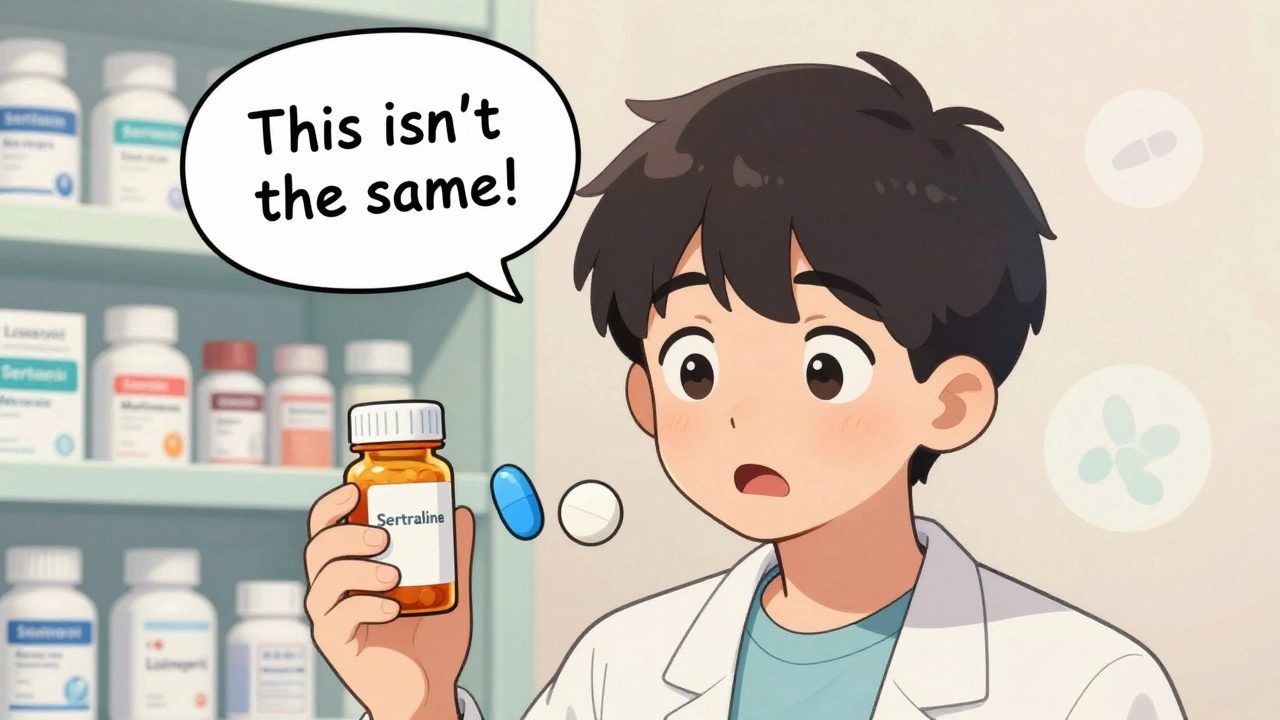
Ever opened your pill bottle and thought, "This isn't the same pill I've been taking for years"? You're not alone. Thousands of people in the UK and the US face this exact moment every month. A pill that was once blue and oval turns white and round. Or maybe it’s the same shape but now has a different letter stamped on it. It’s not a mistake. It’s legal. And it’s happening more than you think.
Why Do Generic Pills Look Different?
Generic drugs are exact copies of brand-name medicines in every way that matters-active ingredients, strength, dosage, and how your body absorbs them. But they don’t have to look the same. That’s not an oversight. It’s the law. In the US, trademark rules block generic manufacturers from copying the exact color, shape, or logo of brand-name pills. So each company that makes a generic version picks its own design. One maker might make sertraline (the generic for Zoloft) as a blue oval. Another might make it white and round. Both work the same. Both are approved by the FDA. But they look nothing alike. This isn’t just about trademarks. It’s also about cost. Pharmacies buy the cheapest version available each month. If Company A’s metformin is 12 cents cheaper than Company B’s, the pharmacy switches. That means your pill can change appearance every time you refill-even if your doctor didn’t change your prescription.Is It Safe?
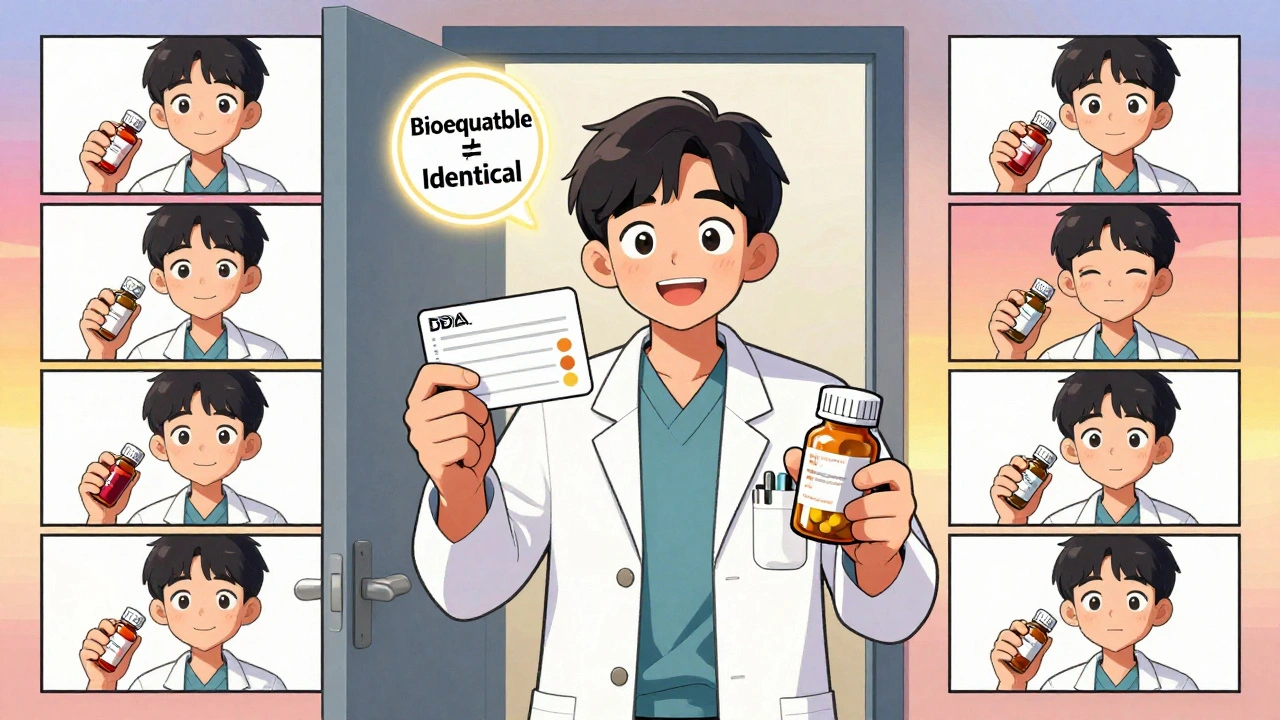
Yes, it’s safe-if you know what you’re taking. The FDA requires every generic drug to prove it’s bioequivalent to the brand name. That means it delivers the same amount of medicine into your bloodstream at the same rate. No exceptions. No loopholes. If a generic doesn’t meet this standard, it doesn’t get approved. But safety isn’t just about chemistry. It’s about how you feel when you take it. When your pill looks different, your brain doesn’t always trust it. A study in the Annals of Internal Medicine found that 34% of patients stopped taking their medication after a color change. That number jumped to 66% when the shape changed. These aren’t rare cases. They’re routine. One patient in Los Angeles reported her potassium pills changed appearance nine times over 15 years. Another thought her blood pressure pills had been swapped out because they went from white to pink. She almost quit taking them. She didn’t know the active ingredient was still lisinopril. The risk isn’t the drug. It’s the fear. And fear leads to missed doses. Missed doses lead to hospital visits. Hospital visits lead to higher costs-and sometimes, worse outcomes.What Drugs Are Most Likely to Change?
Some medications change appearance more than others. Why? Because they’re cheap, widely prescribed, and made by dozens of companies.- Sertraline (Zoloft): Can be blue, green, white, oval, or round.
- Metformin: White or pink, round or oblong.
- Lisinopril: White, pink, or peach, with different markings.
- Gabapentin: Changes shape and color constantly-sometimes even within the same pharmacy.
- Levothyroxine: Even small variations in fillers can affect absorption in sensitive patients, making appearance changes more than just cosmetic.
Why Does This Keep Happening?
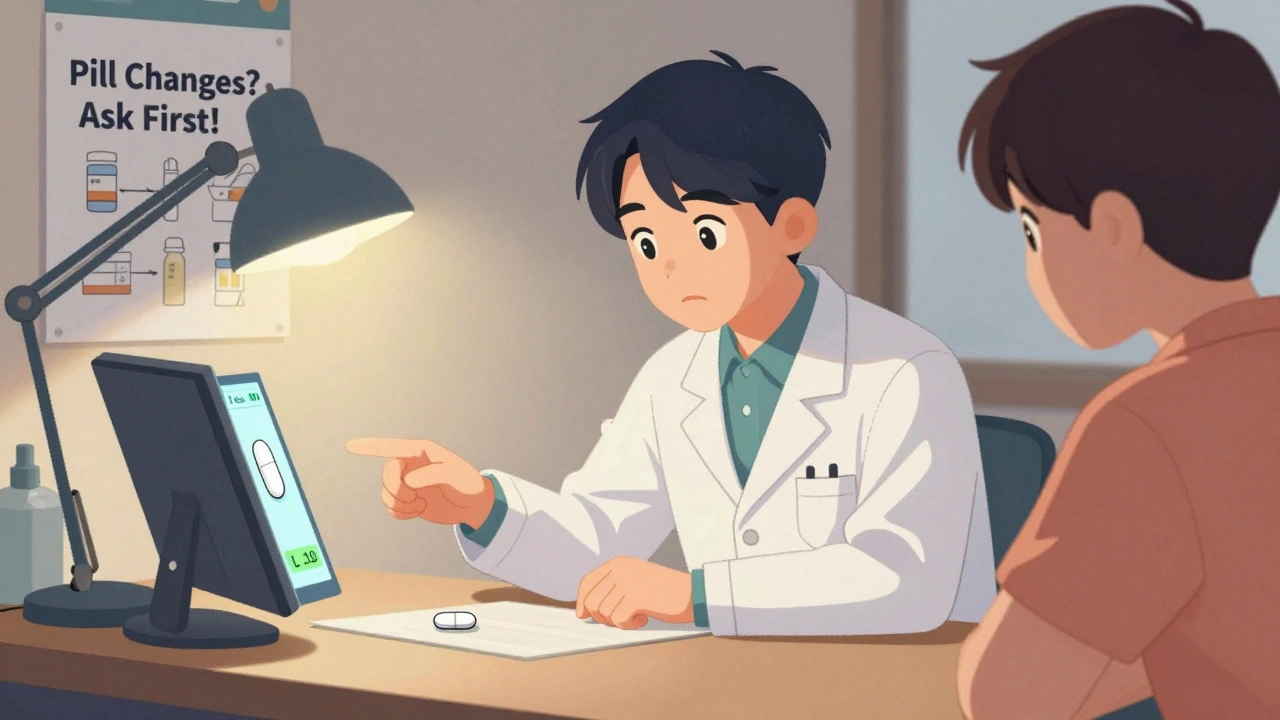
It’s not a glitch. It’s a system. Pharmacies choose the lowest-cost generic. Insurance companies push for it. Patients get the bill. And nobody tells you when the pill changes. In 2018, only 45% of pharmacies warned patients about appearance changes. By 2023, that number rose to 78%. Better-but still not enough. Many patients still get their refill, open the bottle, and panic. The FDA knows this is a problem. In a 2014 letter published in ACP Journals, experts wrote: “Bioequivalent generic drugs that look like their brand-name counterparts enhance patient acceptance.” Translation: If generics looked like the brand, people would take them. But changing that would require rewriting trademark laws. And that’s not happening anytime soon.What You Can Do to Stay Safe
You can’t stop the changes. But you can stop the fear.- Keep a medication list. Write down the name, dose, and appearance of every pill you take. Include color, shape, markings. Take this list to every doctor and pharmacist visit.
- Ask your pharmacist. When you pick up a refill, ask: “Is this the same pill I got last time?” They’re trained to explain differences. Don’t assume it’s a mistake.
- Use a pill identifier. Websites like Medscape’s Pill Identifier let you search by color, shape, and imprint. Snap a photo of your pill before you take it. Keep it on your phone.
- Don’t stop taking it. If it looks different, don’t assume it’s wrong. Call your pharmacist first. Most changes are normal.
- Check your bottle label. The manufacturer name is printed on the label. If it’s different from last time, that’s why the pill looks different.
What Pharmacists and Doctors Are Doing
Forward-thinking clinics and pharmacies are building systems to reduce confusion. In 2023, 63% of independent pharmacies in the US started using pill identification programs. That’s up from 32% in 2020. They keep photos of common generics on file. Staff are trained to explain changes before the patient even asks. Doctors are also adapting. Dr. Darrick Lee, a family physician in Los Angeles, tells patients: “Bring in your actual pill bottles. Don’t just tell me what you take. Show me.” He says this simple step catches more errors than any electronic record. The American Society of Health-System Pharmacists recommends that every patient with chronic conditions-like high blood pressure, diabetes, or depression-have a printed medication card. Not a list on their phone. A card they can hold.What’s Next?
The FDA is watching. In September 2025, new rules came into effect under Section 505(o)(4) of the Federal Food, Drug, and Cosmetic Act. These allow the FDA to require labeling updates when new safety data emerges-even for generics. That means if a pattern of non-adherence is linked to a specific appearance change, the FDA could require manufacturers to standardize the look of certain generics. Or, at minimum, require clearer warnings on packaging. But real change won’t come from regulations alone. It will come from patients speaking up. From pharmacists educating. From doctors listening. The system isn’t broken. It’s just outdated. And it’s putting lives at risk-not because the pills are wrong, but because we’re not helping people understand they’re right.Final Thought: Your Pill Is Still Working
The color change doesn’t mean the medicine changed. The shape change doesn’t mean it’s weaker. The imprint change doesn’t mean it’s fake. Generic drugs save the US healthcare system over $300 billion a year. Without them, millions couldn’t afford their treatment. But those savings mean nothing if people stop taking them because they look different. Next time your pill looks unfamiliar, don’t panic. Don’t skip it. Don’t assume the worst. Check it. Ask. Confirm. Then take it. Because the right medicine, in the right form, is still the right medicine-even if it doesn’t look like it used to.
Ian Glover
My name is Maxwell Harrington and I am an expert in pharmaceuticals. I have dedicated my life to researching and understanding medications and their impact on various diseases. I am passionate about sharing my knowledge with others, which is why I enjoy writing about medications, diseases, and supplements to help educate and inform the public. My work has been published in various medical journals and blogs, and I'm always looking for new opportunities to share my expertise. In addition to writing, I also enjoy speaking at conferences and events to help further the understanding of pharmaceuticals in the medical field.
8 Comments
-
Jaswinder Singh
December 3, 2025 AT 14:55Bro I've had my sertraline change color 7 times in 3 years. Last time it was green and I thought I got weed pills. I almost threw them out. Then I checked the label-same name, same dose. Just some dude in Ohio making it cheaper. I'm not mad. I'm just tired of being treated like a dumb kid who can't tell the difference between a pill and a candy.
-
Patrick Smyth
December 5, 2025 AT 02:08My wife takes lisinopril. She cried last month because her pills turned pink. She thought they were for someone else. She thought she was being poisoned. She didn't eat for two days. We called the pharmacy. They said, 'Oh that's normal.' Normal? Normal is not sobbing over a pill. This isn't a branding issue. This is a mental health crisis disguised as a cost-saving measure. Someone needs to be held accountable.
-
Michelle Smyth
December 6, 2025 AT 03:35It's a semiotic rupture in pharmaceutical phenomenology. The pill, as a signifier of therapeutic continuity, has been decoupled from its iconic form by capitalist commodification. The FDA's bioequivalence metrics are reductive-they measure pharmacokinetics, not epistemic trust. When the shape shifts, the patient's ontological certainty collapses. We're not just talking about medication adherence. We're talking about the erosion of bodily sovereignty under neoliberal healthcare regimes.
-
Eric Vlach
December 8, 2025 AT 00:04Here's what actually works: take a photo of your pill every time you get a refill. Save it in your phone. Label it with the date and pharmacy. If it looks different, compare. No panic. No guesswork. Also-ask your pharmacist. They're not just the people who hand you the bottle. They're trained to explain this stuff. Most of them want to help. You just have to ask. Simple. No drama. Just action.
-
Courtney Co
December 8, 2025 AT 09:50I had a friend who stopped her levothyroxine because it went from white to peach. She gained 30 pounds. Her TSH spiked. She was in the ER. She didn't know the difference between a filler and an active ingredient. Nobody told her. Nobody warned her. And now she's terrified of every pill she takes. This isn't just about pills. It's about how we treat people like numbers on a spreadsheet. Someone's life was almost ruined because a corporation saved 12 cents.
-
Nnaemeka Kingsley
December 9, 2025 AT 15:01in nigeria we dont even have consistent generic pills, sometimes the same brand changes color because the shipment came from different country. but we dont have the luxury to panic. if you get a pill that looks different but has the same name and dose, you take it. you dont have time to call the pharmacy. you take it or you dont. i wish more people in usa could see how lucky they are to even have this problem. this is a first world problem. but still, yeah, they should tell you. its just common sense.
-
Shashank Vira
December 10, 2025 AT 20:06It's ironic, isn't it? We live in an age of hyper-visualization-QR codes, facial recognition, AI-generated imagery-and yet we still can't trust a simple pill because it's not the exact shade of blue it was in 2017. The pharmaceutical industry commodifies identity, reduces medicine to a logo, and then blames the patient for being too emotional. The real tragedy isn't the color change. It's that we've normalized this. We've accepted that our health is subject to the whims of a spreadsheet.


Write a comment
More Articles

How and Where to Buy Leuprolide Online Safely in 2025
Curious about how to buy Leuprolide online? Here’s a practical, up-to-date guide on where to get Leuprolide safely, prescription requirements, and expert tips.
Understanding Vaginal Burning and Its Connection to Chronic Pelvic Pain
Explore how vaginal burning can signal chronic pelvic pain, its causes, diagnosis, and practical treatment steps for lasting relief.

The Role of Minocycline in Treating Bacterial Infections
As a blogger, I've come across some interesting information about Minocycline and its role in treating bacterial infections. This antibiotic, which belongs to the tetracycline class, has proven effective in combating a wide range of bacterial infections. Not only does Minocycline aid in treating common infections like acne and respiratory tract infections, but it also plays a crucial role in treating more severe cases, such as Lyme disease. Additionally, its anti-inflammatory properties have proven beneficial in managing certain neurological disorders. In conclusion, Minocycline is a versatile and valuable antibiotic in the fight against various bacterial infections.
Sean McCarthy
December 2, 2025 AT 17:13This is a systemic failure. No one tells you when your pill changes. No one. Not the pharmacy, not the insurer, not your doctor. You're left holding a white oval instead of a blue one and suddenly you're paranoid you're getting counterfeit meds. This isn't just inconvenient-it's dangerous. And the fact that 34% of people stop taking their meds over a color change? That's not anxiety. That's negligence.