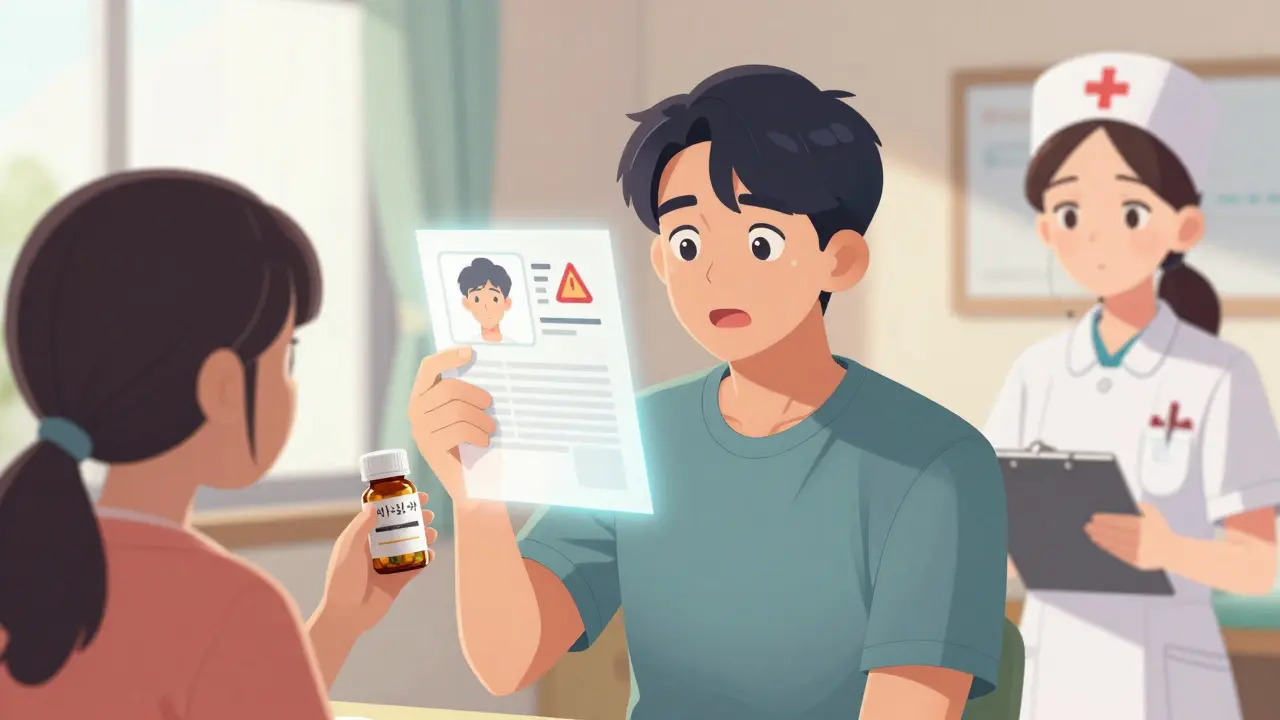
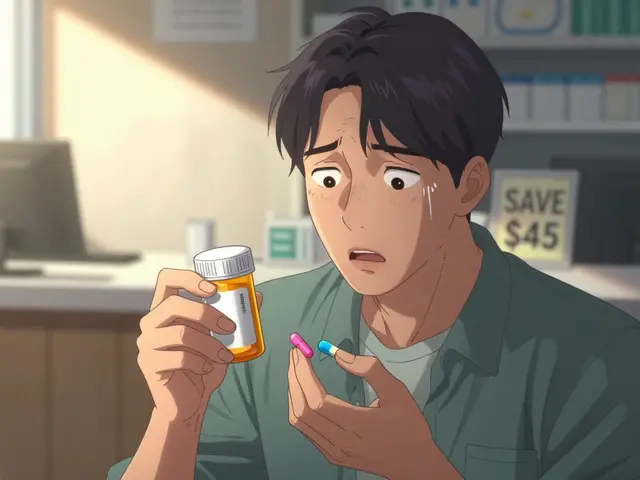
When a medication doesn’t feel right-when the pill looks different, the side effects are worse than expected, or the dose seems off-you’re not overreacting. You’re paying attention. And that’s the first step toward stopping a mistake before it hurts someone else. Medication errors are more common than most people realize. In the U.S., they injure over 1.3 million people every year. Many of those errors go unreported because patients don’t know how, or they fear being ignored. But reporting isn’t just about blaming someone. It’s about fixing systems so no one else has to go through the same scare.
Recognize the Error First
Before you can report a problem, you need to know what you’re seeing. A medication error isn’t always a doctor’s mistake. It could be a pharmacist giving you the wrong pill, a nurse administering the wrong dose, or even a pharmacy label that’s misprinted. You might notice it yourself: the pill color changed, you’re feeling dizzy after a dose you’ve taken before, or your prescription refill looks completely different.Don’t assume it’s just a coincidence. Keep the original packaging. Take a photo of the label. Write down the time you took the medication and what happened afterward-nausea, rash, confusion, low energy. Even small changes matter. A 2022 study in BMJ Quality & Safety found that 64% of patient-reported errors were dismissed until medical records confirmed them. Your notes become evidence.
Gather the Details
A strong report has specifics. You don’t need to be a doctor, but you do need to be precise. Here’s what to collect:- Medication name: Both brand and generic if you know them.
- Dosage and route: Was it supposed to be 10 mg by mouth? Did you get 20 mg injected?
- When it happened: Date and time of the error, and when you noticed the reaction.
- Your symptoms: Write down what you felt-headache, swelling, confusion, vomiting. Include how long it lasted.
- Provider and pharmacy: Who prescribed it? Who filled it? Name the clinic or hospital if possible.
- Medical history: Do you have allergies? Are you on other meds that might interact?
Don’t wait. The sooner you document, the more accurate your memory. Keep the medication bottle-even if it’s empty. Labels are often the clearest proof of what was dispensed.
Report to Your Provider First
Start with the person who knows your health best: your doctor, nurse, or pharmacist. Call their office. Say: “I think there was a medication error. I need to report it so we can make sure it doesn’t happen again.” Don’t apologize. Don’t downplay it. You’re not accusing-you’re protecting.Many clinics now have formal incident reporting systems. If they don’t take you seriously, ask to speak to a patient safety officer or the clinic manager. A 2023 review by the Agency for Healthcare Research and Quality found that patients who reported directly to their provider had an 89% chance of receiving a formal acknowledgment. That’s far higher than reporting to external agencies alone.
Ask for a copy of your medical records. Under HIPAA, you’re legally entitled to them within 30 days. If they delay, remind them: “I’m requesting my records to review the medication history. I need this to ensure my safety.” In one case documented by the FDA, a patient who submitted records alongside a report triggered a full pharmacy audit that uncovered a pattern of mislabeled insulin vials.
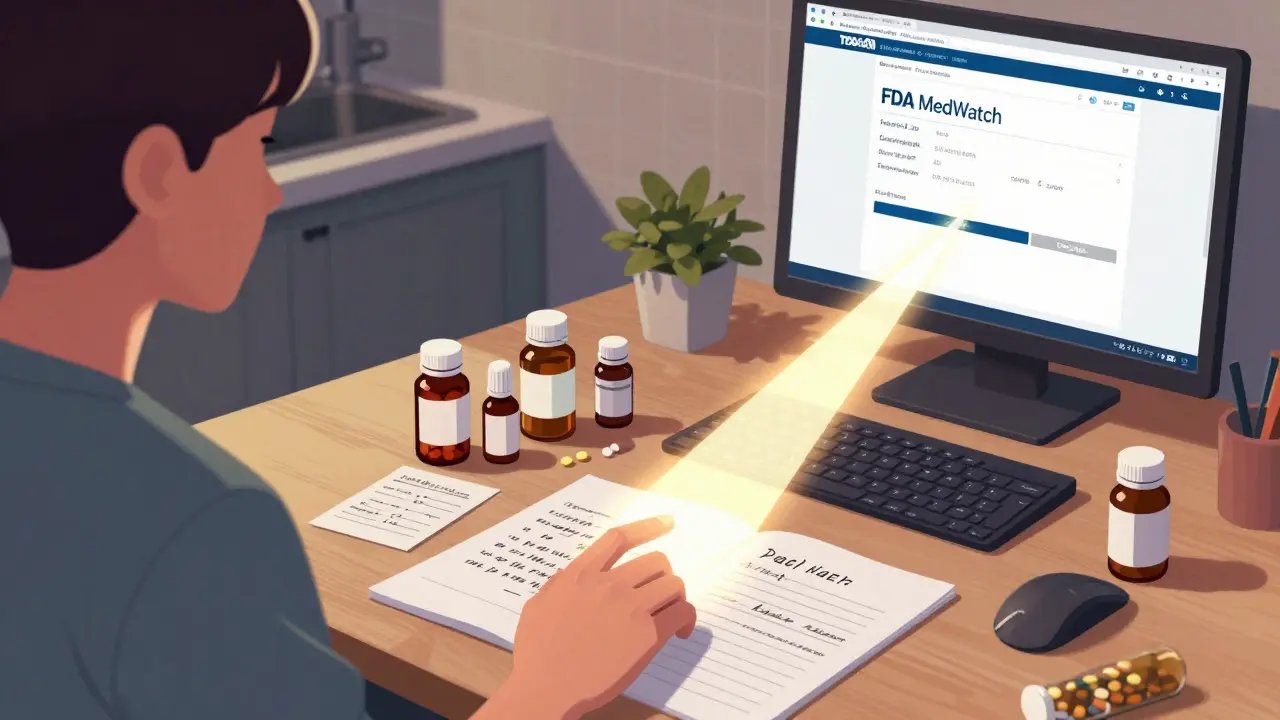
Use MedWatch for National Impact
If your provider doesn’t act, or if you want to help prevent this from happening to others, report to the FDA’s MedWatch program. It’s the federal system for tracking dangerous drug events. In 2022, MedWatch received 140,000 reports-and only 14% came from patients. That means most of the data is missing.The new MedWatch online portal, updated in 2023, cuts reporting time from 25 minutes to under 9 minutes. You’ll need:
- The name of the medication
- How you took it
- Your reaction
- Your age and gender
- Any other medications you’re taking
Even if you’re unsure whether it was an error, report it. The FDA doesn’t punish reporters. They analyze trends. One patient’s report about a mislabeled blood thinner led to a nationwide recall in early 2024. Your voice matters more than you think.
Special Cases: Schools and Children
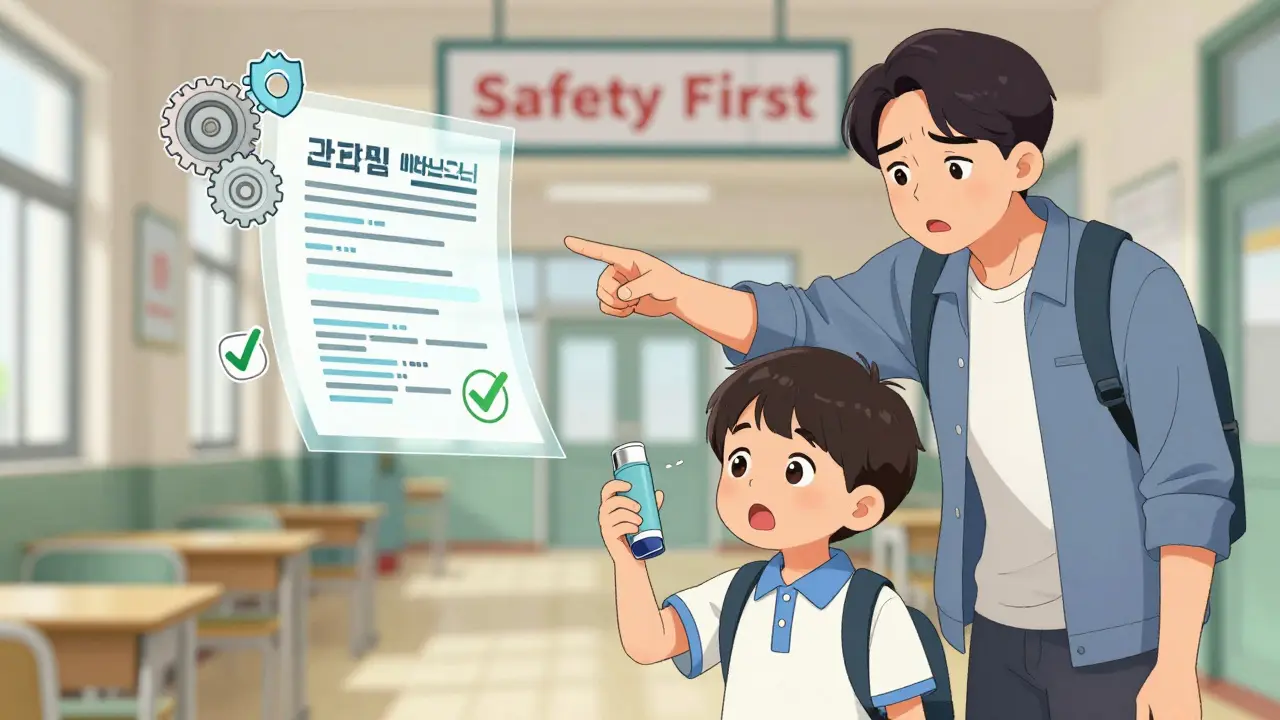
If the error happened in a school-say, a nurse gave the wrong asthma inhaler or a paraprofessional gave a child the wrong dose-act fast. In 48 states, schools are required to report these incidents within 24 hours. But many don’t follow up with parents.Here’s what to do:
- Get the school’s written incident report. Ask for a copy.
- Request a meeting with the school nurse and district health coordinator.
- Ask: “What steps are being taken to prevent this from happening again?”
A 2022 Iowa Department of Education review found that only 41% of parents received follow-up on prevention plans. Don’t accept silence. If needed, escalate to the school board or state education department. Children can’t advocate for themselves. Adults must.
What to Expect-and What Not to Expect
Some things you’ll hear:- “We’re reviewing the case.” That’s good. It means they’re taking it seriously.
- “It was a one-time mistake.” Don’t let that end the conversation. Ask: “What’s being changed in the system to prevent it?”
- “We’re sorry.” A genuine apology is a sign of accountability. In fact, research shows that hospitals that apologize openly reduce lawsuits by 37%.
What you shouldn’t accept:
- Being told, “It’s not that big of a deal.”
- Being asked to sign a waiver that silences you.
- Waiting over 30 days for your medical records.
If you’re ignored, escalate. Contact your state health department or patient advocacy group. The Institute for Safe Medication Practices (ISMP) offers free, confidential reporting and has helped fix over 200 safety flaws since 1991.
Why Reporting Matters More Than You Think
This isn’t about revenge. It’s about safety. A 2023 analysis by the Commonwealth Fund found that hospitals with strong reporting cultures saw a 75% drop in repeat medication errors. That’s not magic. It’s systems changing.When a nurse reports a mislabeled vial, it triggers a review of labeling procedures. When a parent reports a child getting the wrong dose at school, it leads to better training. When a patient submits a MedWatch report, it helps the FDA spot dangerous patterns before more people are hurt.
Studies show that fear of blame shuts down reporting. But when systems focus on fixing processes-not punishing people-reporting increases by 300-400%. That’s why “just culture” frameworks are now recommended in every major safety guideline. You’re not a snitch. You’re a safety partner.
Next Steps: What to Do Today
If you’ve experienced or witnessed a medication error:- Document everything-medication, symptoms, dates.
- Call your provider and say: “I need to report a medication error.”
- Request your medical records.
- If you’re not satisfied, file a report at MedWatch (FDA.gov/MedWatch).
- Follow up in 5 business days. If no one responds, escalate.
You don’t need to be loud. You just need to be clear. And you’re not alone. Every report adds to a growing wave of change.
What if my provider says the error wasn’t real?
If your provider dismisses your concern, ask for a written explanation. Then, request a copy of your medical records. Compare what was prescribed with what was given. If they still won’t acknowledge it, file a report with the FDA’s MedWatch program. External reports often trigger independent reviews. You don’t need their approval to report a safety issue.
Can I report a medication error anonymously?
Yes. The FDA’s MedWatch form allows anonymous reporting. However, providing your contact info helps them follow up if they need more details. If you’re worried about retaliation, you can also report through the Institute for Safe Medication Practices (ISMP), which guarantees confidentiality and does not share names with healthcare providers.
How long do I have to report a medication error?
There’s no strict deadline for patients reporting to the FDA or ISMP. But for internal hospital reports, most institutions require submission within 24 to 72 hours. The sooner you report, the more likely they can fix the problem before it affects someone else. Even reports made months later can still trigger investigations if they reveal a pattern.
Will reporting a medication error get me in trouble?
No. Reporting an error is protected under patient safety laws. In fact, the American Nurses Association and the Institute of Medicine both encourage reporting without fear of punishment. Healthcare systems that focus on learning-not blame-have far fewer errors. Your report helps improve safety, not punish someone.
What if the error happened in a nursing home or long-term care facility?
Report it to the facility’s administrator and the state’s long-term care ombudsman. These offices are required by law to investigate complaints. You can also file a MedWatch report. Nursing homes have higher rates of medication errors due to complex drug regimens and staffing gaps. Your report could help change policies that protect vulnerable residents.

Ian Glover
My name is Maxwell Harrington and I am an expert in pharmaceuticals. I have dedicated my life to researching and understanding medications and their impact on various diseases. I am passionate about sharing my knowledge with others, which is why I enjoy writing about medications, diseases, and supplements to help educate and inform the public. My work has been published in various medical journals and blogs, and I'm always looking for new opportunities to share my expertise. In addition to writing, I also enjoy speaking at conferences and events to help further the understanding of pharmaceuticals in the medical field.
12 Comments
-
gemeika hernandez
March 21, 2026 AT 15:37I’ve been in this game too long. I don’t trust any pharmacy anymore. I check every bottle like it’s a bomb. I’ve caught errors on three different occasions. One time, they gave me blood pressure pills instead of diabetes. I was dizzy for hours. Never again. I keep a notebook. Always.
-
Suchi G.
March 21, 2026 AT 20:59I’ve been trying to report an error for six months now. My doctor said it was ‘just a coincidence.’ My pharmacist laughed. I had to go to the state health board just to get someone to listen. I’m not exaggerating-my husband almost died because they gave him the wrong anticoagulant. I have photos. I have timestamps. I have PTSD from this. And no one in the system gives a damn until it’s too late.
-
Prathamesh Ghodke
March 22, 2026 AT 02:42Honestly? I used to think patients were overreacting. Then my sister got the wrong chemo dose. Turned out, the label had a typo and no one caught it. She’s fine now, but the system almost killed her. I’m not mad at the staff. I’m mad at the lack of double-checks. We need barcode scans on every pill. Period.
-
Nilesh Khedekar
March 22, 2026 AT 08:37they say report it but what if ur doctor is in on it? i mean think about it. big pharma owns everything. even the medwatch form. they dont want you to report. they want you to shut up and take the pills. i saw a guy get hospitalized after a med error and the hospital paid him off. then he signed an nda. sounds fishy right? its not. its the system. they dont want transparency. they want profits.
-
Andrew Muchmore
March 24, 2026 AT 03:18The fact that you have to document everything yourself just to get someone to listen is ridiculous. You shouldn’t need a detective’s notebook to stay alive. This shouldn’t be on the patient. It should be on the system.
-
becca roberts
March 24, 2026 AT 18:44I love how the article says 'you’re not a snitch, you’re a safety partner.' Like that’s gonna make people feel better. Try telling that to the nurse who got written up because I reported the wrong dose. She cried. I didn’t feel like a hero. I felt like a burden. But I still did it. Because someone else’s kid shouldn’t get my story.
-
Srividhya Srinivasan
March 24, 2026 AT 19:30I’ve been watching this for YEARS. You think this is about mistakes? No. It’s about control. The system doesn’t want you to know how many pills are mislabeled. They don’t want you to know that 70% of meds are stored in unmarked containers. They don’t want you to know that the same pharmacy has been fined 12 times for the same error. And they’ll never tell you. But I will. Because someone has to.
-
SNEHA GUPTA
March 25, 2026 AT 10:43Reporting should be built into the process. Not an afterthought. Imagine if every prescription came with a QR code you could scan to confirm the dosage, the batch, the expiration. Simple. Automatic. No paperwork. No begging. No fear. We have the tech. We just don’t use it.
-
Manish Singh
March 25, 2026 AT 11:20I work in a clinic. We have 3 nurses, 2 pharmacists, and 100 patients a day. We’re stretched thin. Mistakes happen. But when someone reports, we fix it. Not because we’re scared. Because we care. I’ve seen systems change after one patient spoke up. It’s not perfect. But it’s better than silence.
-
Paul Ratliff
March 26, 2026 AT 02:58just took my med today and it tasted weird. i called the pharmacy. they said oh thats the generic. i said but last time it was white now its yellow. they said oh wait hold on. turned out they sent me a different drug. i didnt even know. i just trusted them. lesson learned.
-
Kathy Underhill
March 28, 2026 AT 02:56The real question isn’t how to report. It’s why we’ve made reporting a burden instead of a natural part of care. Safety shouldn’t require courage. It should be designed in. We’ve outsourced vigilance to patients because it’s cheaper than fixing systems. But we’re all paying the price.


Write a comment
More Articles
How to Recognize Labeling Errors and Ask for Corrections in Machine Learning Datasets
Learn how to spot and fix labeling errors in machine learning datasets to improve model accuracy. Discover common error types, tools like cleanlab and Argilla, and how to ask for corrections effectively.
Antiseizure Medications and Generic Substitution: Risks and Best Practices
Generic antiseizure medications can save money, but for narrow therapeutic index drugs like lamotrigine and carbamazepine, even small changes in absorption can trigger seizures. Learn the risks, who’s most vulnerable, and how to protect yourself.

Nicole Blain
March 19, 2026 AT 22:21I just got my meds refilled and the pills looked totally different 😅 I thought I was losing my mind until I checked the label. Took a pic, called the pharmacy, and they admitted it was a mix-up. So glad I didn’t just swallow it. 🙌