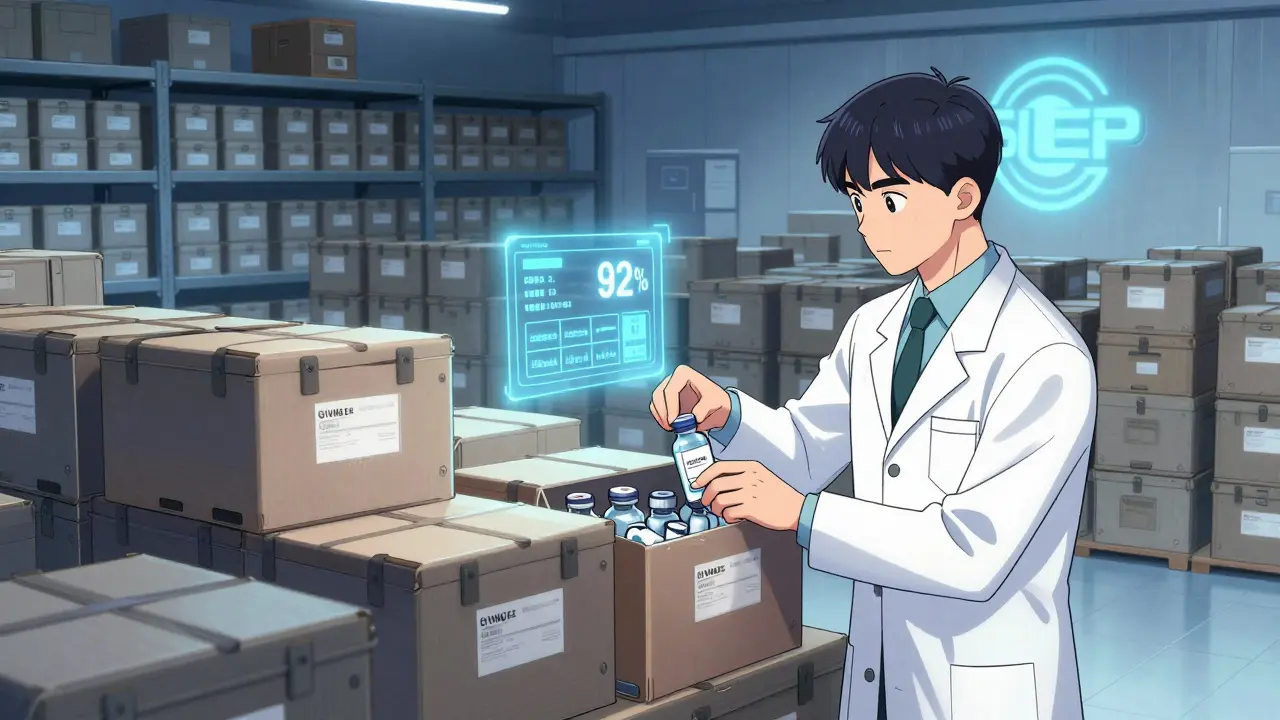
Every year, hospitals, pharmacies, and military depots throw away millions of doses of medicine simply because the date on the label has passed. But what if those pills, syringes, and vials were still perfectly good? The Military Shelf Life Extension Program (SLEP) doesn’t just ask that question-it proves it’s true.
How SLEP Works: Testing Drugs Beyond Their Expiration Dates
The U.S. Department of Defense started the Shelf-Life Extension Program in 1986 after noticing something strange: drugs sitting in storage were still working long after their printed expiration dates. Instead of automatically replacing them, they decided to test them. That decision saved billions. SLEP isn’t about guessing. It’s science. The FDA takes random samples from federally stored medications-antibiotics, antivirals, epinephrine auto-injectors, painkillers-and runs them through strict stability tests. These aren’t the same quick checks drug companies do before release. SLEP tests for potency, chemical breakdown, and physical changes over time under controlled temperature and humidity. To qualify for an extension, a drug must still contain at least 85% of its original active ingredient. That’s not a loose standard-it’s a hard line. Once tested, the FDA’s Center for Drug Evaluation and Research reviews the data. If the drug passes, its expiration date gets extended, sometimes by years. The DoD Shelf Life Extension System (SLES) keeps track of every approved extension, down to the lot number and storage location. This system is the backbone of the entire program. Without accurate records, there’s no way to know what’s still safe to use.What the Numbers Say: 88% of Drugs Still Work After Expiration
A 2006 study in the Journal of Pharmaceutical Sciences tested 122 different drugs from federal stockpiles. Eighty-eight percent of them met the 85% potency threshold-even after being stored for more than 15 years past their original expiration date. That’s not a fluke. It’s a pattern. The Government Accountability Office found that between 2005 and 2015, SLEP extended the shelf life of 2,500 different medications. Those extensions saved the federal government an estimated $2.1 billion. Think about that: over two billion dollars kept in the budget because medicine didn’t need to be thrown out and replaced. Compare that to the private sector. A 2019 analysis in Health Affairs estimated that U.S. pharmacies and hospitals waste $1.7 billion every year just by discarding expired drugs-even when they’re perfectly fine. Why? Because commercial expiration dates are set conservatively. Manufacturers test drugs for 2-3 years under ideal conditions and then add a safety buffer. They’re not testing for 10, 15, or 20 years. They don’t have to. The law doesn’t require it.Real-World Impact: Saving Lives and Money in Crisis
SLEP isn’t just about saving money. It’s about saving lives when time matters most. During the 2009 H1N1 flu pandemic, the Strategic National Stockpile relied on SLEP to extend the shelf life of oseltamivir (Tamiflu) by three years. That single extension preserved 22 million treatment courses. Without it, the U.S. would have had to scramble to buy new supplies during a national emergency-when global demand was already skyrocketing. Military medical units see the difference too. A 2019 Army report showed that using SLEP cut pharmaceutical waste in battlefield kits by 42%. In a combat zone, you don’t get to order new medicine on Amazon. If your epinephrine auto-injector expires tomorrow and you can’t replace it, you’re stuck. SLEP ensures that critical supplies are ready when needed. A 2020 report from the U.S. Army Medical Materiel Agency found that facilities following SLEP protocols saved $87 million annually in avoided waste. That’s enough to buy thousands of new ventilators, IV bags, or antibiotics for underserved clinics.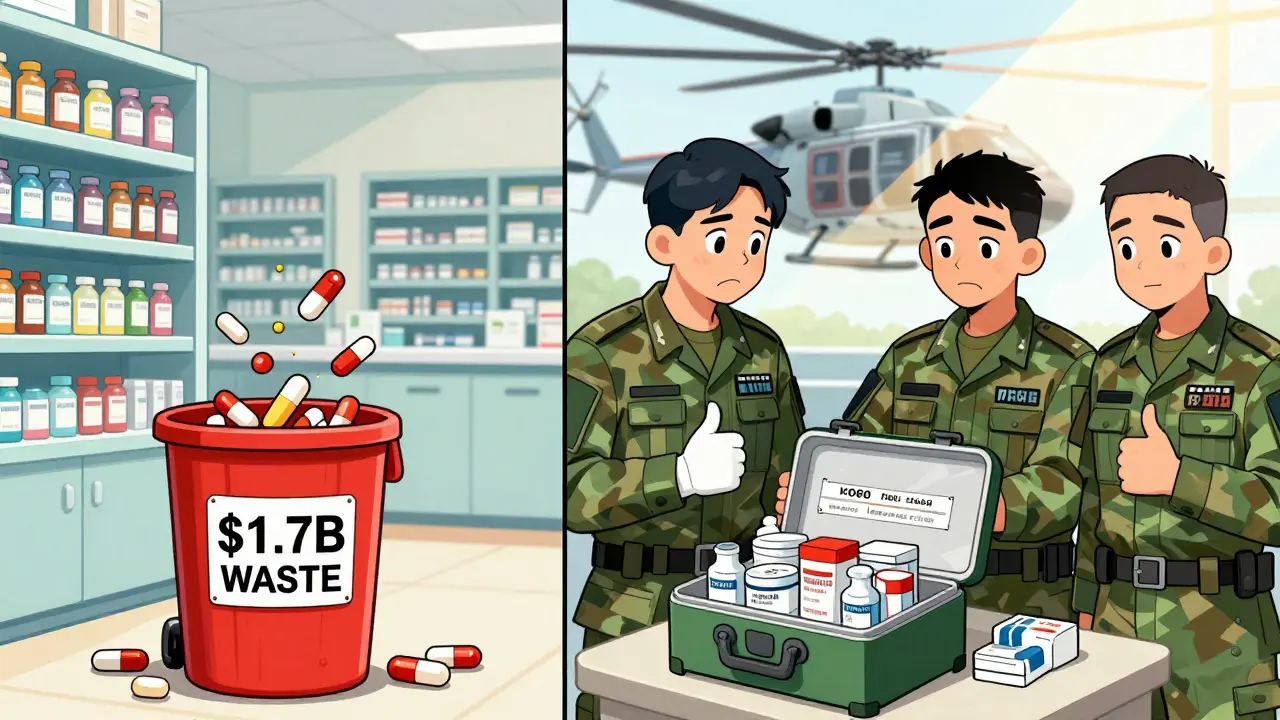
Why You Can’t Just Use SLEP at Your Local Pharmacy
Here’s the catch: SLEP extensions are not transferable. You can’t take a bottle of expired ibuprofen from your medicine cabinet, check the SLES database, and assume it’s still good. The FDA is very clear on this. Their 2021 guidance states that shelf-life extensions only apply to the exact lot number, packaging, and storage conditions tested under SLEP. A drug stored in a climate-controlled military warehouse at 15°C with low humidity behaves differently than one sitting in a hot garage or a humid bathroom. Dr. Michael D. Swartzburg, a pharmaceutical stability expert at UCSF, puts it simply: “SLEP’s findings don’t mean all expired drugs are safe. They mean properly stored drugs can last much longer than we thought.” That’s why pharmacies still follow the printed expiration date. It’s the law. And unless you’re part of a federal agency with access to SLES, you can’t verify if your bottle was part of a tested lot. The system isn’t designed for public use-it’s designed for national security.The Bigger Picture: SLEP Is Changing How the World Thinks About Expired Medicine
SLEP didn’t just save money. It changed the science of drug stability. Before SLEP, the pharmaceutical industry treated expiration dates like hard deadlines. Now, regulators know those dates are often conservative estimates. The FDA now uses SLEP data to inform new testing standards. In 2021, they expanded the program to include certain biological products like vaccines and antitoxins-a major shift, since those were once considered too unstable for long-term storage. Twelve NATO countries have built their own versions of SLEP since 2010. Canada, the UK, and Australia now run similar programs for their emergency stockpiles. The European Medicines Agency has started pilot projects based on SLEP’s model. Even the market is responding. The global shelf-life extension services industry is projected to hit $4.2 billion by 2027, according to Grand View Research. That growth is fueled by governments realizing they can stretch their medical budgets without sacrificing safety.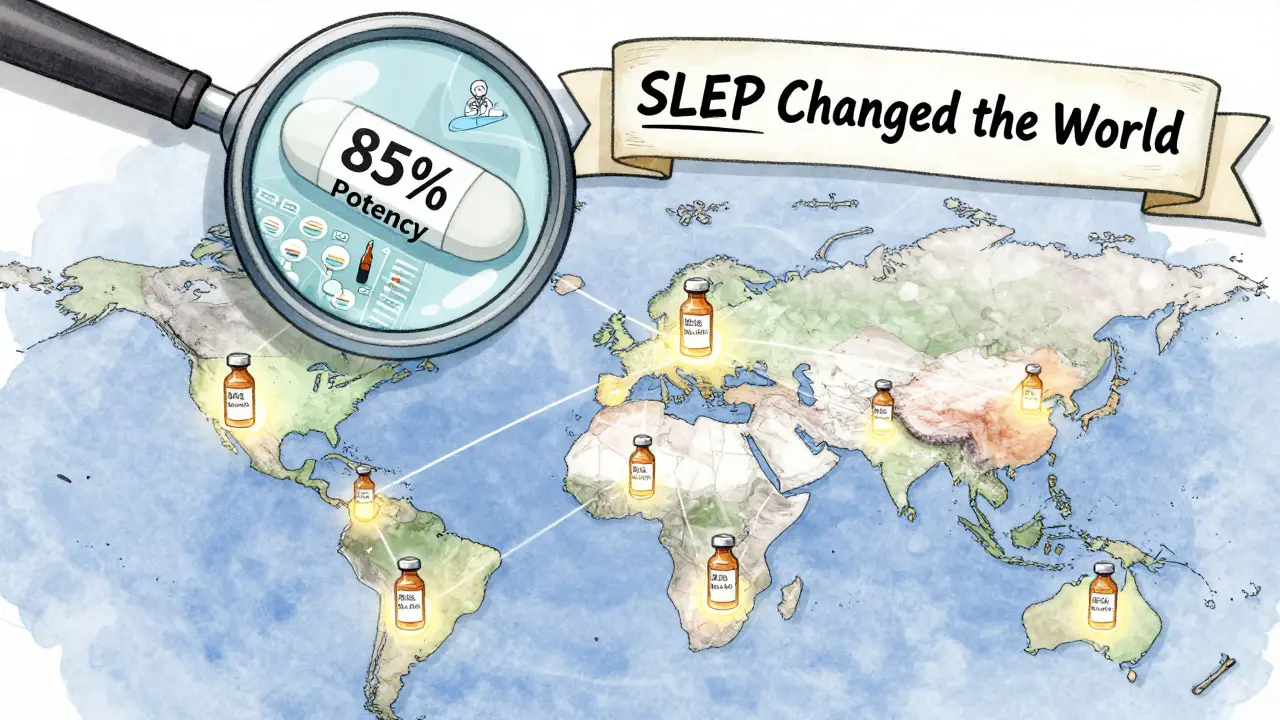
Challenges and Limits: What SLEP Can’t Fix
SLEP isn’t perfect. Access to the SLES database is restricted. A 2018 Defense Logistics Agency survey found that 35% of military logistics staff struggled to get into the system, with delays averaging over a week. Training is required-40 hours of initial instruction, plus 8 hours every year. Without that, even the best program fails. New drugs are coming faster than testing can keep up. The 2023 National Defense Authorization Act wants to expand SLEP to cover more chemical and radiological countermeasures. But those drugs are often new, complex, and poorly understood. Their stability profiles aren’t well documented. Predicting how they’ll hold up over 10 years is still guesswork. A 2022 Institute of Medicine report warned that without better predictive modeling-using tools like mass spectrometry and accelerated aging tests-SLEP might not keep pace with future threats. That’s why the FDA’s 2022-2026 plan prioritizes research into these new methods.What This Means for You
You won’t be able to use SLEP to extend your prescription. But you can learn from it. If you’re storing medications at home, keep them cool, dry, and out of sunlight. Don’t leave them in the bathroom or the car. That’s the same condition SLEP relies on to make drugs last. And if you have an old bottle of medicine you’re not sure about-especially something critical like an EpiPen or insulin-don’t guess. Talk to your pharmacist. They might not have access to SLES, but they know what’s safe and what’s not. SLEP shows us that expiration dates aren’t magic. They’re estimates. And sometimes, those estimates are way too conservative. But only under the right conditions. And only for the right drugs. And only if someone tested them properly. The military didn’t just save money. They proved that with science, discipline, and good storage, medicine can last far longer than we ever believed.Are expired medications safe to use?
It depends. For most people, expired medications should not be used unless they’re part of a verified program like SLEP. Commercial expiration dates are set conservatively, but they’re legally binding. Drugs stored improperly-like in heat or humidity-can break down and become ineffective or even harmful. Only under controlled, documented conditions can some medications remain safe and potent beyond their printed date.
Does the FDA approve shelf-life extensions for all drugs?
No. The FDA only extends shelf life for drugs in federal stockpiles tested under SLEP. This applies to FDA-approved prescription medications, not over-the-counter drugs, supplements, or biologicals (though biologicals were added in 2021). Each extension is specific to a single lot number, packaging, and storage condition. It does not apply to any other product, even if it’s the same drug from the same manufacturer.
How long can a drug last after its expiration date under SLEP?
Many drugs tested under SLEP have been extended by 2 to 15 years beyond their original expiration date. The average extension per cycle is 2.8 years, and some antibiotics and pain relievers have remained stable for over 15 years when stored properly. However, this varies by drug, formulation, and storage conditions. Not every drug can be extended, and each extension requires new testing.
Why don’t pharmacies extend expiration dates like SLEP does?
Pharmacies don’t have access to the SLEP database, testing labs, or the legal authority to extend expiration dates. SLEP is a government program with strict protocols, federal oversight, and controlled storage environments. Pharmacies operate under different rules-they must follow the manufacturer’s printed expiration date. Extending it without verification would be illegal and risky.
Can I trust a drug that’s expired if it looks and smells fine?
No. You can’t tell if a drug is still potent just by how it looks or smells. Tablets can discolor, liquids can separate, and powders can clump-but the active ingredient might still be intact. Conversely, a drug can look perfect while losing potency. Only laboratory testing can confirm whether a medication meets the 85% potency standard required for safety and effectiveness. Never assume expired medicine is safe based on appearance alone.
What happens to drugs that fail SLEP testing?
Drugs that fail SLEP testing are destroyed according to federal hazardous waste protocols. They’re not sold, donated, or repurposed. The Department of Defense ensures safe disposal to prevent misuse or environmental harm. This is a key part of maintaining public trust in the program-only drugs that pass the test are kept in circulation.

Ian Glover
My name is Maxwell Harrington and I am an expert in pharmaceuticals. I have dedicated my life to researching and understanding medications and their impact on various diseases. I am passionate about sharing my knowledge with others, which is why I enjoy writing about medications, diseases, and supplements to help educate and inform the public. My work has been published in various medical journals and blogs, and I'm always looking for new opportunities to share my expertise. In addition to writing, I also enjoy speaking at conferences and events to help further the understanding of pharmaceuticals in the medical field.
15 Comments
-
Andrew Clausen
January 28, 2026 AT 08:54Incorrect. The FDA does not extend expiration dates for civilian use because the storage conditions of the general public are not controlled. SLEP's results are irrelevant to your medicine cabinet. The distinction between institutional logistics and individual storage is not a bureaucratic oversight-it's pharmacology 101.
-
Kathy McDaniel
January 30, 2026 AT 06:45sooo interesting 😊 i had a bottle of amoxicillin from 2018 and i was scared to use it but now i feel better knowing it might still work if stored right
-
Paul Taylor
January 30, 2026 AT 18:18Let me be clear about something because people keep missing the point SLEP isn't about whether expired drugs work it's about whether they work under conditions you can't replicate at home the military stores drugs in climate controlled vaults with humidity sensors and lot tracking systems you store yours in a bathroom drawer next to the shower that's not the same thing and pretending it is is dangerous
-
astrid cook
January 31, 2026 AT 13:14They're hiding something. Why would the government test this and then not tell the public? It's not about safety-it's about control. Big Pharma doesn't want you to know pills last 15 years. They'd lose billions. This is a cover-up.
-
Candice Hartley
February 1, 2026 AT 12:03Wow. This is actually really helpful. I’ve been nervous about keeping my EpiPen past the date. Now I know to check how it’s stored, not just the label.
-
Kirstin Santiago
February 2, 2026 AT 06:19It's cool that the military figured this out. I wish more people knew that storage matters more than the date on the bottle. My grandma kept her meds in a cool drawer and they lasted years. She didn't need a government program to know that.
-
Desaundrea Morton-Pusey
February 2, 2026 AT 08:52Why does the US military get to hoard life-saving drugs while civilians get thrown out? This is a class issue. The rich get access to extended meds through back channels. The rest of us are told to buy new ones. Capitalism kills.
-
Murphy Game
February 3, 2026 AT 12:16Did you know the SLEP database is linked to a classified AI system that predicts drug degradation using satellite weather data? They're not just testing pills-they're monitoring your climate to decide if you're allowed to live. The expiration date is a lie. The real deadline is written in code.
-
John O'Brien
February 3, 2026 AT 21:05bro the fact that we throw away billions in meds while people go without is insane. if the military can do it why cant we? this is pure waste and it's criminal
-
Kegan Powell
February 5, 2026 AT 04:50There's something beautiful here about how discipline and science can outlast bureaucracy. SLEP isn't just about drugs-it's about trust. Trust in data. Trust in process. Trust that if you do things right, things last longer than we think. Maybe that's the lesson we all need right now
-
April Williams
February 5, 2026 AT 06:19So you're saying I should just ignore the expiration date? That's irresponsible. You're not a doctor. You're not the FDA. You're not qualified to make that call. If you're that cheap, don't take medicine at all. You're putting your life-and everyone around you-at risk.
-
Harry Henderson
February 5, 2026 AT 16:28STOP WASTING MONEY. This is the most obvious thing in the world. If your meds are stored right, they last. Why are we still paying for new ones every year? This is the dumbest thing about American healthcare. Fix it. Now.
-
suhail ahmed
February 7, 2026 AT 04:12Man this reminds me of how we used to store spices in Kerala-cool dark place, sealed tight, lasted years. Same logic. The science is ancient. The system is modern. The gap? That's the tragedy.
-
Marian Gilan
February 8, 2026 AT 20:40the fda is a puppet of big pharma and slep is just a distraction so we dont notice theyre poisoning us with preservatives in the meds that only last 2 years on purpose


Write a comment
More Articles
Generic Price Wars: How Consumers Save Money on Prescription Drugs
Generic drug price wars can slash prescription costs by over 95%, but middlemen often keep the savings. Learn how to find real discounts, compare cash prices, and beat the system to save money on your meds.

Helping Your Partner Cope with Depressive Disorder - Practical Guide
Learn practical steps to support a partner with depressive disorder, from recognizing signs to communication, therapy options, daily coping tools, and crisis care.

Clopidogrel, Prasugrel, and Ticagrelor: Side Effects Compared (2026 Guide)
Choosing the right antiplatelet drug is critical for heart patients. This guide compares the side effects of clopidogrel, prasugrel, and ticagrelor, including bleeding risks, dyspnea, and expert preferences. Updated for 2026.
Anjula Jyala
January 26, 2026 AT 15:35The SLEP data is unequivocal 88% of drugs retain >85% potency past expiration under controlled conditions but the FDA's refusal to extend this to civilians is bureaucratic cowardice masked as safety