ICS Safety: Understanding Inhaled Corticosteroid Risks and Safe Use
When you use an inhaled corticosteroid, a type of anti-inflammatory medication delivered directly to the lungs via inhaler. Also known as ICS, it’s one of the most common long-term treatments for asthma and COPD. Unlike oral steroids, inhaled versions target the airways with minimal absorption into the bloodstream—but they’re not risk-free. Many people assume because it’s inhaled, it’s harmless. That’s a dangerous myth. Even low doses over years can cause side effects like oral thrush, hoarseness, or even bone thinning if not managed right.
One of the biggest concerns with ICS safety, the proper use and monitoring of inhaled corticosteroids to minimize adverse effects is improper technique. If you don’t rinse your mouth after using your inhaler, the steroid sits on your tongue and throat, feeding yeast that causes thrush. Or worse—you might swallow some of it, and over time, that can affect your adrenal glands. That’s why corticosteroid taper, the gradual reduction of steroid dosage to prevent withdrawal and support hormone recovery matters even for inhalers, especially if you’ve been on high doses for more than a year. It’s not just about stopping the drug—it’s about letting your body readjust. And if you’re on multiple inhalers, like Symbicort or Advair, you’re getting a combo of steroid and long-acting bronchodilator. That’s effective, but it also means you’re exposed to more steroid than you think.
ICS safety isn’t just about the drug—it’s about your habits. Do you use a spacer? Do you rinse and spit? Are you using the right dose for your condition, or just the one your doctor gave you years ago? Studies show many people keep using high-dose ICS long after their symptoms improve, increasing their risk of pneumonia, cataracts, or muscle weakness. If you have osteoporosis or are on hydroxyurea, your bone health is already at risk—adding ICS without monitoring calcium and vitamin D is like adding fuel to the fire. Even your dentist needs to know you’re on inhaled steroids, because dry mouth and fungal infections are common side effects.
There’s no one-size-fits-all answer. What’s safe for a 25-year-old with mild asthma isn’t safe for a 70-year-old with COPD and diabetes. That’s why the posts below don’t just list risks—they show you how to check your inhaler technique, spot early signs of steroid side effects, compare alternatives like fluticasone vs budesonide, and know when to ask your doctor about reducing your dose. You’ll find real-world tips from people who’ve managed these meds for years, plus guidance on how to track your own symptoms and avoid the traps most users never see. This isn’t theory. It’s what works when your life depends on breathing easy—and staying healthy while you do it.
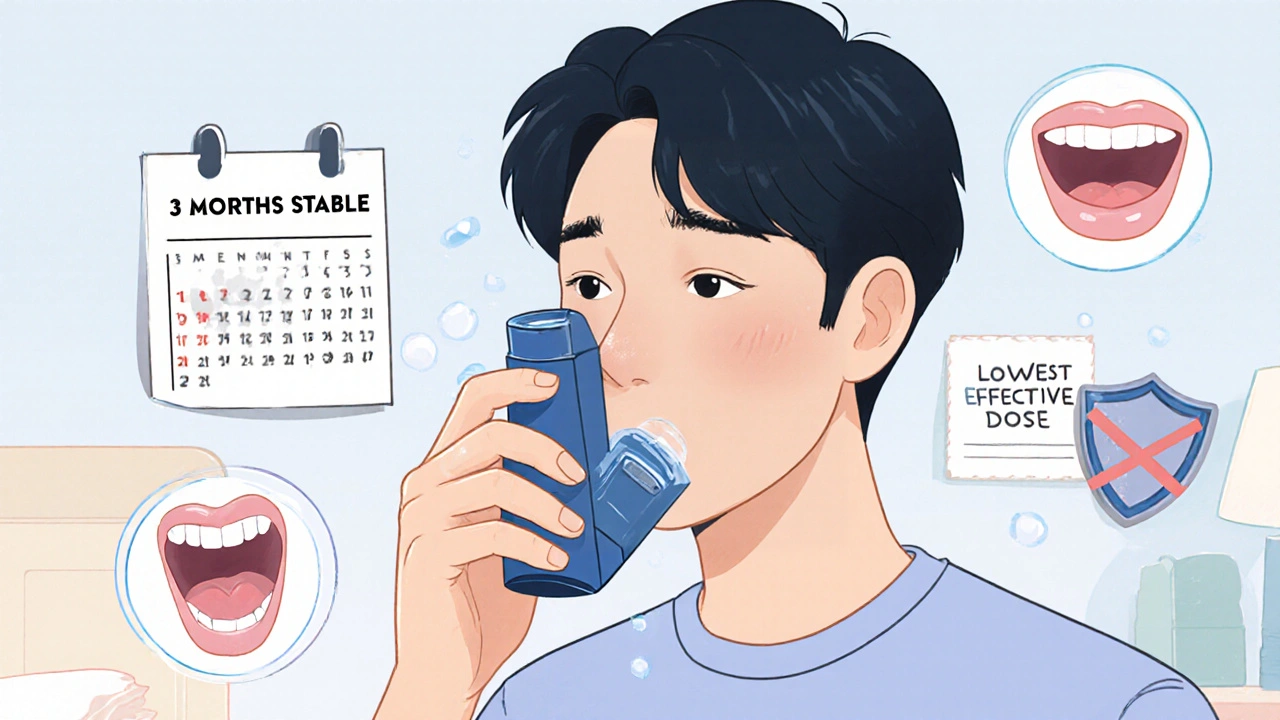
Asthma Steroid Side Effects: How to Reduce Risks and Monitor Your Health
Learn how to minimize side effects from asthma steroid inhalers like thrush, hoarseness, and bone thinning. Discover proven strategies for dose reduction, proper technique, and safer alternatives.