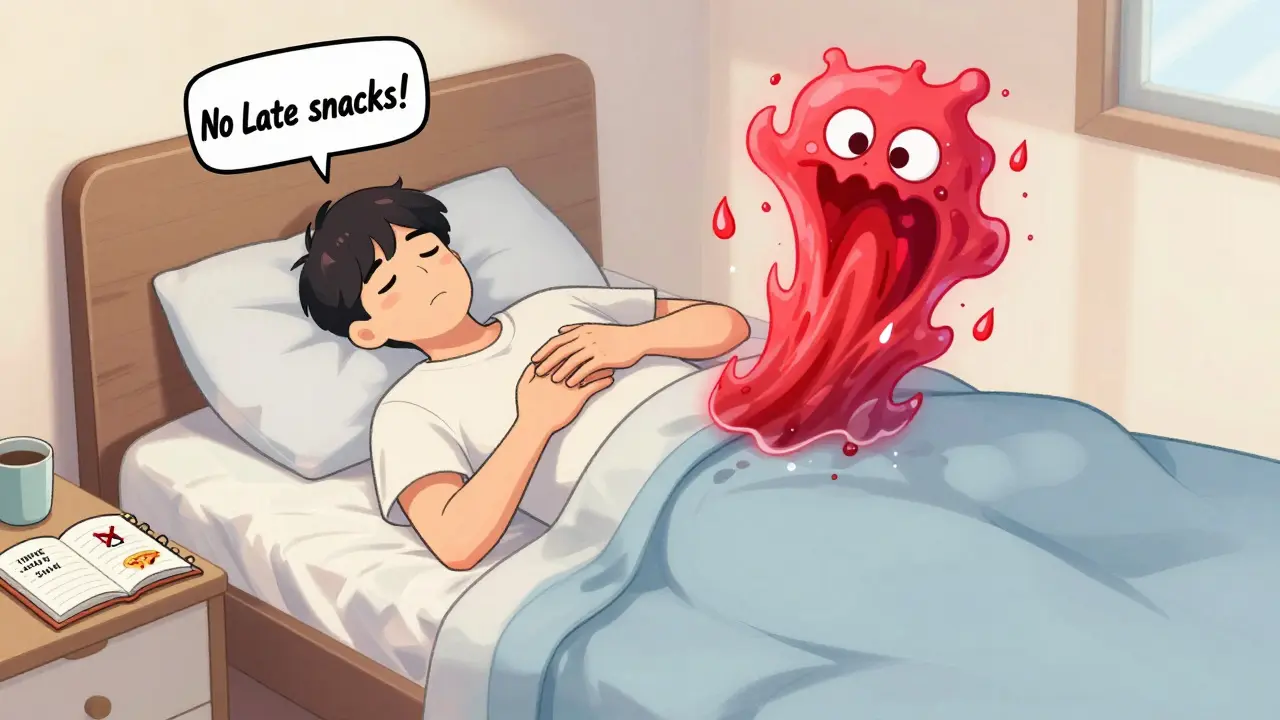
If you’ve ever woken up with a burning chest or a sour taste in your mouth, you’re not alone. About 7% of adults in the U.S. have daily acid reflux symptoms - and many of them are taking proton pump inhibitors (PPIs) to manage it. But here’s the catch: PPIs aren’t a cure. They’re a tool. And the real key to long-term relief? Lifestyle changes that actually stick.
What’s Really Going On With GERD?
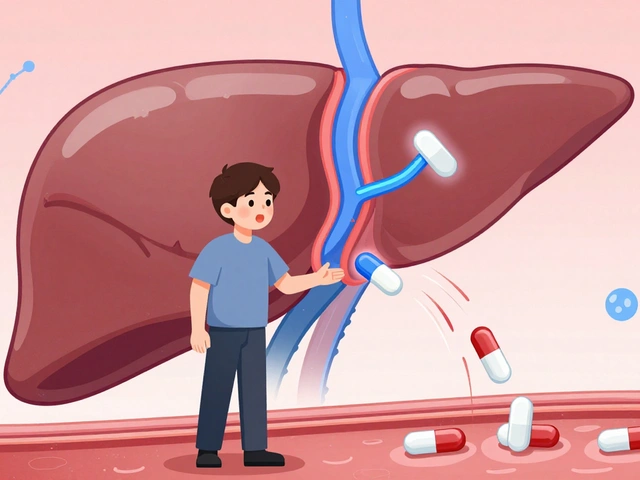
GERD isn’t just occasional heartburn. It’s when the muscle at the bottom of your esophagus - called the lower esophageal sphincter (LES) - stops working right. Instead of staying shut after food goes in, it lets stomach acid sneak back up. That acid burns the lining of your esophagus, which isn’t built to handle it. The result? Pain, regurgitation, chronic cough, hoarseness, even bad breath. This isn’t new. Doctors started calling it GERD in the 1980s, after realizing some people had constant reflux, not just the occasional after-a-big-meal episode. Today, the medical definition is clear: if you have heartburn or regurgitation at least twice a week, and it’s linked to acid backing up, you’ve got GERD. The biggest risk factors? Being overweight (especially with a BMI over 30), smoking, pregnancy, and having a hiatal hernia. About 94% of people with severe esophagitis have one. Medications like calcium channel blockers for high blood pressure can also make it worse. Left untreated, GERD can lead to real problems: strictures (narrowing of the esophagus), ulcers, and Barrett’s esophagus - a condition that raises your risk of esophageal cancer. That’s why managing it isn’t just about feeling better today. It’s about protecting your body long-term.PPIs: The Strongest Acid Blockers, But Not a Forever Fix
Proton pump inhibitors - drugs like omeprazole, pantoprazole, and esomeprazole - are the go-to for GERD. They work by shutting down the acid-producing pumps in your stomach cells. That’s powerful. They reduce acid by 90-98%, and in clinical trials, they heal esophagitis in 70-90% of cases. That’s why doctors prescribe them. If you have visible damage from acid, or symptoms that won’t quit, PPIs are the fastest way to get relief. Most people take them once a day, 30-60 minutes before breakfast. That timing matters. Take them after eating, and they won’t work as well. But here’s what most people don’t know: PPIs don’t fix the broken valve. They just turn down the acid. That’s why symptoms often come back as soon as you stop. And there are risks. Long-term use - especially over a year - is linked to higher chances of:- Intestinal infections like C. diff
- Vitamin B12 deficiency
- Low magnesium levels
- Increased hip fracture risk in older adults (35% higher with 3+ years of use)
Lifestyle Changes: The Real Game-Changer
Medication helps. But lifestyle changes? They change the game. Losing just 5-10% of your body weight cuts GERD symptoms by 50%. That’s not magic. It’s physics. Extra belly fat pushes up on your stomach, forcing acid out. Even modest weight loss makes a measurable difference. Then there’s timing. Eating within two or three hours of bedtime? That’s a major trigger. Studies show cutting that out reduces nighttime acid exposure by 40-60%. Try sleeping with your head elevated 6 inches. It sounds simple, but it’s one of the most effective tricks - and it’s free. Now, the food. Not all triggers are the same for everyone. But the big ones? Coffee, tomatoes, alcohol, chocolate, fatty foods, and spicy meals. Research shows these make symptoms worse for 70-80% of people. One patient on Reddit said cutting out coffee alone gave her 70% relief. Another found eliminating spicy food cut his nighttime cough in half. The key? Track it. Use a food diary for two weeks. Write down what you eat, when you eat it, and how you feel. You’ll start seeing patterns. Maybe it’s not the pizza - it’s the soda you drink with it. Or maybe it’s the late-night snack you think is harmless. A 2022 survey found 58% of people got moderate to complete symptom control with diet and lifestyle changes alone. That’s almost 6 in 10 people who didn’t need meds to feel better.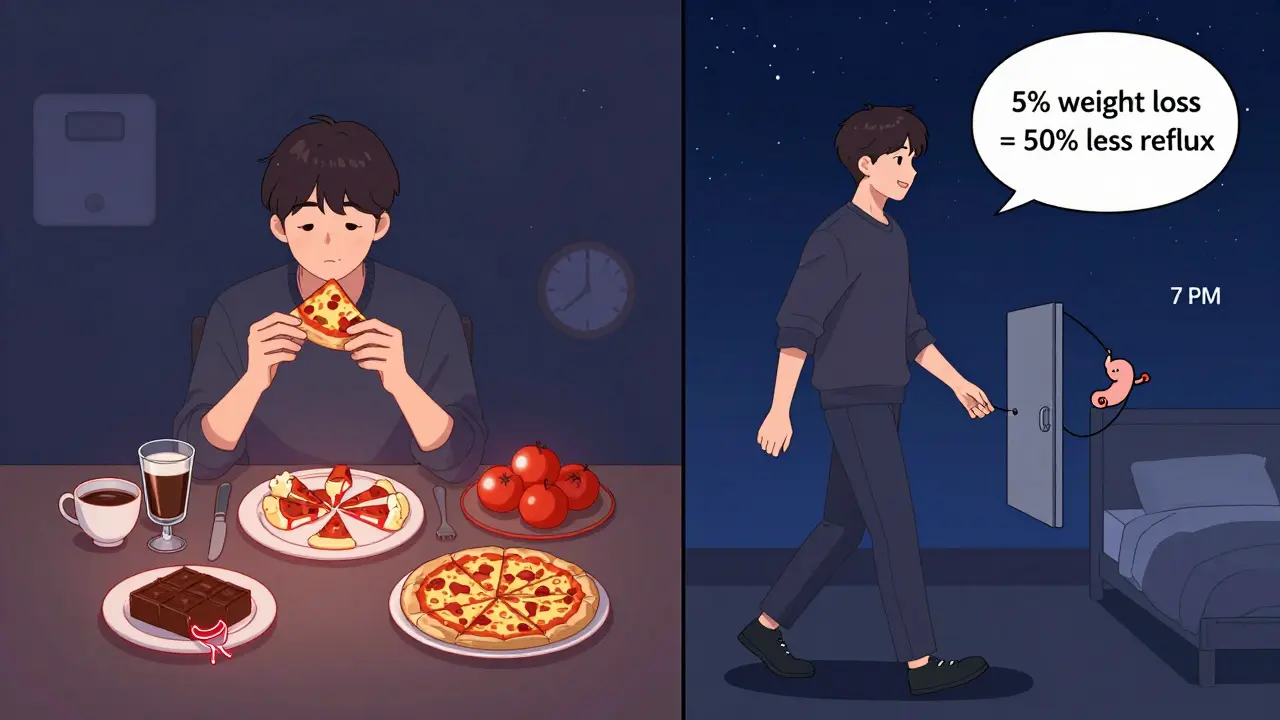
The Problem With Stopping PPIs - And How to Do It Right
Here’s the thing: when people stop PPIs cold turkey, a lot of them get worse. Not because the drug didn’t work - but because their stomach ramps up acid production in response. It’s called rebound acid hypersecretion. About 44% of users report this in studies. You can’t just quit. You have to taper. A smart approach:- Keep your PPI for now.
- Start lifestyle changes - diet, weight loss, no late meals.
- After 4-6 weeks, ask your doctor about switching to an H2 blocker like famotidine (Pepcid). These are weaker than PPIs but safer long-term.
- Use H2 blockers on an as-needed basis - only when you feel symptoms coming on.
- Slowly reduce the dose over 4-8 weeks.
When to Think Beyond Pills and Diets
Not everyone responds to meds and lifestyle. If you’ve tried everything for 8-12 weeks and still have symptoms - especially if you’re having trouble swallowing, losing weight, or seeing blood - you need an endoscopy. That’s not optional. That’s how you catch Barrett’s esophagus early. For those who still struggle, surgery is an option. Fundoplication - where the top of the stomach is wrapped around the LES - has a 90% success rate at 10 years. Newer options like the LINX® device (a small magnetic ring placed around the LES) have 85% of patients reporting symptom reduction at 5 years. And now, there’s Vonoprazan - the first new acid blocker class in 30 years. Approved in 2023, it works faster and may be more effective than PPIs for some. It’s not yet widely available, but it’s a sign that the field is evolving.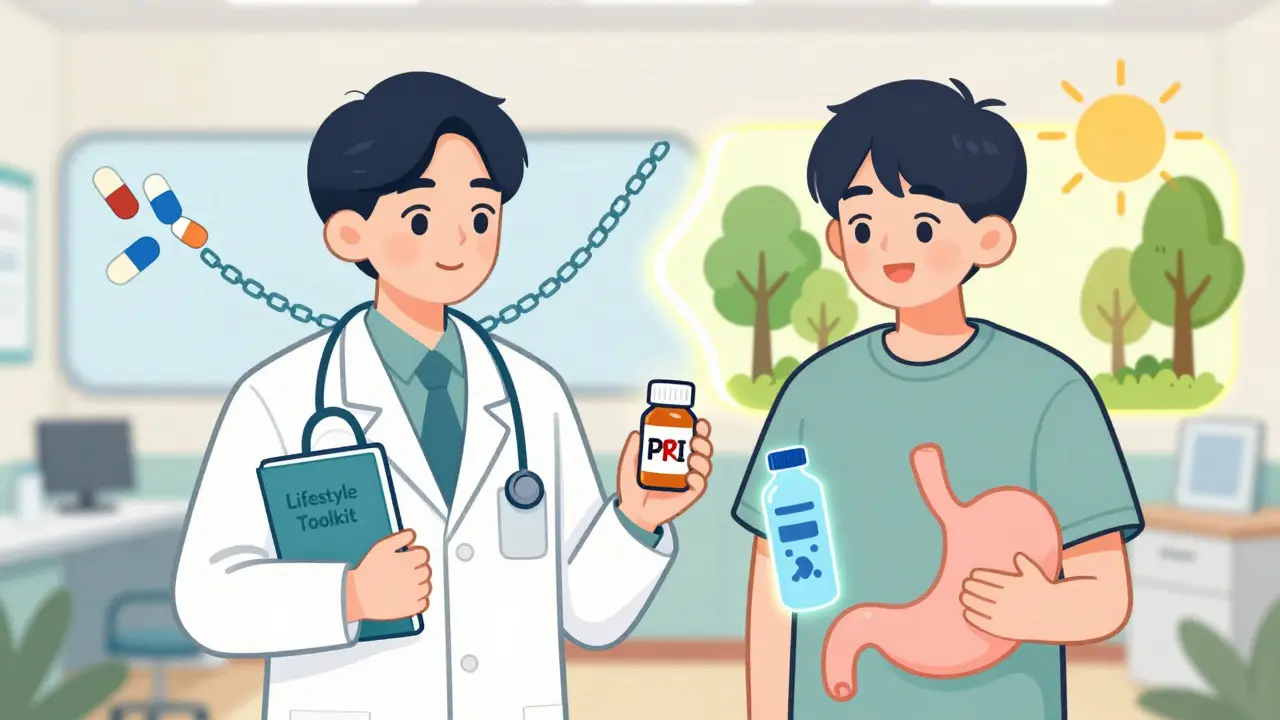
What Works Best? The Real-World Answer
The best outcome? Not PPIs alone. Not diet alone. It’s both. A 2023 Johns Hopkins study gave people a 12-week structured plan: diet, weight loss, sleep position, and stress management - no PPIs at first. After 12 weeks, 65% were able to stop PPIs completely and still feel better. The control group - just standard care - only saw a 28% success rate. That’s the difference between treating symptoms and treating the cause. PPIs are powerful. But they’re not a lifelong solution. Lifestyle changes are hard. They require planning, patience, and sometimes saying no to friends, parties, or late-night snacks. But they’re the only thing that can truly change your relationship with food - and your body. The goal isn’t to be perfect. It’s to be consistent. Skip the coffee one morning. Eat dinner at 7 instead of 9. Walk after eating. Elevate your bed. These aren’t just tips. They’re tools. And together, they can do what no pill can: give you back your life without depending on medication.What to Do Next
If you’re on PPIs right now:- Ask your doctor: “Is this still necessary?”
- Start a food and symptom diary for two weeks.
- Try cutting out the top 3 triggers: coffee, alcohol, and late meals.
- Don’t stop your PPI suddenly. Work with your provider to taper safely.
- If symptoms persist after 8 weeks of lifestyle changes, ask about an endoscopy.
- Don’t wait until it’s “bad enough.”
- Start with weight loss - even 5% helps.
- Give yourself 4-6 weeks to adjust. Symptoms don’t vanish overnight.
- Use apps like RefluxMD to track triggers - they’re rated 4.7/5 by thousands.
Can I stop taking PPIs on my own?
No. Stopping PPIs suddenly can cause rebound acid hypersecretion, making your symptoms worse for days or weeks. Always work with your doctor to taper off slowly - often by switching to an H2 blocker like famotidine first, then reducing gradually over 4-8 weeks.
Do I need to avoid all trigger foods forever?
Not necessarily. Everyone’s triggers are different. Some people can have a small amount of chocolate or wine without issues. The key is to test foods one at a time after symptoms improve. Keep a food diary to find your personal triggers - not just the common ones. Once you know what affects you, you can plan around it instead of avoiding everything.
Is GERD the same as heartburn?
Heartburn is a symptom. GERD is the chronic condition that causes frequent heartburn - at least twice a week - along with other signs like regurgitation, chronic cough, or hoarseness. Occasional heartburn after a big meal is normal. If it’s happening regularly, it’s likely GERD.
Can lifestyle changes really heal esophagitis?
Yes - but not always alone. For mild cases, diet, weight loss, and avoiding late meals can reduce inflammation enough for the esophagus to heal. For moderate to severe cases, PPIs are still needed to speed healing. But lifestyle changes are what keep it healed long-term. Studies show people who combine both have the lowest relapse rates.
Why do I still feel symptoms even though my PPI is working?
PPIs reduce acid, but they don’t fix the physical leak. If you’re still getting symptoms, it could be because you’re still eating trigger foods, lying down too soon after meals, or not taking the PPI correctly (it needs to be taken before food). Also, some symptoms like cough or hoarseness may be caused by acid reaching your throat - which PPIs don’t always stop completely. Lifestyle changes help block that path.
Is surgery worth considering for GERD?
Surgery is usually an option if you’ve tried 8-12 weeks of lifestyle changes and medication and still have severe symptoms, or if you can’t tolerate long-term PPI use. Procedures like fundoplication or LINX® have high success rates - 85-90% - and many patients report better quality of life than with daily pills. But surgery isn’t risk-free. Talk to a specialist to see if you’re a candidate.

Ian Glover
My name is Maxwell Harrington and I am an expert in pharmaceuticals. I have dedicated my life to researching and understanding medications and their impact on various diseases. I am passionate about sharing my knowledge with others, which is why I enjoy writing about medications, diseases, and supplements to help educate and inform the public. My work has been published in various medical journals and blogs, and I'm always looking for new opportunities to share my expertise. In addition to writing, I also enjoy speaking at conferences and events to help further the understanding of pharmaceuticals in the medical field.
12 Comments
-
Heather Wilson
January 9, 2026 AT 20:48Wow. So you’re saying I should just ‘eat better’ and ‘sleep higher’ instead of taking a pill that actually works? Because clearly, my 30-year career in finance means I’m qualified to diagnose my own esophagitis. Thanks for the condescension, doctor.
-
Patty Walters
January 10, 2026 AT 09:50just wanna say i started keepin a food diary after readin this and cut out coffee + late dinners… 2 weeks in and i haven’t woken up with that sour taste once. still takin my ppi but gonna talk to my doc bout taperin. thank u for the real talk.
-
Jacob Paterson
January 11, 2026 AT 13:39Oh so now it’s ‘lifestyle changes’? Because clearly the problem isn’t that Big Pharma sold us a $100 billion lie for 20 years. Next you’ll tell me water is wet and gravity exists. Please. I’ve been on PPIs for 7 years. My stomach doesn’t ‘rebound’ - it just hates me.
-
Alicia Hasö
January 12, 2026 AT 18:33To everyone who says ‘I can’t change my habits’ - I get it. I was you. I worked 80-hour weeks, ate takeout at 11pm, and blamed my PPI for not working. Then I started sleeping with 2 pillows. Not fancy. Not expensive. Just… elevated. And guess what? My nighttime cough vanished in 10 days. You don’t need a miracle. You need one small, consistent choice. Start there.
-
Jeffrey Hu
January 13, 2026 AT 22:43Actually, the 70% unnecessary PPI stat is misleading. That study excluded patients with Barrett’s esophagus or erosive esophagitis - which are exactly the people who NEED PPIs. You’re glorifying lifestyle changes like they’re a cure-all, but if you’ve got structural damage, you’re playing Russian roulette with cancer. Don’t be that guy who quits meds because a Reddit post told him to.
-
Matthew Maxwell
January 13, 2026 AT 23:31People who blame their GERD on ‘coffee’ and ‘chocolate’ are just avoiding accountability. The real issue? You’re fat, you’re lazy, and you won’t stop eating like a raccoon at midnight. PPIs are a band-aid. Your waistline is the bullet. Fix the cause or keep paying for the symptoms.
-
Pooja Kumari
January 15, 2026 AT 15:04I’ve been on PPIs for 12 years. I lost 40 pounds. I sleep with my bed elevated. I don’t eat after 7pm. I still wake up with acid in my throat. I feel like I’ve done everything right and my body is still betraying me. Is it me? Or is it just… broken? I’m tired of being told I’m not trying hard enough. This isn’t a motivational poster. This is my life.
-
Elisha Muwanga
January 17, 2026 AT 06:45While I appreciate the sentiment, this post reads like a wellness influencer’s manifesto disguised as medical advice. The FDA warnings on PPIs are real, yes - but so is the risk of untreated GERD. We’re not choosing between ‘natural living’ and ‘Big Pharma.’ We’re choosing between informed, supervised care and dangerous self-experimentation. If you’re going to taper, do it under supervision. Not because I said so - because your esophagus doesn’t forgive mistakes.
-
Micheal Murdoch
January 18, 2026 AT 23:36There’s a quiet truth here that nobody wants to say out loud: GERD isn’t just a physical problem - it’s a symptom of how we live. We rush. We eat while scrolling. We sleep like we’re on a deadline. We treat our bodies like machines that don’t need rest. PPIs silence the alarm. But the alarm is there for a reason. Maybe the real healing isn’t in what we stop eating - but in what we start honoring. Time. Stillness. Presence. Those are the things no pill can give you.
-
tali murah
January 19, 2026 AT 02:20Oh please. ‘Cut out coffee and elevate your bed’ - as if that’s the silver bullet. My mom did all that. Still got Barrett’s. Still needed surgery. And now she’s on lifelong surveillance. So tell me - when your ‘lifestyle changes’ fail, and you’re staring at a biopsy report that says ‘dysplasia’ - will you still be smug about your 6-inch pillow stack? Or will you finally admit that sometimes, medicine isn’t optional?
-
Phil Kemling
January 19, 2026 AT 08:20If we’re going to talk about healing, maybe we should also ask: why do we accept chronic discomfort as normal? Why do we medicate instead of listen? GERD might be the body’s scream for slower living - for meals without screens, for silence before bed, for space between eating and lying down. The pill stops the burn. But maybe the soul needs to stop the rush.


Write a comment
More Articles
How to Read Directions for Extended-Release Medications on Labels
Learn how to safely read and follow instructions on extended-release medication labels to avoid dangerous mistakes like crushing pills or taking them at the wrong time. Understand ER, XR, SR, and CR labels and why timing matters.
Darren McGuff
January 9, 2026 AT 18:47Let me tell you something most doctors won’t: PPIs are the opioid of GI medicine. We’ve been overprescribing them like candy while ignoring the root cause. I’ve seen patients go from ‘I can’t sleep’ to ‘I feel like a new person’ after ditching the pill and just cutting out midnight snacks and losing 8% of their body weight. No magic, just physics and discipline.