Why Your Medications Expire Sooner Than They Should
You bought that antibiotic for your child’s ear infection. It’s still in the bottle, sealed, and the expiration date says next year. But you throw it out anyway because it’s been sitting in the bathroom for months. You’re not alone. Most people don’t realize that medication storage has a bigger impact on how long a drug lasts than the date printed on the label. The FDA says medications are guaranteed to work up to their expiration date - only if stored correctly. But in real life, 37% of premature expirations happen because of where people keep them - not because the drug itself is faulty.
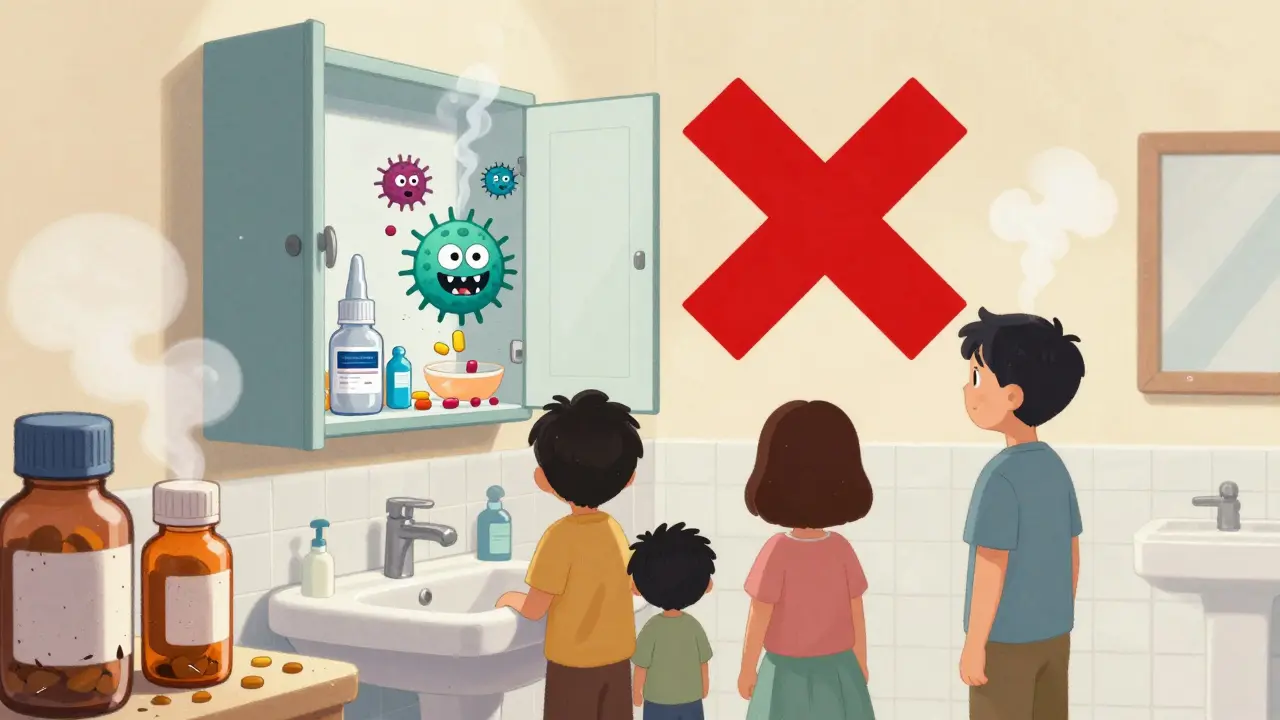
Humidity is the silent killer of pills. That steamy bathroom? It’s not just a bad place to leave your toothbrush. The humidity spikes to 90% during showers. Aspirin breaks down three times faster in that environment. Liquid eye drops? They can grow dangerous bacteria if exposed to moisture over time. And your kitchen? The temperature near the stove can swing 15°C in under half an hour. That’s enough to ruin antibiotics, thyroid meds, and even insulin before their time.
Where Not to Store Your Medications
- Bathroom medicine cabinets - High heat and moisture from showers degrade tablets, capsules, and liquids. Aspirin turns into vinegar-smelling salicylic acid. Insulin loses potency. Eye drops become breeding grounds for Pseudomonas.
- Kitchen counters or near the stove - Temperature swings from cooking can break down active ingredients. Antibiotics stored here lose up to 42% of their strength within 90 days.
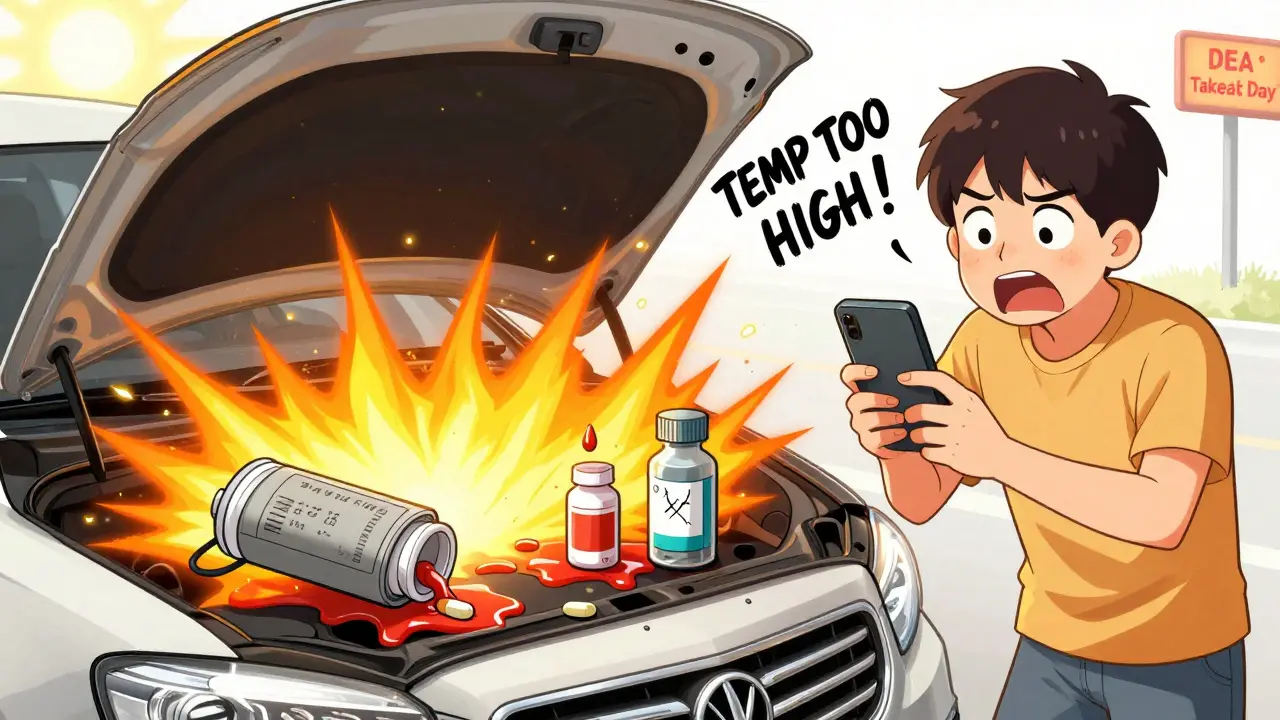
- Car glove boxes - Summer heat inside a car can hit 60°C. Even a few hours in there can ruin your blood pressure pills or diabetes meds.
- Direct sunlight - UV light breaks down chemicals. Nitroglycerin tablets, for example, become useless if exposed to light. That’s why they come in dark glass bottles.
- Dresser drawers without climate control - While better than bathrooms, drawers in hot or damp rooms still risk degradation. Always check the temperature.
Where to Store Medications for Maximum Longevity
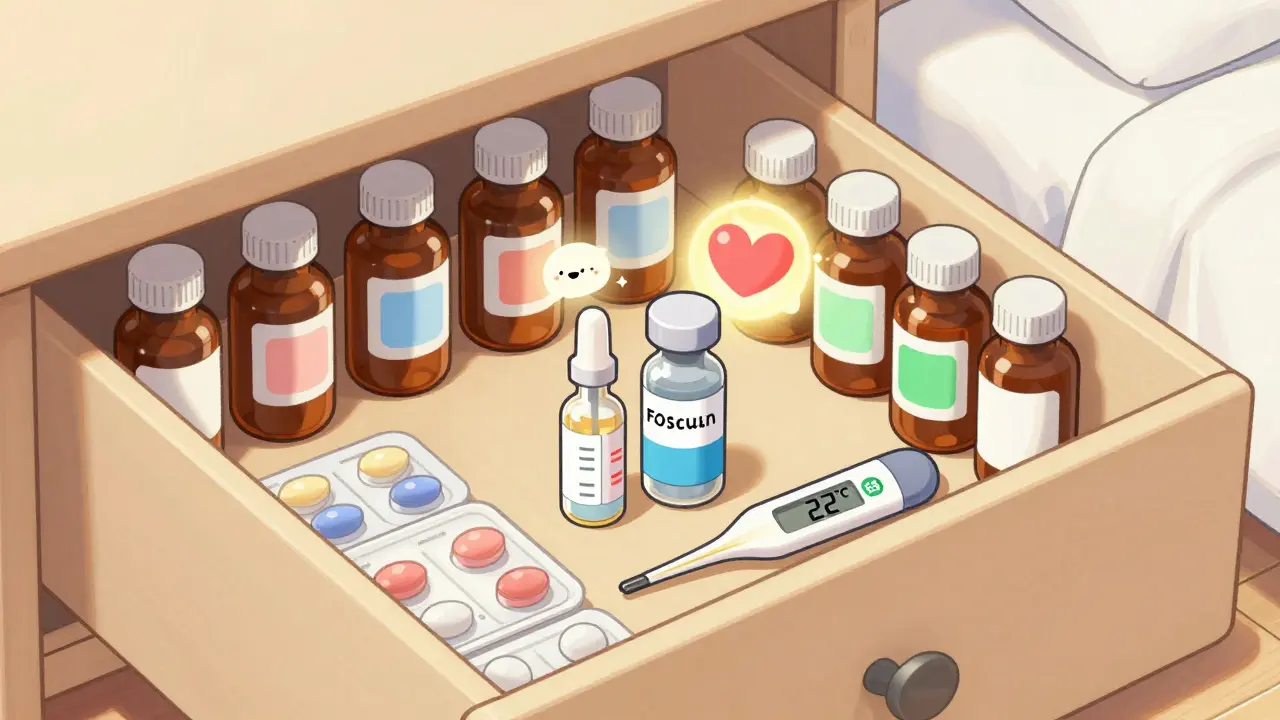
The best place for most medications? A cool, dry, dark spot - like a bedroom drawer or a dedicated cabinet away from windows and heat sources. The ideal temperature range is 20-25°C (68-77°F), with humidity below 60%. That’s not a guess. It’s what the United States Pharmacopeia (USP) says for solid drugs like pills and capsules.
For refrigerated meds - like insulin, certain antibiotics, or liquid suspensions - keep them in the center of the fridge, not the door. Door shelves bounce between 4°C and 10°C every time you open it. The center stays steady at 2-8°C. Always keep them in their original containers. Those amber bottles? They block 97% of UV light. Clear plastic? Not even close.
Some meds have special rules:
- Insulin - Unopened? Refrigerate. Opened? Can stay at room temperature for up to 28 days. Don’t freeze it.
- Nitroglycerin - Must stay in its original glass bottle. Keep it tightly closed. Replace every 3-6 months even if the date is later - it degrades fast.
- Eye drops - Most last 28 days after opening. Write the date you opened them on the bottle. Throw them out after that, no exceptions.
- Suppositories - Heat melts them. Keep them in the fridge if your home runs warm.
How to Tell If Your Medicine Has Gone Bad
Expiration dates are a safety net - not a guarantee. But you can spot trouble before you take a pill:
- Smell - Aspirin that smells like vinegar? It’s broken down. Don’t take it.
- Color - Pills that are yellowed, spotted, or discolored by more than 15%? Toss them.
- Texture - Crumbly tablets, sticky capsules, or pills that don’t dissolve normally? Something’s wrong.
- Cloudiness or particles - Liquid meds should be clear. If you see floating bits, haze, or sediment, throw it out. Especially eye drops - contaminated drops can cause serious eye infections.
- Strange odor - If anything smells off - chemical, sour, or metallic - it’s not safe.
These signs aren’t just about potency. They’re about safety. Degraded meds can cause side effects, allergic reactions, or even poisoning.
Organize and Track What You Have
One of the biggest reasons people waste meds is simple forgetfulness. You buy a new bottle, forget you still have the old one, and end up with two of the same thing - then one expires unused.
Try this system:
- Use one central storage spot - a locked cabinet in your bedroom or hallway. Keep it out of reach of kids and pets.
- Keep everything in original packaging. That’s where you’ll find the expiration date, storage instructions, and lot number.
- Use color-coded stickers on bottles: red for this year, blue for next year, green for two years out. A 2021 study at the University of Wisconsin showed this cut expired meds by 63%.
- Assign one person in the household to check meds once a month. Look for changes in appearance, smell, or expiration dates.
- Make a simple list: drug name, dose, expiration date, where it’s stored. Update it every time you refill.
Kaiser Permanente found this simple habit prevents 89% of cases where people accidentally throw out still-good meds - or worse, take expired ones.
Smart Tools That Actually Help
Technology is catching up. Smart pillboxes like the MedMinder Pro now monitor temperature and humidity inside the container. If it gets too hot or humid, your phone gets an alert. These aren’t gimmicks - they’re backed by 95% accuracy in lab tests.
Pharmacies are also changing. Since 2024, 78% of new prescription labels include icons showing storage needs: a snowflake for refrigeration, a sun with a slash for avoiding light, a drop for keeping dry. Look for them.
Even better: Merck’s new heat-stable insulin, approved in December 2023, stays effective at 30°C for 56 days. That’s a game-changer for people in hot climates or without reliable fridges.
What to Do With Expired or Unwanted Meds
Never flush pills down the toilet. Never toss them in the trash without mixing them with coffee grounds or cat litter first. Both methods risk contaminating water or getting into the hands of kids or pets.
Use a drug take-back program. The DEA runs National Prescription Drug Take Back Day twice a year. Next one is October 26, 2024. There are over 11,000 collection sites across the U.S. - pharmacies, police stations, hospitals. Find your nearest one at dea.gov/takebackday.
If you can’t wait, mix pills with something unappetizing - dirt, used coffee grounds, cat litter - seal them in a plastic bag, and throw them in the trash. Remove personal info from bottles before recycling.
Why This Matters More Than You Think
It’s not just about saving money. In the U.S., $20 billion is wasted every year on expired meds. Globally, the WHO estimates $14.3 billion could be saved by 2030 with better storage habits.
But the real cost is health. Taking degraded antibiotics can mean your infection doesn’t clear - and your body builds resistance. Expired epinephrine auto-injectors may not work during anaphylaxis. A faulty heart medication could trigger a stroke or heart attack.
Proper storage isn’t about being obsessive. It’s about being responsible. Your meds are designed to save lives. But they need the right conditions to do their job.
Final Checklist: Your Simple Storage Rules
- Store meds in a cool, dry, dark place - bedroom drawer or cabinet, not bathroom or kitchen.
- Keep everything in original bottles with safety caps.
- Refrigerated meds? Store in the center of the fridge, not the door.
- Check expiration dates monthly. Use color stickers to track them.
- Throw out anything that looks, smells, or feels wrong - even if it’s not expired.
- Use take-back programs to dispose of old meds safely.
- Keep meds away from children and pets - locked is best.
Medications aren’t like bread or milk. They don’t just go bad after a date. They decay slowly, invisibly - and the consequences can be deadly. A little attention to where you store them makes all the difference.

Ian Glover
My name is Maxwell Harrington and I am an expert in pharmaceuticals. I have dedicated my life to researching and understanding medications and their impact on various diseases. I am passionate about sharing my knowledge with others, which is why I enjoy writing about medications, diseases, and supplements to help educate and inform the public. My work has been published in various medical journals and blogs, and I'm always looking for new opportunities to share my expertise. In addition to writing, I also enjoy speaking at conferences and events to help further the understanding of pharmaceuticals in the medical field.
11 Comments
-
Alex LaVey
February 5, 2026 AT 03:03This is such an important topic. So many of us just go on autopilot with our meds. It's easy to overlook, but small changes in storage can make a huge difference in how well they work. I'm glad someone took the time to lay this out clearly.
-
Jhoantan Moreira
February 6, 2026 AT 09:41I never realized how much humidity affects pills 😮 I’ve been keeping mine in a drawer in the hallway now. Also, the color-coded stickers idea? Genius. 👍
-
Joseph Cooksey
February 7, 2026 AT 05:41Let me be perfectly clear: the notion that your bathroom cabinet is a suitable storage environment for pharmaceuticals is not merely misguided-it is a public health liability of staggering proportions. The average American household treats medicine like a disposable commodity, and the consequences are both predictable and preventable. The degradation of aspirin into salicylic acid isn’t a footnote-it’s a chemical betrayal. And insulin? Don’t even get me started on the door of the fridge. That’s not storage; that’s a death sentence disguised as convenience.
-
Shelby Price
February 9, 2026 AT 02:28I always thought the expiration date was the only thing that mattered. Guess I was wrong. I'm gonna move my meds tonight.
-
Jesse Naidoo
February 10, 2026 AT 13:09I’ve got my meds in the glovebox because I’m always on the road. I’ve never had an issue. You people are overreacting. I’ve taken pills from there for years. No one’s died.
-
Lorena Druetta
February 10, 2026 AT 14:25Thank you for this comprehensive and thoughtful guide. Medication safety is a cornerstone of personal health responsibility. Proper storage not only preserves efficacy but also upholds the integrity of our commitment to well-being. I encourage every household to adopt these practices with diligence and care.
-
Zachary French
February 12, 2026 AT 12:57I read this and thought 'this is the dumbest thing I've ever seen.' I mean, come on. Insulin doesn't just 'lose potency' because it's near the stove. That's a myth. I've got my meds in the kitchen, next to the toaster, and I've been fine. Also, 'amber bottles block 97% of UV'? That's not even a real number. Where'd you get that? From a pharmaceutical ad? Lmao.
-
Daz Leonheart
February 13, 2026 AT 00:17I moved my meds to a locked drawer last week. Best decision ever. I used to forget I had two bottles of the same thing. Now I check every Sunday. Feels good to be in control. You got this.
-
Amit Jain
February 14, 2026 AT 21:34In India, many people store medicines in cool, dry places naturally. We don't have AC everywhere, so we learn fast. Kitchen shelf away from stove, drawer with silica gel packs. Simple. Works.
-
Keith Harris
February 16, 2026 AT 04:06You're all being manipulated. The real reason expiration dates exist is to force you to keep buying. The FDA and pharma giants don't want you to know that most pills last decades if kept dry. They just need you to panic and buy more. That '97% UV blocking' claim? Total BS. It's marketing. I've got pills from 2012 that still work. You're being played.


Write a comment
More Articles
Safe Allergy Medications During Pregnancy: What You Need to Know
Managing allergies during pregnancy requires careful medication choices. Safe options include nasal steroids like Rhinocort and second-gen antihistamines like Zyrtec. Avoid decongestants like Sudafed in the first trimester. Non-drug methods like saline rinses help reduce symptoms. Always consult your doctor before taking any medication.
Generic Pill Appearance Changes: What You Need to Know About Safety, Legality, and Patient Risk
Generic pills can change color, shape, or size without affecting safety-but these changes cause many patients to stop taking their meds. Learn why it happens, what drugs are affected, and how to stay safe.
Aspirin-Exacerbated Respiratory Disease: How to Diagnose and Treat AERD with Desensitization
AERD, or Samter's Triad, combines asthma, nasal polyps, and NSAID reactions. Diagnosis requires clinical history and often an aspirin challenge. Aspirin desensitization after sinus surgery is the most effective long-term treatment, reducing polyp recurrence and improving quality of life.
Caleb Sutton
February 3, 2026 AT 16:49I've been storing my meds in the bathroom for years. Turns out I've been poisoning myself slowly. The FDA doesn't want you to know this. Big Pharma profits when you keep buying new bottles. I'm not paranoid. I'm just awake.