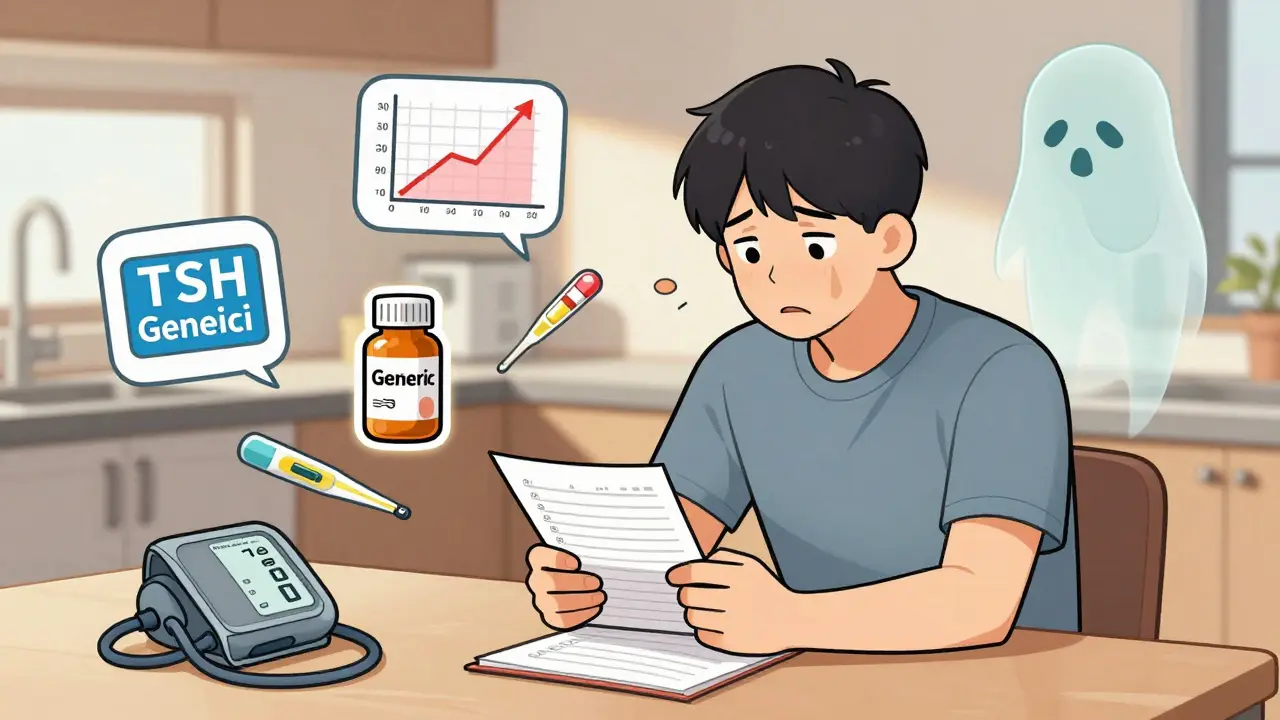
Switching from a brand-name drug to a generic version sounds simple-cheaper, same active ingredient, right? But for many people, especially those on critical medications, the switch can trigger unexpected side effects, loss of control over symptoms, or even dangerous health events. If you’ve been switched to a generic and feel like something’s off, you’re not imagining it. Tracking medication effectiveness after a generic switch isn’t optional-it’s essential.
Why Some People Struggle After a Generic Switch
The FDA requires generics to prove they’re bioequivalent to the brand-name drug. That means the amount of active ingredient absorbed into your bloodstream must be within 80-125% of the original. Sounds tight? It is. But here’s the catch: that range allows for up to a 44% difference in total drug exposure between the brand and the generic. For most drugs, that’s fine. For others, it’s a problem. Drugs with a narrow therapeutic index (NTI) are the biggest concern. These are medications where the difference between a helpful dose and a toxic one is razor-thin. Think warfarin (blood thinner), levothyroxine (thyroid hormone), digoxin (heart medication), and certain seizure drugs like phenytoin or carbamazepine. A small change in how your body absorbs the drug can mean the difference between staying stable and ending up in the hospital. A 2019 study in JAMA Internal Medicine followed over 28,000 people who switched from brand to generic digoxin. The group on the generic had a 34.7% higher chance of being hospitalized for digoxin toxicity. That’s not a fluke. That’s a pattern. And it’s not just about chemistry-inactive ingredients matter too. Fillers, dyes, and coatings in generics can trigger allergic reactions or alter how the pill dissolves in your stomach. One patient might handle a generic just fine. Another might develop nausea, dizziness, or seizures because of a different binder in the tablet.What to Track: The Key Metrics
You can’t just wait and hope things work out. You need to monitor specific signs. Here’s what to look for, depending on your medication:- Lab values: For warfarin, check your INR (International Normalized Ratio) weekly for the first month. A change of more than 0.5 from your baseline is a red flag. For levothyroxine, your TSH level should stay between 0.5 and 4.5 mIU/L. If it jumps outside that range after the switch, your dose may need adjusting.
- Symptoms: Did your seizures get worse? Are you more tired than usual? Is your blood pressure suddenly harder to control? These aren’t "just in your head." They’re data points.
- Emergency visits: A 2016 FDA study found a 12.3% increase in emergency room visits after switching to generic antiepileptic drugs. If you or a loved one ends up in the ER after a generic switch, it’s a signal-not a coincidence.
- Medication gaps: If you stop filling your prescription for more than 90 days after switching, that’s a strong sign something went wrong. Research shows this happens 6.5% more often after generic switches.
How to Monitor: A Step-by-Step Plan
Tracking isn’t guesswork. It’s a process. Use this 4-phase approach:- Before the switch: Write down your current lab results, symptoms, and medication schedule. Take a photo of your prescription bottle. Keep a note of how you feel on a scale of 1 to 10.
- Days 1-7: Call your pharmacist. Ask if the generic is made by the same manufacturer as your brand. Ask if it’s an "authorized generic"-these are made by the brand company and are identical. If you’re on an NTI drug, insist on a follow-up appointment within a week.
- Days 8-90: For NTI drugs, schedule lab tests at 2 weeks, 4 weeks, and 8 weeks. For other medications, check in at 30 and 60 days. Keep a simple journal: "Day 10: Headache, felt sluggish. Took pill at 8 AM. No change in appetite." This helps your doctor spot patterns.
- Day 91+: If your labs are stable and symptoms haven’t changed, you can likely switch to routine monitoring. But if anything’s off, don’t wait. Go back to your original brand-or ask for a different generic.
Which Drugs Need the Most Attention?
Not all generics are equal. Some are safe. Others? Not so much. Here’s a quick guide:| Drug Class | Examples | Risk Level | Monitoring Needed |
|---|---|---|---|
| Narrow Therapeutic Index (NTI) | Warfarin, Levothyroxine, Digoxin, Phenytoin | High | Weekly labs for 3 months |
| Antiepileptic Drugs | Carbamazepine, Valproate, Lamotrigine | High | Seizure diary + lab tests at 30 and 60 days |
| Psychiatric Medications | Fluoxetine, Sertraline, Lithium | Medium | Track mood, sleep, anxiety daily for 6 weeks |
| Non-NTI Drugs | Lisinopril, Metformin, Atorvastatin | Low | Standard follow-up at 3 months |
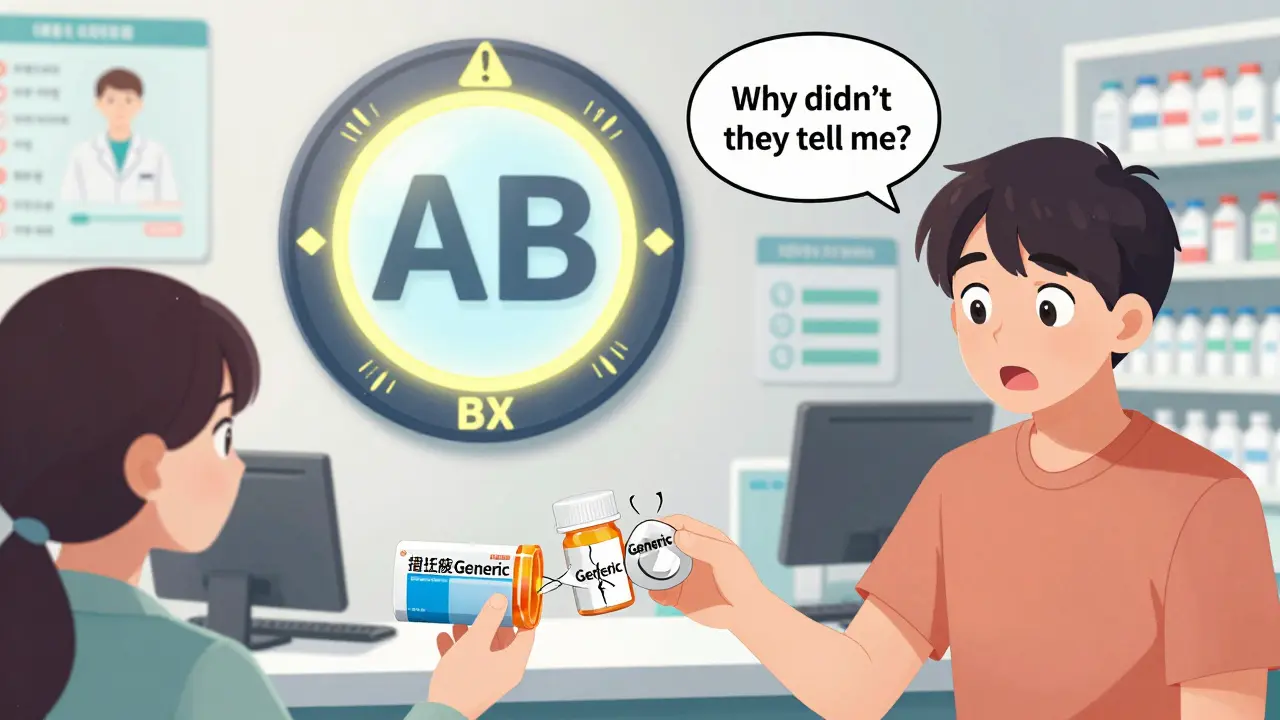
The FDA assigns therapeutic equivalence codes: "AB" means safe to substitute. "BX" means potential issues. Always ask your pharmacist for the code on your prescription. If it’s BX, don’t accept the switch without talking to your doctor.
What Patients Are Saying
Real stories matter. On the PatientsLikeMe epilepsy forum, 64% of 1,243 people who switched to generic seizure meds reported more seizures. Eighty-three percent of pharmacists on Reddit’s r/Pharmacy community say patients quit their generic because they felt it "didn’t work." These aren’t outliers. They’re patterns. One woman in Birmingham, on levothyroxine for 12 years, switched to a generic after her pharmacy changed suppliers. Within three weeks, her heart started racing. Her TSH jumped from 2.1 to 6.8. She thought she was going crazy. Her doctor didn’t connect the dots until she showed her lab results. She went back to the brand-and her symptoms vanished in 10 days.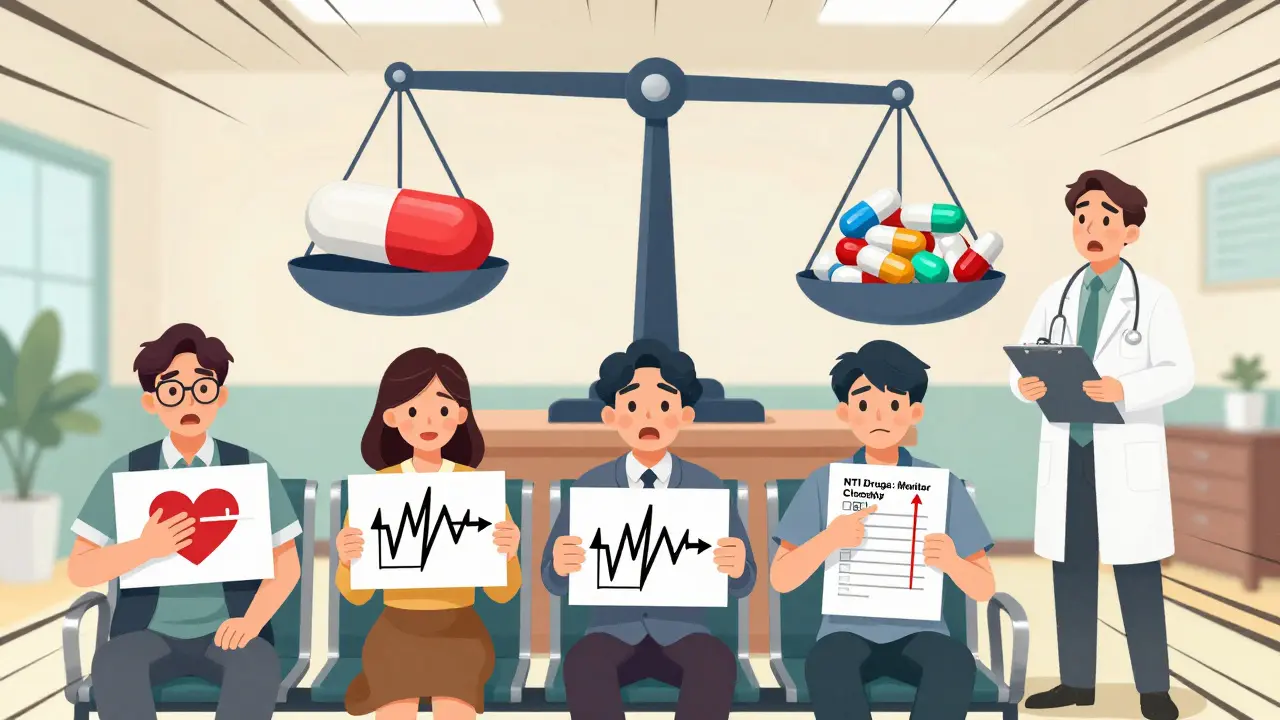
What You Can Do Right Now
- Check your prescription bottle. Is it labeled "generic"? Ask the pharmacist for the manufacturer name.
- Call your doctor and say: "I was switched to a generic. Can we check my labs in the next 2 weeks?"
- If you’re on an NTI drug, ask for an "authorized generic"-it’s the same as the brand, just cheaper.
- Use a pill tracker app or a simple notebook. Write down how you feel every day for the first 30 days.
- If you feel worse, don’t tolerate it. Ask for your original brand. You have that right.
Generic drugs save billions. That’s good. But they shouldn’t cost you your health. You’re not being difficult if you notice a change. You’re being smart.
Can I just switch back to the brand if the generic doesn’t work?
Yes. If you notice a drop in effectiveness or new side effects after switching to a generic, you can ask your doctor to prescribe the brand-name version. Many insurance plans will cover it if you submit a prior authorization form stating that the generic caused issues. Your doctor can write "therapeutic equivalence not established" or "patient experienced adverse effect" on the prescription. This is a common and accepted practice.
Are all generics made the same way?
No. Different manufacturers use different processes, fillers, and coatings. Even two generics for the same drug can behave differently in your body. That’s why some people tolerate one generic fine but react poorly to another. Always check the manufacturer name on the label. If you’ve had a good experience with one brand of generic, ask your pharmacist to stick with it.
Why don’t doctors always warn patients about generic switches?
Many doctors assume all generics are interchangeable because of FDA approval. But the system doesn’t require them to notify patients. Pharmacists often make the switch automatically under state laws unless the prescription says "dispense as written" or "no substitution." Always ask: "Is this a generic? Can I see the manufacturer?" You have the right to know.
What if I can’t afford the brand-name drug?
You’re not alone. Many patients face this. Ask your doctor about patient assistance programs-pharmaceutical companies often offer free or discounted brand-name drugs to those who qualify. Some pharmacies have discount cards that bring the brand price close to the generic. Also, ask if an authorized generic is available-it’s the same as the brand, just sold under a different name, and often cheaper.
Is there a way to know if my generic is high-risk before I take it?
Yes. Check the FDA’s Orange Book online (or ask your pharmacist) for the therapeutic equivalence code. If it’s "BX," avoid substitution. For high-risk drugs like warfarin or levothyroxine, ask for the manufacturer’s name. Some companies have better reputations-like Mylan, Teva, or Pfizer (for authorized generics). Also, if your pharmacy switches manufacturers without telling you, that’s a red flag. Request consistency.
Final Thoughts
Generic drugs are a vital part of affordable healthcare. But they’re not magic bullets. For some people, the switch can be risky-and the risks are real, measurable, and preventable. You don’t need to be a doctor to protect yourself. You just need to pay attention, ask questions, and track your body’s response. If something feels off after a switch, it probably is. Don’t wait. Don’t assume. Act.
Ian Glover
My name is Maxwell Harrington and I am an expert in pharmaceuticals. I have dedicated my life to researching and understanding medications and their impact on various diseases. I am passionate about sharing my knowledge with others, which is why I enjoy writing about medications, diseases, and supplements to help educate and inform the public. My work has been published in various medical journals and blogs, and I'm always looking for new opportunities to share my expertise. In addition to writing, I also enjoy speaking at conferences and events to help further the understanding of pharmaceuticals in the medical field.
13 Comments
-
amber carrillo
March 8, 2026 AT 01:29I switched to a generic levothyroxine last year. My TSH went from 1.8 to 7.2 in six weeks. I thought I was dying. My doctor dismissed it as 'stress.' I brought my logs. He apologized. I went back to brand. My energy came back in 10 days. This isn't about being difficult. It's about listening to your body. Thank you for putting this out there.
-
Andrew Poulin
March 9, 2026 AT 08:10Stop being so passive. If your meds feel off after a switch, call your doctor TODAY. Don't wait for labs. Don't hope it gets better. You're not crazy. You're just not being heard. Fight for your health.
-
Vikas Verma
March 9, 2026 AT 17:40The pharmacokinetic variability in generics is a well-documented issue in clinical pharmacology. For NTI agents, Cmax and AUC fluctuations beyond 20% can precipitate therapeutic failure or toxicity. The FDA's 80-125% bioequivalence window is statistically acceptable for population-level dosing but ignores interindividual variability in CYP450 metabolism, gastric pH, and intestinal permeability.
Patients with polymorphisms in CYP2C9 or CYP2C19 are at disproportionate risk. Genetic testing should be considered before substitution in high-risk cohorts. -
Adebayo Muhammad
March 9, 2026 AT 19:31Let’s be real: this whole 'generic crisis' is just capitalism’s latest way to offload risk onto the vulnerable. You think the FDA cares? They’re paid by the pharma lobby. The 'authorized generic' is a marketing trick-same factory, same pill, different label. The real villain? Insurance companies forcing substitutions to hit quarterly targets.
And you? You’re just a data point in a spreadsheet. Wake up. The system isn’t broken-it’s designed this way. -
phyllis bourassa
March 10, 2026 AT 21:56Oh wow, another person who thinks their body is some kind of sacred temple. Newsflash: pills are pills. If you can't handle a generic, maybe your body is just weak. I've been on generics for 20 years. No issues. Maybe you're just anxious. Or worse-you're addicted to being a victim.
Stop whining. Take the pill. Move on. -
Bridget Verwey
March 12, 2026 AT 10:55Oh honey, you’re not imagining it. You’re not crazy. You’re not dramatic. You’re just someone who actually pays attention to their body while everyone else is too busy scrolling to notice they’re not sleeping, not eating, not functioning.
Go get your labs. Demand the brand. You’re not asking for special treatment-you’re asking for basic human decency. And if they give you pushback? Smile and say, 'I’ll see you in court.' 😘 -
William Minks
March 12, 2026 AT 18:41Big thanks for this. I’m from rural Nigeria and we don’t have access to brand-name meds. But I’ve seen people die because their 'generic' was made in a garage. This isn’t just an American problem. It’s global. We need global standards-not just FDA rules that ignore how people actually live.
Also, emoji for solidarity: 🙏💊 -
Joey Pearson
March 13, 2026 AT 22:01You’re not alone. I was terrified after my switch too. But here’s the thing-you have power. Call your pharmacy. Ask for the manufacturer. Write it down. Talk to your doctor. Keep a journal. You’re not being annoying-you’re being proactive. And that’s heroic.
Small steps. Big impact. You’ve got this. 💪 -
Ferdinand Aton
March 13, 2026 AT 23:49Actually, most studies show no difference between brand and generic. This whole thing is fear-mongering. If you're having side effects, maybe it's your anxiety. Or maybe you're just not used to the pill looking different. I've been on generics for 15 years. No issues. Stop making a mountain out of a molehill.
-
Sean Callahan
March 15, 2026 AT 02:34i switched to generic sertraline and now i cry for no reason and cant get out of bed. my doc said 'its all in your head'. i dont know if its the pill or my life but i just want to sleep forever. i dont even know why im typing this. help?
ps i think my pill looks different. maybe its the color. or the smell. or the way it dissolves. idk. i just feel broken. -
Jeff Mirisola
March 17, 2026 AT 02:05There’s a reason I always ask for the manufacturer on my prescriptions. I had a bad reaction to one generic, switched to another, and it was fine. The issue isn’t generics-it’s inconsistency. If your pharmacy switches without telling you, that’s the real problem.
Ask for consistency. Demand transparency. And if they say no? Find a new pharmacy. Your health isn’t negotiable. -
Weston Potgieter
March 17, 2026 AT 02:19So you’re telling me we’re supposed to trust a pill that looks different? LOL. I’ve been on the same generic for 8 years. No problems. Why are people so obsessed with control? Maybe you’re not supposed to be on this drug at all. Maybe you’re just addicted to being sick.
Also, why do you need a 4-phase plan? Just take the damn pill. Your brain is making this up.


Write a comment
More Articles

Idiosyncratic Drug Reactions: Rare, Unpredictable Side Effects Explained
Idiosyncratic drug reactions are rare, unpredictable side effects that can cause severe organ damage or death. Unlike common side effects, they strike without warning, often weeks after starting a drug. This article explains how they happen, which drugs trigger them, and what’s being done to predict and prevent them.

Roland Silber
March 6, 2026 AT 14:20Just want to say this is one of the most important posts I've read in years. I'm a pharmacist and I see this every week. Patients come in panicked because their 'new' pill looks different and now they're dizzy, or their INR is way off, or their seizures are back. The system is broken. We're told to substitute automatically unless told otherwise. But for NTI drugs? It's not a swap-it's a gamble.
Always check the manufacturer. If it changes without warning, that's a red flag. And yes-authorized generics exist for a reason. They're the same as brand. Ask for them. You deserve that safety net.