
When you're on immunosuppressive drugs-whether after a kidney, liver, or heart transplant, or for a condition like lupus or rheumatoid arthritis-your body is being deliberately held back. That’s the whole point: to stop your immune system from attacking your new organ or your own tissues. But holding back the immune system isn’t like turning down a volume knob. It’s more like walking a tightrope between rejection and infection, between healing and harm. One wrong step, and you could lose your graft, get a life-threatening infection, or develop kidney damage, diabetes, or even cancer. That’s why monitoring during immunosuppressive therapy isn’t optional. It’s the backbone of survival.
Why Monitoring Isn’t Just a Routine Checkup
Immunosuppressants like tacrolimus, cyclosporine, and mycophenolate aren’t like antibiotics or blood pressure pills. They have a razor-thin window between working and hurting you. For example, tacrolimus is effective at 5-10 ng/mL in the first few months after transplant. Go above 15 ng/mL, and you risk kidney damage, tremors, or seizures. Drop below 3 ng/mL, and your body might start rejecting the new organ. And here’s the kicker: two people taking the exact same dose can have completely different blood levels. One might be perfectly safe. The other could be in danger without even knowing it. This is why therapeutic drug monitoring (TDM) became standard in the 1980s after cyclosporine was introduced. Today, TDM is still the most reliable tool we have. But it’s not just about checking numbers once a month. It’s about tracking trends over time, adjusting doses based on how your body responds, and catching problems before they become emergencies.Which Drugs Need Monitoring-and How
Not all immunosuppressants are monitored the same way. Some require frequent blood tests. Others don’t need it at all.- Tacrolimus: Monitored at trough levels (just before your next dose). Target: 5-10 ng/mL early on, then 3-7 ng/mL after 3-6 months. Measured with LC-MS/MS for accuracy-immunoassays can be off by up to 20% due to cross-reacting metabolites.
- Cyclosporine: Often tracked with both trough (C0) and 2-hour post-dose (C2) levels. C2 levels are better predictors of rejection. Target: 100-200 ng/mL.
- Sirolimus and Everolimus: Target range is 5-10 μg/L, but guidelines are weak because evidence linking levels to outcomes is limited. Still, monitoring helps avoid side effects like high cholesterol and lung inflammation.
- Mycophenolic acid (MPA): Tricky because it recirculates in the gut. Trough levels don’t tell the whole story. The gold standard is AUC (area under the curve) monitoring: 30-60 mg·h/L over 12 hours is linked to 85% rejection-free survival at one year. But AUC testing is expensive and not widely available.
- Corticosteroids and Belatacept: No routine TDM needed. But you still need lab checks for side effects like high blood sugar, weight gain, or bone loss.
Lab Tests You Can’t Skip
Beyond drug levels, routine blood and urine tests are your early warning system. These aren’t optional extras-they’re non-negotiable. Here’s what’s checked regularly, usually every 1-3 months:- Complete blood count (CBC): Looks for low white blood cells (leukopenia), low red blood cells (anemia), or low platelets (thrombocytopenia). Mycophenolate can drop your white count by 25-30%. Sirolimus can do the same.
- Creatinine and electrolytes: Your kidneys are the first to show damage from calcineurin inhibitors. A 30% rise in creatinine from baseline is a red flag. Cyclosporine and tacrolimus both cause kidney stress in up to 25-30% of patients.
- Liver enzymes (ALT, AST): MPA and sirolimus can cause mild liver enzyme spikes. Persistent elevations need investigation.
- Glucose and lipids: Steroids and sirolimus raise blood sugar and cholesterol. Fasting glucose and lipid panels every six months catch prediabetes and high triglycerides early.
- Magnesium, calcium, phosphate: Cyclosporine causes magnesium loss in 40-60% of patients. Low magnesium leads to muscle cramps, irregular heartbeats, and even seizures.
- Uric acid: High levels are common with cyclosporine and can lead to gout.
Imaging: Seeing What Blood Tests Can’t
Blood tells you what’s happening inside your bloodstream. Imaging shows what’s happening in your organs.- Renal ultrasound: Done annually or if your creatinine rises. Checks for kidney size, scarring, blockages, or reduced blood flow-all signs of chronic damage from drugs like cyclosporine.
- Chest X-ray: If you develop a cough, fever, or shortness of breath, this is the first step. Sirolimus and everolimus can cause interstitial pneumonitis, a lung inflammation that shows up as hazy patches on X-rays.
- Bone density scan (DEXA): As mentioned, required yearly after 12 months of steroid use. Prevents fractures from osteoporosis.
- CT or MRI: Not routine, but used if there’s suspicion of lymphoma or other cancers. Immunosuppressed patients have a 2-4 times higher risk of skin cancer and lymphoma.
The New Frontier: TTV Monitoring
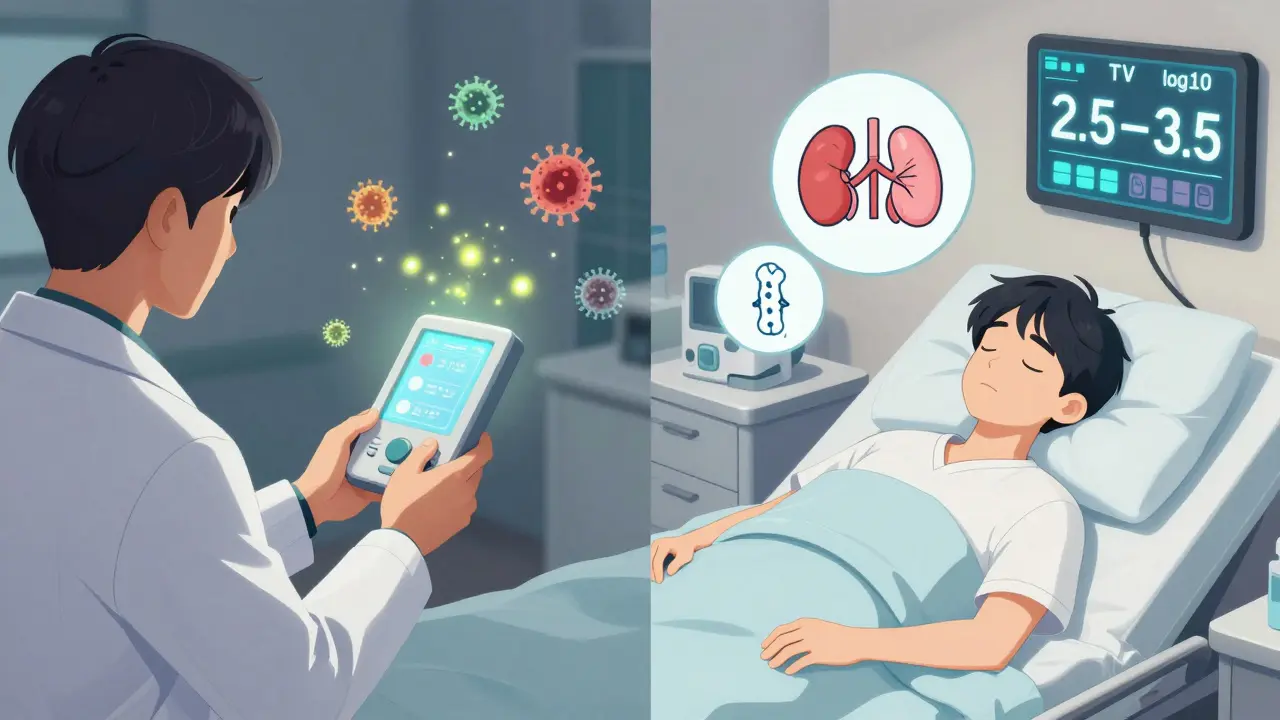
There’s a quiet revolution happening in transplant care. Meet Torque Teno Virus (TTV). It’s not dangerous. In fact, it’s harmless-it’s been found in 90% of healthy people. But in transplant patients, it’s become a powerful tool. Here’s why it matters: TTV multiplies only when your immune system is suppressed. The higher the TTV level in your blood, the weaker your immune system is. And the lower it is, the more your body is trying to fight back-possibly leading to rejection. Studies show:- TTV levels between 2.5 and 3.5 log10 copies/mL are the sweet spot between rejection and infection.
- Levels below 2.5 mean your rejection risk jumps 3.2 times.
- Levels above 3.5 mean your infection risk doubles.
What’s Holding Monitoring Back?
You’d think with all this evidence, everyone would be doing it right. But here’s the reality:- 68% of transplant centers have inconsistent monitoring practices between different teams.
- Only 42% use standardized protocols for MPA monitoring.
- 75% say cost is the biggest barrier. LC-MS/MS tests cost $150-250 each. Immunoassays are cheaper but less accurate.
- 63% lack agreed-upon reference ranges for some drugs.
- Patients get 12-18 blood draws in the first year. One in three say it causes anxiety.
What’s Next?
The future is smarter, faster, and less invasive.- AI-powered prediction: A 2023 study used machine learning to predict rejection 14 days before symptoms appeared by analyzing trends in tacrolimus levels, TTV load, and kidney function. Accuracy: 87%.
- Point-of-care devices: Handheld machines for instant TDM are in clinical trials. Expected FDA approval by 2026-2027.
- Exhaled breath analysis: Early research is testing whether immunosuppressant metabolites can be detected in breath-no needles needed.
What You Should Do
If you’re on immunosuppressants:- Know your drug’s target range. Ask your pharmacist or doctor.
- Keep a log of your lab results over time-not just one number, but the trend.
- Report any new symptoms: unexplained fever, swelling, fatigue, or changes in urination.
- Ask if TTV monitoring is available at your center. It’s not everywhere yet, but it’s growing fast.
- Don’t skip your imaging scans. A simple ultrasound or X-ray can catch problems you’d never feel.
Do I need to get blood tests every month if I’ve been stable for years?
Even if you feel fine, regular testing is still necessary. Immunosuppressants can cause slow, silent damage-like kidney decline or rising cholesterol-that won’t cause symptoms until it’s advanced. Most patients need blood tests every 3-6 months after the first year, but your doctor may adjust based on your drug, side effects, and overall health.
Can I stop taking my immunosuppressants if my lab results look good?
Never stop or change your dose without talking to your transplant team. Even if your labs look perfect, stopping your medication can trigger acute rejection within days. Rejection can happen without warning, and once it starts, it’s often irreversible. Stability means your treatment is working-not that you no longer need it.
Is TTV monitoring available everywhere?
Not yet. TTV testing is still considered experimental in many places and isn’t covered by all insurance plans. It’s primarily available at major transplant centers and academic hospitals. Ask your care team if they offer it or are participating in a trial. The FDA is expected to clear commercial TTV assays by 2025 after the TTVguideIT trial concludes.
Why do some labs use immunoassays and others use LC-MS/MS?
It’s mostly about cost and access. Immunoassays are cheaper ($50-100 per test) and faster, but they can over- or under-estimate drug levels by 15-20% because they react with similar metabolites. LC-MS/MS is more accurate (95-98% precision) and is the gold standard, but it costs $150-250 per test and requires specialized equipment. Larger centers use LC-MS/MS; smaller ones may still rely on immunoassays.
What if I can’t afford all the tests?
Cost is a real barrier, but skipping monitoring is riskier. Talk to your transplant center’s social worker or financial counselor. Many centers have patient assistance programs, sliding-scale fees, or partnerships with pharmaceutical companies that offer free or discounted testing. Some labs also offer payment plans. The long-term cost of a rejected transplant or a hospital stay for infection can be over $100,000-far more than the cost of monitoring.
Can lifestyle changes reduce the need for monitoring?
Healthy habits help, but they don’t replace monitoring. Eating well, avoiding alcohol, staying active, and managing stress can reduce side effects like high blood pressure or high cholesterol. But they won’t stop your immune system from attacking your transplant or your body from reacting to the drugs. Monitoring is still required-it’s how we know if your treatment is working safely.

Ian Glover
My name is Maxwell Harrington and I am an expert in pharmaceuticals. I have dedicated my life to researching and understanding medications and their impact on various diseases. I am passionate about sharing my knowledge with others, which is why I enjoy writing about medications, diseases, and supplements to help educate and inform the public. My work has been published in various medical journals and blogs, and I'm always looking for new opportunities to share my expertise. In addition to writing, I also enjoy speaking at conferences and events to help further the understanding of pharmaceuticals in the medical field.
12 Comments
-
Layla Anna
January 3, 2026 AT 02:59omg i just found out about TTV and now i’m obsessed 😍 like… it’s wild that a harmless virus can tell us how strong or weak our immune system is? i’ve been on tacrolimus for 5 years and never knew this existed. my doc never mentioned it but i’m gonna ask next visit!! 🙏 #transplantlife
-
Heather Josey
January 4, 2026 AT 12:32This is one of the most comprehensive and clinically accurate summaries I’ve read on immunosuppressive monitoring. The integration of TTV as a biomarker represents a paradigm shift in personalized transplant care. The data from the TTVguideIT trial is compelling, and the call for standardized protocols is long overdue. Healthcare systems must invest in LC-MS/MS infrastructure and interdisciplinary teams to ensure equitable access. This isn’t just medicine - it’s patient empowerment.
-
Alex Warden
January 4, 2026 AT 23:04Why do we even need all this fancy testing? Back in my day, we just took the pills and didn’t complain. Now everyone’s got a blood draw every other week like they’re in a lab rat cage. This country’s gone soft. You want to live? Then deal with the consequences. No one’s holding a gun to your head.
-
LIZETH DE PACHECO
January 6, 2026 AT 17:11Hey, if you’re reading this and you’re on immunosuppressants - you’re doing better than you think. I’ve been here for 8 years. Some months the labs look scary, some months they’re perfect. But showing up? That’s the win. Keep logging your numbers. Keep asking questions. You’re not just surviving - you’re learning how to thrive.
-
Lee M
January 8, 2026 AT 11:38Monitoring is just another form of control disguised as care. The system wants you dependent - on drugs, on tests, on doctors. The real freedom isn’t in stable tacrolimus levels - it’s in realizing your body can heal itself if you stop poisoning it with synthetic immunosuppressants. The immune system isn’t your enemy. The pharmaceutical industry is.
-
Matthew Hekmatniaz
January 10, 2026 AT 06:52I appreciate how this post balances science with practicality. TTV is fascinating - it’s like nature gave us a free, built-in biomarker. But I also see the gap: people in rural areas or developing countries can’t access LC-MS/MS or even basic TDM. Maybe the real innovation isn’t in the tech - it’s in making these tools affordable and accessible. We need global equity in transplant care, not just better numbers in elite hospitals.
-
Liam George
January 11, 2026 AT 11:44Let’s be real - the entire TDM framework is a placebo-driven illusion. LC-MS/MS is marketed as ‘gold standard’ because it’s profitable. The metabolites it detects aren’t even the active forms of the drug. The real therapeutic effect is likely mediated by gut microbiota, epigenetic modulation, and cytokine feedback loops - none of which are measured. We’re treating numbers, not humans. And now they want to add TTV? Another proxy for profit. The truth? We don’t understand immunosuppression at all. We just have better tools to pretend we do.
-
gerard najera
January 13, 2026 AT 06:29Stable doesn’t mean cured.
-
Stephen Gikuma
January 13, 2026 AT 17:08They’re using TTV to build a national immune registry. You think that’s for your benefit? No. They’re mapping who’s immunocompromised so they can target them later - during a pandemic, a lockdown, a civil emergency. This isn’t medicine. It’s social engineering. And the FDA? They’re in on it. Don’t be a lab rat.
-
Olukayode Oguntulu
January 15, 2026 AT 06:31While the author presents a technocratic panacea under the guise of ‘evidence-based care,’ one must interrogate the epistemic hegemony of Western biomedical paradigms. The reduction of immune homeostasis to log10 copies/mL is not scientific advancement - it is colonial epistemology dressed in lab coats. Where are the indigenous healing modalities? The Ayurvedic immunomodulators? The Sufi breathwork protocols? TTV is merely the latest iteration of pharmaceutical colonialism - quantifying the ineffable to monetize the vulnerable.
-
jaspreet sandhu
January 16, 2026 AT 15:03Look I’ve been on these meds for 10 years and I’ve never had a single problem so why are we even doing all these tests? I mean come on, my doctor says I’m fine and I feel fine so why do I need to get blood drawn every three months? I don’t need a machine to tell me I’m okay. I know my body better than any lab ever could. And those expensive LC-MS/MS tests? Totally overkill. I’ve seen people in India on these drugs with no testing at all and they’re doing fine. Why are we making this so complicated? It’s just money. They want to keep you coming back so they can keep billing. I stopped getting tests after year five and I’m still here. So maybe you don’t need all this stuff after all.


Write a comment
More Articles

Flunarizine interactions with other medications: A guide for patients
Well, folks, let's dive into the exciting world of Flunarizine interactions! A medication often used for migraines and vertigo, Flunarizine is as social as a prom queen at a high school reunion, mixing and mingling with other drugs in your system. It's like a cocktail party, but in your body! Now, this party can turn into a bummer if mixed with alcohol or antihypertensives, potentially causing dizziness or even fainting. So, as always, it's important to chat with your doctor about all the medications you're taking, to ensure the party in your system stays fun and safe!

Top 5 Thyroid Medication Alternatives to Synthroid in 2024
Explore five alternatives to Synthroid, a commonly prescribed thyroid medication. This guide delves into the characteristics, benefits, and potential downsides of each option. From natural desiccated thyroid extracts like Armour Thyroid and Nature-Throid to synthetic options such as Cytomel and Tirosint, we cover the essential information you need. Use this resource to understand which alternative might be more suitable for your thyroid health needs. Make a well-informed decision about your health with this comprehensive analysis.

Molybdenum: The Essential Dietary Supplement for a Healthier You
In my recent blog post, I explored the importance of Molybdenum, a lesser-known but essential dietary supplement. I found that it plays a crucial role in many of our body's biological processes, including metabolic function, enzyme activity, and overall cellular health. Furthermore, a deficiency in Molybdenum can lead to serious health problems, underscoring its importance in our diet. However, it's also key to note that it should be taken in moderation as an excess can also cause health issues. So, in the pursuit of a healthier you, consider the balance of Molybdenum in your diet.
Bobby Collins
January 1, 2026 AT 14:56They’re lying about TTV. The government’s using it to track transplant patients through their blood. You think they care if you live or die? Nah. They just want your data. Every time you get a blood draw, it’s another fingerprint in their database. I’ve seen it in the leaks - they’re building immune system profiles. Don’t let them turn your survival into a surveillance project.