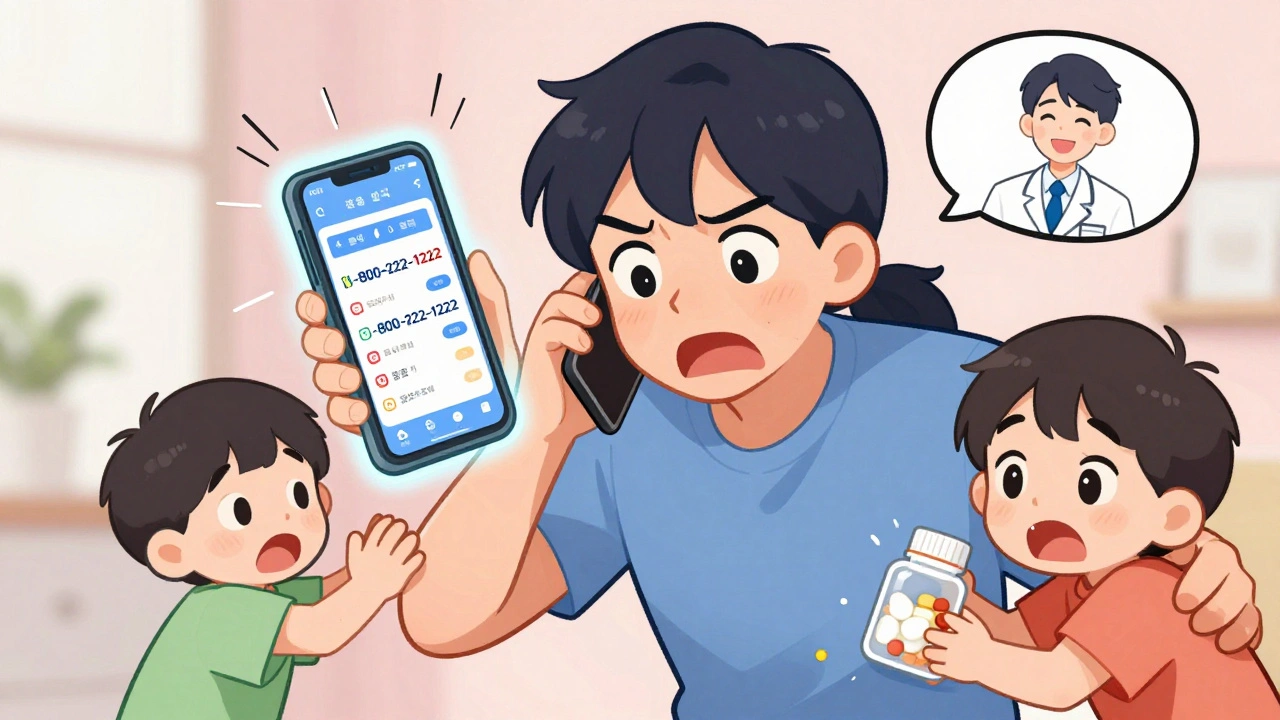
When a child swallows a handful of pills, or an adult accidentally takes double the dose of their blood pressure medication, panic sets in. You don’t have time to Google symptoms or wait for a doctor’s appointment. That’s when the poison control hotline becomes your lifeline. Dialing 1-800-222-1222 connects you to a trained specialist within seconds - no hold music, no automated menus, just expert help when every minute counts.
How the Poison Control Hotline Actually Works
The poison control hotline isn’t just a phone number. It’s a nationwide network of 53 accredited centers, each staffed by Specialists in Poison Information - usually pharmacists, nurses, or doctors with years of toxicology training. These professionals handle over 2.1 million calls a year, nearly half of which involve medications. They don’t guess. They don’t read from scripts. They use 1,540 evidence-based algorithms developed over decades of real-world cases to assess risk and give clear instructions. When you call, your area code automatically routes you to the nearest center. If you’re in Birmingham, Alabama, you’ll speak with someone who knows local hospitals, pharmacy practices, and common local exposures. You can also text “poison” to 797979 or use the webPOISONCONTROL tool at poisonhelp.org. The online tool walks you through six key questions and gives you a risk assessment in under three minutes - and it’s 97% as accurate as speaking with a human specialist. All calls are free, confidential, and available 24/7. No insurance needed. No ID required. Even if you’re not sure whether it’s an emergency, call anyway. Better safe than sorry.What to Report About Medications - The Exact Details That Save Lives
The most common mistake people make when calling poison control? Giving vague information. Saying “I took too much Tylenol” doesn’t help. Specialists need specifics. Here’s what they need to know:- Exact medication name: Brand and generic. Not just “painkiller.” Say “Advil 200 mg ibuprofen” or “Lipitor 20 mg atorvastatin.”
- Strength and form: Is it a tablet, liquid, patch? How many milligrams? (e.g., “500 mg acetaminophen extended-release tablet”)
- Amount ingested: “One pill” isn’t enough. Say “three 500 mg tablets” or “half a bottle of cough syrup.”
- Time of exposure: “About an hour ago” isn’t precise. Say “3:15 p.m.” Timing affects treatment - especially for drugs like acetaminophen, where the antidote works best within 8 hours.
- Patient details: Age, weight in kilograms (not pounds), and any existing conditions like liver disease or pregnancy.
- Symptoms: Nausea? Drowsiness? Rash? Vomiting? Write down exactly what happened and when.
Don’t assume the specialist knows what’s in your medicine cabinet. Even if the bottle is empty, they need the label info. If you’re unsure, take a photo of the packaging and show it to the specialist during the call. They’ve seen thousands of pills and can identify them by color, shape, or imprint code.
And if multiple medications are involved? Tell them all of them. Nearly one in three serious medication overdoses happen because of dangerous interactions - like mixing opioids with benzodiazepines or taking too much acetaminophen while on antidepressants. The specialist will check for every possible interaction.
What Happens After You Call?
Most calls (about 60%) are resolved at home. No ambulance. No ER visit. Just clear, step-by-step instructions. For example:- For a child who swallowed one adult-strength ibuprofen: “Watch for stomach upset. Give water. Call back if vomiting starts.”
- For someone who took 15 extra-strength acetaminophen tablets: “Go to the ER immediately. We’ll call ahead and give them the antidote, N-acetylcysteine, before you arrive.”
- For an elderly person who mixed blood pressure meds: “Stop all meds. Monitor heart rate. We’ll call back in 2 hours.”
Follow-up is built into the system. For high-risk cases like acetaminophen, you’ll get a callback at 4, 8, and 24 hours. The New Mexico Poison & Drug Information Center reports 92% of these follow-ups are successfully completed. That’s because they track every case in the National Poison Data System - a real-time database that collects info from every poison center in the U.S.
After your call, you’ll get an email summary with the exact product names, risk level, and instructions. Most people save this. One parent told us they printed it out and kept it in their diaper bag - just in case.

Why This Service Saves Money - and Lives
A 2019 study found poison control centers saved the U.S. healthcare system $1.8 billion in a single year by preventing unnecessary ER visits. For every dollar spent on poison control, society gets back $7.67 in saved medical costs and lost productivity. That’s not just about money. It’s about avoiding trauma. A child who gets treated at home after swallowing a single pill doesn’t need sedation, IVs, or hours in a crowded ER. An adult who avoids an overdose hospitalization doesn’t risk long-term liver damage or addiction treatment down the line. The American Medical Association called poison control centers “essential public health infrastructure” in 2015. And they’re right. They’re not a luxury. They’re a safety net.Common Scenarios - And What to Do
Here are real cases handled by poison control centers:- Child finds grandma’s pills: 3-year-old swallowed 3 pills of metoprolol. Weight: 14 kg. Time: 20 minutes ago. Result: Monitored at home. No ER needed. Follow-up call at 4 and 8 hours.
- Adult mixes antidepressants: Took sertraline and tramadol together. Symptoms: Shaking, sweating, fast heartbeat. Result: Immediate ER referral. Specialist called ahead to alert ER staff about serotonin syndrome risk.
- Older adult misreads label: Thought “take one daily” meant “take one every 4 hours.” Took 6 doses of oxycodone in 12 hours. Result: Naloxone administered in ER. Survived with no lasting damage.
These aren’t rare. In fact, accidental pediatric ingestions make up 47% of all poison control calls. And 83% of those cases are managed safely at home - if you call fast.

What You Shouldn’t Do
Don’t wait for symptoms. Don’t induce vomiting unless told to. Don’t give milk or charcoal unless a specialist says so. Some substances become more dangerous when vomited. Some require specific antidotes - and those only work if given at the right time. Also, don’t assume your local hospital knows what to do. Many ER doctors aren’t toxicology experts. That’s why they call poison control first - and you should too.What’s New in 2025
The system is getting smarter. In 2023, the CDC funded $4.7 million to update algorithms for new drugs - especially weight-loss medications like semaglutide and novel opioid analogs that are showing up in unexpected places. Some poison centers now offer video consultations for complex cases, letting specialists see the patient or the pill bottle in real time. The National Poison Data System is now linked to electronic health records at 42 major hospital networks. That means if you go to the ER after calling poison control, the doctor already has your case history - no repeats, no confusion.Final Thought: Call Early, Call Often
You don’t need to be sure it’s an emergency. You don’t need to be scared. You don’t even need to be the person who took the medication. If you’re worried, call. It’s free. It’s fast. It’s confidential. And if you have kids, elderly parents, or anyone on multiple medications - save 1-800-222-1222 in your phone right now. Put it on the fridge. Program it into your smart speaker. Make it as easy to find as 911. Because when it comes to medication safety, waiting for symptoms to appear is the riskiest move you can make.Is the poison control hotline really free?
Yes. There is no charge to call 1-800-222-1222 or use webPOISONCONTROL. The service is funded by government grants, hospital support, and state funding. You don’t need insurance, ID, or a credit card to get help.
Can I call poison control for pets?
No. The U.S. poison control hotline handles human exposures only. For pets, contact the ASPCA Animal Poison Control Center at 1-888-426-4435. There is a fee for this service, but it’s staffed by veterinary toxicologists who can guide you on what to do next.
What if I don’t know what the pill is?
Take a photo of the pill - color, shape, markings - and show it to the specialist. You can also describe it: “It’s a small white oval with a 5 on one side.” Many poison control centers have digital pill identifier tools. Even if the bottle is empty, the imprint code can help them identify it.
Do poison control specialists speak other languages?
Yes. All centers have access to professional interpreters for over 150 languages. You don’t need to speak English. Just say “I need an interpreter,” and they’ll connect you immediately.
Should I call poison control for a missed dose?
Usually not. Missing one dose of most medications isn’t dangerous. But if you’re unsure - especially with insulin, blood thinners, or seizure meds - call anyway. It’s better to confirm than to guess. The specialist will tell you whether to take the missed dose, skip it, or adjust the next one.
Can I call poison control for over-the-counter drugs?
Absolutely. In fact, nearly half of all calls involve OTC meds like ibuprofen, acetaminophen, antihistamines, or cough syrups. These are often taken in large amounts accidentally - especially by children or older adults. Don’t assume they’re harmless. Too much acetaminophen can cause liver failure. Too much diphenhydramine can cause seizures.
What if I call and they tell me to go to the ER?
Go. Don’t delay. The specialist has used their algorithms to determine the risk level. They’ll often call the ER ahead of time to alert staff and prepare the right treatment. If you’re unsure where to go, they can tell you the nearest hospital with a toxicology unit. Never wait for symptoms to worsen.
Is poison control only for overdoses?
No. They handle all types of exposures - including household cleaners, plants, chemicals, insect bites, and even food poisoning. Medications are the most common, but they’re trained for everything. If you’re unsure whether it’s a poison, call. They’ve seen it all.
Can I call poison control for myself if I’m an adult?
Yes. Adults call all the time - for medication mistakes, alcohol interactions, supplement overdoses, or even recreational drug use. There’s no judgment. The goal is to keep you safe. If you took too much of something and are worried, call. You’re not alone.
What if I can’t get through to the hotline?
Try the webPOISONCONTROL tool at poisonhelp.org - it works instantly. If you’re in crisis and the hotline is busy, call 911. Poison control is for advice and guidance. Emergency services are for life-threatening situations. If someone is unconscious, having seizures, or struggling to breathe, dial 911 immediately.

Ian Glover
My name is Maxwell Harrington and I am an expert in pharmaceuticals. I have dedicated my life to researching and understanding medications and their impact on various diseases. I am passionate about sharing my knowledge with others, which is why I enjoy writing about medications, diseases, and supplements to help educate and inform the public. My work has been published in various medical journals and blogs, and I'm always looking for new opportunities to share my expertise. In addition to writing, I also enjoy speaking at conferences and events to help further the understanding of pharmaceuticals in the medical field.
14 Comments
-
Linda Migdal
December 4, 2025 AT 00:21Finally. Someone in the U.S. is doing things right. We don't need more bureaucracy-we need more of this. Other countries should be jealous.
-
Louise Girvan
December 5, 2025 AT 14:08Wait... so you're telling me the government actually funds something that helps people... without tracking them? This smells like a psyop. Where's the data harvesting?
-
Sean McCarthy
December 6, 2025 AT 01:15This is just a PR stunt. The real problem is that pharmacies sell everything like candy. Fix the system, not the hotline.
-
Michelle Smyth
December 6, 2025 AT 04:18The jargon here is almost impressive. 'Evidence-based algorithms'... how many consultants did it take to write this? I'm not convinced it's worth $1.8 billion.
-
Walker Alvey
December 6, 2025 AT 11:01Call poison control. Don't wait for symptoms. Just like you don't wait for your marriage to collapse before you read the prenup.
-
Declan O Reilly
December 8, 2025 AT 04:12You know what's wild? This system works because it trusts people. Not algorithms. Not cops. Not insurance reps. Just trained humans listening. That's rare. That's sacred.
-
patrick sui
December 9, 2025 AT 22:51The 97% accuracy of webPOISONCONTROL is statistically significant (p < 0.001) and aligns with the WHO's 2022 toxicology triage benchmarks. Still, human intuition adds nuance-especially in polypharmacy cases where metabolic interactions defy algorithmic prediction. Also, the emoji on the website? A+ UX.
-
James Steele
December 10, 2025 AT 03:15I'm genuinely impressed by the integration with EHRs. That’s not just innovation-that’s systems thinking at a level most public health entities haven't even conceptualized. The CDC should be handing out medals.
-
Shannon Gabrielle
December 11, 2025 AT 10:37Oh great. Another reason for liberals to feel smug. Meanwhile, my cousin died because the ER didn't have a tox doc on call. This hotline doesn't fix the broken system-it just makes you feel better while it collapses.
-
Patrick Smyth
December 11, 2025 AT 11:39I called them last week when my dog ate my insulin. They told me to call the ASPCA. I said, 'But I'm the one who's panicking!' They didn't care. I felt so alone.
-
Matt Dean
December 13, 2025 AT 02:28You people need to stop treating poison control like it's magic. It's just a hotline. If you're that careless with meds, maybe you shouldn't have them.
-
Jeremy Butler
December 14, 2025 AT 00:16The institutional integrity of this service is commendable. One cannot overstate the epistemological weight of evidence-based toxicological triage when deployed at a national scale. The ethical imperative to preserve autonomy while minimizing harm is here, fully realized.
-
Tommy Walton
December 14, 2025 AT 13:11This is why America still wins. 🇺🇸✨ The rest of the world is still arguing about healthcare. We’re saving lives with algorithms and empathy. Bow down.


Write a comment
More Articles

Breakthrough Restless Legs Syndrome Treatments in 2025: Latest Hopes for Relief
2025 is showing real progress for people battling Restless Legs Syndrome. Cutting-edge drugs and exciting non-drug therapies are giving new hope. This article dives deep into the genuine breakthroughs—what's working, how UK patients are coping, and which emerging options you should know about. Find out about new medicines like amantadine and why lifestyle changes are getting attention from experts. Everything here is down-to-earth, practical, and aimed at helping real sufferers finally get some rest.
Conor Forde
December 3, 2025 AT 05:42This is the most beautifully written public health info I've seen in years. Like, someone actually cared about making it human. I cried. Not joking. <3