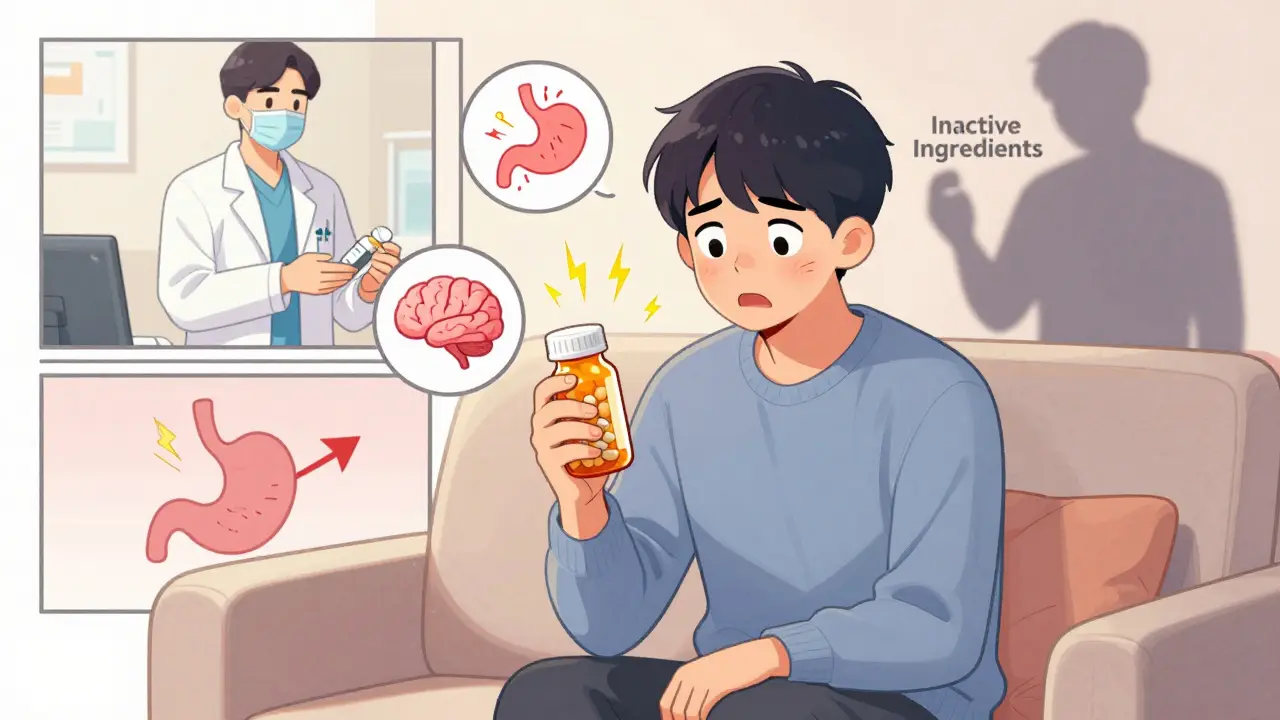
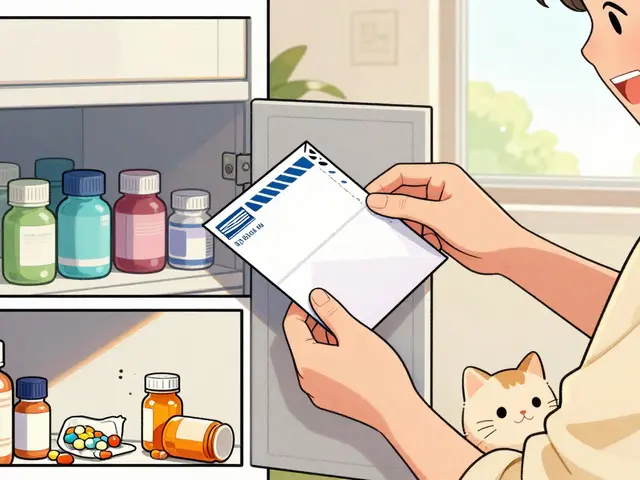
Switching from a brand-name drug to a generic version sounds simple: same active ingredient, lower cost, same results. For most people, that’s exactly what happens. But for some, the switch triggers unexpected problems - and knowing when to call your doctor could prevent a serious health setback.
Why Some People React Differently to Generics
Generic drugs aren’t copies. They’re required by the FDA to contain the same active ingredient, strength, and dosage form as the brand-name drug. They must also deliver the same amount of medicine into your bloodstream within a tight window - 80% to 125% of the brand’s effect. That sounds precise, but it’s not foolproof. The real issue? Inactive ingredients. These are the fillers, dyes, preservatives, and binders that hold the pill together or help it dissolve. While they don’t treat your condition, they can trigger reactions. A rash, stomach upset, or sudden fatigue might not be your illness flaring up - it could be a new filler in your generic pill. This matters most for drugs with a narrow therapeutic index. These are medications where the difference between an effective dose and a dangerous one is tiny. Think levothyroxine for thyroid disease, warfarin for blood thinning, or lamotrigine for epilepsy. Even a small shift in how your body absorbs the drug can throw your levels off balance. A 2017 study found that 15.3% of patients stabilized on brand-name levothyroxine saw their TSH levels jump out of the safe range after switching to generic. That’s not a fluke. For someone on thyroid meds, a TSH level that’s too high means fatigue, weight gain, and depression. Too low, and you risk heart rhythm problems. Neither outcome is minor.Top Warning Signs You Shouldn’t Ignore
Most people switch to generics without a hitch. But if you notice any of these changes within the first two weeks - especially after a new prescription or pharmacy refill - call your doctor. Don’t wait. Don’t assume it’s "just stress."- Unexplained skin rash or hives - This was the most common complaint in patient reports, with over 60% of adverse reaction stories on Reddit mentioning skin issues after a generic switch. It could be an allergic reaction to a dye or coating.
- Persistent nausea, vomiting, or diarrhea - If your stomach hasn’t settled in 3-4 days, and you didn’t have this before the switch, it’s not "just a bug." It might be a new excipient irritating your gut.
- Sudden fatigue or dizziness - If you’re suddenly exhausted, even with enough sleep, your body might not be absorbing the drug properly. This is especially true for heart, thyroid, or seizure meds.
- Changes in how well your medication works - Did your migraines come back? Did your blood pressure spike? Did your seizures increase? These aren’t "normal fluctuations." They’re red flags.
- Mood swings or mental health changes - People switching from brand-name sertraline or lamotrigine to generics have reported increased anxiety, depression, or even mania. These aren’t coincidences. A 2023 case study described a bipolar patient hospitalized after switching to a generic lamotrigine.
Drugs That Need Extra Caution
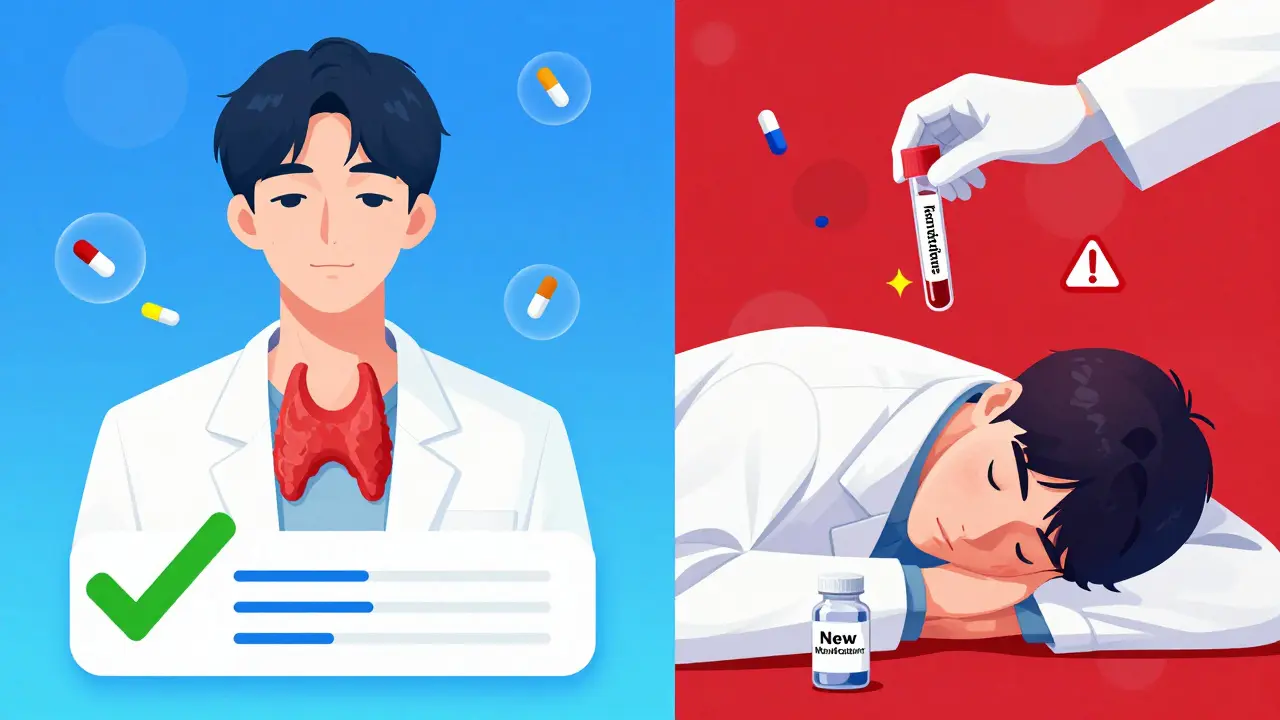
Not all generics are created equal. Some medications carry higher risks when switched. Here are the ones that demand attention:- Levothyroxine (Synthroid) - Even small changes in absorption can throw thyroid levels out of balance. TSH should be checked 6-8 weeks after switching.
- Warfarin (Coumadin) - A slight change in how your body processes this blood thinner can lead to dangerous bleeding or clots. INR levels must be monitored closely.
- Lamotrigine (Lamictal) - Used for epilepsy and bipolar disorder. Studies show a 25% higher risk of seizure recurrence after switching between generic versions.
- Phenytoin (Dilantin) - Another epilepsy drug with a narrow window. Serum levels must be tested after any switch.
- Sumatriptan (Imitrex) - Migraine sufferers have reported a complete loss of effectiveness after switching to generic. One 2022 case study showed symptoms vanished when the patient returned to the brand.
What to Do If You Notice a Problem
Don’t stop taking your medication. Don’t double up. Don’t guess. Here’s what to do instead:- Call your doctor within 24 hours if you have any of the warning signs above. Mention the exact drug you switched from and to.
- Check your pharmacy - Was the generic made by a different manufacturer? Some brands of generics have more reported issues. Ask if you can get the same maker as before.
- Ask for a lab test - If you’re on warfarin, levothyroxine, or an antiepileptic, request a blood test. INR, TSH, or drug levels can tell you if the generic is working right.
- Request a brand-name prescription - If your doctor agrees, they can write "Dispense as Written" or "Do Not Substitute" on the script. This legally prevents the pharmacist from switching it.
- Document everything - Write down when you switched, what symptoms started, and how bad they got. This helps your doctor decide if it’s a reaction or something else.
State Laws and Your Rights
In the U.S., pharmacists can usually swap a brand for a generic unless the doctor says no. But 28 states have passed laws to protect patients on high-risk drugs. California, for example, requires pharmacists to notify the prescribing doctor before substituting generics for 12 specific medications - including levothyroxine and warfarin. If you’re in one of these states, you have more control. Ask your pharmacist: "Is this substitution allowed under state law?" If they hesitate, ask to speak with the pharmacist-in-charge. You have the right to refuse a substitution.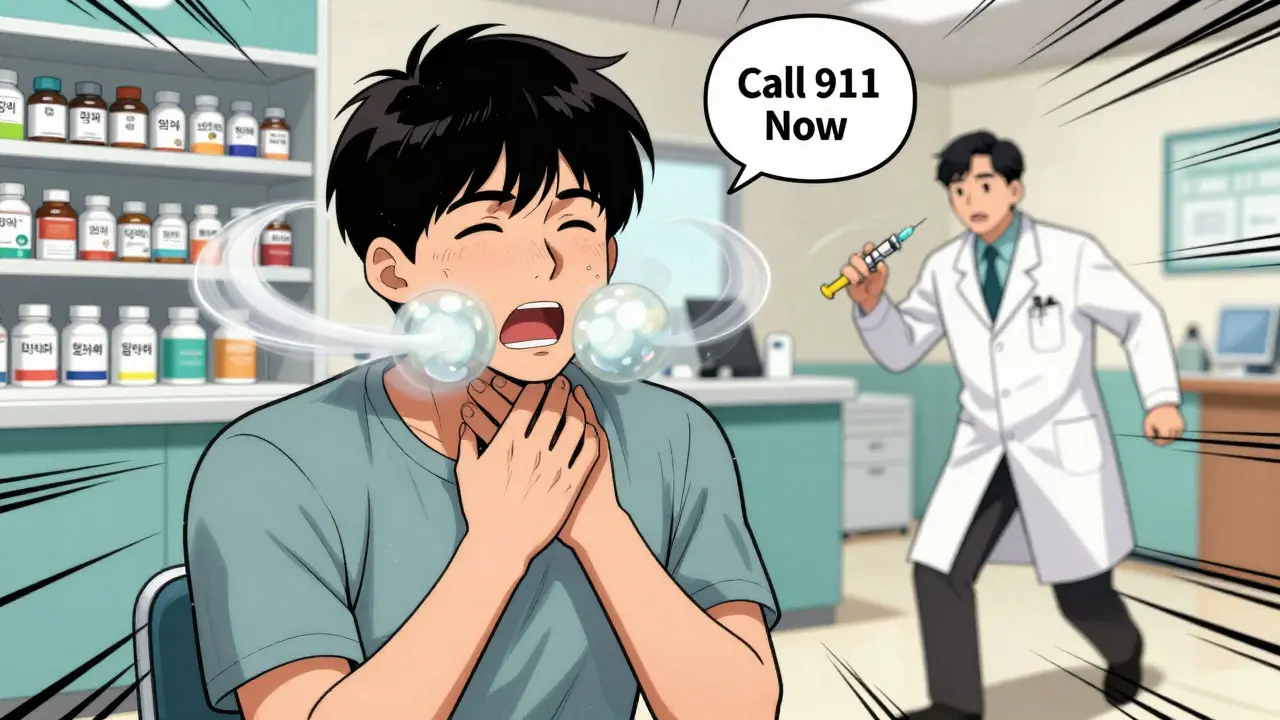
When to Go to the ER
Some reactions need immediate care. If you experience any of these, call 911 or go to the emergency room:- Swelling of the throat, tongue, or lips
- Difficulty breathing or wheezing
- Sudden drop in blood pressure (feeling faint, cold skin, rapid heartbeat)
- Seizure or loss of consciousness
What’s Changing in 2026
The FDA is using AI to catch bioequivalence problems before generics hit the market. New testing standards mean fewer bad batches. But that doesn’t mean your individual body won’t react differently. Pharmacogenomic testing - which looks at your genes to predict how you’ll respond to drugs - is now available through companies like Color Genomics. While not routine yet, it could one day tell you whether you’re at risk for a bad reaction to a generic before you even take it. For now, trust your body. If something feels off after a switch, it probably is. You know your health better than any algorithm. And your doctor is there to help - not to judge.Can I switch back to the brand-name drug if the generic isn’t working?
Yes. If you notice side effects or reduced effectiveness after switching, talk to your doctor. They can write a new prescription with "Do Not Substitute" or "Dispense as Written" on it. Pharmacists are legally required to follow this. You’re not being difficult - you’re being proactive about your health.
Are all generic drugs the same, no matter who makes them?
No. While all generics must meet FDA standards, different manufacturers use different inactive ingredients. One brand of generic levothyroxine might have a different filler than another. That’s why some patients react to one generic but not another. If you switch generics and feel worse, ask your pharmacist if it’s the same manufacturer as before.
Do I need blood tests every time I switch generics?
Not every time - but yes, for high-risk drugs. If you’re on warfarin, levothyroxine, phenytoin, or lamotrigine, your doctor should check your levels 4-6 weeks after any switch. For most other medications like metformin or statins, blood tests aren’t needed unless you have symptoms.
Why do some doctors say generics are always fine?
For the majority of patients - about 70% - generics work perfectly. Studies show no difference in outcomes for drugs like metformin, lisinopril, or atorvastatin. But doctors who say "they’re always the same" are oversimplifying. The science shows that for narrow therapeutic index drugs, individual variation matters. It’s not about distrust - it’s about precision.
Can I ask my pharmacist to give me the same generic I had before?
Absolutely. Pharmacists keep records of which generic manufacturer they dispense. Ask them: "Can you refill this with the same manufacturer as last time?" If they say no, ask why. If you’ve had no issues with one brand, there’s no reason to switch unless you’re told otherwise by your doctor.
Final Thought
Generics save billions in healthcare costs. That’s good. But your health isn’t a statistic. If you feel different after switching - whether it’s a rash, a mood shift, or a seizure - don’t ignore it. You’re not overreacting. You’re paying attention. And that’s exactly what good patient care looks like.
Ian Glover
My name is Maxwell Harrington and I am an expert in pharmaceuticals. I have dedicated my life to researching and understanding medications and their impact on various diseases. I am passionate about sharing my knowledge with others, which is why I enjoy writing about medications, diseases, and supplements to help educate and inform the public. My work has been published in various medical journals and blogs, and I'm always looking for new opportunities to share my expertise. In addition to writing, I also enjoy speaking at conferences and events to help further the understanding of pharmaceuticals in the medical field.
14 Comments
-
Ali Hughey
March 16, 2026 AT 15:21THE FDA IS LYING TO US. 😱
Did you know? The ‘80-125% bioequivalence window’? That’s not science-it’s a loophole. Big Pharma bribes regulators to let them pump out generics with 82% absorption and call it ‘equivalent.’
I’ve got a friend who had a stroke after switching to generic warfarin. The INR was 1.1. The brand was at 2.8. The pharmacy didn’t even notify the doctor.
They’re turning us into lab rats. And the worst part? They’ll tell you ‘it’s all the same’ while you’re bleeding internally. 💉🩸 -
Alex MC
March 18, 2026 AT 09:31Wanted to say-this is one of the most balanced, well-researched takes I’ve read on generics. Thank you.
I’m a pharmacist in Ohio, and I see this every week. Patients come in panicked because their ‘new’ pill looks different. Most are fine. But the ones who aren’t? They’re the ones we need to listen to.
My rule: if a patient says ‘this doesn’t feel right,’ we pause. We check. We don’t assume. Because sometimes, ‘different’ means ‘dangerous.’ -
rakesh sabharwal
March 19, 2026 AT 14:09How quaint. You’re all treating pharmaceuticals like artisanal coffee. ‘Oh no, the filler changed!’
Let me remind you: the FDA requires bioequivalence testing. If you’re having a reaction, it’s likely psychosomatic or noncompliance. You didn’t take it with food. You drank grapefruit juice. Or worse-you’re just anxious.
My uncle took generic metformin for 17 years. Never had an issue. Meanwhile, you’re treating your thyroid like a sacred artifact. 🤦♂️ -
Aaron Leib
March 21, 2026 AT 11:54Thank you for sharing this. Seriously.
If you’re on a narrow-therapeutic-index drug and you switch generics, give yourself 2 weeks. Track symptoms. Sleep. Energy. Mood.
If something’s off? Call your doctor. No shame. No guilt. You’re not ‘difficult.’ You’re informed.
And if your doc brushes you off? Get a second opinion. Your health isn’t a suggestion-it’s your priority. -
Serena Petrie
March 22, 2026 AT 10:08My rash started day 3. Called doc. Switched back. Done.
Also, pharmacy gave me a different brand. Same generic name. Different filler. Weird. -
Buddy Nataatmadja
March 23, 2026 AT 23:06Interesting. I’m from Indonesia, and here, generics are the norm. No one even asks about fillers. But I’ve heard stories-especially with epilepsy meds. One cousin had a seizure after switching. Turned out the new generic had a different coating that slowed absorption.
So yeah. Even in places where this isn’t talked about, it still matters. -
mir yasir
March 24, 2026 AT 18:47The notion that ‘inactive ingredients’ can cause systemic effects is a fallacy propagated by laypersons with no grasp of pharmacokinetics. The bioequivalence standards are rigorously validated through dissolution profiles and AUC/Cmax metrics. Any deviation is statistically negligible.
Furthermore, the FDA’s ANDA process is among the most stringent in the world. To suggest otherwise is to misunderstand the regulatory architecture.
One must question the source of anecdotal ‘symptoms’-are they placebo-driven? Or the result of non-adherence? -
Stephanie Paluch
March 25, 2026 AT 18:10I switched my lamotrigine last year. Started having panic attacks. Thought I was losing my mind. 😔
Turned out the generic had a different binder. My doc checked my levels-poof. Down 40%. We switched back. I cried. Not because I was ‘weak’-because I finally felt like myself again.
Trust your body. It knows.
Also-thank you for writing this. I needed to hear someone say it out loud. -
tynece roberts
March 25, 2026 AT 23:28soooo i switched to generic sertraline and i swear i felt like a robot for like 3 weeks?? like i wasnt sad or happy just… there??
and then i went back to the brand and boom. i cried for no reason and laughed at dumb memes again. sooo yeah. my brain noticed. idk if its legit science but my soul felt it. 🤷♀️
also my pill looked different. i know that sounds dumb but it made me paranoid. lol -
Hugh Breen
March 26, 2026 AT 17:01THIS. IS. CRUCIAL.
As someone who’s worked in public health for 20 years, I’ve seen too many people get sidelined because ‘it’s just a generic.’
But here’s the truth: your body is a unique ecosystem. One person’s ‘safe’ is another’s ‘danger zone.’
Don’t let anyone tell you you’re overreacting. If you feel off-speak up. Document it. Demand a test. You’re not a burden-you’re a patient who deserves precision.
And pharmacists? They need to be trained to ask, not assume.
👏👏👏 -
Byron Boror
March 26, 2026 AT 23:55Why are we letting foreign manufacturers make our medicine? China and India are pumping out generics with substandard labs. The FDA’s ‘80-125%’ window? That’s a joke. We’re letting foreign labs cut corners while Americans get sick.
Buy American. Demand brand-name. Stop this corporate betrayal.
Our health isn’t a commodity. It’s a right. -
Lorna Brown
March 27, 2026 AT 01:43It’s fascinating how we’ve built a system that prioritizes cost over individual biology.
Generics are efficient. But efficiency doesn’t equal safety. We treat the body like a machine with interchangeable parts-but it’s not. It’s a living, evolving system shaped by genetics, microbiome, even stress.
What if the real issue isn’t the generic… but our failure to personalize medicine?
Shouldn’t we be investing in pharmacogenomics before we force 100 million people into a one-size-fits-all pill? -
Rex Regum
March 28, 2026 AT 16:07Oh please. This is why America is collapsing.
You people think your ‘symptoms’ are special? Newsflash: every drug has side effects. You take something new? You might feel weird. That’s biology. Not a conspiracy.
And you want to pay $200 for a pill that does the same thing as the $4 generic? That’s not healthcare-that’s entitlement.
Stop being dramatic. Take the pill. Breathe. Live.


Write a comment
More Articles

Top 5 Thyroid Medication Alternatives to Synthroid in 2024
Explore five alternatives to Synthroid, a commonly prescribed thyroid medication. This guide delves into the characteristics, benefits, and potential downsides of each option. From natural desiccated thyroid extracts like Armour Thyroid and Nature-Throid to synthetic options such as Cytomel and Tirosint, we cover the essential information you need. Use this resource to understand which alternative might be more suitable for your thyroid health needs. Make a well-informed decision about your health with this comprehensive analysis.
Noluthando Devour Mamabolo
March 15, 2026 AT 10:08Just switched my levothyroxine to generic last month and woke up feeling like a zombie. 😵💫 Not tired from work-tired from *existence*. TSH was through the roof. Called my doc within 48hrs. They reordered the brand. No regrets. 🙌
Also-side note: the filler in the generic was lactose. I’m mildly lactose intolerant. Never connected the dots until I read this. Mind blown. 🤯