CYP3A4 Inhibitors: What They Are, How They Affect Your Medications, and What to Watch For
When you take a medication, your body doesn’t just absorb it and move on. It breaks it down—mostly in the liver—using enzymes like CYP3A4, a key liver enzyme responsible for metabolizing over half of all commonly prescribed drugs. Also known as cytochrome P450 3A4, it’s the workhorse that clears drugs like statins, blood thinners, and even some antibiotics from your system. But when something blocks CYP3A4—like grapefruit juice, certain antibiotics, or antifungal pills—your body can’t break down those drugs the way it should. That means more of the drug stays in your bloodstream, turning a normal dose into a potentially dangerous one.
This isn’t theoretical. People end up in the ER because they took a statin with a CYP3A4 inhibitor and got muscle damage. Others had dangerous drops in blood pressure after mixing blood pressure meds with antifungals. Grapefruit juice, a well-known and often underestimated CYP3A4 inhibitor can wreck the metabolism of more than 85 medications. Ketoconazole, a strong antifungal once used for fungal infections, is so potent it’s now avoided in people on heart or immune meds. Even clarithromycin, a common antibiotic, can cause serious interactions if you’re on a cholesterol drug or a sedative.
What makes this even trickier? Many of these inhibitors are easy to miss. You might not think of grapefruit as a drug. You might not know your antifungal cream or eye drops can still affect your liver enzymes. And even if your doctor knows, they might not ask about every supplement you take—like St. John’s wort, which does the opposite (it speeds up CYP3A4), or turmeric, which can slow it down. The real risk isn’t just one drug—it’s the combo. You could be fine on your own meds, but add one new pill, juice, or herb, and suddenly your body is drowning in medication.
The posts below don’t just list risks—they show you how to spot these hidden dangers in real life. You’ll find guides on building a food-and-medication checklist that actually works, how to compare expiration dates to avoid taking something that’s already broken down, and how to recognize when a side effect isn’t just a side effect—it’s a warning sign of an interaction. You’ll see how people managing asthma, heart rhythm issues, or even IBD have had to rethink their meds because of CYP3A4. This isn’t about memorizing a list. It’s about learning how to ask the right questions, read between the lines of your prescription label, and protect yourself before something goes wrong.
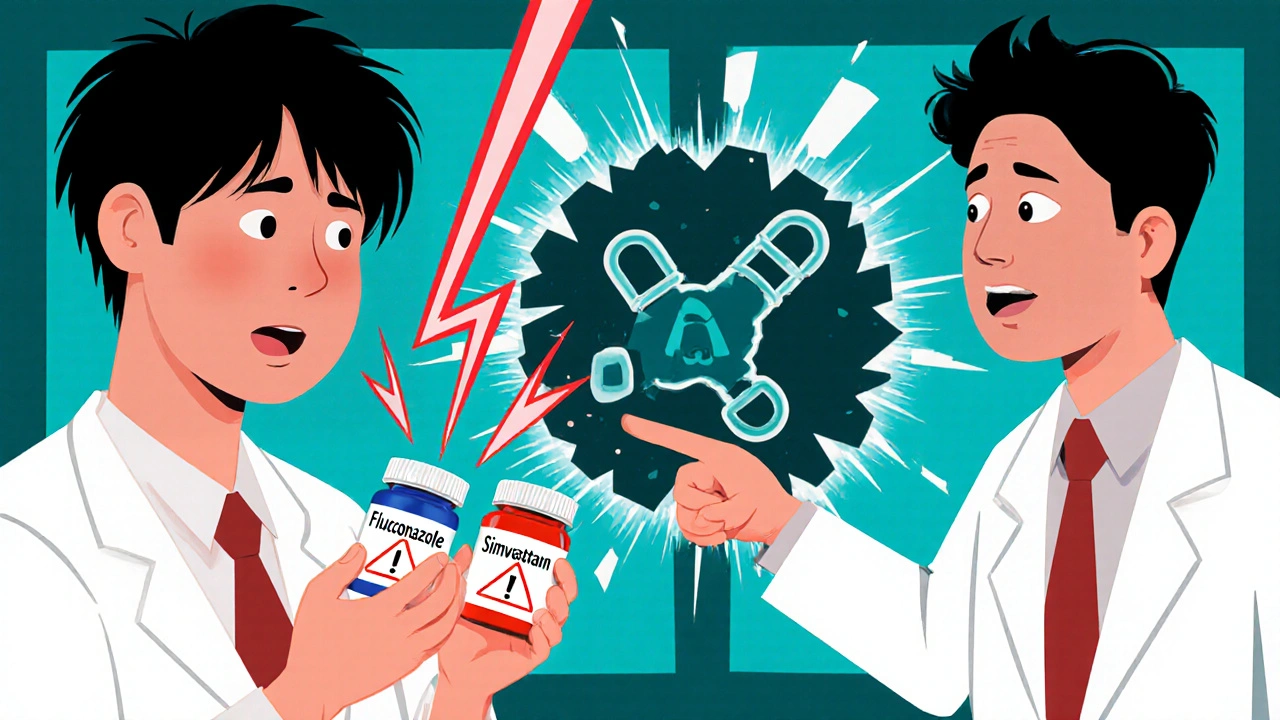
Systemic Antifungals: High-Risk Interactions with Statins and Immunosuppressants
Systemic antifungals like azoles can dangerously increase statin and immunosuppressant levels, raising the risk of muscle damage and kidney failure. Learn which combinations are lethal and how to stay safe.