Expired Medication: What Happens When Your Pills Go Bad
When you find an old bottle of pills in the back of your medicine cabinet, you might wonder: is it still good? Expired medication, any pharmaceutical product past its labeled expiration date. Also known as out-of-date drugs, it’s not just about legality—it’s about whether your body will still get what it needs. The expiration date isn’t a random number. It’s the last day the manufacturer guarantees the drug will work as intended under proper storage conditions. That means if you kept your antibiotics in a hot bathroom or left your insulin in the sun, they could lose strength long before the date on the label.
Some drugs break down into harmless substances. Others? They can become less effective—or worse, risky. Take insulin, epinephrine auto-injectors, or nitroglycerin. These aren’t things you want to gamble with. If they’re expired, they might not work when you need them most. Antibiotics like amoxicillin or azithromycin might not kill all the bacteria if they’ve degraded, leading to stubborn infections or even antibiotic resistance. And while most pills like painkillers or blood pressure meds don’t turn toxic, they also won’t do their job. A study from the FDA found that many drugs retain 90% of their potency for years past expiration—if stored right. But that’s not something you can assume without knowing how they were kept.
Drug safety, the practice of ensuring medications remain effective and non-harmful from production to use depends heavily on pharmaceutical storage, how medicines are kept in homes, pharmacies, and hospitals to preserve potency. Humidity, heat, and light are the real enemies. A pill bottle in a drawer is fine. One in a steamy bathroom? Not so much. That’s why the best place to store meds is a cool, dry spot—like a bedroom closet. Don’t keep them in the car, near the stove, or in direct sunlight. Even over-the-counter meds like ibuprofen or allergy pills can lose strength over time.
What should you do when you find expired stuff? Don’t flush most pills unless the label says to—this pollutes water supplies. Instead, check for local drug take-back programs. Pharmacies, hospitals, or police stations often run them. If that’s not an option, mix the pills with coffee grounds or cat litter, seal them in a bag, and toss them in the trash. That keeps kids and pets from getting into them. And if you’re unsure? Ask your pharmacist. They’ve seen it all and won’t judge you for asking.
The posts below cover real cases where medication timing, storage, and condition mattered—from how hydroxyurea affects bone health to why brimonidine eye drops need to be fresh, and how azithromycin and statins behave when they’re past their prime. You’ll find practical advice on spotting weak meds, storing them right, and knowing when to throw them away. No fluff. Just what you need to keep yourself and your family safe.
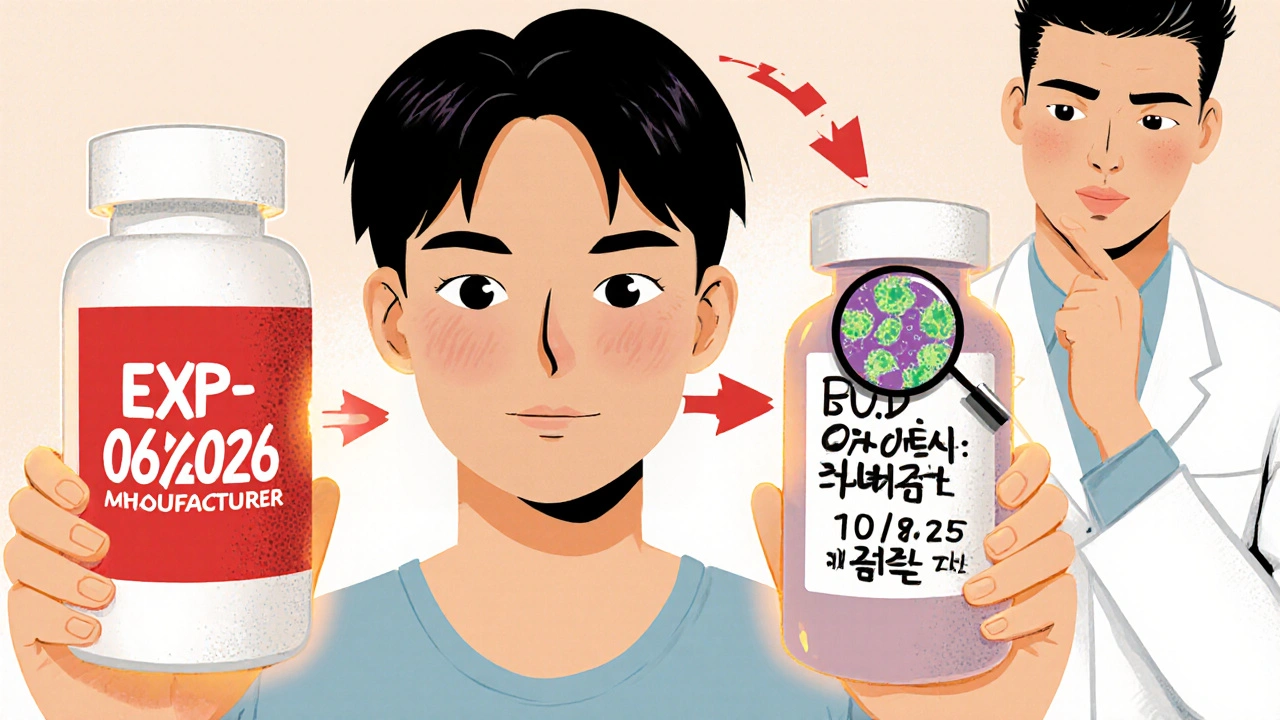
How to Compare Manufacturer Expiration Dates vs. Pharmacy Beyond-Use Dates
Learn the critical difference between manufacturer expiration dates and pharmacy beyond-use dates for compounded medications. Know when your medicine is safe to use-and when to throw it away.