Flying with Prescriptions: What You Need to Know About Traveling with Medication
When you're flying with prescriptions, the process of carrying medications on a plane while complying with airline and government regulations. Also known as traveling with medication, it's a routine part of managing chronic conditions, but many people get caught off guard by what’s allowed, how to pack it, or what to say at security. You don’t need a doctor’s note for most pills in the U.S., but having one can save you time if an agent asks. The TSA, the U.S. Transportation Security Administration responsible for screening passengers and baggage at airports doesn’t require prescriptions to be in original bottles—but it’s smart to keep them that way. Why? Because if your pills look like candy or don’t have labels, they’ll get pulled for extra screening—and you’ll miss your flight.
International travel adds another layer. Countries like Japan, the UAE, and Australia have strict rules on certain painkillers, ADHD meds, and even common sleep aids. What’s legal in the U.S. might be classified as a controlled substance overseas. The FDA, the U.S. Food and Drug Administration that regulates drugs and ensures their safety and effectiveness doesn’t control foreign laws, so you’re on your own there. Always check the embassy website of your destination before you pack. And don’t forget: liquids like liquid insulin or cough syrup follow the 3-1-1 rule, but medical exemptions exist. You can bring more than 3.4 ounces if you declare it, and you should—always put it in a separate clear bag.
Some people panic when their generic pills look different than last time. That’s normal—manufacturers change colors and shapes all the time, and it’s still the same drug. But if you’re flying and worried about confusion, keep the original prescription label with you. Same goes for insulin pens, EpiPens, or inhalers. Don’t pack them in checked luggage. If your bag gets lost, you’re not just without meds—you’re at risk. Keep everything in your carry-on, along with a printed list of your medications, dosages, and why you take them. This isn’t just for security. It’s for you. If you have a medical emergency abroad, this list helps doctors act fast.
There’s no magic trick to flying with prescriptions. It’s about preparation, clarity, and knowing your rights. You’re not asking for special treatment—you’re exercising your right to manage your health. The system works better when you’re ready. And if you’ve ever been stopped at security because your meds looked odd, you know how much better it feels when you’re not scrambling.
Below, you’ll find real stories and practical guides from people who’ve been there—how to handle international customs, what to do if your meds get confiscated, how to pack for a multi-stop trip, and why some pharmacies won’t refill your prescription until you’re back home. These aren’t theory pieces. They’re fixes for the messy, real-world problems you actually face when you’re trying to stay healthy while moving across the globe.
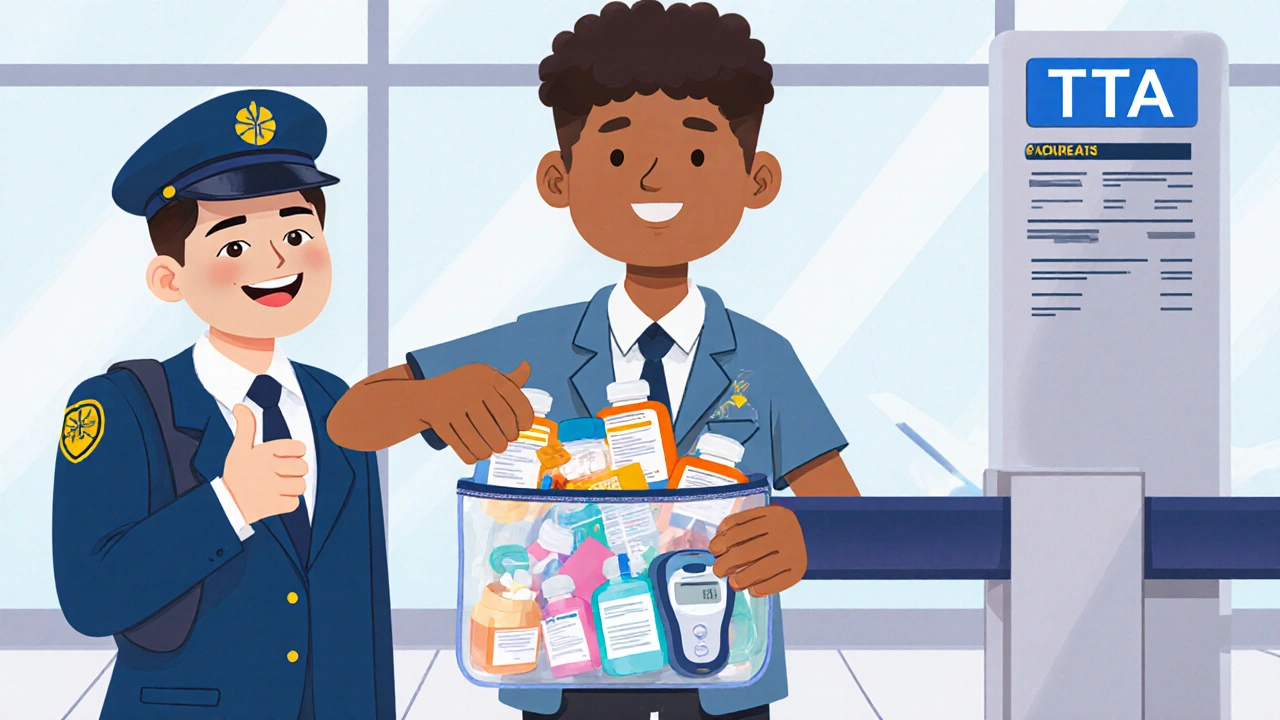
TSA Guidelines for Flying with Prescription Medications: What You Need to Know in 2025
Learn exactly how to fly with prescription medications in 2025 under TSA rules - including what’s allowed, what gets confiscated, and how to avoid delays at security. Essential for travelers with insulin, CBD, ADHD meds, or other prescriptions.