Food-Drug Interactions: What You Need to Know Before You Eat
When you take a pill, it doesn’t just work in a vacuum. What you eat, drink, or even swallow with it can change how that drug behaves in your body. This is called a food-drug interaction, a change in how a medication works because of something you consume. Also known as dietary interactions, these aren’t rare quirks—they’re common, often overlooked, and sometimes dangerous. A glass of grapefruit juice can turn a routine statin into a heart risk. Calcium supplements might block your thyroid med from working. Even a simple banana could mess with your blood pressure pill. These aren’t theoretical concerns. Real people end up in the ER because they didn’t know their morning smoothie was fighting their prescription.
Some of the most dangerous food-drug interactions, happen when food changes how your body absorbs or breaks down a drug. For example, calcium supplements like calcium carbonate can bind to antibiotics or thyroid meds, stopping them from being absorbed. That’s why your doctor tells you to take them on an empty stomach. Then there’s statins and diabetes, a well-documented link where cholesterol drugs like atorvastatin can raise blood sugar levels in people already at risk. It doesn’t mean you stop taking them—but you do need to monitor your glucose. And don’t forget grapefruit, which blocks an enzyme that breaks down over 85 drugs, from statins to anti-anxiety meds. One grapefruit can cause effects that last days.
It’s not just about what you eat—it’s about when and how. Iron pills and dairy? Don’t take them together. Coffee and antidepressants? Could spike your heart rate. Even herbal supplements like St. John’s Wort can turn your blood thinner into a useless pill. The truth is, most people don’t realize their daily habits are quietly undermining their meds. You’re not being careless—you just never learned the rules. That’s why this collection pulls together real, practical posts on what actually matters: how calcium alternatives affect absorption, why statins might raise your sugar, how to time your meds around meals, and what foods to avoid when you’re on common prescriptions. You’ll find no fluff, no theory—just clear, actionable info from people who’ve been there. Whether you’re managing IBD, heart disease, or just trying to stay healthy on meds, what you eat next could make all the difference. Let’s get you the facts you need to stay safe.
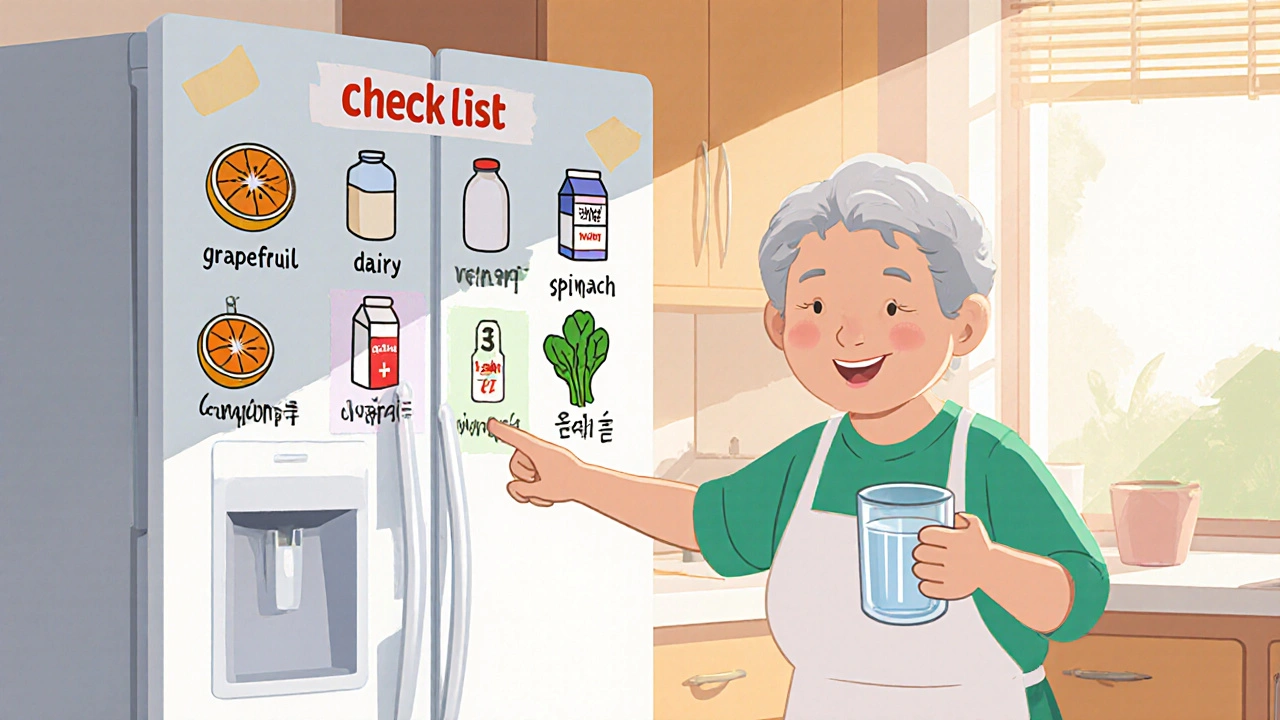
How to Create a Food and Medication Interaction Checklist at Home
Create a simple, personalized food and medication interaction checklist to prevent dangerous reactions. Learn what foods to avoid with common meds like warfarin and statins, how to update it, and where to keep it for maximum safety.