Joint Commission NPSGs: What They Are and Why They Matter for Patient Safety
When you walk into a hospital, you expect care that’s safe, reliable, and consistent. That’s not luck—it’s because of the Joint Commission NPSGs, National Patient Safety Goals established by The Joint Commission to reduce common medical errors in U.S. healthcare settings. Also known as NPSGs, these are non-negotiable rules hospitals must follow to earn and keep their accreditation. They’re not suggestions. They’re enforced standards backed by inspections, penalties, and public reporting.
These goals focus on the biggest risks patients face: wrong-site surgery, medication mix-ups, infections from poor hygiene, and communication breakdowns between providers. For example, one NPSG requires hospitals to verify patient identity using at least two identifiers before giving any treatment. Another demands that all high-alert medications—like blood thinners or insulin—be labeled clearly at every step. These aren’t abstract policies; they’re direct responses to real, preventable deaths. A 2016 study by the Institute of Medicine found that over 250,000 people die each year in U.S. hospitals due to medical errors. Many of those deaths could have been stopped by following NPSGs.
The medication safety, a core focus area of the Joint Commission NPSGs that targets prescribing, dispensing, and administration errors, connects directly to many of the posts in this collection. You’ll find guides on how statins affect blood sugar, how antifungals interact with immunosuppressants, and how to avoid dangerous food-drug combinations. These aren’t just patient tips—they’re practical applications of NPSG principles. Hospitals use similar checklists and protocols to prevent the exact same risks you’re learning to avoid at home.
Another key entity is accreditation, the official recognition a healthcare facility earns after meeting The Joint Commission’s strict safety and quality benchmarks. Without it, hospitals lose Medicare funding, insurance contracts, and public trust. That’s why every hospital staff member—from nurses to pharmacists to administrators—must know and follow the NPSGs. It’s not just about compliance. It’s about survival.
And then there’s healthcare standards, the broader framework of rules and best practices that guide how care is delivered, measured, and improved. The NPSGs are part of this system, but they’re the most visible and enforceable piece. They’re why you’re asked to confirm your name and birthdate before every procedure. Why your IV bag has a barcode you scan. Why your doctor checks your allergies before writing a prescription. These aren’t red tape—they’re safety nets.
You won’t find NPSGs listed on your discharge papers, but you’ll feel their impact in every detail of your care. The posts here cover the real-world consequences of ignoring these goals: dangerous drug interactions, mislabeled meds, forgotten allergies, and preventable side effects. What you’re reading isn’t just medical advice—it’s a behind-the-scenes look at how patient safety rules translate into daily practice. Whether you’re managing asthma inhalers, avoiding grapefruit with statins, or tracking your calcium supplements, you’re navigating a system built on these standards. Below, you’ll find clear, practical guides that show you how to protect yourself within that system—and why knowing these rules matters more than you think.
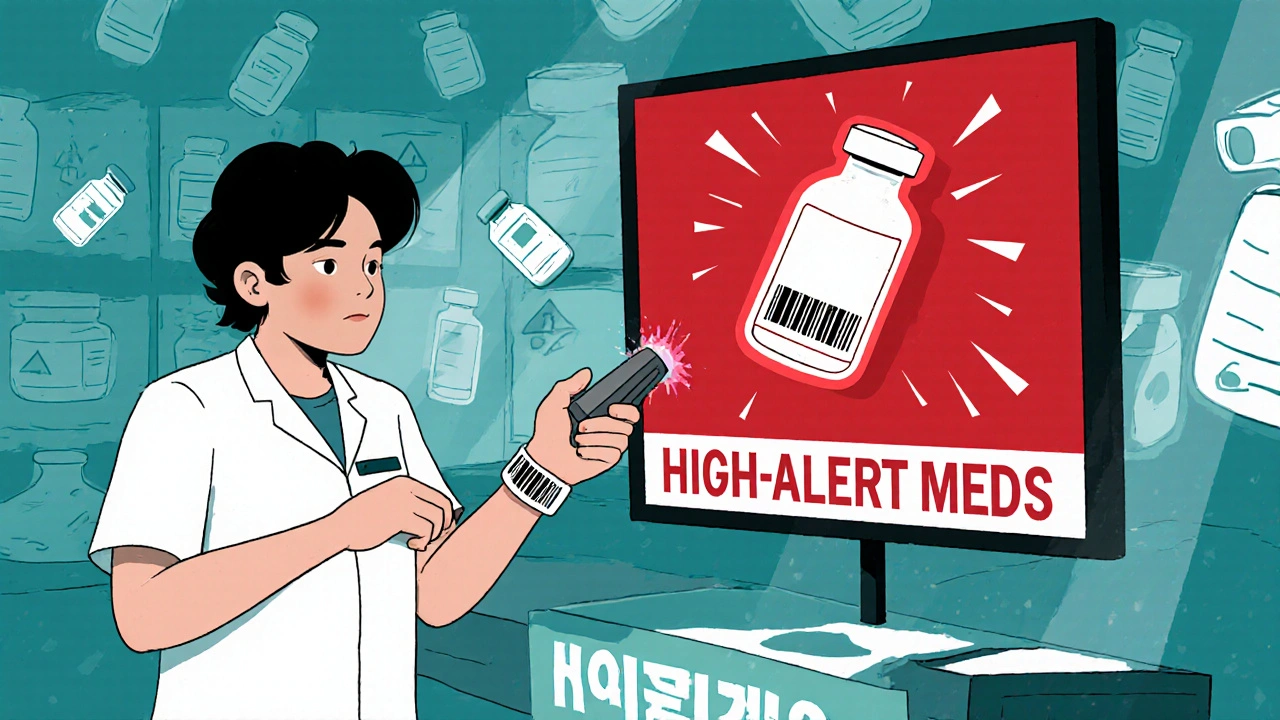
Patient Safety Goals in Medication Dispensing and Pharmacy Practice: How to Prevent Errors and Save Lives
Discover the real-world safety goals that prevent medication errors in pharmacies and hospitals. Learn how barcode scanning, high-alert drug controls, and system redesign-not just training-save lives.