Pain Management: Effective Strategies, Medications, and Safe Alternatives
When you're dealing with pain management, the process of reducing or controlling chronic or acute discomfort using medical, physical, or behavioral approaches. Also known as pain control, it's not just about popping pills—it's about finding the right balance between relief and risk. Too many people jump straight to opioids or high-dose NSAIDs without knowing the long-term costs: dependency, organ damage, or even worse side effects. The truth is, effective pain management often means working smarter, not harder.
One major piece of the puzzle is corticosteroid taper, a gradual reduction of steroid doses like prednisone to avoid withdrawal symptoms and protect your body’s natural hormone production. Many people don’t realize that stopping steroids cold turkey can cause fatigue, joint pain, and even adrenal crisis. That’s why tapering isn’t optional—it’s essential. And then there’s clonidine pain management, the use of this blood pressure drug to reduce nerve-related pain, anxiety, and even withdrawal symptoms. It’s not a first-line treatment, but for some, it’s a game-changer—especially when opioids aren’t safe or effective. You’ll also find that pain often ties into other conditions. For example, medication safety, the practice of preventing harmful drug interactions and dosing errors. A lot of pain meds, like NSAIDs or muscle relaxants, can clash dangerously with heart drugs, antidepressants, or even supplements. One wrong combo can lead to kidney failure, internal bleeding, or worse.
What you won’t find in most pain guides are the real alternatives. Things like physical therapy, nerve blocks, or even low-dose antidepressants for nerve pain. Some people manage chronic pain with diet changes, gentle movement, or sleep fixes—not just more pills. And when you’re on long-term meds, you need to know when to question them. Is that back pain really getting worse, or is your body just reacting to the drug itself? That’s where tools like the Naranjo Scale help doctors decide if a side effect is truly caused by the medication.
Below, you’ll find real, practical advice from people who’ve been there—how to taper off steroids safely, why clonidine works for some dental pain, what to do when your pain meds stop helping, and how to spot dangerous drug mixes before they hurt you. No fluff. No hype. Just what works.
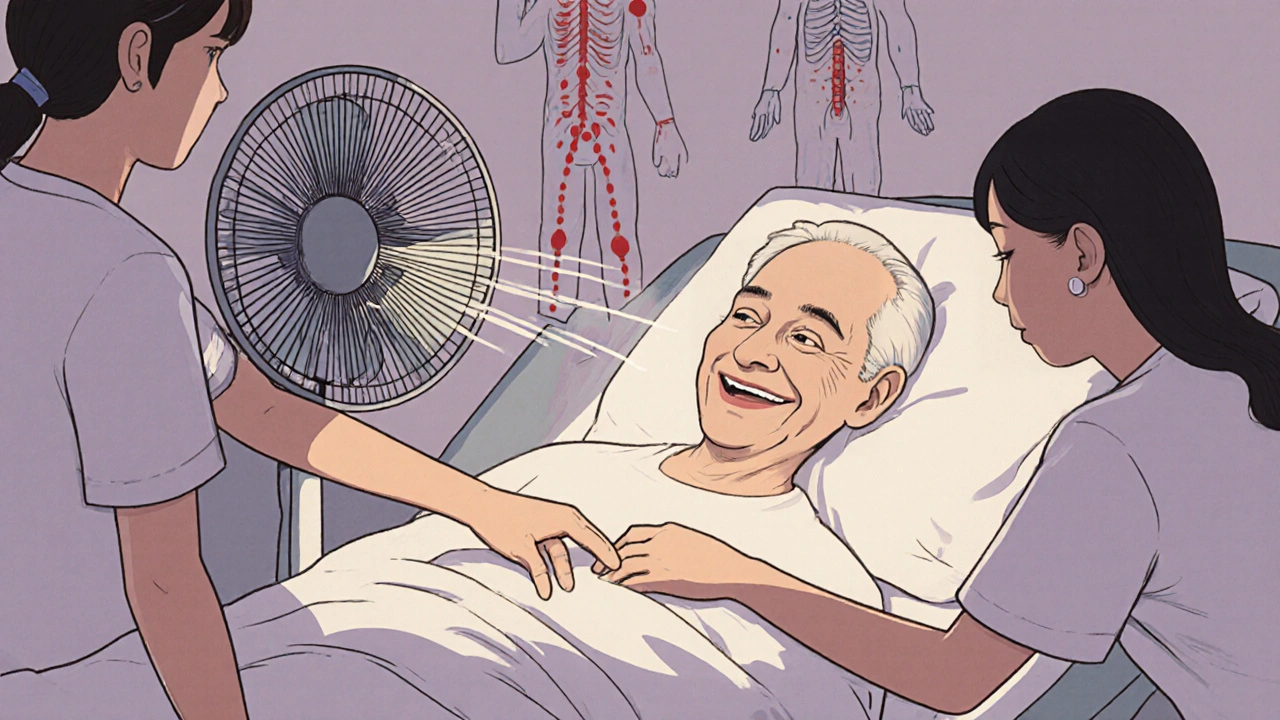
Palliative and Hospice Care: How to Balance Symptom Relief with Minimal Side Effects
Learn how palliative and hospice care balance pain relief with minimal side effects. Discover practical strategies for managing symptoms like breathlessness, delirium, and nausea while preserving dignity and quality of life.