Warfarin and Vitamin K: What You Need to Know About Diet and Blood Thinners
When you’re on warfarin, a blood thinner used to prevent dangerous clots in people with atrial fibrillation, artificial heart valves, or a history of deep vein thrombosis. Also known as Coumadin, it works by blocking vitamin K’s role in clotting—making your blood less likely to form clots that could cause strokes or pulmonary embolisms. But here’s the catch: if your vitamin K intake changes, your warfarin dose might need to change too. It’s not about avoiding vitamin K entirely—it’s about keeping it steady.
Vitamin K, a group of fat-soluble vitamins essential for blood clotting and bone health. Also known as phylloquinone, it’s found in leafy greens like spinach, kale, broccoli, and Brussels sprouts. If you suddenly eat a big bowl of kale salad every day, your INR (the test that measures how long your blood takes to clot) can drop. That means your warfarin isn’t working as well. On the flip side, if you go weeks without eating any greens, your INR can spike—and that raises your risk of bleeding. This isn’t guesswork. Doctors and pharmacists track your INR regularly because even small shifts in vitamin K intake can throw off your balance. It’s why consistency matters more than perfection.
Many people think they need to cut out greens completely. That’s not true. You don’t have to give up your favorite salads or smoothies. You just need to keep your intake about the same from week to week. A spinach salad on Monday? Have one on Friday too. A daily serving of broccoli? Stick with it. Skipping it for a week and then doubling up next week? That’s the problem. Same goes for supplements—vitamin K pills, multivitamins with K, or even green tea extracts can interfere. Talk to your provider before adding anything new.
Other things can affect warfarin too: alcohol, certain antibiotics, herbal products like St. John’s wort, and even changes in liver function. But vitamin K is the one you can control every day through food. It’s the most predictable factor in your treatment. Think of it like a scale: warfarin on one side, vitamin K on the other. You don’t need to remove either. You just need to keep the weight balanced.
What you’ll find in the posts below aren’t just general warnings. They’re real, practical stories from people managing warfarin while juggling diets, other meds, and lifestyle changes. You’ll see how others handle the vitamin K balance, what happens when they miss a dose, how alcohol affects them, and what to do when lab results don’t match how they feel. There’s no fluff—just what works, what doesn’t, and what your doctor might not have told you because they assume you already know.
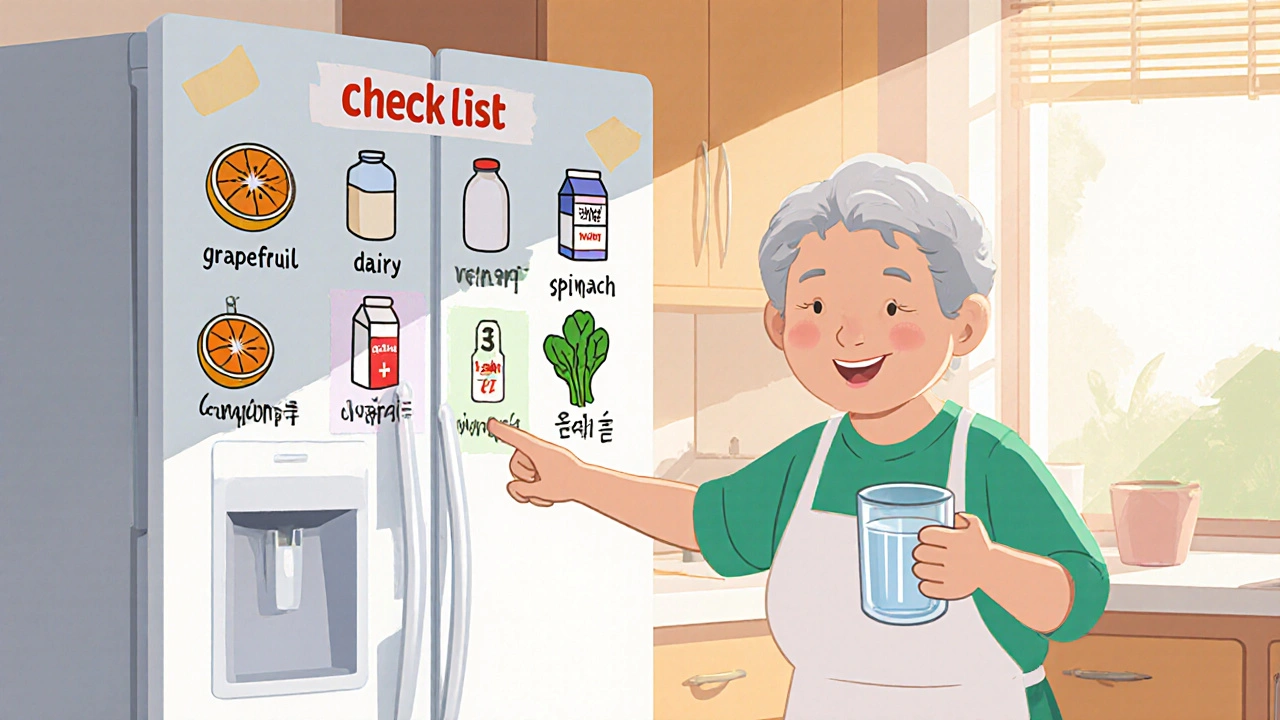
How to Create a Food and Medication Interaction Checklist at Home
Create a simple, personalized food and medication interaction checklist to prevent dangerous reactions. Learn what foods to avoid with common meds like warfarin and statins, how to update it, and where to keep it for maximum safety.