Adverse Drug Reactions: What They Are, Why They Happen, and How to Stay Safe
When your body reacts badly to a medicine you took on purpose, that’s an adverse drug reaction, an unintended and harmful response to a medication taken at normal doses. Also known as drug side effects, these reactions range from mild rashes to life-threatening organ damage—and they’re far more common than most people realize. You’re not imagining it if you feel off after starting a new pill. Millions of people experience these reactions every year, and many never tell their doctor because they think it’s just "normal" or "not serious." But some of the most dangerous reactions start as something small—a headache, a weird taste in your mouth, or a rash that won’t go away.
These reactions don’t happen in a vacuum. They’re often tied to drug interactions, when two or more medications affect each other’s behavior in your body. For example, taking a common antifungal with a statin can spike muscle damage risk. Or mixing heartburn meds with blood thinners can turn a routine dose into a bleeding emergency. Medication safety, the practice of using drugs in a way that minimizes harm isn’t just about taking the right pill—it’s about knowing what else is in your system. Even something as simple as grapefruit juice can change how your body handles dozens of common drugs. And it’s not just prescriptions. Supplements, over-the-counter painkillers, and even herbal teas can trigger reactions you didn’t see coming.
Some people are more at risk than others. Older adults juggling five or more medications? Higher chance. Women after menopause? Hormonal shifts change how drugs are processed. People with kidney or liver issues? Their bodies can’t clear drugs the same way. And here’s the thing: many of these reactions happen because the drug itself is fine—it’s the combination, the dose, or the timing that goes wrong. That’s why checking for patient safety, system-level practices designed to prevent harm during medical care isn’t just hospital policy—it’s personal. Barcode scanning at the pharmacy, clear labeling, and knowing your own meds are all part of the puzzle.
You won’t find every possible reaction listed on a pill bottle. But you can learn the red flags: sudden confusion, unexplained bruising, swelling in your ankles, chest tightness, or a fever that comes with a rash. If something feels off after starting a new drug, don’t wait. Call your pharmacist. Call poison control. Write it down. These reactions are often preventable—not because doctors are careless, but because the system is complex and patients aren’t always given the tools to speak up.
Below, you’ll find real-world stories and facts about how these reactions happen, how they’re being tracked, and how you can protect yourself. From tacrolimus shaking hands to statins raising blood sugar, these aren’t theoretical risks—they’re happening to people right now. And the good news? You don’t have to guess what’s normal. You can learn what to watch for—and what to do next.

Idiosyncratic Drug Reactions: Rare, Unpredictable Side Effects Explained
Idiosyncratic drug reactions are rare, unpredictable side effects that can cause severe organ damage or death. Unlike common side effects, they strike without warning, often weeks after starting a drug. This article explains how they happen, which drugs trigger them, and what’s being done to predict and prevent them.
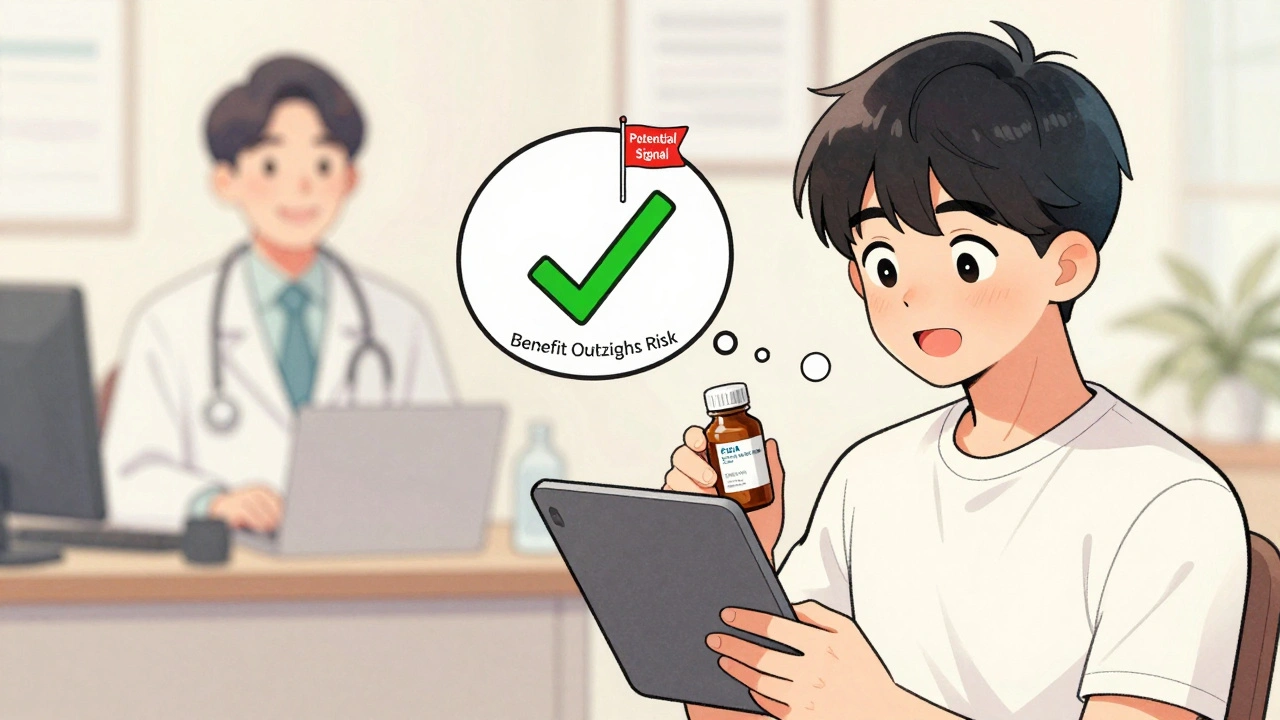
How to Interpret Risk vs. Benefit in FDA Safety Announcements
Learn how to read FDA safety alerts without panic. Understand the difference between potential signals and confirmed risks, and how to weigh a drug’s benefits against its side effects for smarter health decisions.