Travel with Pills: Safe Ways to Carry Medications Across Borders
When you travel with pills, carrying your prescribed medications across borders while staying legal and safe. Also known as passing through airport security with medicine, it’s not just about stuffing bottles in your bag—it’s about understanding rules that vary by country, airline, and even state. Many people assume if it’s legal at home, it’s fine abroad. That’s a dangerous myth. The travel with pills rules in the U.S. are different from Canada, the EU, Japan, or even Dubai. A pill you take daily for anxiety, blood pressure, or pain could be classified as a controlled substance overseas—and getting caught with it can mean fines, detention, or worse.
What you need to know starts with TSA medication guidelines, the rules set by the U.S. Transportation Security Administration for carrying drugs through U.S. airports. The TSA doesn’t require prescriptions for pills in carry-ons, but they do expect you to be able to identify them. Keep meds in original bottles with your name and doctor’s info clearly printed. If you’re flying internationally, bring a letter from your doctor listing your medications, doses, and why you need them. Some countries, like Japan, require advance permits for even common drugs like Adderall or opioids. Others, like Australia, ban certain painkillers entirely unless you declare them.
Then there’s international drug rules, the legal frameworks that govern what medications you can bring into foreign countries. These aren’t always easy to find. The U.S. State Department’s website has a list of restricted drugs by country, but it’s not always updated. For example, codeine is legal in the U.S. but illegal in the U.K. without a special license. Melatonin is sold over the counter in the U.S., but in Germany, it’s a prescription-only drug. And don’t assume your pharmacy’s label is enough—some countries require the prescription to be in their official language. A printed copy of your prescription in English, plus a translated version, is a smart backup.
Also watch out for medication travel tips, practical steps to avoid delays, loss, or legal trouble while carrying drugs on trips. Never pack meds in checked luggage. Bags get lost. Keep them in your carry-on, with your ID and passport. Split your supply between two bags if you’re traveling long-term. Bring extra pills—just in case your flight is delayed. And if you’re taking insulin, syringes, or injectables, bring a doctor’s note and keep them cool with a small cooler or insulated pouch. Airlines usually allow these, but you’ll need to declare them at security.
And yes, it’s okay to mix generics and brand names—just be consistent. If your doctor prescribed a generic version of your medication, that’s fine to travel with. But if you switch brands mid-trip, especially for drugs like thyroid meds or epilepsy treatments, you risk side effects or reduced effectiveness. Stick to what works. And if you’re unsure about a drug’s status in your destination, check with their embassy or consulate before you book your ticket. A quick call can save you from a nightmare at customs.
You’ll find real-world advice below on how others have handled tricky situations—from carrying psychiatric meds through Southeast Asia to bringing insulin into countries with strict controls. We’ve pulled together stories, rules, and fixes from people who’ve been there. Whether you’re flying for vacation, work, or medical treatment, this collection gives you the facts you need—not guesswork, not rumors, just clear, tested guidance on how to travel with pills safely, legally, and without stress.
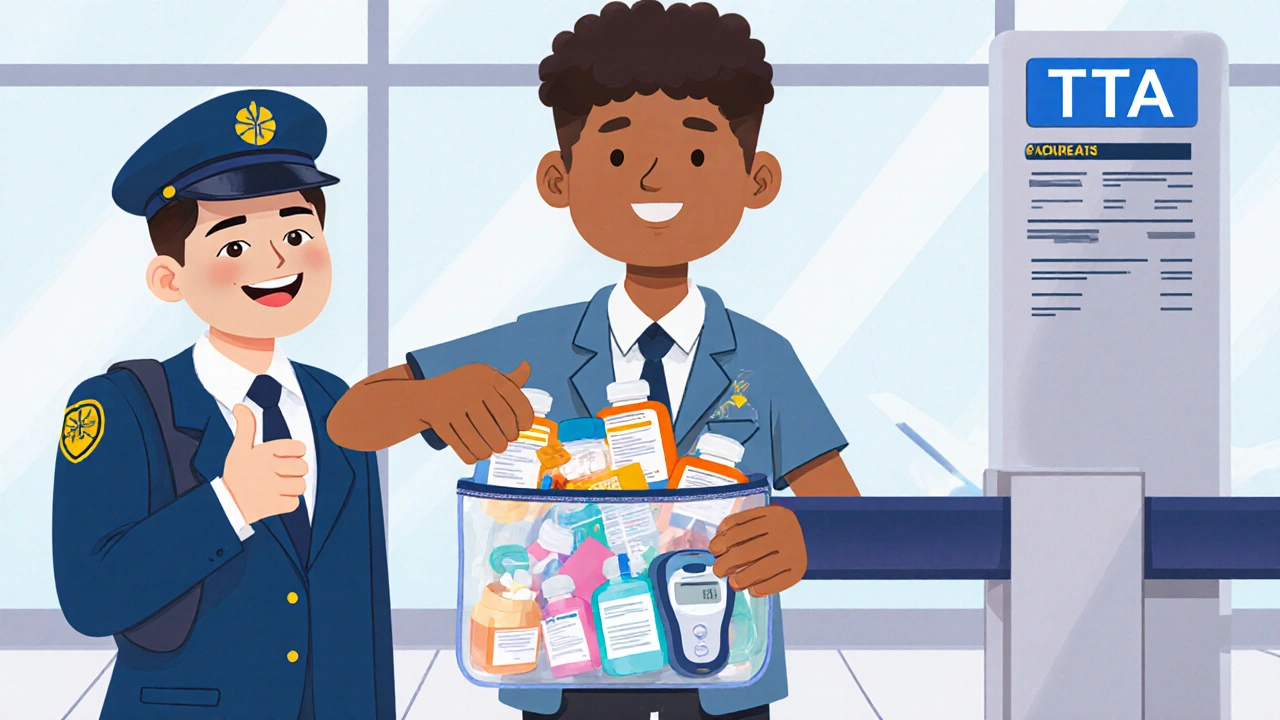
TSA Guidelines for Flying with Prescription Medications: What You Need to Know in 2025
Learn exactly how to fly with prescription medications in 2025 under TSA rules - including what’s allowed, what gets confiscated, and how to avoid delays at security. Essential for travelers with insulin, CBD, ADHD meds, or other prescriptions.