Expiration Date: What It Really Means for Your Medications and Health
When you see an expiration date, the date by which a medication is guaranteed to be fully potent and safe to use, as determined by the manufacturer under controlled storage conditions. Also known as use-by date, it’s not just a bureaucratic stamp—it’s your last line of defense against ineffective or unsafe drugs. Many people think expired pills are just weak, but that’s not the whole story. Some medications break down into harmful compounds over time. Others simply lose their power, leaving you unprotected when you need them most.
Take antibiotics like amoxicillin or azithromycin. If they’ve passed their expiration date, you might not kill the infection—and instead, you could be training bacteria to resist treatment. Same goes for heart meds like atorvastatin or amiodarone. A drop in potency could mean a spike in cholesterol or an irregular heartbeat you didn’t see coming. Even something as simple as epinephrine in an EpiPen can lose effectiveness. The FDA has tested expired epinephrine and found some delivered less than 90% of the labeled dose after just a few years past the date. That’s not a gamble you want to take.
Storage matters just as much as the date on the bottle. Heat, moisture, and light speed up degradation. Storing insulin in a hot car or keeping nitroglycerin in your bathroom cabinet? That’s asking for trouble. The pharmaceutical shelf life, the period during which a drug maintains its intended strength, quality, and purity under specified storage conditions isn’t just about time—it’s about environment. Your medicine cabinet isn’t a lab. Humidity from showers can turn tablets into mush. Sunlight can bleach liquid meds and break down their chemistry. Always check the label: some drugs need refrigeration. Others must stay dry. Ignore those instructions, and even a fresh pill could fail you.
What about those old bottles in the back of your drawer? The ones you haven’t touched since last winter? If it’s a life-saving drug—like an inhaler for asthma, a seizure med, or a blood thinner—don’t risk it. Replace it. For minor stuff like painkillers or antihistamines, you might be okay a few months past the date if stored well, but there’s no guarantee. And never, ever use expired insulin, vaccines, or injectables. The risk isn’t worth the savings.
Manufacturers test drugs under strict conditions to set those dates. But they don’t test what happens when you leave them in a glove compartment or a damp drawer. That’s your responsibility. The medication safety, the practice of ensuring drugs are used correctly, stored properly, and replaced when past their effective life to prevent harm starts with you. Know the date. Know the storage rules. When in doubt, toss it. Your body doesn’t care if you bought it at a discount. It only cares if it works.
Below, you’ll find real-world guides on how expiration dates affect everything from your heart meds to your antibiotics, how to spot when a drug’s gone bad, and what to do if you accidentally take an old pill. No fluff. Just what you need to keep your meds—and your health—on track.
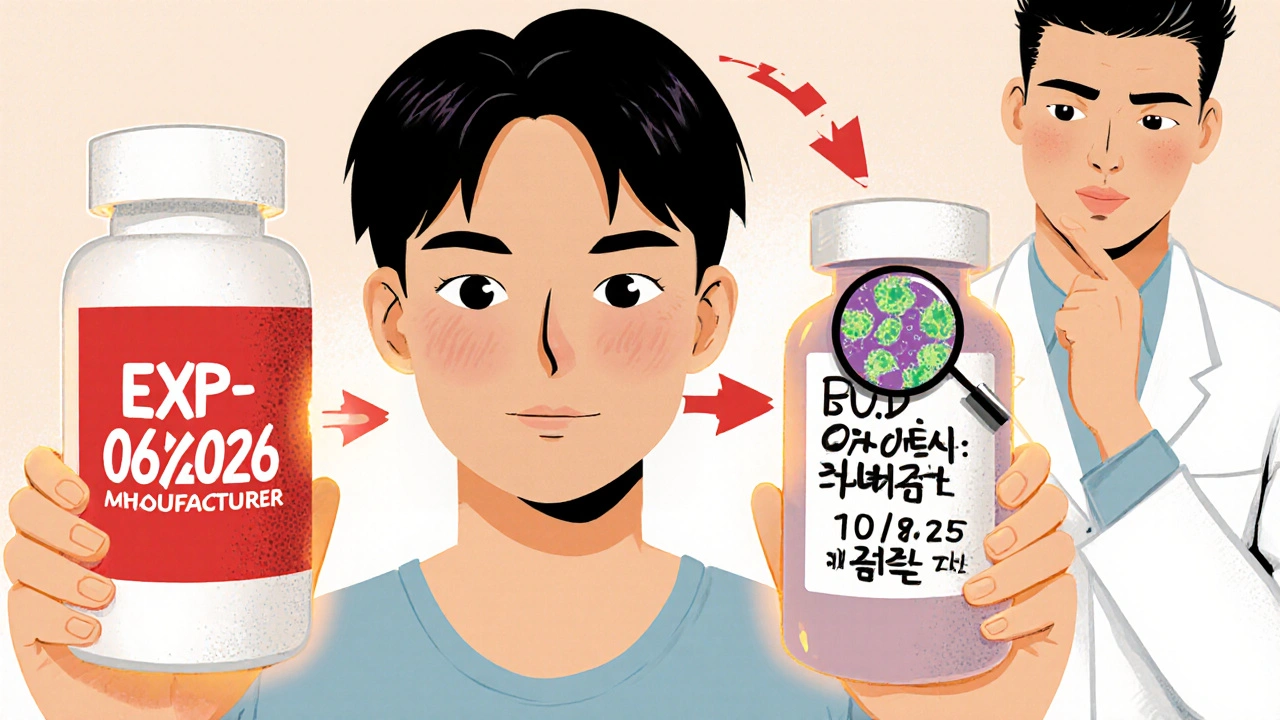
How to Compare Manufacturer Expiration Dates vs. Pharmacy Beyond-Use Dates
Learn the critical difference between manufacturer expiration dates and pharmacy beyond-use dates for compounded medications. Know when your medicine is safe to use-and when to throw it away.