FDA Drug Safety Communications: Alerts, Recalls, and What You Need to Know
When the FDA Drug Safety Communications, official alerts issued by the U.S. Food and Drug Administration to warn the public about serious risks tied to medications. Also known as drug safety alerts, these notices are the FDA’s direct way of telling doctors, pharmacists, and patients when a medicine might be more dangerous than previously known. These aren’t vague warnings—they’re urgent, specific, and backed by data. You’ll find them when a drug causes unexpected heart problems, when a batch is contaminated with carcinogens, or when a generic version turns out to be ineffective. They’re the reason you hear about sudden recalls for blood pressure pills or insulin pens with faulty dosing.
FDA Drug Safety Communications often tie into FDA drug recalls, official actions taken when a medication is removed from the market due to safety or quality issues. These aren’t rare. In 2025 alone, over 120 drug recalls were linked to foreign manufacturing problems, including pills made with impure ingredients or labeled incorrectly. The FDA doesn’t wait for thousands of injuries to happen—they act when early signals point to real harm. That’s why you might see a notice about a specific lot of metformin or a batch of losartan with nitrosamine contamination. These aren’t theoretical risks. People have ended up in the hospital because of them.
These alerts also connect to medication risks, the potential for harm from drugs due to side effects, interactions, or manufacturing flaws. For example, a recent communication warned that certain antifungal drugs can spike statin levels to dangerous levels, causing muscle breakdown. Another flagged that some generic painkillers were missing active ingredients entirely. These aren’t edge cases—they’re systemic issues that affect real people taking everyday meds. If you’re on a long-term drug like warfarin, statins, or immunosuppressants, a single FDA safety notice could change how you take it.
What you won’t find in these notices is sugarcoating. The FDA doesn’t say "may cause"—they say "has been linked to" or "resulted in." They name the exact drug, the manufacturer, the lot number, and the symptom. If you’ve ever wondered why your pill changed color or why your pharmacy switched brands without telling you, it’s often because of one of these alerts. The FDA doesn’t just monitor drugs—they track how they’re made, where they’re shipped, and how patients react after taking them.
Below, you’ll find real cases where these communications made a difference. From how overseas production flaws led to nationwide recalls, to how patients were confused by generic pill changes that weren’t safety-related but still caused dangerous drops in adherence. You’ll see how poison control hotlines were called because of mislabeled meds, and how flying with prescriptions became a minefield after a safety alert changed TSA rules. These aren’t abstract topics—they’re daily realities for people managing chronic conditions, traveling, or just trying to take their pills safely.
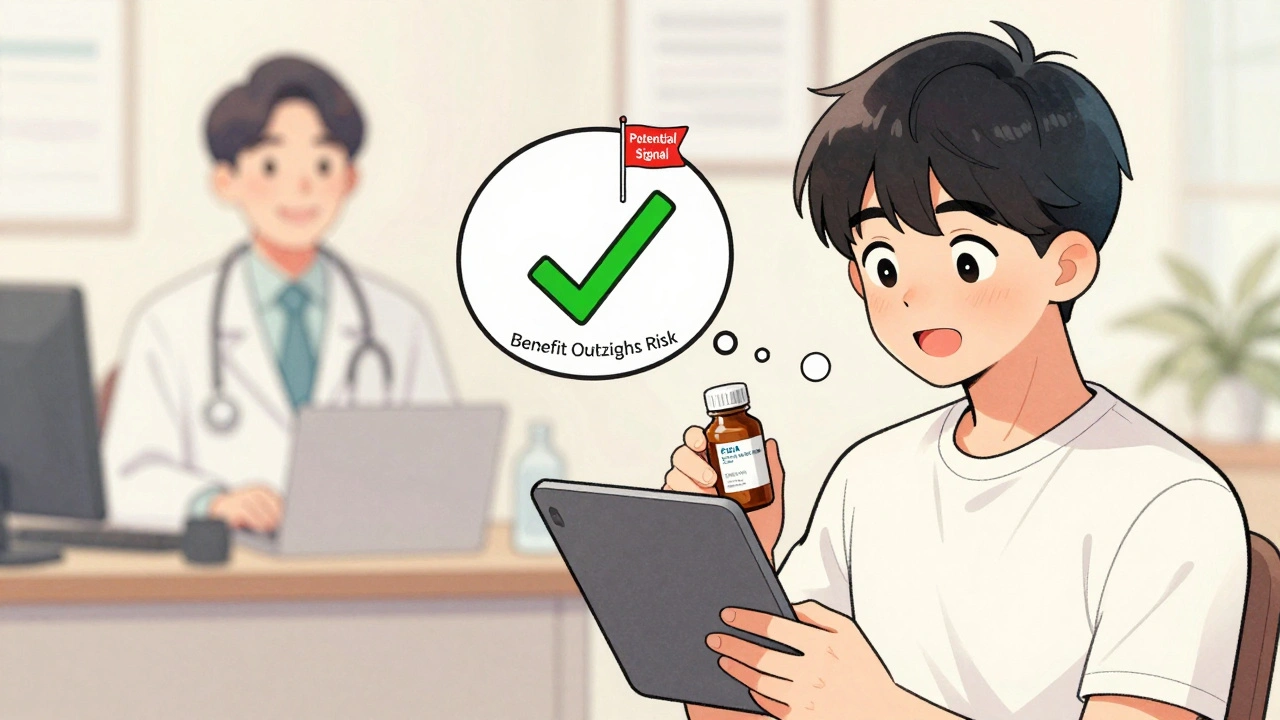
How to Interpret Risk vs. Benefit in FDA Safety Announcements
Learn how to read FDA safety alerts without panic. Understand the difference between potential signals and confirmed risks, and how to weigh a drug’s benefits against its side effects for smarter health decisions.