FDA Safety Announcements: What You Need to Know About Drug Risks and Recalls
When the FDA safety announcements, official warnings issued by the U.S. Food and Drug Administration about dangerous drugs, manufacturing flaws, or hidden health risks. Also known as drug alerts, these notices are your first line of defense against unsafe medications. These aren’t just bureaucratic notices—they’re life-saving updates that tell you when a pill you’re taking might be contaminated, when a factory’s quality control failed, or when a drug’s side effects are worse than anyone admitted.
FDA safety announcements often link to FDA inspections, on-site checks of drug manufacturers, both domestic and overseas, that uncover violations like unsanitary conditions, falsified records, or unapproved ingredients. These inspections triggered over 300 drug recalls in 2024 alone, mostly from foreign plants where oversight is weaker. You might not know it, but the generic version of your blood pressure pill could have been made in a facility flagged for missing sterility tests. The FDA doesn’t always shut these places down immediately—they give them a Form 483, a list of violations you can actually look up online. If you’re on a long-term medication, especially one made overseas, checking for recent inspection reports is smarter than assuming your pharmacy’s supply is safe.
These alerts also connect directly to medication safety, the practice of preventing harm from drugs through better labeling, clearer warnings, and patient education. A recent announcement warned that certain generic heartburn pills contained a cancer-causing chemical. Another flagged a batch of insulin that was labeled wrong—patients got the wrong dose because the bottle looked too similar to another drug. These aren’t rare mistakes. They happen because companies cut corners to save money, and the FDA is playing catch-up. That’s why you need to pay attention to changes in pill color, unexpected side effects, or recalls posted on the FDA website. If your medication suddenly looks different, or your doctor mentions a new warning, it’s not paranoia—it’s protocol.
FDA safety announcements don’t just cover bad drugs—they also tell you when a drug you rely on might disappear. When a manufacturer stops making a generic because it’s not profitable, the FDA flags it as a potential shortage. That’s why you’re seeing more warnings about asthma inhalers, insulin, and antibiotics. These aren’t random gaps. They’re the result of a broken supply chain, where one overseas factory failure can ripple across the country. The good news? You can prepare. Keep a 30-day backup of critical meds. Know your pharmacy’s alternative suppliers. And if you’re on a high-risk drug like tacrolimus or amiodarone, sign up for FDA email alerts—they’ll tell you before your next refill.
Below, you’ll find real-world examples of how these safety alerts affect everyday patients—from pill changes that make people stop taking their meds, to overseas manufacturing flaws that led to recalls, to how poison control hotlines and TSA rules tie into broader medication safety. These aren’t theoretical risks. They’re happening now. And knowing what to look for could keep you—or someone you love—out of the ER.
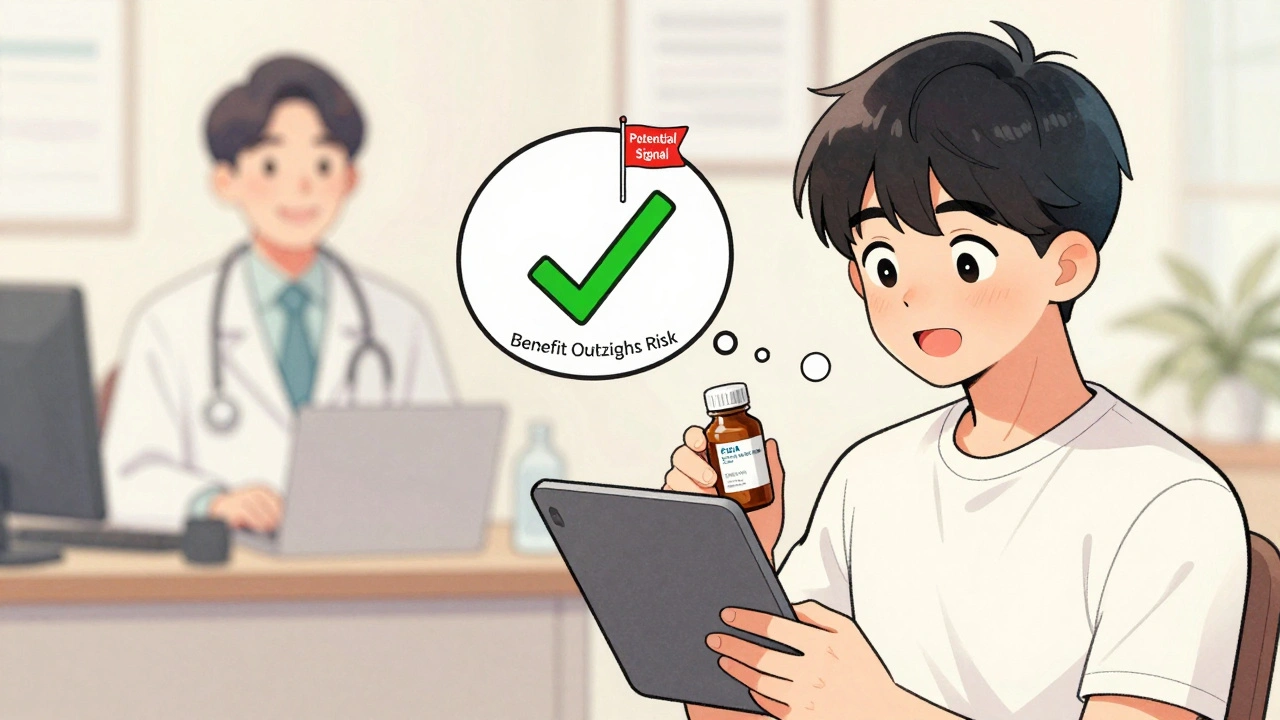
How to Interpret Risk vs. Benefit in FDA Safety Announcements
Learn how to read FDA safety alerts without panic. Understand the difference between potential signals and confirmed risks, and how to weigh a drug’s benefits against its side effects for smarter health decisions.