Food and Medication Interactions: What You Need to Know Before You Eat
When you take a pill, it doesn’t just disappear into your system quietly. What you eat—right before, right after, or even hours later—can change how that medicine works. This is called food and medication interactions, the way certain foods, drinks, or supplements alter how your body absorbs, breaks down, or responds to a drug. Also known as drug-food interactions, these aren’t just minor annoyances—they can make your medicine less effective, cause dangerous side effects, or even lead to hospital visits. Think of it like this: your body is a factory. Medicines are the tools it uses to fix problems. But if you dump the wrong ingredients into the system—like grapefruit juice, calcium-rich foods, or alcohol—you’re basically throwing a wrench into the gears.
Some of the most common and dangerous interactions involve statins, cholesterol-lowering drugs like atorvastatin and simvastatin that are broken down by liver enzymes easily disrupted by certain foods. Grapefruit juice is the biggest offender—it blocks those enzymes, causing statins to build up in your blood. That raises your risk of muscle damage, kidney failure, and worse. Then there’s calcium supplements, often taken for bone health, but they can bind to antibiotics like tetracycline or fluoroquinolones and stop them from being absorbed. If you take calcium at the same time as your antibiotic, you’re not getting the full dose—your infection might not clear up. Even something as simple as eating spinach with blood thinners like warfarin can throw off your clotting levels because of the vitamin K in greens.
These aren’t theoretical risks. Real people are getting sick because they didn’t know that taking a calcium pill with their thyroid med meant the thyroid med didn’t work. Others took a statin with grapefruit juice for years and only found out after a muscle biopsy. The truth is, most doctors don’t have time to go over every food interaction during a 10-minute visit. And pharmacy labels rarely list everything. That’s why you need to know the basics yourself. You don’t need to memorize a hundred rules. Just learn the big ones: avoid grapefruit with statins, space calcium and antibiotics by at least two hours, watch your vitamin K intake if you’re on warfarin, and never mix alcohol with painkillers or sedatives.
Below, you’ll find real, practical guides based on actual cases and studies. We cover how calcium carbonate compares to other forms, why statins can raise blood sugar, how hydroxyurea affects bone health, and why some meds need to be taken on an empty stomach. These aren’t guesswork—they’re what people are experiencing, what clinics are seeing, and what you need to know to stay safe.
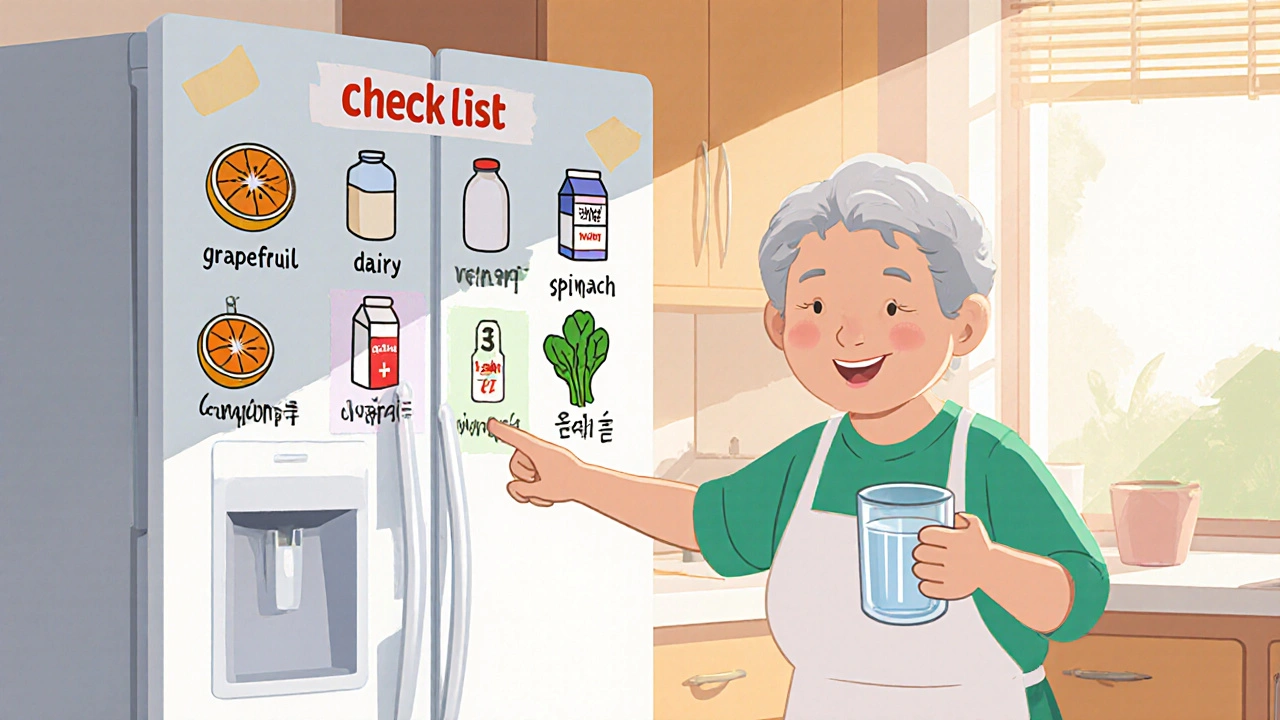
How to Create a Food and Medication Interaction Checklist at Home
Create a simple, personalized food and medication interaction checklist to prevent dangerous reactions. Learn what foods to avoid with common meds like warfarin and statins, how to update it, and where to keep it for maximum safety.