Medication Safety Checklist: Key Steps to Avoid Dangerous Mistakes
When you take medication, any substance used to treat, cure, or prevent disease. Also known as prescription drugs, it can save your life — but only if used correctly. Too many people skip basic safety steps, and the results can be serious: missed doses, dangerous interactions, or even hospital visits. A simple medication safety checklist cuts through the confusion and puts control back in your hands.
Think about your daily routine. Do you know the difference between a manufacturer’s expiration date and the pharmacy’s beyond-use date? Many don’t. That’s why posts like How to Compare Manufacturer Expiration Dates vs. Pharmacy Beyond-Use Dates matter — using an expired or degraded drug isn’t just wasteful, it’s risky. And what about those pills stacked in a drawer? A cluttered pillbox can lead to double-dosing or skipping a critical dose. Organizing your meds isn’t just neat — it’s a core part of safety. Tools like pill organizers, dosage trackers, and even smartphone reminders are part of a real-world safety system.
Drug interactions are another silent danger. You might take statins for cholesterol, but did you know they can slightly raise blood sugar — especially if you already have prediabetes? Or that a common antibiotic like azithromycin might not be the best choice for your infection? These aren’t edge cases. They’re common. The Naranjo Scale, a clinical tool to assess if a reaction was caused by a drug. Also known as ADR probability scale, it helps doctors decide if a side effect is real or coincidence. You don’t need to score it yourself, but you should ask: Could this new symptom be from my meds? That question alone prevents mistakes. And don’t forget supplements. Calcium carbonate might seem harmless, but if you’re on certain heart or kidney meds, it can interfere. The same goes for hydroxyurea and bone health, or corticosteroids and withdrawal symptoms. Everything connects.
Medication safety isn’t about memorizing every possible side effect. It’s about building habits: checking labels every time, keeping an updated list of everything you take (including herbs and OTC drugs), asking your pharmacist about interactions, and never ignoring unusual symptoms. You don’t need to be a doctor — just careful. Below, you’ll find real guides that break down exactly how to handle common meds safely: from statins and prednisone to cancer combos and glaucoma drops. Each one gives you a piece of the puzzle. Put them together, and you’re not just taking pills — you’re managing your health with confidence.
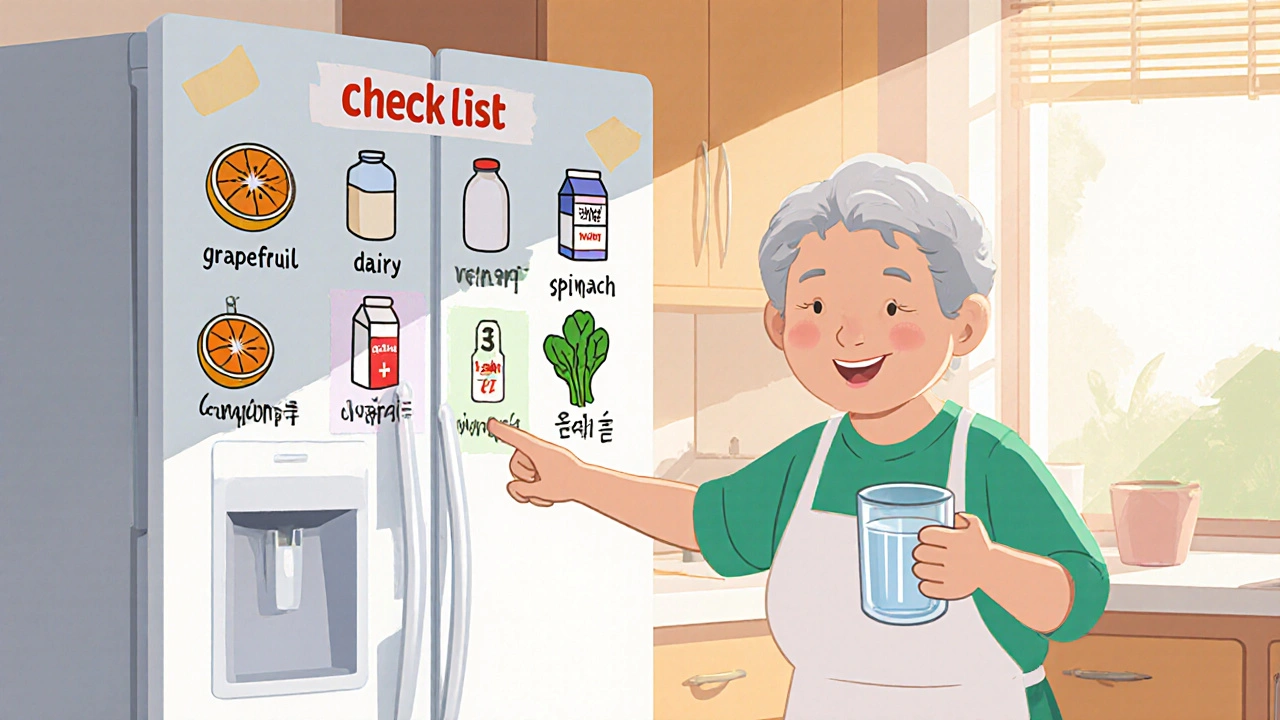
How to Create a Food and Medication Interaction Checklist at Home
Create a simple, personalized food and medication interaction checklist to prevent dangerous reactions. Learn what foods to avoid with common meds like warfarin and statins, how to update it, and where to keep it for maximum safety.