TSA CBD Oil: What You Need to Know About Travel, Laws, and Safety
When you're traveling with TSA CBD oil, a hemp-derived product used for relaxation, pain, or sleep that’s legal under federal law if it contains less than 0.3% THC. Also known as cannabidiol oil, it’s one of the most misunderstood substances at airport security. Many people assume CBD is illegal or will set off alarms—but that’s not true, as long as it follows federal rules. The key isn’t whether it’s CBD—it’s whether it’s compliant.
The TSA, the federal agency responsible for screening passengers and baggage at U.S. airports doesn’t actively search for CBD. Their focus is on illegal drugs like marijuana and high-THC products. If your CBD oil is derived from hemp and has under 0.3% THC, it’s technically allowed under the 2018 Farm Bill. But here’s the catch: state laws vary, and some airport staff or local police might not know the difference. That’s why packaging matters. Keep your CBD in its original container with a clear label showing THC content. No vague labels like "hemp extract"—that’s a red flag.
It’s not just about legality—it’s about avoiding delays. A 2023 survey by a major travel health site found that nearly 1 in 5 travelers with CBD were questioned at security, even when their product was legal. Why? Because agents don’t have THC testers on the spot. They rely on labels, smell, and gut instinct. If your bottle looks like a drug paraphernalia or has no ingredient list, you’re asking for trouble. Also, don’t pack CBD in checked luggage if it’s your only supply. Bags get lost. Carry it in your personal item where you can show it if asked.
Another thing people forget: international travel. Just because TSA allows it doesn’t mean other countries do. Canada, the UK, and Japan have different rules. Some ban all CBD. Others require a prescription. Always check the destination’s laws before you fly. And if you’re flying domestically, remember that TSA doesn’t control what happens after security. If you land in a state where CBD is illegal—even if it’s federally legal—you could still face local penalties.
What about the science behind it? CBD doesn’t get you high. It doesn’t impair you. It doesn’t show up on standard drug tests—unless it’s contaminated with THC. That’s why third-party lab reports matter. Look for a QR code or link on the bottle that leads to a certificate of analysis. If it’s not there, don’t trust it. You’re not just risking a flight delay—you’re risking your health with untested products.
And here’s the quiet truth: most people who get stopped with CBD aren’t breaking the law. They’re just unprepared. They didn’t read the label. Didn’t bring the lab report. Didn’t know their state’s rules. The fix is simple: know your product, know the rules, and be ready to explain it calmly. You don’t need to be an expert. Just be informed.
Below, you’ll find real-world advice from people who’ve been through security with CBD, guides on choosing safe products, and deep dives into how federal and state laws clash. Whether you’re flying for work, vacation, or medical reasons, these posts give you the facts—not the hype—so you can travel with confidence.
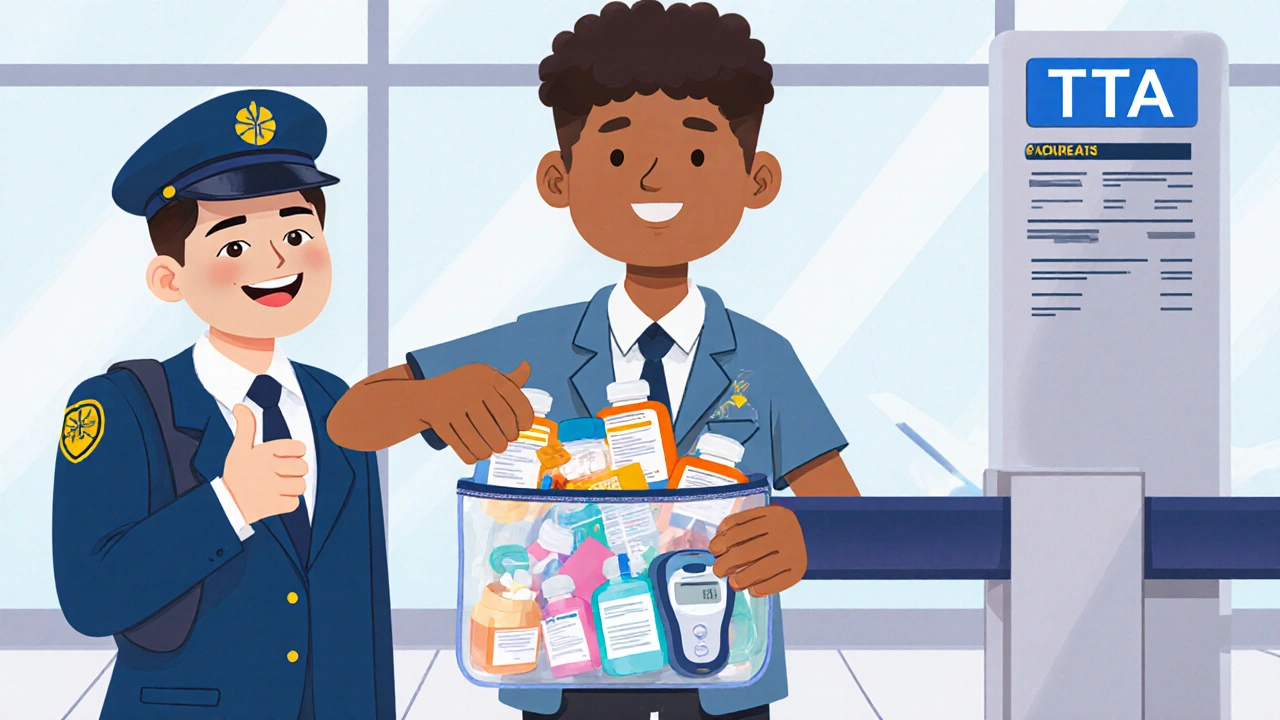
TSA Guidelines for Flying with Prescription Medications: What You Need to Know in 2025
Learn exactly how to fly with prescription medications in 2025 under TSA rules - including what’s allowed, what gets confiscated, and how to avoid delays at security. Essential for travelers with insulin, CBD, ADHD meds, or other prescriptions.