Risk Benefit Analysis: Weighing Medication Risks Against Real-World Outcomes
When you take a pill, you’re not just getting the cure—you’re also accepting the possible downsides. That’s where risk benefit analysis, the process of comparing the potential harm of a medication against its expected health improvement. It’s not just for doctors. It’s something every patient should understand to make informed choices about their treatment. This isn’t theory. It’s daily life in pharmacies, hospitals, and homes where people decide whether a drug’s side effects are worth the relief it brings.
Take statins, cholesterol-lowering drugs that reduce heart attacks but may slightly raise blood sugar. Or corticosteroids, powerful anti-inflammatories that can cause weight gain, bone loss, and mood swings with long-term use. Even something as simple as calcium carbonate, a common supplement for bone health that can cause constipation or interact with thyroid meds needs this kind of evaluation. Risk benefit analysis isn’t about avoiding all risk—it’s about knowing which risks you’re willing to live with, and which ones you should push back on.
Look at the posts below. They’re all built around this same question: Is the trade-off worth it? When a generic pill changes color and you stop taking it, that’s a risk benefit decision. When you choose between Symbicort and a cheaper alternative, you’re weighing control against cost. When you worry about tacrolimus causing tremors, you’re asking: does this drug keep me alive, or just make me shaky? Even something like flying with prescriptions or handling poison control calls ties back to this—knowing what’s dangerous, when to act, and what’s just a nuisance.
There’s no perfect formula. One person’s side effect is another’s minor annoyance. But understanding how these decisions are made gives you power. You’ll know when to ask your doctor: "What happens if I don’t take this?" or "Is there a safer option?" The posts here don’t just list risks—they show you how real people, pharmacists, and health systems actually manage them every day. You’ll find clear examples, real data, and practical steps to help you weigh your own options—without getting lost in medical jargon.
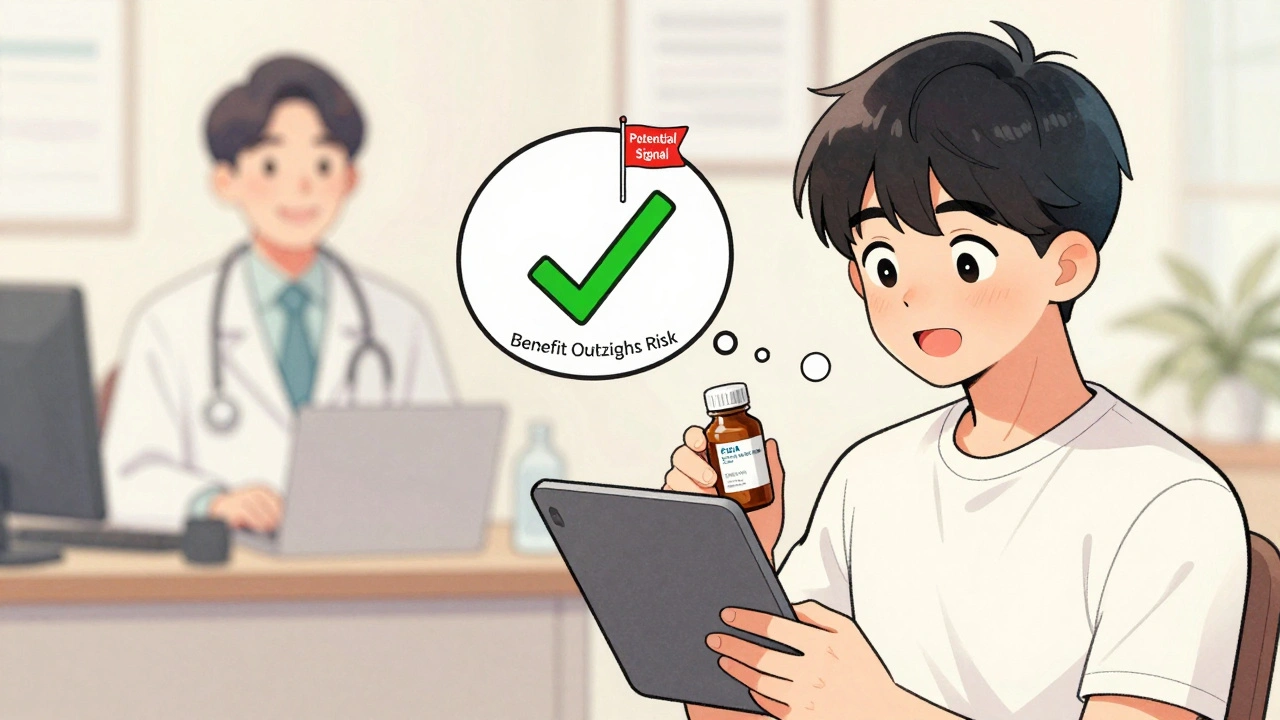
How to Interpret Risk vs. Benefit in FDA Safety Announcements
Learn how to read FDA safety alerts without panic. Understand the difference between potential signals and confirmed risks, and how to weigh a drug’s benefits against its side effects for smarter health decisions.